Comparisons
Interlock Kit vs Transfer Switch
Both prevent back-feeding absolutely. They differ on cost, on circuit access, and on who manages the load — you or the hardware.
Written byMike M.
Published
Disclosure: we earn a commission on purchases made through links on this page, at no cost to you. It does not affect what we recommend or what we say about it — how we are funded.
The short answer
| Interlock kit | Transfer switch | |
|---|---|---|
| Hardware cost | Tens of dollars | Several hundred |
| Circuits available | Every breaker in the panel | 6 or 10, fixed at install |
| Load management | Entirely manual | Built in — circuits pre-limited |
| Panel fit | Brand, amperage and spacing must match | Works with any panel |
| Inspection risk | Third-party plates vary by inspector | Listed product, UL 1008 available |
| Install labor | Lower — no circuits relocated | Higher — circuits moved one by one |
From the manufacturer listings for the products in this registry. Both methods prevent simultaneous utility and generator connection absolutely — this is a comparison of cost and convenience, not of safety.
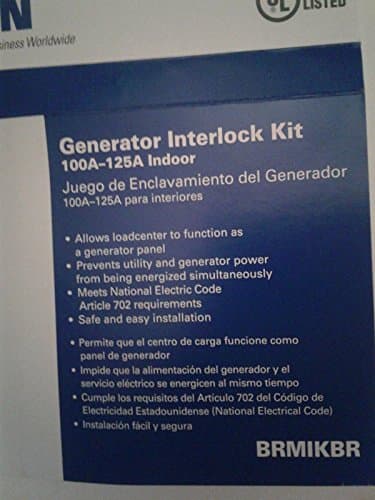
First, the thing that is not in dispute: both are safe and both are legitimate. An interlock plate makes simultaneous connection mechanically impossible, and Eaton's own kit states that it meets National Electrical Code Article 702 requirements. A transfer switch achieves the same through double-throw switching. Neither is the compromise option.
Where the interlock wins
Cost, on two lines rather than one. The plate itself is a small fraction of a switch. Less obviously, the installation is cheaper too, because no circuits have to be relocated — and moving circuits out of the main panel one at a time is the biggest labor line in a transfer switch install.
Circuit access. You get every breaker in the panel rather than a pre-chosen six or ten. If you later want to add a circuit to your backup plan, it is already available — no second electrician visit.
Capacity matching. An interlock's capacity is set by the generator inlet breaker your electrician installs, so it can be sized to your generator directly rather than to a 30 or 50 amp switch rating.
Where the transfer switch wins
It manages your load. The circuits were chosen at installation to total less than the generator can carry, so overloading is much harder. Connecticut Electric describes the mechanism: double-throw rocker switches eliminate the risk of back-feeding, per circuit.
It works with any panel. No measuring, no brand matching, no spacing question. Which matters because interlock fit is genuinely fussy:
| Panel | Published interlock spacing requirement |
|---|---|
| Square D QO / Homeline, 100-125 A | 3/4 - 7/8 in |
| Eaton BR, 150-200 A | 1 1/4 - 1 7/16 in |
| Siemens / Murray 100 A, plug-on-neutral | 7/8 in |
| Siemens / Murray 100 A, non-plug-on-neutral | 1 1/4 in |
Inspection certainty. A transfer switch is a purpose-built listed product — Champion publishes UL 1008 certification on its 50 amp unit — and nobody argues about it. Acceptance of third-party interlock plates varies by authority having jurisdiction; some inspectors want the panel manufacturer's own kit. See are interlock kits legal.
One-button operation, on some switches. Generac's HomeLink uses an electronic rocker for a single changeover action, which is meaningfully faster than flipping ten individual circuit switches in the dark.
The real trade-off, stated plainly
It is who manages the load, and that is a question about you rather than about the hardware.
With a transfer switch, the design does it. With an interlock, you do: you decide which breakers go on, in what order, and whether the total stays under the generator's rating. Using EWEB's published figures, that means knowing your fridge is 700 W, your furnace blower 700 W, your well pump 1,000 W, and that a 1,500 W space heater will not fit on top.
For some households that is fine and the saving is welcome. For others — a house where several people might flip breakers, or where nobody wants to think about watts during a storm — the switch's built-in discipline is worth the money.
The short answer
The best of each route
| # | Product | Best for | Score | Price |
|---|---|---|---|---|
| 1 | 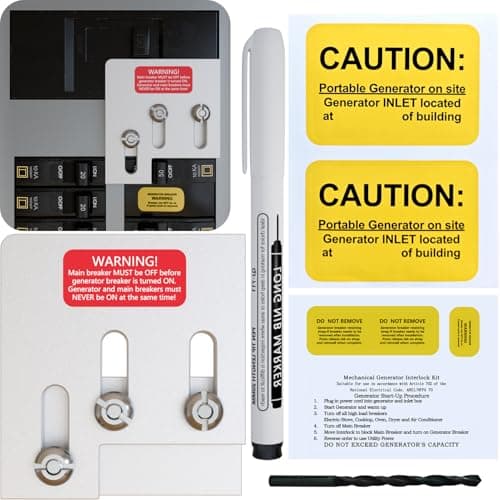 SPZOCE Interlock Kit — Square D QO/Homeline 150/200A The cheapest correct way to connect a generator to the whole panel, provided your panel is a Square D QO or Homeline with the exact spacing stated — measure first. | Square D QO and Homeline, 150-200A | 8.5/10 | $26.99 |
| 2 | 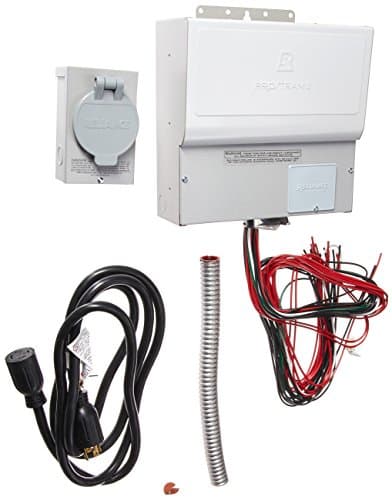 Reliance Controls 310CRK 10-Circuit 30A Kit The standard answer for connecting a portable generator properly: ten circuits, 30 A, from the brand electricians recognize. | The ten-circuit default | 8.6/10 | $474.76 |
| 3 | 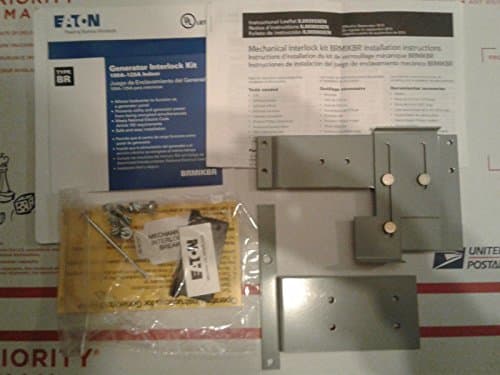 Eaton BRMIKBR Factory Interlock Kit 100-125A Pay the premium for this one: a factory interlock with a stated NEC Article 702 basis removes both the fit risk and the inspection risk. | Factory kit that satisfies inspectors | 8.9/10 | $84.00 |
| 4 | 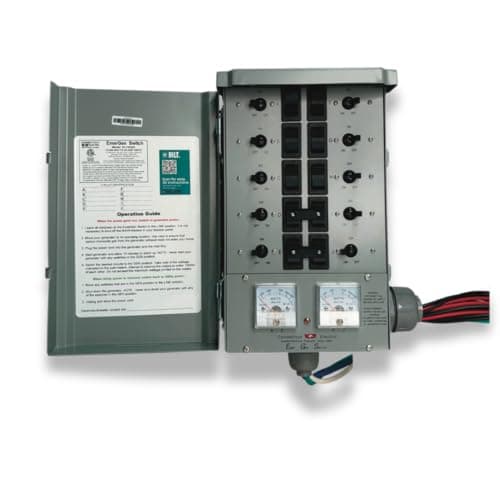 Connecticut Electric EmerGen EGS1012KG2 50A 10-Circuit The simplest way to do a 50 A installation correctly: everything matched in one box, including the cord people most often get wrong. | 50A kit with inlet and cord | 9.0/10 | $379.99 |
| 5 | 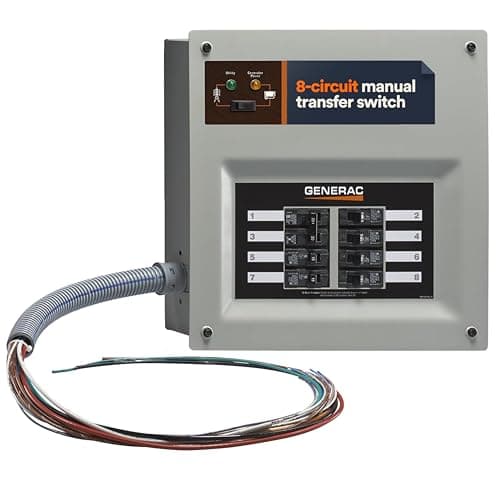 Generac HomeLink 6852 30A Manual Choose this if a standby generator is a genuine plan for later; otherwise the Reliance kits do the same job for less. | A path to automatic later | 8.0/10 | $368.87 |
#ad Prices as of October 5, 2026; they may have changed since. Scores are our editorial judgment from published specifications, not test results — how we pick. How we are funded.
How to choose, in four questions
- 1Does a kit fit your panel? Read the brand, amperage and spacing. If no kit matches, the switch is the answer and the decision is made.
- 2Will your inspector accept a third-party plate? Ask your electrician. If the answer is factory-only and no factory kit exists for your panel, the switch again.
- 3Will you manage load, or do you want it managed? Honest answer, not aspirational.
- 4Do you want access to every circuit, or will six or ten cover it? Interlock gives you the panel; the switch gives you certainty.
Question one eliminates the interlock for a meaningful minority of houses, and question two for a further group. Where both pass, the choice is genuinely yours — which is why this page does not declare a winner.
Questions people actually ask
Is an interlock kit as safe as a transfer switch?
Yes. Both make simultaneous utility and generator connection mechanically impossible, and Eaton's own interlock kit states that it meets NEC Article 702 requirements. The differences are cost, circuit access, panel fit and who manages the load — not safety.
Which is cheaper, an interlock kit or a transfer switch?
The interlock, on two counts. The plate costs a small fraction of a switch, and the installation is cheaper too because no circuits have to be relocated — which is the biggest labor line in a transfer switch install.
What is the main disadvantage of an interlock kit?
Nothing limits your load. You get access to every breaker in the panel and the discipline is yours: knowing your fridge is 700 watts, your blower 700, your well pump 1,000, and that a space heater will not fit on top. A transfer switch's pre-chosen circuits manage that for you.
Will an interlock kit fit my panel?
Only if the brand, the main breaker amperage and the breaker spacing all match a published kit. Spacing requirements are as tight as 3/4 to 7/8 of an inch. A transfer switch has no equivalent constraint and works with any panel.
Which is more likely to pass inspection?
A transfer switch, because it is a purpose-built listed product — Champion publishes UL 1008 certification on its 50 amp unit. Acceptance of third-party interlock plates varies by authority having jurisdiction; the panel manufacturer's own kit removes that risk.
Can I switch from an interlock to a transfer switch later?
Yes, but it means paying for the install twice, since the switch install involves relocating circuits that the interlock left in the main panel. Decide at the outset, which is why the four questions in this page are worth answering honestly.
Sources
- Eaton BRMIKBR Type BR mechanical interlock kit — manufacturer listingManufacturer statement that the kit meets National Electrical Code Article 702 requirements.
- Eugene Water & Electric Board — Generator Sizing ConsiderationsPublished appliance running and additional-starting watt figures used in the load arithmetic on this page.
- US Consumer Product Safety Commission — Portable Generator Information CenterThe placement and carbon monoxide guidance referenced wherever this page compares indoor and outdoor operation.
Read next
Best Interlock Kit
The Best Generator Interlock Kits
Interlock kits by panel brand with the published breaker-spacing figures, and the factory kit that removes fit risk.
Top pick · Eaton BRMIKBR Factory Interlock Kit 100-125A
$84.00View on Amazon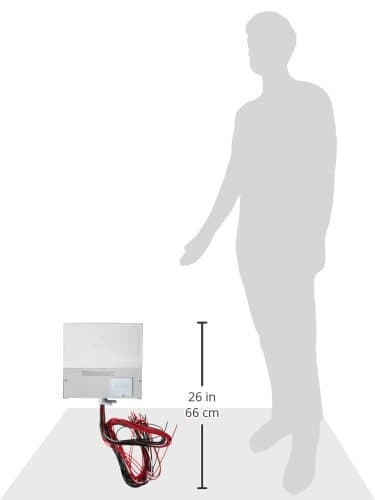
Best Transfer Switch
The Best Generator Transfer Switches
Transfer switches ranked on circuit count, amp rating and kit completeness, from 6-circuit 30A to 10-circuit 50A.
Top pick · Reliance Controls 310CRK 10-Circuit 30A Kit
$474.76View on AmazonReference
Interlock Kit Panel Compatibility
A reference table of published interlock breaker-spacing figures by panel brand and amperage, plus how to identify your panel.
Reference
Are Generator Interlock Kits Legal?
The code basis for mechanical interlocks, why acceptance varies locally, and how to find out before you buy.
Guide
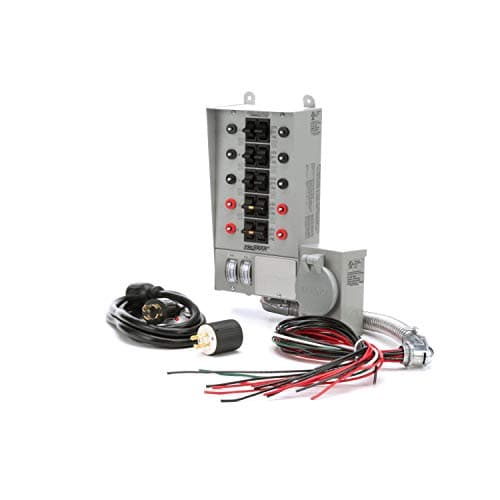
What Transfer Switch Installation Costs
What a transfer switch installation quote consists of, the hardware choices that reduce labor, and how to compare quotes.