Costs
Generator Fuel Cost Calculator
Your fuel price, your load, your numbers. We will not publish a cost per hour, because it would be a guess about both.
Written byMike M.
Published
Disclosure: we earn a commission on purchases made through links on this page, at no cost to you. It does not affect what we recommend or what we say about it — how we are funded.
Interactive
Running cost calculator
Your machine’s tank and published runtime, and your own local fuel price. The formula is shown below the result.
On the spec sheet. E.g. 6.7 for a WEN DF8000X.
Use the manufacturer's half-load figure unless you know your load is lighter.
Your local price today, not a national average.
24 for a day, 72 for a three-day outage.
Result
- Consumption
- 0.64 gal/hr
- Cost per hour
- Enter a fuel price
- Fuel for the period
- 15.3 gal
- Cost for the period
- Enter a fuel price
- Refuels needed
- 3 tanks
Consumption 0.64 gallons per hour.
The arithmetic
- gal/hr = tank ÷ runtime
- cost/hr = gal/hr × price
- period gal = gal/hr × hours
- refuels = hours ÷ runtime
Nothing hidden. If your real-world consumption differs from this, the cause is almost always that you are running at a different load than the published runtime assumed.
3 refuels means at least one shutdown-and-cool-down in the middle of the night. Never refuel a hot or running generator. This is the number that should make you consider propane or a natural gas connection.
The short answer
Running cost depends on your load, your machine's fuel consumption and your local fuel price — so any single published cost-per-hour figure is a guess about all three. The calculator on this page takes your numbers and shows the arithmetic. The key insight it will demonstrate: consumption tracks load closely, and the same generator can run 14 hours at quarter load and 9.5 hours at half load from the same tank.
Use the calculator at the top of this page. Everything below explains where to get the inputs and what the output means.
Input one: your fuel price
Your local price, not a national average, and certainly not a figure typed into a web page months ago. The official sources update weekly:
- Gasoline: the US Energy Information Administration's Gasoline and Diesel Fuel Update publishes national and regional averages weekly.
- Propane: the EIA also publishes residential propane prices. Note that an exchange-cage tank swap is typically dearer per gallon than a refill, and tanks are usually filled to 80% of their nominal capacity.
- Natural gas: read your own bill. It is billed in therms or CCF rather than gallons, which the calculator handles separately.
Input two: your generator's consumption
Manufacturers publish runtime at a stated load rather than gallons per hour, so you work backwards: tank size divided by runtime gives consumption.
| Machine | Tank | Published runtime | Implied gal/hr |
|---|---|---|---|
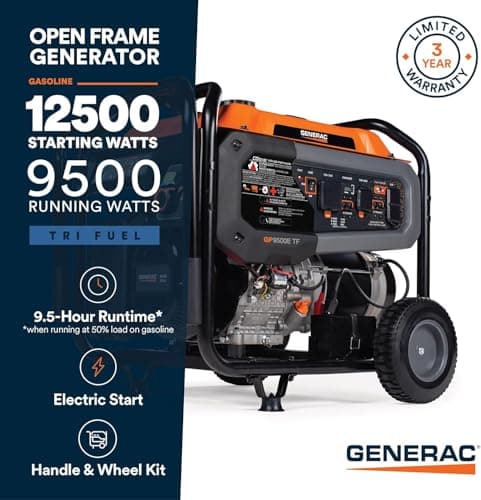
| Generac 12,500 W tri-fuel | 7.5 gal | 9.5 h at 50% load | ~0.79 |
| Generac 12,500 W tri-fuel | 7.5 gal | 14 h at 25% load | ~0.54 |
| WEN DF8000X | 6.7 gal | 10.5 h at half load | ~0.64 |
| WEN DF1100T | 6.6 gal | 8.5 h at half load | ~0.78 |
| Westinghouse iGen5000c | 3.4 gal | 18 h, economy mode | ~0.19 |
| Westinghouse WGen11500TFc | 9.5 gal | 19 h | ~0.50 |
Those two Generac rows are the whole lesson of this page. Load is the variable. Nothing about the machine changed between them.
And look at the Westinghouse iGen5000c: 0.19 gallons per hour, because an inverter generator in economy mode throttles the engine to match a light load. Westinghouse states inverter technology cuts fuel use by up to half versus a conventional generator, and that row is what the claim looks like in practice.
Input three: your actual load
Work it from EWEB's published figures, or use the sizing calculator which does it for you. Then express it as a fraction of the generator's running rating, because that is what the published runtimes are quoted against.
A worked example
- Essential load (fridge, furnace, well, sump, lights)
- 3,500 W
- Machine: WEN DF8000X
- 6,500 W running
- Load fraction
- ~54% — close to half load
- Published runtime at half load
- 10.5 h on 6.7 gal
- Implied consumption
- ~0.64 gal/hr
- Per day (24 h)
- ~15.3 gallons
Our arithmetic from WEN's published figures. Multiply that 15.3 gallons by your local price for a daily cost, and note it means refueling roughly three and a half times in 24 hours — which is the number that actually matters operationally.
What the output tells you beyond the money
How often you refuel. A 6.7 gallon tank at 0.64 gallons per hour means a shutdown-and-cool-down cycle every 10.5 hours, at least one of them in the middle of the night. That is the most hazardous routine moment in generator ownership, and it is a better reason to care about consumption than the cost.
How much fuel to store. Your daily consumption times the number of days you are preparing for, rotated annually with stabilizer.
Whether natural gas is worth it. If the answer is 15 gallons a day and three refuels, a plumbed natural gas line — which never runs out and needs no refueling at all — starts to look like the best money on this site.
The fuels compared qualitatively
What each fuel does to running cost
- Natural gas
- Cheapest per BTU, no refueling
- Gasoline
- Most BTU per gallon, degrades in months
- Propane
- Fewer BTU per gallon, stores indefinitely
Propane carries fewer BTU per gallon than gasoline, so a generator burns more volume for the same work even when the per-gallon price looks similar. Worked through in propane vs gasoline cost.
The short answer
The machines with the best published efficiency
| # | Product | Best for | Score | Price |
|---|---|---|---|---|
| 1 | 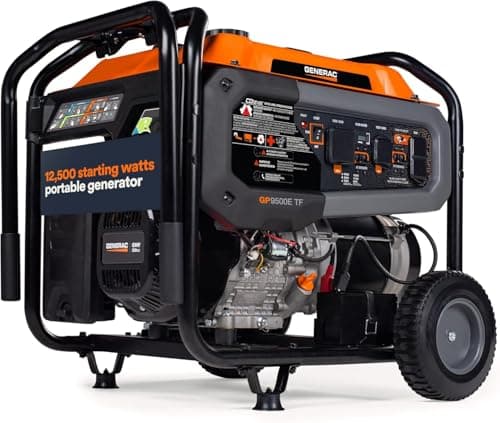 Generac 12,500W Starting Tri-Fuel The cheapest credible way to get a generator onto your home's natural gas line, which is the one fuel supply an outage usually does not interrupt. | Natural-gas hookup at the best price | 9.1/10 | $920.00 |
| 2 | 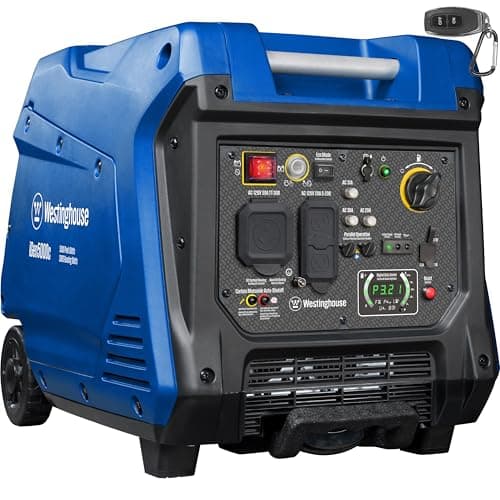 Westinghouse iGen5000c 5,000W Inverter Buy the dual fuel version instead unless the price gap matters — this one's 18-hour runtime and live runtime display are its real strengths. | 18-hour runtime on one tank | 8.2/10 | $899.00 |
| 3 | 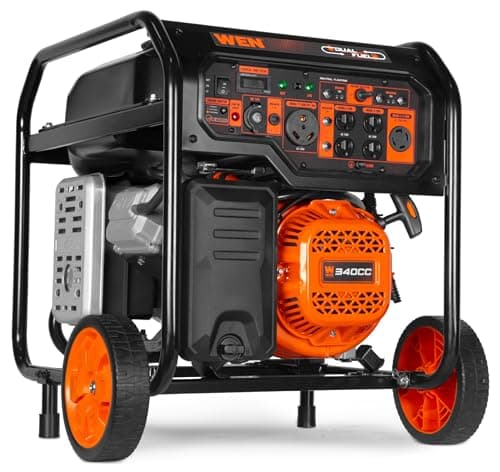 WEN DF8000X 8,000W Dual Fuel The best-value correctly-sized home backup generator here: enough for every essential circuit, dual fuel, CO shutoff, a real transfer-switch outlet, and no money spent on capacity you will not use. | Essential circuits, dual fuel, lowest cost | 8.5/10 | $623.17 |
| 4 | 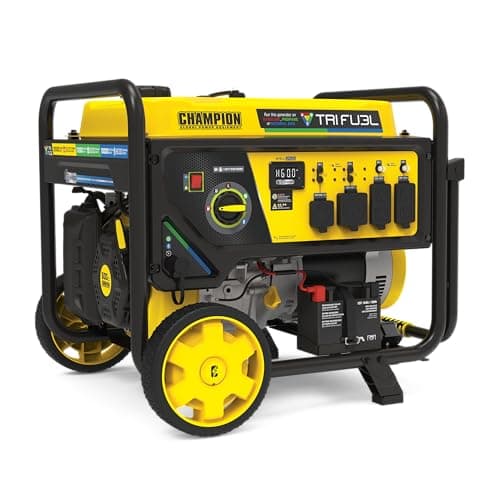 Champion 12,500W Tri-Fuel Home Backup The most complete tri-fuel package on the shelf: three fuels, both hoses, every output figure published, CO shutdown included. | Tri-fuel with both hoses in the box | 9.0/10 | $1,259.99 |
| 5 | 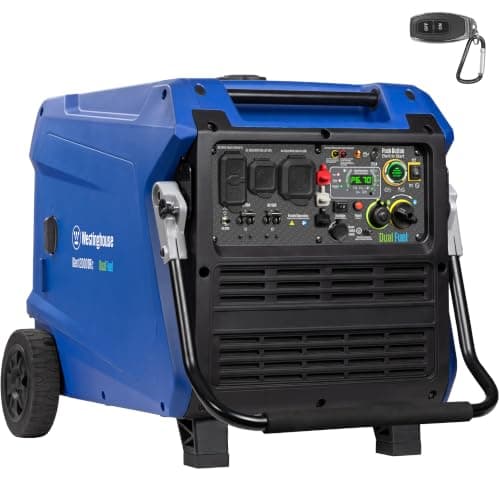 Westinghouse iGen12000DFc 12,000W Dual Fuel Inverter The best technical answer for whole-house backup if the budget allows: transfer-switch-ready output, inverter-clean power, and far less noise than the conventional alternative. | Whole-house backup with clean power | 9.0/10 | $1,899.00 |
#ad Prices as of October 5, 2026; they may have changed since. Scores are our editorial judgment from published specifications, not test results — how we pick. How we are funded.
Two patterns in that list. The tri-fuel machines, because natural gas removes the cost question from the planning. And the inverter machines, because economy mode genuinely halves consumption at light load — which is where a backup generator spends most of its time.
Whatever the fuel
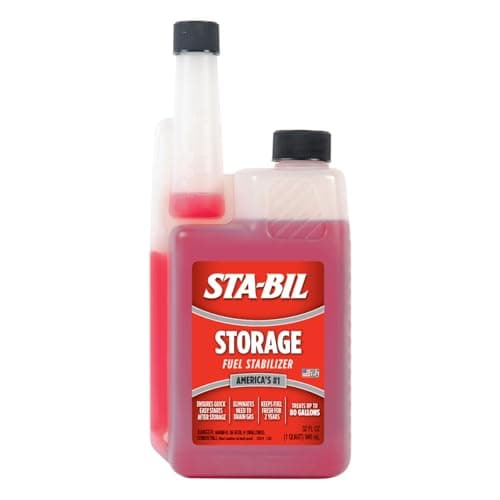
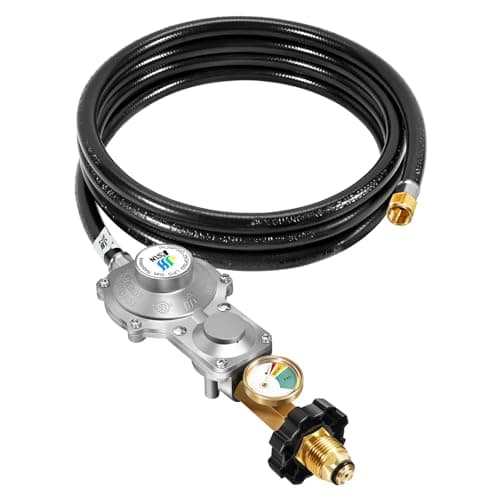
Running a dual fuel generator on a tank
GasSaf 10 ft Two-Stage Propane Regulator + Hose
Stabilizer so stored gasoline is still usable, or a two-stage propane regulator that holds pressure steady as the tank empties.
Questions people actually ask
How much does it cost to run a generator per hour?
It depends on your load, your machine's consumption and your local fuel price, so any single figure would be a guess about all three. Use the calculator on this page with your own numbers — the formula is shown so you can check the arithmetic.
How much fuel does a generator use per hour?
Work it backwards from the published runtime: tank size divided by runtime. WEN's DF8000X publishes 10.5 hours at half load on 6.7 gallons, which is about 0.64 gallons per hour. The same machine at quarter load would use substantially less.
Does load affect how much fuel a generator uses?
Heavily. Generac's 12,500 W tri-fuel publishes 9.5 hours at 50% load and 14 hours at 25% load from the same 7.5 gallon tank — a 46% difference in consumption from nothing but the load. This is the single biggest variable.
Are inverter generators cheaper to run?
At light load, substantially. They throttle the engine to match demand rather than running at fixed speed, and Westinghouse states inverter technology cuts fuel use by up to half versus a conventional generator. Its iGen5000c's 18 hours on 3.4 gallons works out at about 0.19 gallons per hour.
Where do I find current fuel prices?
The US Energy Information Administration publishes weekly national and regional gasoline prices and residential propane prices. For natural gas, read your own bill — it is billed in therms or CCF rather than gallons.
How much fuel should I store?
Your daily consumption multiplied by the days you are preparing for. A 6,500 watt machine at half load is roughly 15 gallons a day on published figures. Rotate it annually and use stabilizer, and check your local storage limits.
Sources
- US Energy Information Administration — Gasoline and Diesel Fuel UpdateWhere to find the current national and regional gasoline price to put into the fuel cost calculator. We do not reproduce the figure, because it changes weekly.
- US Energy Information Administration — Propane and Heating Oil PricesWhere to find current residential propane prices for the same purpose.
- Eugene Water & Electric Board — Generator Sizing ConsiderationsPublished appliance running-watt figures used in the load arithmetic on this page.
Read next

Comparison
Propane vs Gasoline for a Generator
The honest propane-versus-gasoline comparison: energy density, output penalty, storage life and refueling safety.
Guide
How Long Will a Generator Run?
Published runtime figures across fuels and loads, and why fuel choice matters more than tank size.
Guide
What a Home Backup Generator Costs
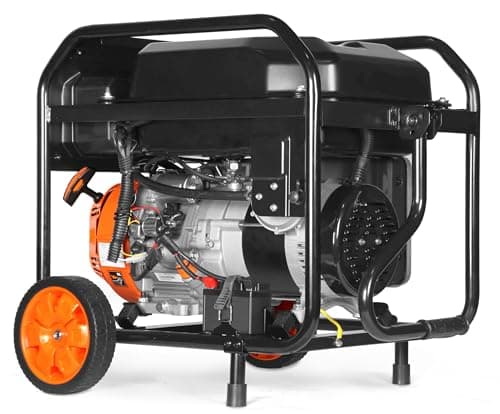
The variables that drive generator price, the connection cost people forget, and where the money is best spent.
Guide
What Size Generator Do I Need?
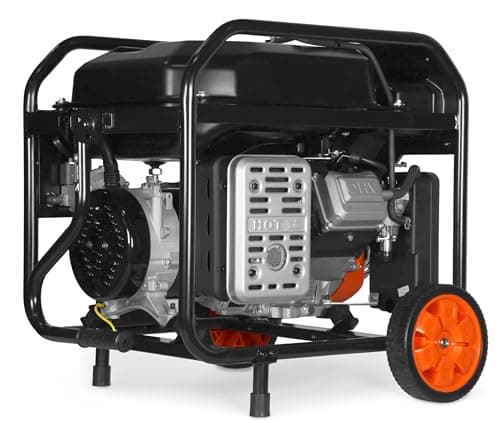
The core sizing method: total running watts, add the single biggest surge, derate for continuous running, then match a wattage class.
Best Tri-Fuel
Best Tri-Fuel Generators
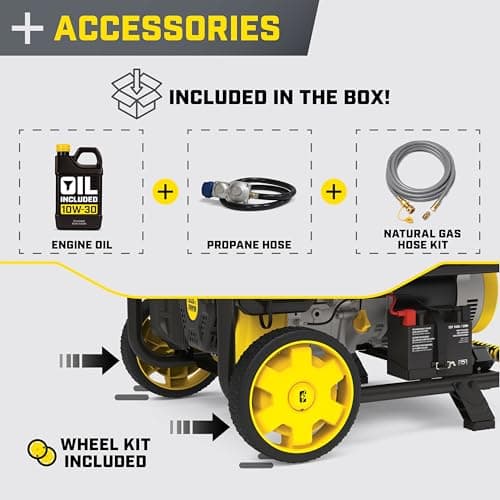
Tri-fuel generators with all three fuels' published running watts, and the natural gas derating stated plainly.
Top pick · Champion 12,500W Tri-Fuel Home Backup
$1,259.99View on Amazon