Generator Sizing
What Size Generator for a House?
Four common house types, worked through properly. The answer swings from 2,000 to 12,000 running watts, and heating type is the biggest single variable.
Written byMike M.
Published
Disclosure: we earn a commission on purchases made through links on this page, at no cost to you. It does not affect what we recommend or what we say about it — how we are funded.
The short answer
| House type | Running watts needed | Generator class |
|---|---|---|
| Gas heat, city water, no AC | ~1,750 W | Quiet inverter, 2,000-3,500 W |
| Gas heat, well pump, sump pump | ~4,400 W | Dual fuel, 5,000-6,500 W |
| Above plus a window AC | ~8,500 W | Portable, 8,000-10,000 W |
| Central air or electric heat | 11,000 W+ | Tri-fuel, 11,000 W+ |
Running watts after the 80% continuous-load derating. Built from the published figures on our appliance wattage chart.
"What size generator for a house" has no single answer, because houses differ on exactly the variables that matter. The two that matter most are how the house heats and where the water comes from. Everything else is a rounding error by comparison.
Type 1: gas heat, city water, no air conditioning
The easiest house to back up, and more common than people expect. A gas furnace needs only its blower and controls powered, and city water arrives under municipal pressure whether or not your house has electricity.
Simultaneous load
- Refrigerator
- 700 W
- Furnace blower, 1/3 HP
- 700 W
- LED lighting
- 150 W
- Modem, router, phones
- 100 W
- Total running
- 1,650 W
- Largest surge (fridge)
- +2,200 W
- Starting watts needed
- 3,850 W
- Derated running minimum
- 2,100 W
2,100 running watts with 3,850 starting watts. A 3,500 running-watt quiet inverter generator covers this with large headroom — or, if your outages are short, a 2 kWh battery power station does it indoors and silently. This is the house where a generator is often the wrong purchase.
Type 2: gas heat, well pump, sump pump
Now the surge matters. A well pump and a sump pump both have motors, and losing either one has consequences — no water at all, or a flooded basement.
Simultaneous load
- Refrigerator
- 700 W
- Furnace blower, 1/3 HP
- 700 W
- Well pump, 1/3 HP
- 1,000 W
- Sump pump, 1/3 HP
- 800 W
- Lighting + electronics
- 300 W
- Total running
- 3,500 W
- Largest surge (fridge)
- +2,200 W
- Starting watts needed
- 5,700 W
- Derated running minimum
- 4,400 W
This is the classic American essential-circuit house and it wants a 5,000-6,500 running-watt dual fuel generator through a 30 amp transfer switch. Note that the fridge's surge still dominates — the well pump's 2,000 watt surge is second, so the fridge sets the starting requirement.
One caution: EWEB publishes figures for a 1/3 HP well pump. If yours is 1/2 HP or larger — and many deep wells are — the surge is substantially higher and you should read generator size for well pump before settling on a machine.
Type 3: add a window air conditioner
One window unit changes the picture considerably, and the two charts we cite disagree sharply about by how much — which is itself the lesson.
| Source | Window AC running watts | Additional starting watts |
|---|---|---|
| EWEB (12,000 BTU unit) | 3,250 | 3,950 |
| Champion (unspecified window unit) | 1,200 | 2,000 |
Taking EWEB's larger figure, the Type 2 house plus a 12,000 BTU window unit is 6,750 running watts, and the AC's 3,950 watt surge now exceeds the fridge's, so starting watts become 10,700. After derating: about 8,500 running watts.
That is an 8,000-10,000 running-watt portable generator, and at that level a 30 amp transfer switch becomes the bottleneck. Plan a 50 amp connection or an interlock kit.
Type 4: central air, electric heat, or both
Here we stop and tell you what we do not know. Neither published chart we cite gives central air conditioning figures, and we are not going to invent them for the load that most often decides which generator somebody buys.
What you do instead: read the nameplate on the outdoor condenser unit. It gives voltage and running amps — multiply for running watts — and often LRA, locked rotor amps, which is the start-up surge. A 3-ton residential system is commonly in the region of 3,500 running watts with a much larger surge, but your plate is the authority, not a generic figure.
Add that to the Type 2 or Type 3 total and you will generally land above 11,000 running watts, which means tri-fuel and a 50 amp connection. Before you commit to that, check whether a soft starter on the compressor brings you down a class — on the published claim of up to 70% startup reduction, it frequently does, and it costs far less than the next generator up.
Electric heat is a different and harder problem: resistive heating has no surge but draws its full rating continuously, and an electric furnace or water heater can exceed a portable generator's entire output on its own. The usual answer is to leave electric heat off the backup list and use a gas or propane space heater instead.
The short answer
One pick for each house type
| # | Product | Best for | Score | Price |
|---|---|---|---|---|
| 1 | 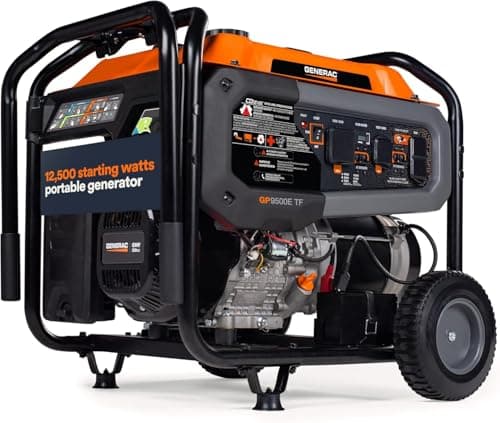 Generac 12,500W Starting Tri-Fuel The cheapest credible way to get a generator onto your home's natural gas line, which is the one fuel supply an outage usually does not interrupt. | Natural-gas hookup at the best price | 9.1/10 | $920.00 |
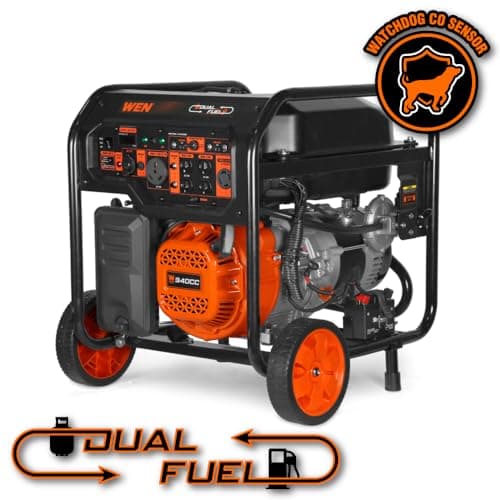
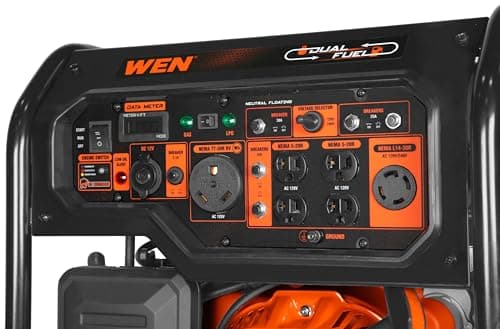
| 2 | 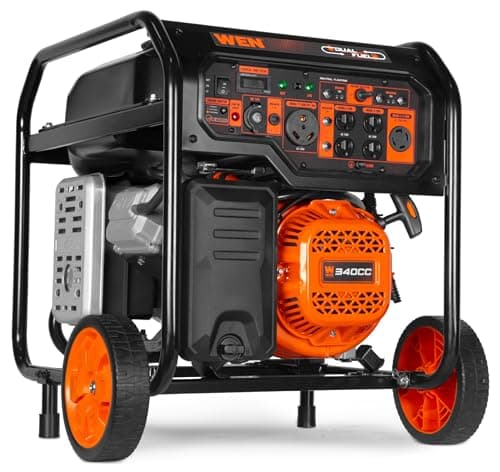 WEN DF8000X 8,000W Dual Fuel The best-value correctly-sized home backup generator here: enough for every essential circuit, dual fuel, CO shutoff, a real transfer-switch outlet, and no money spent on capacity you will not use. | Essential circuits, dual fuel, lowest cost | 8.5/10 | $623.17 |
| 3 | 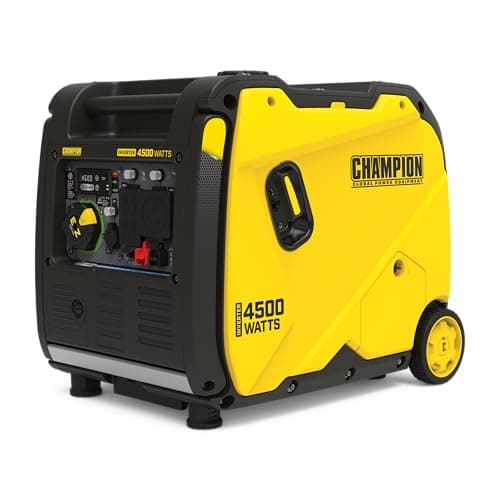 Champion 4,500W RV Ready Inverter The best balance of quiet, clean power and real output for cord-based backup: enough for the essentials, under 3% THD, half the price of the Honda equivalent. | Quiet backup at a sane price | 8.5/10 | $674.10 |
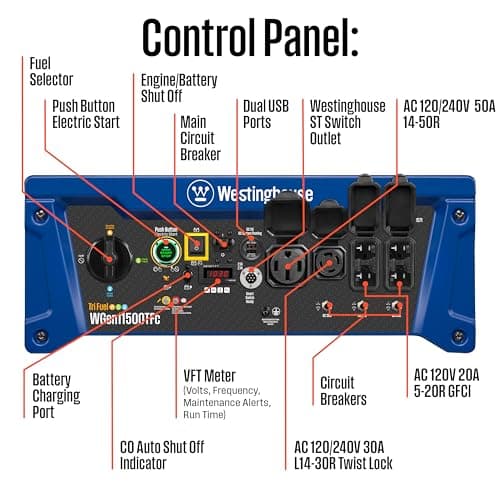
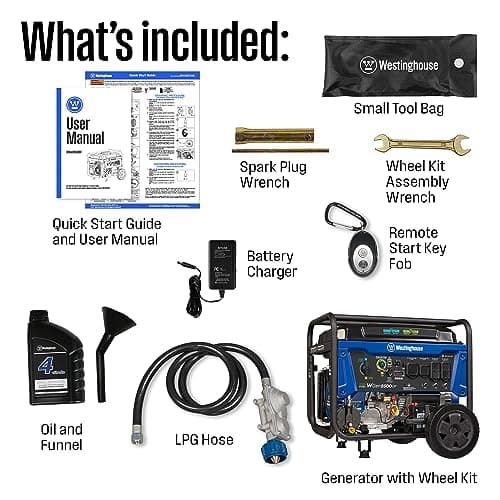
| 4 | 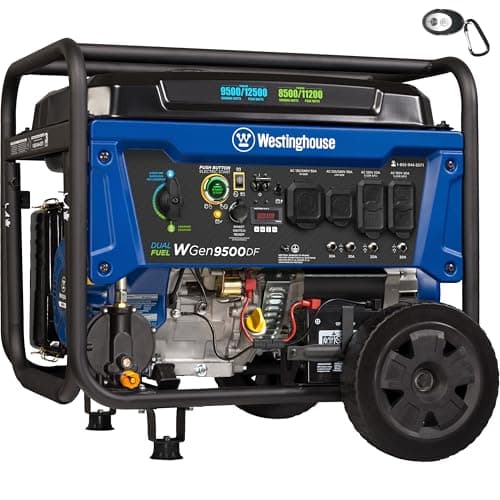 Westinghouse WGen9500DF 12,500W Dual Fuel The most broadly sensible home backup generator on the market: enough running watts for a whole essential-circuit panel, both transfer-switch outlets, and dual fuel — with the caveat that it has no CO shutoff. | The default whole-house pick | 8.8/10 | $999.00 |
#ad Prices as of October 5, 2026; they may have changed since. Scores are our editorial judgment from published specifications, not test results — how we pick. How we are funded.
Questions people actually ask
What size generator do I need for a 3 bedroom house?
Bedrooms do not determine it. A 3-bedroom house with gas heat and city water needs roughly 2,100 running watts for its essentials; the same house with a well pump and a sump pump needs about 4,400; add central air and it is above 11,000. The heating type and the water source are what decide it.
How many watts does it take to run a house on a generator?
For essential circuits only — fridge, heat, water, lighting, electronics — most houses land between 1,650 and 3,500 running watts before derating. Running a house in full, including air conditioning, electric cooking and laundry, is a different question and usually exceeds what a portable generator can deliver.
Will a 7500 watt generator run a whole house?
It will run every essential circuit in a house with gas heat, a well pump and a sump pump, with headroom. It will not add central air to that list. Note also that a 30 amp transfer switch caps throughput at about 7,200 watts, so a 7,500 watt machine is well matched to a 30 amp connection.
Do I need a bigger generator if my house is all-electric?
Yes, substantially, and it may not be practical with a portable machine at all. Resistive electric heat draws its full rating continuously — EWEB puts an electric water heater alone at 4,500 watts. Most all-electric homes leave heat and hot water off the backup list rather than buying a generator large enough for them.
Does house square footage affect generator size?
Only indirectly. Larger houses tend to have larger heating and cooling equipment, which is what actually drives the number. Two houses of identical size can need very different generators depending on gas versus electric heat and well versus city water.
Sources
- Eugene Water & Electric Board — Generator Sizing ConsiderationsPublic-utility wattage chart: the running and additional-starting figures quoted on this page, and the add-the-single-largest-surge method.
- Champion Power Equipment — Quick Reference WattageManufacturer wattage chart: the second published figure wherever it differs from EWEB's, and the kitchen and laundry loads EWEB does not list.
Read next
Guide
What Size Generator Do I Need?
The core sizing method: total running watts, add the single biggest surge, derate for continuous running, then match a wattage class.
Guide
What Size Generator for a Well Pump?
Well pump sizing from the published 1/3 HP figures, what changes on larger pumps, and the soft-starter route.
Guide
What Size Generator to Run an Air Conditioner?
Window AC sizing from two published charts that disagree sharply, central AC guidance from the nameplate, and the soft-starter alternative.
Reference
Appliance Wattage Chart
The site's reference wattage table, with each row's source named and both figures shown wherever the published charts disagree.
Best Dual Fuel
Best Dual Fuel Generators for Home Backup
Dual fuel generators ranked on both fuels' published running watts, with the brands that decline to publish propane figures named.
Top pick · Westinghouse WGen9500DF 12,500W Dual Fuel
$999.00View on Amazon