Comparisons
Dual Fuel vs Tri-Fuel vs Gasoline
Published per-fuel output for every machine that states it, and the one question that decides which you should buy.
Written byMike M.
Published
Disclosure: we earn a commission on purchases made through links on this page, at no cost to you. It does not affect what we recommend or what we say about it — how we are funded.
The short answer
Gasoline gives the most output and the worst storage — it degrades in months. Dual fuel adds propane, which stores indefinitely, for about 10% of the output. Tri-fuel adds natural gas, which never runs out, for 15-25%. The question that decides it: do you have a natural gas line at the house? If yes, buy tri-fuel. If no, buy dual fuel. Buy gasoline-only only if you will genuinely use the machine often enough to rotate the fuel.
Every published per-fuel figure, in one table
| Machine | Gasoline | Propane | Natural gas |
|---|---|---|---|
| Champion 12,500 W tri-fuel | 10,000 W | 9,000 W | 8,000 W |
| WEN TF-1450X tri-fuel | 11,500 W | 10,300 W | 8,750 W |
| Westinghouse WGen11500TFc | 11,500 W | 10,500 W | 9,500 W |
| Westinghouse WGen10500DFc | 10,500 W | 9,500 W | — |
| Westinghouse WGen9500DF | 9,500 W | 8,500 W | — |
| Champion 11,500 W dual fuel | 9,200 W | 8,280 W | — |
| WEN DF1100T | 8,300 W | 7,500 W | — |
| WEN DF8000X | 6,500 W | 5,850 W | — |
| Generac 8,125 W | 6,500 W | — | — |
Two patterns to extract. Propane costs about 10%, remarkably consistently — every machine that publishes both lands within a point of it. Natural gas costs 15-25%, and the spread is wider: Westinghouse's WGen11500TFc loses 17%, Champion's 12,500 W loses 20%, WEN's TF-1450X loses 24%.
If natural gas will be your primary fuel, that third column is your sizing figure. A machine advertised at 12,500 watts is an 8,000 running-watt generator on gas, and sizing from the headline leaves you short.
Gasoline: most output, worst storage
Gasoline has the highest energy density of the three, so it gives the most watts from a given engine and the longest runtime per gallon.
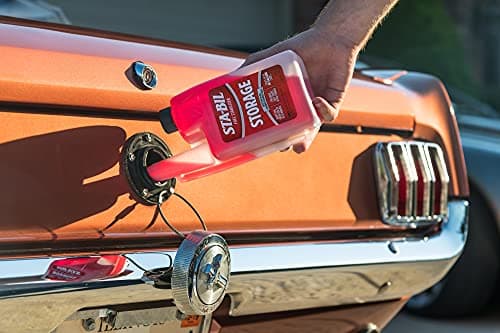
Its weakness is specific and very common. Modern pump gasoline contains ethanol, which draws moisture from the air; the fuel oxidizes and leaves gums and varnish in a carburetor's small passages. STA-BIL states its storage stabilizer keeps gasoline fresh for up to 24 months — an admission about how short untreated fuel's life is.
Since a backup generator spends 99% of its life not running, fuel storage is its dominant real-world failure mode. Which is why gasoline-only is defensible only if you will genuinely use the machine regularly.
Dual fuel: the sensible default
Propane in a sealed tank does not degrade. Not in a year, not in five. No stabilizer, no rotation schedule, no gummed carburetor.
Secondary advantages worth having: swapping a tank involves no liquid fuel near a hot engine, which is safer than pouring gasoline in the dark; propane generally burns cleaner; and propane exchange cages do not need electricity, so they are often accessible when gas station pumps are dead.
Check whether the hose is included — Westinghouse's WGen5300DFc listing states it is, and several machines leave it out. A two-stage regulator is worth buying regardless, because it holds output pressure steady as the tank empties.
Tri-fuel: the real upgrade, if you have a line
Natural gas arrives by pipe, so runtime stops being a planning problem entirely. No refueling at 3am, no jerry cans, no tank swaps. Generac's tri-fuel listing puts it directly: connect to a natural gas line for virtually unlimited runtime.
For anyone expecting multi-day outages, that is the single most consequential feature on this site — more consequential than brand, noise or output.
Champion's 12,500 W tri-fuel is worth singling out because it includes both the natural gas and propane hoses in the box, which is unusual and removes a delivery-day disappointment.
The short answer
The best tri-fuel, dual fuel and gasoline-only machines
| # | Product | Best for | Score | Price |
|---|---|---|---|---|
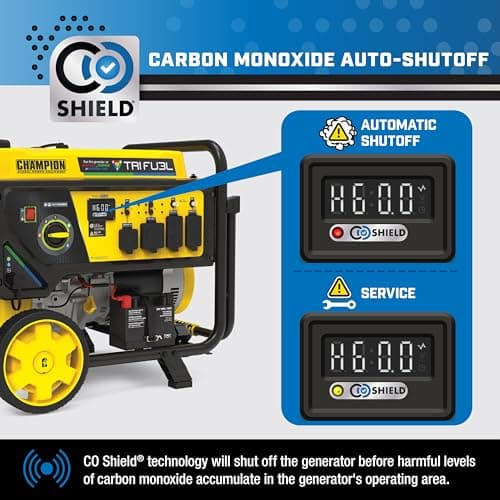
| 1 | 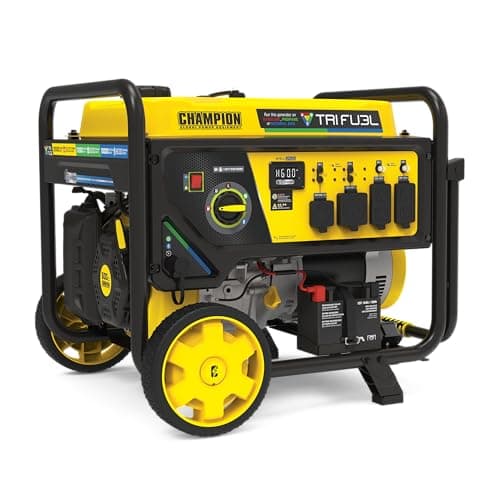 Champion 12,500W Tri-Fuel Home Backup The most complete tri-fuel package on the shelf: three fuels, both hoses, every output figure published, CO shutdown included. | Tri-fuel with both hoses in the box | 9.0/10 | $1,259.99 |
| 2 | 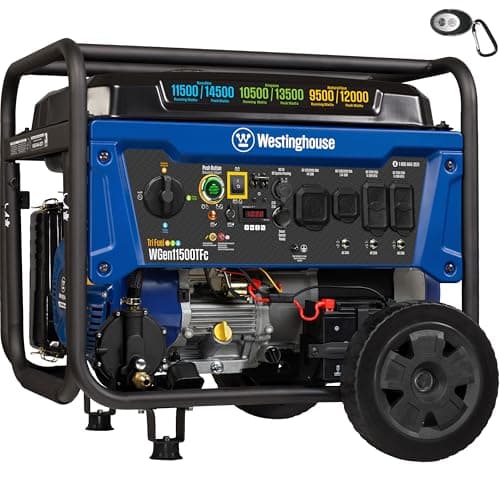 Westinghouse WGen11500TFc 14,500W Tri-Fuel Buy this when the sizing math genuinely lands above 10,000 running watts — not because bigger feels safer. | Larger homes with real 240V loads | 8.9/10 | $1,499.00 |
| 3 | 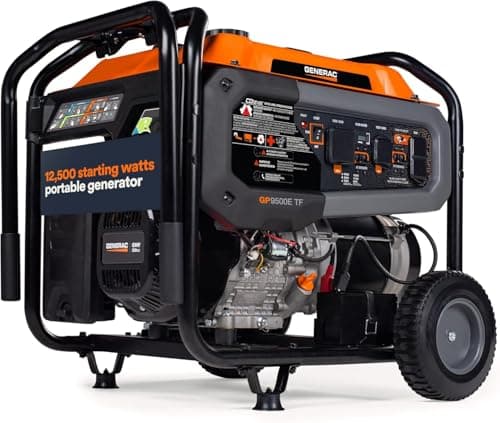 Generac 12,500W Starting Tri-Fuel The cheapest credible way to get a generator onto your home's natural gas line, which is the one fuel supply an outage usually does not interrupt. | Natural-gas hookup at the best price | 9.1/10 | $920.00 |
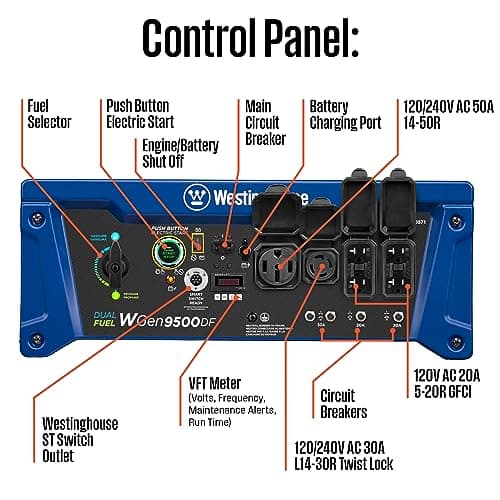
| 4 | 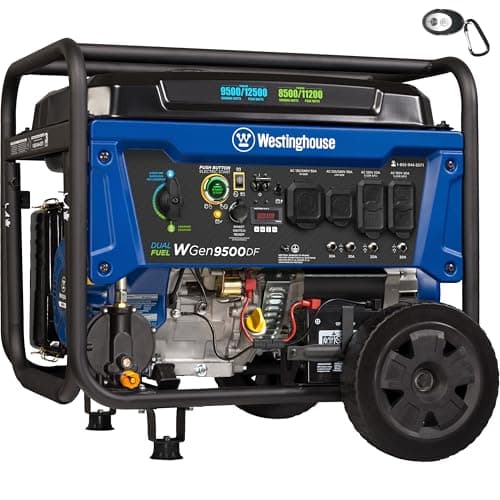 Westinghouse WGen9500DF 12,500W Dual Fuel The most broadly sensible home backup generator on the market: enough running watts for a whole essential-circuit panel, both transfer-switch outlets, and dual fuel — with the caveat that it has no CO shutoff. | The default whole-house pick | 8.8/10 | $999.00 |
| 5 | 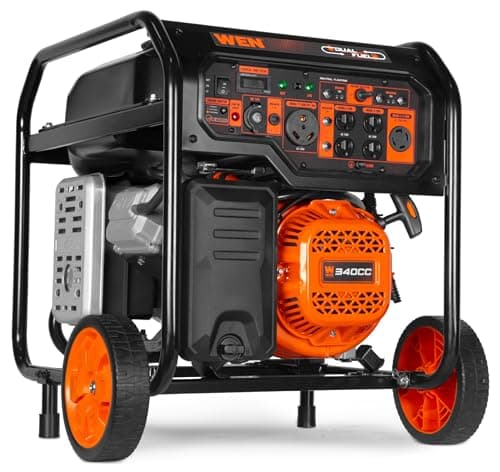 WEN DF8000X 8,000W Dual Fuel The best-value correctly-sized home backup generator here: enough for every essential circuit, dual fuel, CO shutoff, a real transfer-switch outlet, and no money spent on capacity you will not use. | Essential circuits, dual fuel, lowest cost | 8.5/10 | $623.17 |
| 6 | 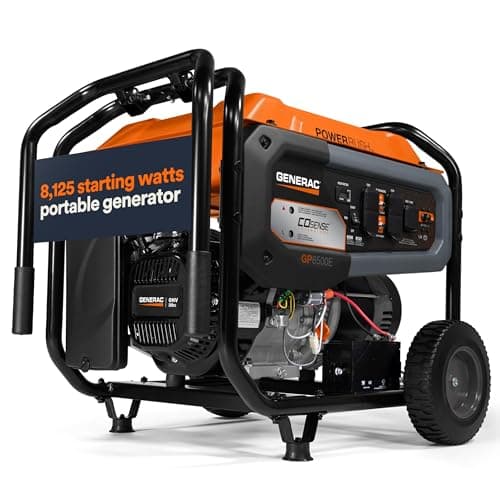 Generac 8,125W Starting Portable The right size for most people who think they need 10,000 watts: enough running capacity for every essential circuit, with surge headroom for motor startup. | Essential circuits on a budget | 7.8/10 | $899.00 |
#ad Prices as of October 5, 2026; they may have changed since. Scores are our editorial judgment from published specifications, not test results — how we pick. How we are funded.
The decision, in one question
Which to buy
- Natural gas line at the house?
- Tri-fuel
- No gas line, stored machine
- Dual fuel
- Used regularly, fuel rotated
- Gasoline is fine
- Already own dual fuel + have gas
- A conversion kit
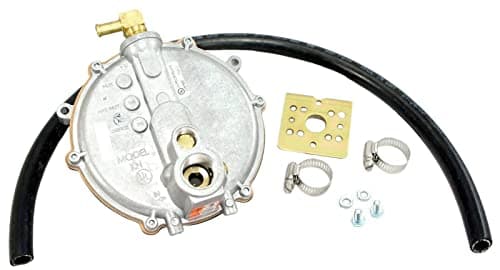
That last row is the cheap route: a model-specific conversion kit uses the carburetor's existing port, is reversible with no permanent modification, and costs a fraction of the dual-to-tri-fuel price difference. Its drawback is that the derating is usually unpublished.
Detail on each: is a dual fuel generator worth it, best tri-fuel generators, converting a generator.
Questions people actually ask
What is the difference between dual fuel and tri-fuel generators?
Dual fuel runs on gasoline and propane; tri-fuel adds natural gas. Natural gas is the genuinely different one because it arrives by pipe and does not run out, which removes refueling from your outage plan entirely.
How much power do you lose on each fuel?
Propane costs about 10% of the gasoline rating, consistently across every machine that publishes both. Natural gas costs 15-25% — Westinghouse's WGen11500TFc loses 17%, Champion's 12,500 W loses 20%, WEN's TF-1450X loses 24%.
Should I buy tri-fuel if I have no gas line?
No. The third fuel is capability you will never use, and the money is better spent on a dual fuel machine with more running watts or on the transfer switch. Dual fuel is the correct default without a gas supply.
Is gasoline-only ever the right choice?
Yes, if you will genuinely use the machine often enough that the fuel is rotated and never has the chance to degrade. You get about 10% more output and one fewer fuel system to maintain. Buy stabilizer at the same time regardless.
Which brands publish all three fuels' output?
Champion, WEN and Westinghouse publish all three on their tri-fuel machines. DuroMax, DuroStar and Generac's tri-fuel do not state per-fuel running figures on their listings, which means sizing for a non-gasoline fuel on those machines is guesswork.
Can I add natural gas to a dual fuel generator?
Often, with a model-specific conversion kit that uses the carburetor's existing port and is reversible with no permanent modification. Two caveats: the output derating is usually unpublished, and the house-side gas connection is licensed gas work.
Sources
- STA-BIL Storage Fuel Stabilizer — manufacturer listingThe 24-month treated-gasoline claim, cited as evidence of untreated fuel's short storage life.
- Eugene Water & Electric Board — Generator Sizing ConsiderationsPublished appliance running and additional-starting watt figures used in the load arithmetic on this page.
Read next
Best Tri-Fuel
Best Tri-Fuel Generators
Tri-fuel generators with all three fuels' published running watts, and the natural gas derating stated plainly.
Top pick · Champion 12,500W Tri-Fuel Home Backup
$1,259.99View on Amazon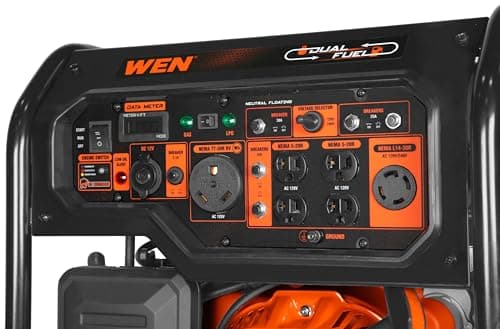
Guide
Is a Dual Fuel Generator Worth It?
The real argument for dual fuel — fuel storage, not running cost — plus the honest case against it.
Comparison
Propane vs Gasoline for a Generator
The honest propane-versus-gasoline comparison: energy density, output penalty, storage life and refueling safety.
Guide
Converting a Generator to Propane or Natural Gas
How generator conversion kits work, their unpublished output cost, and which half of the job is licensed gas work.
Guide
Generator Fuel Storage and Stabilizer
Fuel degradation, stabilizer shelf-life claims, safe storage quantities and containers, and the propane alternative.