Power Stations
Best Power Station for a Refrigerator
Surge rating decides whether it works at all. Idle draw and UPS switchover decide whether it works well.
Written byMike M.
Published
Disclosure: we earn a commission on purchases made through links on this page, at no cost to you. It does not affect what we recommend or what we say about it — how we are funded.
The short answer
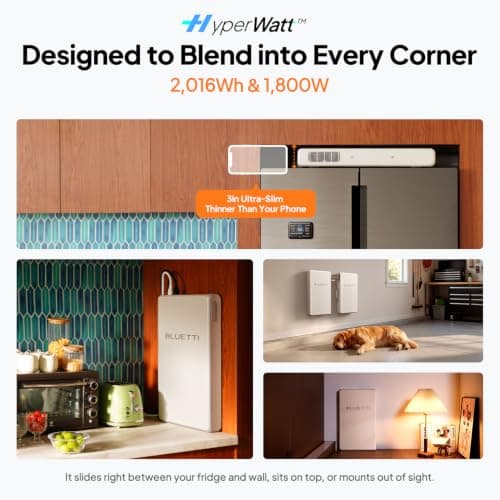
Bluetti's FridgePower is purpose-built for this and wins: 2,016 Wh, a 4 W standby draw, a 10 ms UPS switchover, a 75 mm slim case designed to sit behind a fridge, and a storm alert that fast-charges it before weather arrives. EcoFlow's DELTA 3 Classic is the value pick with 1,800 W output, 3,600 W surge and sub-10 ms UPS at around half the capacity. Both published charts put a fridge's start-up surge at 2,200 W — that is the gate.
Keeping the refrigerator alive is the single most common reason people buy a power station, and it is a load batteries are genuinely well suited to: small running draw, cycling duty, and a hard requirement to run indoors and quietly.
The short answer
Quick picks
| # | Product | Best for | Score | Price |
|---|---|---|---|---|
| 1 | 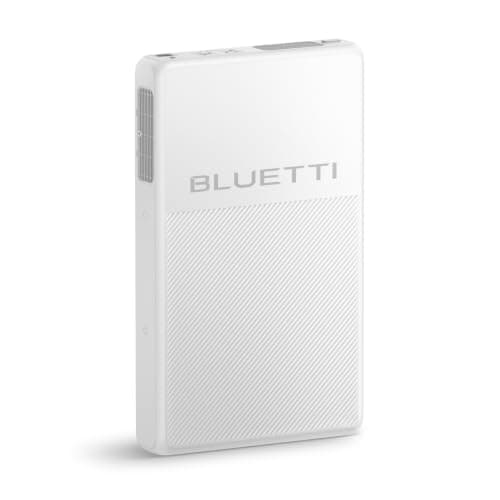 Bluetti FridgePower If the problem you are solving is specifically the refrigerator, this is the unit designed for that problem — the 4 W standby and storm auto-charge are genuine engineering answers to it. | Purpose-built refrigerator backup | 9.0/10 | $899.00 |
| 2 | 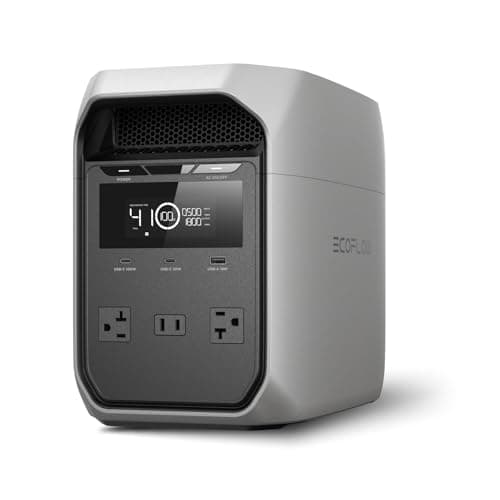 EcoFlow DELTA 3 Classic The best-value battery on the site: UPS-grade switchover, 1,800 W and a 45-minute recharge for roughly half what the 2 kWh units cost. | Best value 1 kWh with UPS | 8.6/10 | $499.00 |
| 3 | 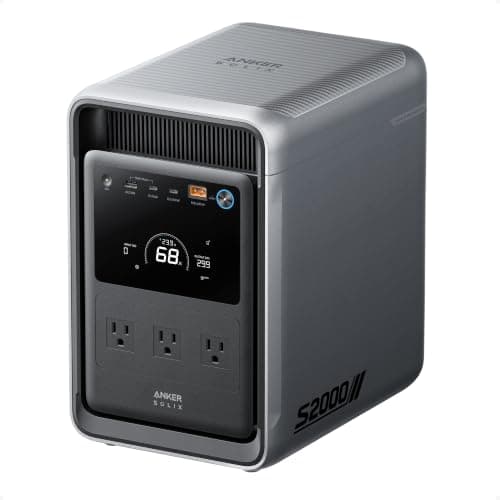 Anker SOLIX S2000 The endurance choice: the lowest idle draw and the longest cycle life here, with an output ceiling deliberately traded away to get them. | Longest fridge runtime per watt-hour | 8.7/10 | $679.99 |
| 4 | 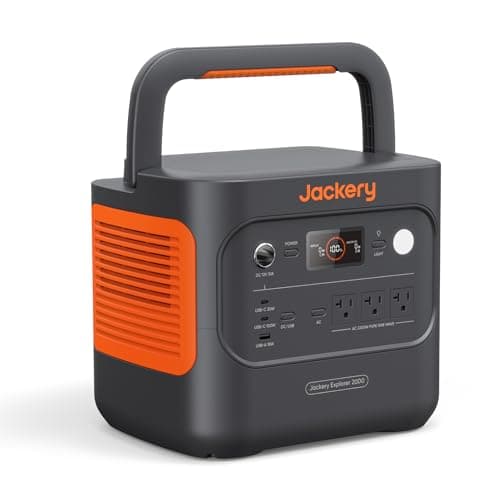 Jackery Explorer 2000 v2 The most sensible battery backup for most homes: enough capacity to carry a fridge and electronics through a typical outage, indoors, silently. | The default 2 kWh home backup battery | 8.9/10 | $898.99 |
| 5 | 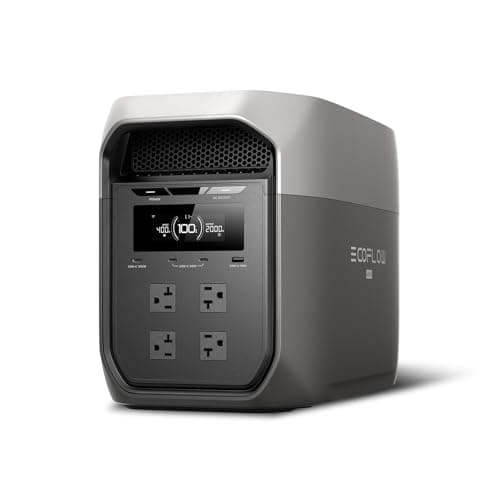 EcoFlow DELTA 3 Max The best battery here for keeping specific things running without interruption — the sub-10 ms transfer is a real functional difference, not a spec-sheet flourish. | UPS-grade switchover for a fridge | 8.8/10 | $879.00 |
| 6 | 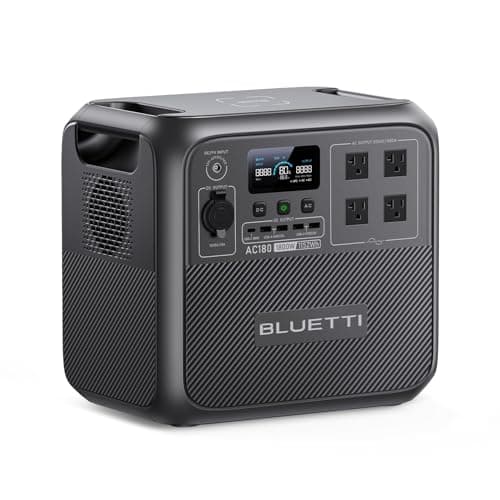 Bluetti AC180 The cheapest battery that will actually run a refrigerator overnight, with solar input as its main compromise. | 1.1 kWh at the lowest price | 8.0/10 | $449.00 |
| 7 | 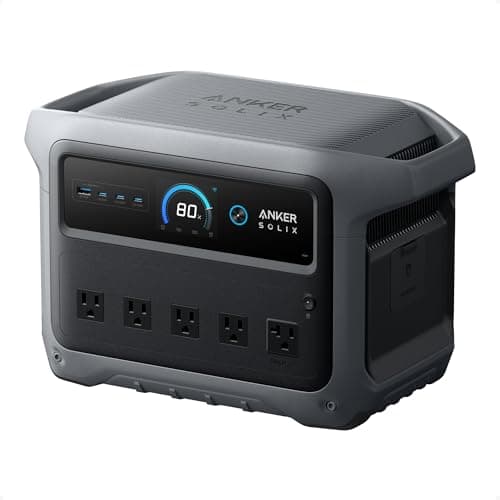 Anker SOLIX C1000 Gen 2 The right 1 kWh battery if your problem is short high-draw bursts rather than long low-draw endurance — and the fastest refill here by a wide margin. | Fastest 1 kWh recharge | 8.5/10 | $499.99 |
#ad Prices as of October 5, 2026; they may have changed since. Scores are our editorial judgment from published specifications, not test results — how we pick. How we are funded.
The gate: 2,200 watts of surge
What a refrigerator demands, published
- Running watts
- 700 W (EWEB) / 400 W (Champion)
- Additional starting watts
- 2,200 W (both charts agree)
- Surge rating to be confident
- ~3,000 W
- Average draw (cycling)
- Far below running watts
The running figures differ between the two published charts; the 2,200 W surge does not. With inverter overhead, a 3,000 W surge rating is what makes starting reliable.
So a unit with 1,500 W of surge will not reliably do this regardless of its capacity. Anker's SOLIX S2000 publishes 1,500 W of output and is still on this list — because of what comes next.
The feature that removes the surge problem entirely
UPS switchover under 10 milliseconds. EcoFlow's DELTA 3 Max and DELTA 3 Classic and Bluetti's FridgePower all publish it. The fridge is plugged into the unit permanently, the grid fails, and the compressor never stops — so it never has to restart, and the 2,200 watt surge never happens.
That is not a convenience feature. It converts a marginal unit into a comfortable one and it means the fridge's internal temperature never rises at all. For this load it is the most valuable specification in the category.
Idle draw, for a unit you leave plugged in
If the point is to have the fridge permanently behind the battery, the battery's own standby consumption matters. Most units waste 20-30 watts doing nothing, which is real money over a year and tells you how seriously the unit was engineered.
| Unit | Published idle draw | Manufacturer runtime claim |
|---|---|---|
| Bluetti FridgePower | 4 W | 26% longer runtime as a result |
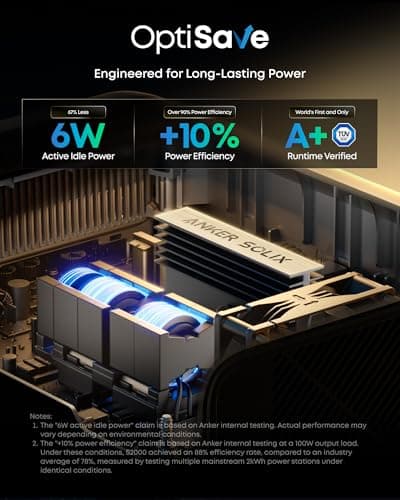
| Anker SOLIX S2000 | 6 W | Up to 35 hours of fridge backup |
| Others here | Not published | — |
How long, with our arithmetic shown
| Capacity | Fridge alone | Fridge + chest freezer |
|---|---|---|
| 1,024 Wh | ~15-20 hours | ~8-10 hours |
| 1,152 Wh | ~17-22 hours | ~9-11 hours |
| 2,016-2,048 Wh | ~30-40 hours | ~15-20 hours |
| 2,304 Wh | ~34-45 hours | ~17-22 hours |
Worth setting against FoodSafety.gov's guidance: an unopened refrigerator holds safe temperatures for about 4 hours and a full freezer for about 48. So a 2 kWh unit does not need to cover a 48-hour outage for the freezer — the freezer covers itself. It needs to cover the fridge, which is the appliance with only four hours of grace.
Why the FridgePower rather than a general-purpose unit
Because every one of its design choices targets this load. The 4 W standby makes permanent connection sensible. The 10 ms UPS means the compressor never stops. The 75 mm case actually fits where a fridge lives instead of becoming a floor obstacle. And the storm alert that triggers its own fast charge when severe weather is forecast means it is full on the day without anyone remembering.
Its cost is versatility: the slim purpose-built shape is less useful for camping or a job site than a conventional box, and its 1,800 W ceiling is built for a fridge rather than for the house. If you want one unit for several jobs, buy the Jackery or the EcoFlow instead.
- Capacity
- 2,016 Wh
- AC output
- 1,800 W
- Standby draw
- 4 W (mfr)
#1 · Purpose-built refrigerator backup
Bluetti FridgePower
If the problem you are solving is specifically the refrigerator, this is the unit designed for that problem — the 4 W standby and storm auto-charge are genuine engineering answers to it.
#ad Price as of October 5, 2026; it may have changed since. How we are funded.
What is good
- 4 W standby draw is the specification that matters most for a device left plugged in for months — most power stations waste 20-30 W doing nothing
- The storm alert auto-charge is the single most practically useful feature on any battery here: it tops itself up before the outage
- 75 mm deep means it actually fits where a fridge lives, instead of becoming a floor obstacle
What is not
- 1,800 W ceiling — it is built for a fridge, not for the house
- Purpose-built shape makes it less useful for camping or job-site duty than a conventional unit
- Requires the app and a network connection for the storm-alert feature to work
Published specification & our scoring
- 2,016 Wh LFP battery, 1,800 W output (manufacturer)
- Ultra-low 4 W standby consumption; manufacturer states 26% longer runtime as a result
- DualGuard UPS with a 10 ms switch to battery (manufacturer)
- 75 mm slim design purpose-built to sit beside or behind a refrigerator (manufacturer)
- Storm alert push notifications that trigger automatic fast charging; Alexa and Google Home (manufacturer)
- Published weight 41.9 lb
- Usable capacity
- 9
- Standby efficiency
- 10
- UPS behavior
- 10
- Output ceiling
- 7
- Form factor
- 10
- Value
- 8
Specification figures are the manufacturer’s published values. Scores are our editorial judgment from those figures and are never published as structured review data — how we pick.
- Capacity
- 1,024 Wh
- AC output
- 1,800 W / 3,600 W surge
- Switchover
- Under 10 ms (mfr)
#2 · Best value 1 kWh with UPS
EcoFlow DELTA 3 Classic
The best-value battery on the site: UPS-grade switchover, 1,800 W and a 45-minute recharge for roughly half what the 2 kWh units cost.
#ad Price as of October 5, 2026; it may have changed since. How we are funded.
What is good
- UPS behavior at a 1 kWh price point — you can put the fridge or the home office behind it permanently
- 1,800 W continuous is higher than Jackery's 1,500 W at similar capacity
- 45 minutes to 80% and 26.7 lb
What is not
- 1,024 Wh is a single night of fridge duty, not a weekend
- X-Boost's surge figure does not apply to motor loads
- No expansion battery option on the Classic
Published specification & our scoring
- 1,024 Wh, 1,800 W output with 3,600 W surge via X-Boost (manufacturer)
- 0-80% in 45 minutes with X-Stream AC charging (manufacturer)
- Under 10 ms UPS switchover (manufacturer)
- LiFePO4 cells rated for 10+ years of daily use, EV-grade cell-to-chassis design (manufacturer)
- Published weight 26.7 lb
- Usable capacity
- 6
- Output ceiling
- 7
- UPS behavior
- 10
- Recharge speed
- 10
- Portability
- 9
- Value
- 10
Specification figures are the manufacturer’s published values. Scores are our editorial judgment from those figures and are never published as structured review data — how we pick.
- Capacity
- 2,010 Wh
- AC output
- 1,500 W
- Cycles
- 10,000 LFP (mfr)
#3 · Longest fridge runtime per watt-hour
Anker SOLIX S2000
The endurance choice: the lowest idle draw and the longest cycle life here, with an output ceiling deliberately traded away to get them.
#ad Price as of October 5, 2026; it may have changed since. How we are funded.
What is good
- 10,000 cycles is more than three times what most LiFePO4 power stations claim — this is a buy-once battery
- A 6 W idle draw makes it one of the few units that is sensible to leave plugged in permanently
- The manufacturer's 35-hour fridge figure is the longest claim of any 2 kWh unit here
What is not
- 1,500 W output is the lowest of the 2 kWh units — it is built for endurance, not for appliances
- No published UPS switchover time
- Anker does not publish a weight on this listing
Published specification & our scoring
- 2,010 Wh capacity, 1,500 W AC output (manufacturer)
- Manufacturer states up to 35 hours of fridge backup, from a 6 W idle draw and 10% higher efficiency
- 314Ah LFP cells rated 10,000 cycles with a stated 15-year lifespan (manufacturer)
- Manufacturer states it is 30% smaller and 25% lighter than the industry average 2 kWh unit
- Usable capacity
- 9
- Cycle life
- 10
- Standby efficiency
- 10
- Output ceiling
- 5
- Recharge speed
- 7
- Value
- 10
Specification figures are the manufacturer’s published values. Scores are our editorial judgment from those figures and are never published as structured review data — how we pick.
- Capacity
- 2,042 Wh
- AC output
- 2,200 W
- Weight
- 39.5 lb
#4 · The default 2 kWh home backup battery
Jackery Explorer 2000 v2
The most sensible battery backup for most homes: enough capacity to carry a fridge and electronics through a typical outage, indoors, silently.
#ad Price as of October 5, 2026; it may have changed since. How we are funded.
What is good
- 2,042 Wh runs a modern fridge for roughly a day and a half of cycling — the single most useful thing a battery does in an outage
- 39.5 lb for 2 kWh is genuinely carryable by one person, which no generator at equivalent usefulness is
- Zero exhaust means it runs indoors, which is the entire point versus a generator
- 66 minutes to 80% means you can top it up fast from a generator or during a brief grid restoration
What is not
- 2,200 W will not start a well pump or run central air — motor loads are where batteries lose to generators
- Once it is empty it is empty: without solar or a generator to recharge it, a multi-day outage outlasts it
- Costs about the same as a 9,500-running-watt dual fuel generator with ten times the output
Published specification & our scoring
- 2,042 Wh capacity, 2,200 W total AC output across three AC ports (manufacturer)
- 0-80% in 66 minutes on AC fast charging (manufacturer)
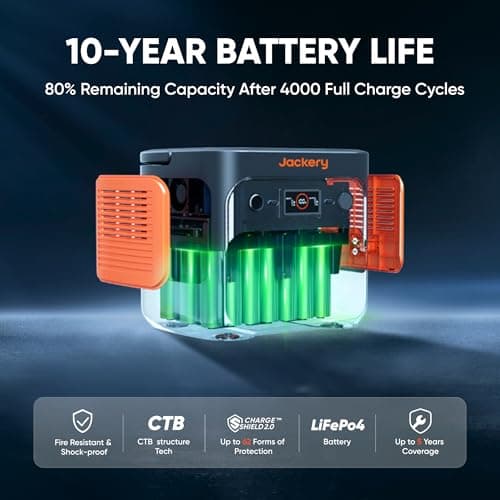
- LiFePO4 battery rated for up to 10 years (manufacturer)
- Silent Charging Mode under 30 dB (manufacturer)
- Published weight 39.5 lb — manufacturer states it is the lightest 2 kWh unit
- App control
- Usable capacity
- 9
- Output ceiling
- 7
- Recharge speed
- 10
- Cycle life
- 9
- Portability
- 9
- Value
- 9
Specification figures are the manufacturer’s published values. Scores are our editorial judgment from those figures and are never published as structured review data — how we pick.
- Capacity
- 2,048 Wh
- AC output
- 2,400 W / 3,400 W boost
- Switchover
- Under 10 ms (mfr)
#5 · UPS-grade switchover for a fridge
EcoFlow DELTA 3 Max
The best battery here for keeping specific things running without interruption — the sub-10 ms transfer is a real functional difference, not a spec-sheet flourish.
#ad Price as of October 5, 2026; it may have changed since. How we are funded.
What is good
- A sub-10 ms switchover means plugged-in equipment never notices the outage — this is what makes it genuinely usable for a fridge, a modem or a home office
- 3,400 W in X-Boost handles appliances the 2,400 W rating would reject
- Usually cheaper than the DELTA 2 Max it replaces
What is not
- X-Boost works by reducing voltage to resistive loads; it is not a true 3,400 W inverter and should not be relied on for motors
- Slower AC recharge than the DELTA 2 Max (1.13 h versus 43 min to 80%)
- EcoFlow does not publish a weight for this listing
Published specification & our scoring
- 2,048 Wh LFP battery, 2,400 W output (manufacturer)
- Up to 3,400 W continuous in X-Boost mode (manufacturer)
- Under 10 ms transfer time for home backup (manufacturer)
- 0-80% in 1.13 hours with X-Stream charging (manufacturer)
- Manufacturer states a 10-year daily-use design life
- Usable capacity
- 9
- Output ceiling
- 8
- UPS behavior
- 10
- Recharge speed
- 8
- Cycle life
- 9
- Value
- 9
Specification figures are the manufacturer’s published values. Scores are our editorial judgment from those figures and are never published as structured review data — how we pick.
- Capacity
- 1,152 Wh
- AC output
- 1,800 W / 2,700 W peak
- Recharge
- 1 h at 1,440 W (mfr)
#6 · 1.1 kWh at the lowest price
Bluetti AC180
The cheapest battery that will actually run a refrigerator overnight, with solar input as its main compromise.
#ad Price as of October 5, 2026; it may have changed since. How we are funded.
What is good
- 1,152 Wh and 1,800 W for well under $500 is the price floor for a battery that can genuinely carry a fridge overnight
- One-hour full recharge
- UPS function included
What is not
- 500 W solar input is half what the EcoFlow and larger Bluetti units accept
- Bluetti does not publish a cycle count for this model on the listing
- 37.4 lb for 1.1 kWh is heavy relative to Jackery's 23.8 lb for 1.07 kWh
Published specification & our scoring
- 1,152 Wh LiFePO4 battery, 1,800 W output with 2,700 W peak (manufacturer)
- Full recharge in one hour at 1,440 W AC input (manufacturer)
- 500 W solar input; 2.8-3.3 hours solar-only charge (manufacturer)
- Eight outlets; UPS function for emergency power (manufacturer)
- App control; published weight 37.4 lb
- Usable capacity
- 6
- Output ceiling
- 7
- Recharge speed
- 9
- Solar input
- 5
- Portability
- 7
- Value
- 10
Specification figures are the manufacturer’s published values. Scores are our editorial judgment from those figures and are never published as structured review data — how we pick.
- Capacity
- 1,024 Wh
- AC output
- 2,000 W / 3,000 W peak
- Recharge
- 49 min (mfr)
#7 · Fastest 1 kWh recharge
Anker SOLIX C1000 Gen 2
The right 1 kWh battery if your problem is short high-draw bursts rather than long low-draw endurance — and the fastest refill here by a wide margin.
#ad Price as of October 5, 2026; it may have changed since. How we are funded.
What is good
- 2,000 W continuous at 1 kWh is the highest output-to-capacity ratio here — it runs appliances other 1 kWh units refuse
- 49 minutes to full is the fastest recharge on the site
- 4,000 cycles with at least 80% remaining
What is not
- 1,024 Wh at 2,000 W draw is about 30 minutes — high output and small capacity is a short-runtime combination
- No expansion battery for this generation
- No published UPS switchover time
Published specification & our scoring
- 1,024 Wh capacity, 2,000 W output with 3,000 W peak across 10 ports (manufacturer)
- Full recharge in 49 minutes at 1,600 W with HyperFlash (manufacturer)
- InfiniPower: at least 80% capacity after 4,000 cycles, 10-year design life (manufacturer)
- Manufacturer states it is 14% smaller than the previous generation
- Published weight 24.9 lb
- Output ceiling
- 9
- Recharge speed
- 10
- Cycle life
- 10
- Usable capacity
- 6
- Portability
- 10
- Value
- 9
Specification figures are the manufacturer’s published values. Scores are our editorial judgment from those figures and are never published as structured review data — how we pick.
Questions people actually ask
What size power station do I need to run a refrigerator?
At least 3,000 watts of surge rating, because both published charts put a fridge's start-up surge at 2,200 watts. For duration, 1,024 Wh gives roughly 15-20 hours of cycling and 2,042 Wh roughly 30-40 hours on our arithmetic.
Will a 1000 watt power station run a fridge?
Only if its surge rating covers the compressor's 2,200 watt start-up — check the peak figure, not the continuous one. Several 1 kWh units do: EcoFlow's DELTA 3 Classic publishes 1,800 W continuous with a 3,600 W surge, and Anker's C1000 Gen 2 publishes 3,000 W peak.
How long will a power station run a refrigerator?
On our arithmetic, roughly 15-20 hours for a 1 kWh unit and 30-40 hours for a 2 kWh one, assuming a cycling average of about 150 watts and 12% inverter loss. Anker claims up to 35 hours for its SOLIX S2000 thanks to a 6 watt idle draw.
Should I leave the power station connected to the fridge all the time?
If it has UPS switchover and a low idle draw, yes — that is the best way to own one. Under 10 ms switchover means the compressor never stops when the grid fails, and a 4-6 watt standby draw makes permanent connection cheap.
Do I need a power station for a fridge if outages are short?
Probably not. FoodSafety.gov's guidance is that an unopened refrigerator holds safe temperatures for about 4 hours. If your outages reliably fit inside that, keeping the door shut is the whole solution and costs nothing.
Can a power station run a fridge and a chest freezer?
Yes, with enough capacity — roughly 15-20 hours from a 2 kWh unit on our arithmetic. Only one 2,200 watt surge needs covering, not two, because the two compressors will not start in the same instant.
Sources
- Eugene Water & Electric Board — Generator Sizing ConsiderationsPublished appliance running and additional-starting watt figures used in the capacity arithmetic on this page.
- FoodSafety.gov — food safety during a power outageThe 4-hour refrigerator and 48-hour full-freezer guidance referenced when deciding how much capacity is needed.
Read next
Guide
Keep Your Refrigerator Running Through an Outage
The free measures first, then battery and generator options for a refrigerator, with published wattage and food-safety figures.
Guide
How Long Will a Power Station Run a Fridge?
The runtime calculation shown in full, the manufacturer claims, and why a cycling fridge lasts far longer than its running watts suggest.

Guide
Generator Size for a Refrigerator and Deep Freezer
Sizing for a fridge plus a chest freezer, including why only one surge counts and when a battery beats a generator.
Best Overall Power Station
The Best Home Backup Power Stations
Battery power stations ranked for home backup on surge, capacity, recharge speed and cycle life.
Top pick · Jackery Explorer 2000 v2
$898.99View on Amazon10% off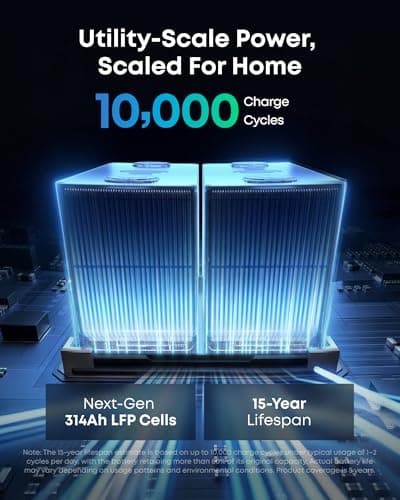
Reference
How Long Does Food Last in a Power Outage?
The published fridge and freezer timings, the 40 F safe threshold, and what to discard or refreeze after power returns.