Costs
What a Home Backup Generator Costs
We will not quote you a number. We will show you exactly what moves it, which is more useful and stays true next month.
Written byMike M.
Published
Disclosure: we earn a commission on purchases made through links on this page, at no cost to you. It does not affect what we recommend or what we say about it — how we are funded.
The short answer
- Running watts is the dominant price variable, and buying more than your load needs is the most common way to overspend.
- Fuel count is next: dual fuel adds modestly, tri-fuel adds more.
- Start method — recoil, electric, then remote — and CO shutdown add steps.
- The connection is a separate budget: switch or interlock, inlet box, cord, and licensed labor. Frequently a third of the total.
Every price on this site is live and dated, and we do not type figures into prose. What follows is therefore about the structure of the cost rather than its amount — which is the part that stays true and the part that lets you spend well.
The dominant variable: running watts
Price tracks running watts more closely than anything else, which makes correct sizing the single largest saving available to you. And the direction of the common error is consistent — people buy too much.
Using EWEB's published figures: a house with a refrigerator, a furnace blower, a well pump, a sump pump and lighting totals about 3,500 running watts, or 4,400 after our 80% derating. A 6,500 running-watt machine covers that with real headroom.
What the classes cost you in capability
- 1,900-3,500 W
- Fridge, furnace, sump, lights
- 5,000-6,500 W
- The above plus a well pump
- 9,500-10,500 W
- Plus a window AC
- 11,500 W+
- Central air or electric heat
Published running watts from the machines in this registry. Each step up is a real price increase, and the top two steps also force a 50 amp connection, which raises the installation cost as well.
Fuel count: what each step buys
Dual fuel adds modestly and is usually worth it — not for running cost, but because propane stores indefinitely while gasoline degrades in months. Stale fuel is the most common reason a stored generator will not start.
Tri-fuel adds more, and only pays off if a natural gas line is realistic at your house. Then it is excellent value, because a plumbed supply removes refueling from your plan. Budget separately for the house-side gas connection, which is licensed gas work.
A cheaper route if you already own a dual fuel machine: a model-specific conversion kit adds natural gas reversibly for a fraction of the difference between dual and tri-fuel.
The features that move the price, and which are worth it
| Feature | Worth paying for? | Why |
|---|---|---|
| Electric start | Yes | Recoil-starting a 420cc engine in winter is genuinely hard |
| Remote start | Often | You start it without going out in the weather that caused the outage |
| CO shutdown | Yes | Cannot be added later; price gap is usually small |
| Both 240 V outlets | Yes | L14-30R and 14-50R keeps your connection options open |
| Inverter (low THD) | Depends | Matters for furnace control boards and noise, not for pumps |
| Live wattage meter | Underrated | With an interlock you manage load by hand; seeing it beats calculating |
The budget line people forget entirely
A generator that cannot reach your furnace is not a backup power system. The connection is a second purchase:
- A transfer switch or interlock kit. The interlock plate itself is genuinely cheap; the switch is several hundred.
- An inlet box, unless the switch has one integrated — Reliance's 306A and A510A offer that option.
- A cord of the correct gauge, connector type and length. 25 feet minimum, because CPSC guidance puts the generator 20 feet from the house.
- A licensed electrician, plus a permit and inspection in most jurisdictions. This is usually the largest single line.
On a correctly sized setup the connection is commonly a meaningful fraction of the total. Detail in transfer switch installation cost.
And the safety spend, which is trivial and non-optional
A battery-powered carbon monoxide alarm, around twenty dollars, one per sleeping level. A plug-in alarm does not work during the outage you bought the generator for, which makes this the cheapest and most consequential item in the whole budget.
Plus fuel stabilizer if you store gasoline, and a running cover if you expect to use the machine in weather — which, since outages come with storms, you will.
The short answer
Where the value sits in each class
| # | Product | Best for | Score | Price |
|---|---|---|---|---|
| 1 | 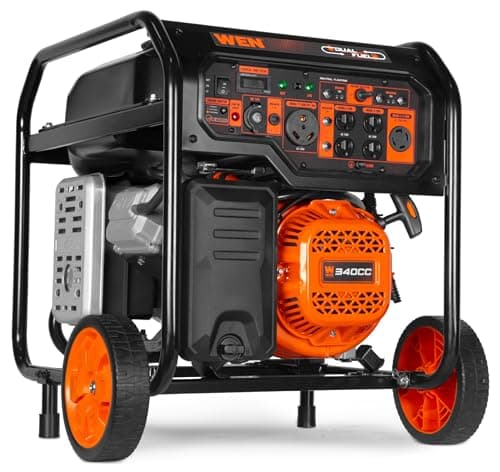 WEN DF8000X 8,000W Dual Fuel The best-value correctly-sized home backup generator here: enough for every essential circuit, dual fuel, CO shutoff, a real transfer-switch outlet, and no money spent on capacity you will not use. | Essential circuits, dual fuel, lowest cost | 8.5/10 | $623.17 |
| 2 | 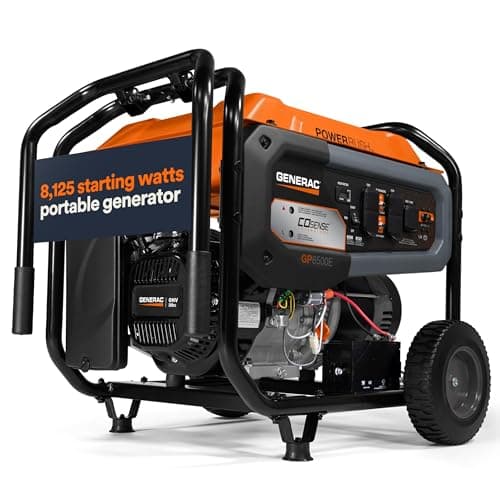 Generac 8,125W Starting Portable The right size for most people who think they need 10,000 watts: enough running capacity for every essential circuit, with surge headroom for motor startup. | Essential circuits on a budget | 7.8/10 | $899.00 |
| 3 | 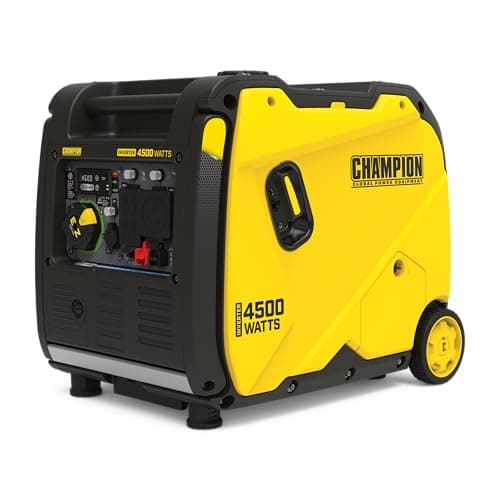 Champion 4,500W RV Ready Inverter The best balance of quiet, clean power and real output for cord-based backup: enough for the essentials, under 3% THD, half the price of the Honda equivalent. | Quiet backup at a sane price | 8.5/10 | $674.10 |
| 4 | 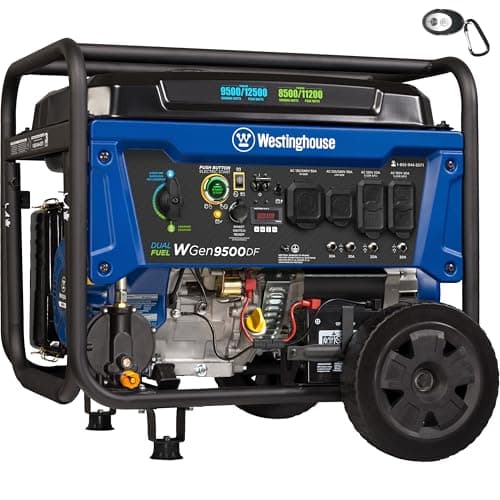 Westinghouse WGen9500DF 12,500W Dual Fuel The most broadly sensible home backup generator on the market: enough running watts for a whole essential-circuit panel, both transfer-switch outlets, and dual fuel — with the caveat that it has no CO shutoff. | The default whole-house pick | 8.8/10 | $999.00 |
| 5 | 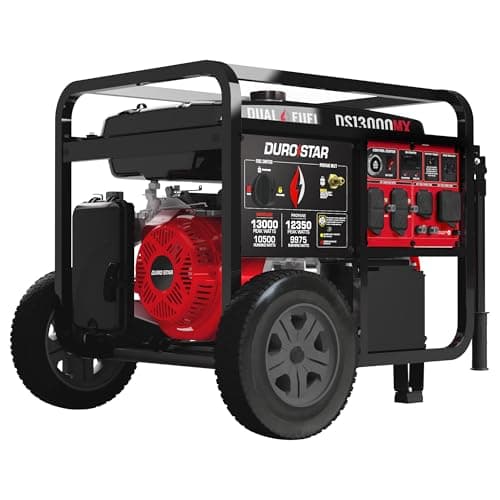 DuroStar DS13000MX 13,000W Dual Fuel If the budget is the constraint and you still want 13,000 peak watts with CO shutoff, this is the cheapest honest way there. | Cheapest route to 13,000 peak watts | 8.4/10 | $899.00 |
#ad Prices as of October 5, 2026; they may have changed since. Scores are our editorial judgment from published specifications, not test results — how we pick. How we are funded.
The small spend that makes the big spend work
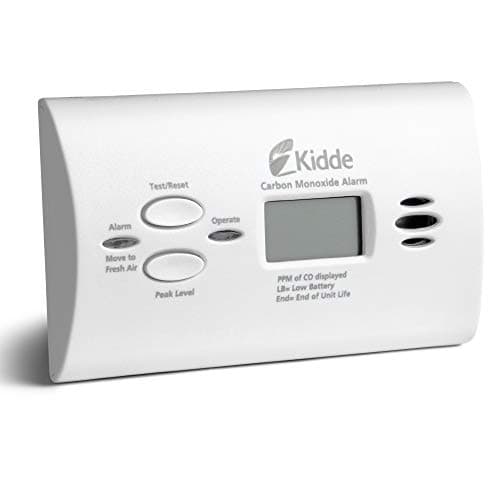
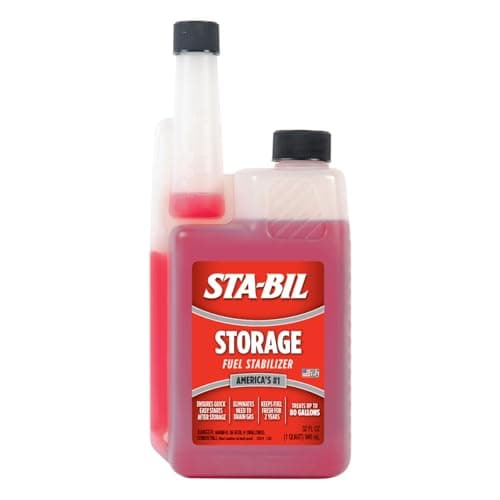
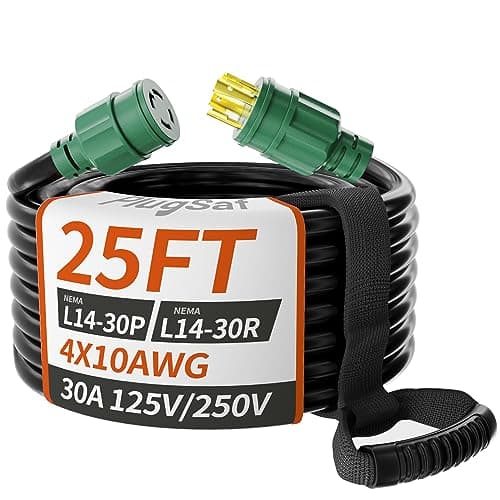
A battery CO alarm, stabilizer for stored fuel, and a cord long enough to site the generator safely. Together a fraction of the generator's price and all three necessary.
Where to spend and where not to
Our view, stated as a view
- Spend on
- The right size, not more
- Spend on
- Dual fuel, CO shutdown, both 240 V outlets
- Spend on
- A proper connection and a long cord
- Do not spend on
- Watts a 30 A switch cannot pass
- Do not spend on
- Tri-fuel with no gas line
- Do not spend on
- Capacity for loads you will not back up
This is our editorial judgment from the published specifications rather than a cost analysis of anyone's actual purchase. Your priorities may differ, and the sizing calculator is the honest starting point either way.
Questions people actually ask
How much does a home backup generator cost?
We deliberately do not quote figures in text, because prices move weekly and a number typed into a page is wrong within days. Every price on this site is live and dated. What drives the price is running watts first, then fuel count, then start method and safety features.
What size generator gives the best value?
The size your load actually needs. Using published figures, a house with a fridge, furnace blower, well pump, sump pump and lighting totals about 3,500 running watts, which a 6,500 running-watt machine covers with headroom — and that class pairs perfectly with a cheaper 30 amp connection.
Is the transfer switch included in the generator price?
No, and this is the budget line people most often forget. You need a transfer switch or interlock kit, an inlet box, a cord, and a licensed electrician plus a permit. On a correctly sized setup it is commonly a meaningful fraction of the total.
Does a bigger generator cost more to run?
Yes. A larger engine burns more fuel to deliver the same watts, so an oversized machine costs more per useful hour as well as more to buy. It is also heavier and louder, and above 7,500 running watts it forces a more expensive 50 amp connection.
Which generator features are worth paying extra for?
The ones you cannot retrofit: a carbon monoxide shutdown, dual fuel capability, and both 240 volt transfer-switch outlets. Electric start is worth it for winter. Remote start means not going out in the weather that caused the outage.
What is the cheapest way to get backup power?
Cords to plug-in appliances from a modest generator or battery, which needs no electrician and no permit. It cannot reach hard-wired loads like a furnace or well pump, but it covers a refrigerator, lighting and devices for the cost of the machine and a cord.
Sources
- Eugene Water & Electric Board — Generator Sizing ConsiderationsPublished appliance running-watt figures used in the load arithmetic on this page.
- US Energy Information Administration — Gasoline and Diesel Fuel UpdateWhere to find the current national and regional gasoline price to put into the fuel cost calculator. We do not reproduce the figure, because it changes weekly.
Read next
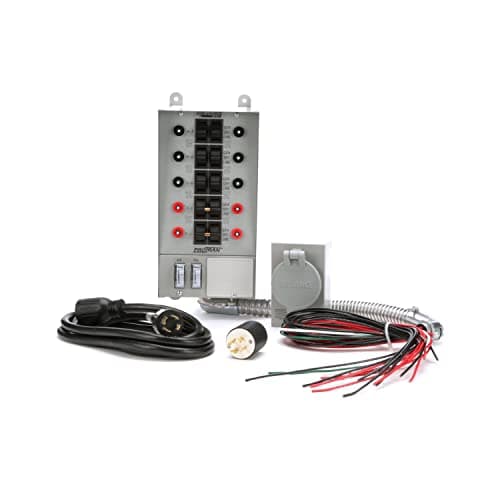
Guide
What Transfer Switch Installation Costs
What a transfer switch installation quote consists of, the hardware choices that reduce labor, and how to compare quotes.
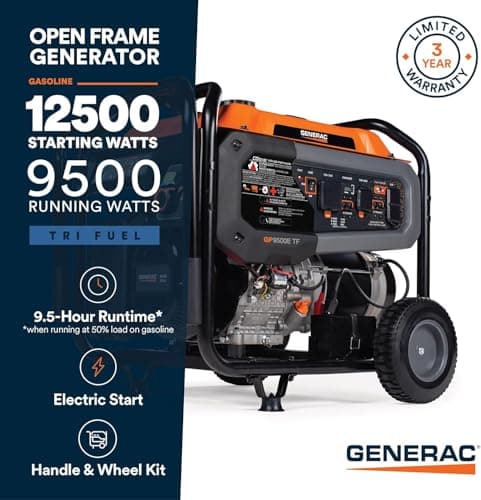
Guide
Generator Fuel Cost Calculator
An interactive running-cost calculator using your own fuel price and load, with the formula shown.
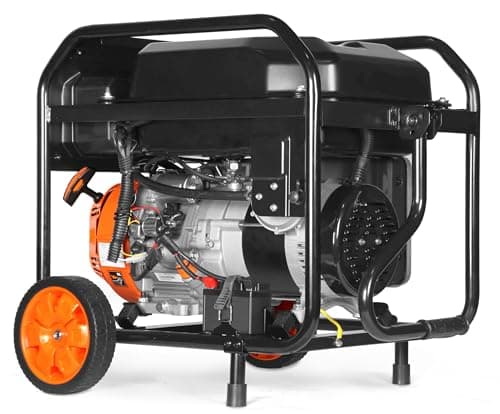
Guide
What Size Generator Do I Need?
The core sizing method: total running watts, add the single biggest surge, derate for continuous running, then match a wattage class.
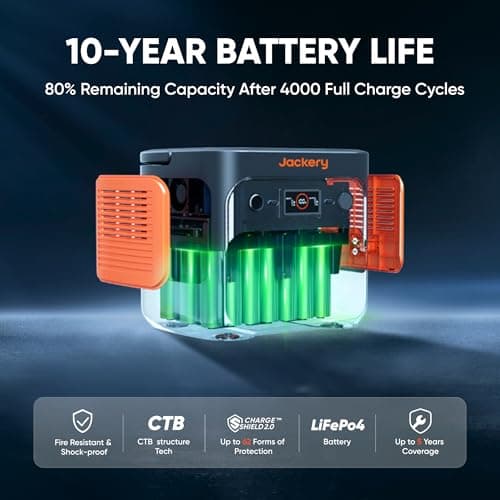
Comparison
Power Station vs Generator: Total Cost
Five-year ownership cost compared between a battery and a generator, including the connection and maintenance lines.
Best Value
Best Portable Generators for the Money
Value-ranked portable generators with each one's specific compromise stated — CO shutdown, outlet type, support network.
Top pick · WEN DF8000X 8,000W Dual Fuel
$623.17View on Amazon