Outage Prep
Generator Carbon Monoxide Safety
This is the page we link from every generator recommendation on the site. It is short because the rules are short.
Written byMike M.
Published
Disclosure: we earn a commission on purchases made through links on this page, at no cost to you. It does not affect what we recommend or what we say about it — how we are funded.
The short answer
- Outdoors only. Never in a house, garage, basement, crawlspace, shed or any partly enclosed space — not even with doors and windows open.
- At least 20 feet from the house, with the exhaust pointed away from doors, windows and vents.
- Battery-powered CO alarms inside, on every sleeping level. A plug-in alarm is dead during the outage.
- If anyone feels dizzy, weak or nauseous, get outside immediately and call emergency services. Do not investigate.
The four rules, and the reasoning behind each
1. Outdoors, with no exceptions for part-enclosed spaces
The failure mode people fall into is thinking in terms of degrees of enclosure: a garage with the door up feels halfway to outside. It is not. An open garage door does not produce enough air exchange to clear a generator's exhaust, and the concentration builds in the space regardless. The same applies to a carport, a covered porch, a shed with the doors open, and a basement with a window open.
2. At least 20 feet, exhaust pointed away
Distance is the mechanism that actually protects you, and the direction the exhaust faces matters as much as the distance. CO from a generator five feet from an open window will find the window. Twenty feet, with the exhaust aimed away from the building, is the published guidance.
This has a practical purchasing consequence that catches people out: you need a cord long enough to achieve it. A 10-foot cord cannot put a generator 20 feet away. A 25-foot cord is the realistic minimum and a 50-foot cord gives you genuine freedom about siting. See generator extension cords.
3. Battery CO alarms indoors, on every sleeping level
This is the single most important sentence on this page. A plug-in carbon monoxide alarm does not work during a power outage — which is the exact event during which you are running a generator. If your only CO alarm is hardwired or plug-in without battery backup, you have no CO detection at precisely the moment you most need it.
A battery-powered CO alarm costs around twenty dollars. Buy one before you buy a generator, and buy one per sleeping level. Look for an electrochemical sensor, which is the accurate type for CO, and note that CO sensors have a finite service life — commonly 7 to 10 years — after which the unit needs replacing, not just new batteries.
The short answer
Battery CO alarms — buy before the generator
| # | Product | Best for | Score | Price |
|---|---|---|---|---|
| 1 | 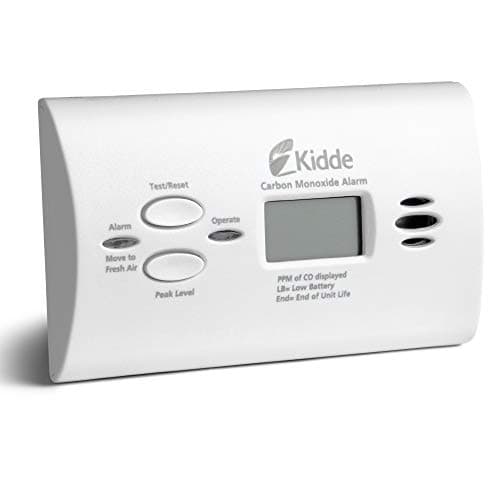 Kidde KN-COPP-B-LPM Battery CO Alarm Buy this before you buy the generator. Battery-powered CO detection is the one piece of equipment that addresses the way generators actually kill people. | The one accessory nobody should skip | 9.6/10 | $23.45 |
| 2 | 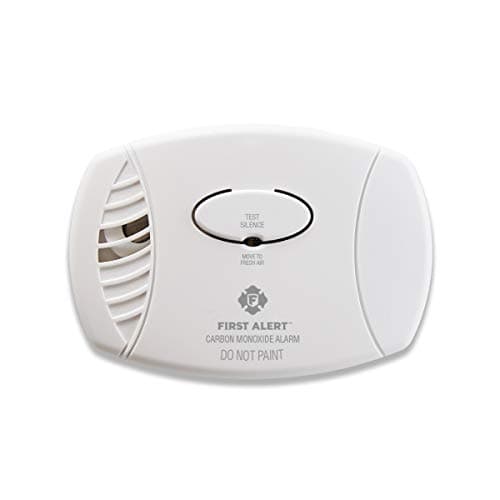 First Alert CO400 Battery CO Alarm The right second alarm: put the Kidde on the sleeping floor and this one near the room closest to where the generator sits. | A second alarm for upstairs | 9.2/10 | $21.99 |
#ad Prices as of October 5, 2026; they may have changed since. Scores are our editorial judgment from published specifications, not test results — how we pick. How we are funded.
4. Symptoms mean leave, not investigate
CO poisoning presents as headache, dizziness, weakness, nausea, confusion, blurred vision. The confusion is the dangerous part, because it impairs exactly the judgment needed to recognize what is happening and act. The rule is therefore mechanical: if anyone in the house feels unwell while a generator is running, everyone goes outside into fresh air immediately and you call emergency services from there. You do not go looking for the cause.
What a CO shutdown on the generator does and does not do
Most current generators include some form of CO shutoff — Generac's COsense, Champion's CO Shield, WEN's Watchdog, DuroMax's CO Alert, Honda's CO-MINDER. These are genuinely worth having and we note their presence or absence on every product in our registry.
But understand what they measure: the CO concentration in the generator's own operating area. Champion's description is representative — it shuts the generator off before harmful levels accumulate in the generator's operating area. That protects someone standing next to the machine. It does nothing about the CO accumulating in your bedroom, because the sensor is not in your bedroom.
Running in bad weather, which is when you need it
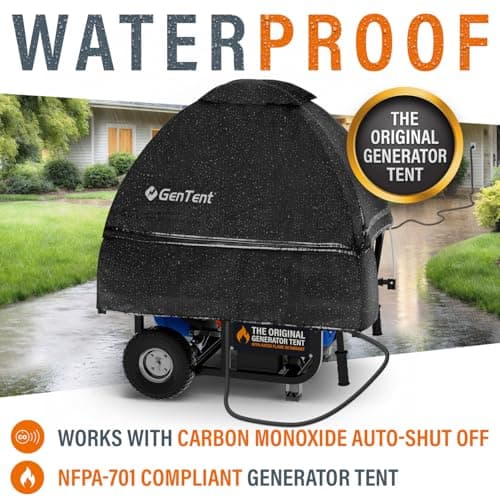
The tension here is obvious: outages come with storms, generators must stay outdoors, and generators do not like rain. The correct resolution is a purpose-made running cover — a canopy that sheds water away from the electrical components while leaving the exhaust and the air intake completely open.
What is not a resolution: moving it into the garage, under a tarp, into a shed, or under a closed canopy. A cover solves the water problem and changes nothing about the carbon monoxide problem.
Running covers — for water, not for enclosure
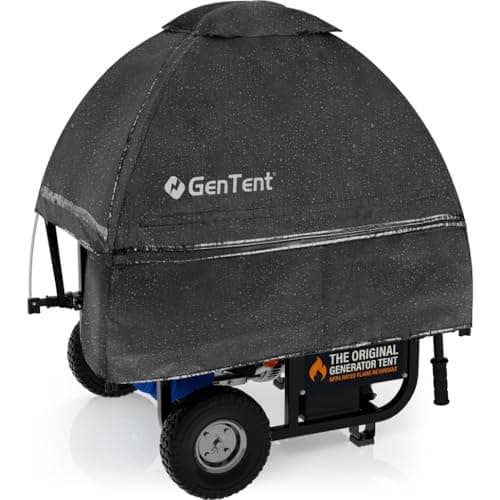
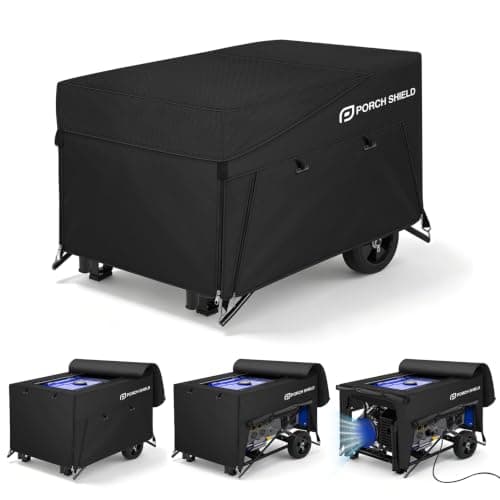
Cheapest cover with stated dimensions
Porch Shield Running Generator Cover, 36 x 28 x 20 in
These let a generator run in rain and snow while sitting out in the open. Placement rules are unchanged: still 20 feet away, still exhaust pointed away from the house.
More on the weather question: using a generator in rain.
Questions people actually ask
How far should a generator be from the house?
At least 20 feet, per CPSC guidance, with the exhaust directed away from doors, windows and vents. This has a purchasing consequence: you need a cord long enough to achieve it, which in practice means 25 feet or more.
Can I run a generator in my garage with the door open?
No. The CPSC's guidance is explicit that a portable generator must never be run in a garage, basement, crawlspace or any partly enclosed space, even with doors and windows open. An open door does not provide enough air exchange to clear the exhaust, and carbon monoxide accumulates regardless.
Do I need a carbon monoxide detector if my generator has a CO shutoff?
Yes. The generator's shutoff measures CO in the generator's own operating area, not in your house. You need battery-powered CO alarms indoors on every sleeping level, and they must be battery-powered because a plug-in alarm is dead during the outage.
What are the symptoms of carbon monoxide poisoning?
Headache, dizziness, weakness, nausea, confusion and blurred vision. The confusion is particularly dangerous because it impairs the judgment needed to recognize the problem. If anyone feels unwell while a generator is running, get everyone outside into fresh air and call emergency services from there.
Can I run a generator under a tarp or in a shed?
No. Both are enclosures as far as carbon monoxide is concerned. Use a purpose-made running cover that sheds water while leaving the exhaust and air intake fully open to the atmosphere, with the generator still sited 20 feet from the house in the open air.
How long do carbon monoxide alarms last?
The sensors have a finite service life, commonly 7 to 10 years depending on the model, after which the whole unit needs replacing rather than just the batteries. Check the date on the back of yours — an expired alarm gives a false sense of protection.
Sources
- US Consumer Product Safety Commission — Portable Generator Information CenterThe placement, never-indoors and CO-alarm guidance this site repeats on every generator page.
Read next
Guide
Can You Run a Generator in the Rain?
How to run a generator safely in wet weather, what running covers actually do, and the enclosures that are never acceptable.
Guide
How to Run Your House on a Generator
Connection options ranked, the correct start-up sequence, load management, and the back-feeding practice to never attempt.
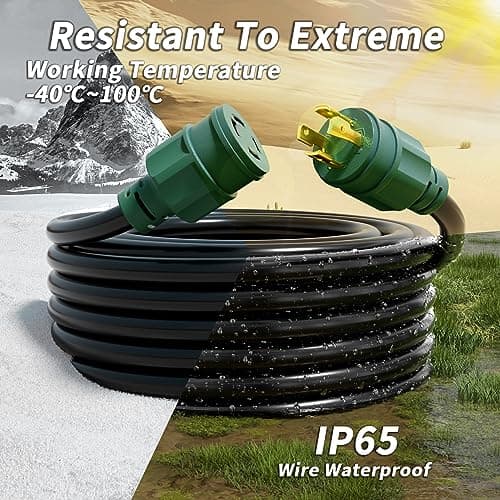
Best Generator Cord
The Best Generator Extension Cords
Generator cords by gauge, length and connector type, with the certification and connector-match checks that matter.
Top pick · PlugSaf 25 ft 30A L14-30 Cord, 10 AWG
$58.99View on Amazon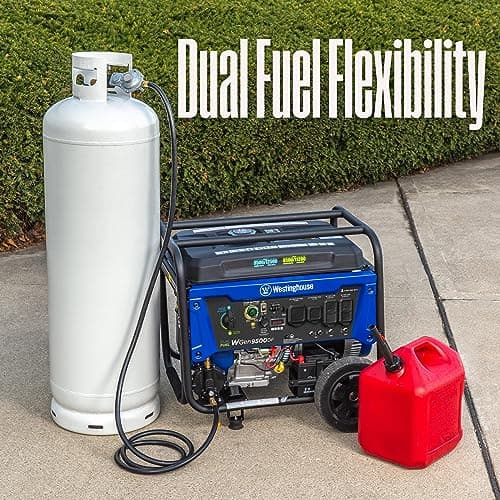
Best Overall Home Backup
The Best Home Backup Generators
Nine conventional-frame generators ranked for whole-house backup, with per-fuel running watts and transfer-switch fit.
Top pick · Westinghouse WGen9500DF 12,500W Dual Fuel
$999.00View on Amazon
Guide
Generator Fuel Storage and Stabilizer
Fuel degradation, stabilizer shelf-life claims, safe storage quantities and containers, and the propane alternative.