Outage Prep
Keep Your Refrigerator Running Through an Outage
The first hour costs nothing and buys you most of the benefit. Then decide whether to buy anything at all.
Written byMike M.
Published
Disclosure: we earn a commission on purchases made through links on this page, at no cost to you. It does not affect what we recommend or what we say about it — how we are funded.
The short answer
- 1Keep the doors shut. FoodSafety.gov's guidance: a refrigerator holds safe temperatures for about 4 hours unopened, a full freezer for about 48 hours.
- 2Move fridge items into the freezer if the outage looks long — the freezer's thermal mass protects them.
- 3Fill empty freezer space with frozen water jugs, which slows warming considerably.
- 4If it runs past 4 hours, a battery power station with a 3,000 W surge rating takes over the fridge directly.
A refrigerator full of food is a few hundred dollars, and the panic about losing it is why most people start looking at backup power. It is worth knowing how much time you actually have before you spend anything.
What the clock actually is
FoodSafety.gov's published guidance: an unopened refrigerator holds safe temperatures for roughly 4 hours; a full freezer for about 48 hours, or 24 hours if it is half full. Food is safe below 40 F, and the test afterwards is temperature rather than appearance or smell.
So if your outages typically last two hours, you need nothing at all — just the discipline not to open the door. The whole backup power question only becomes real past that four-hour mark, which is a much smaller set of outages than people assume.
What it takes to actually power it
| Figure | Value | Source |
|---|---|---|
| Refrigerator / freezer running watts | 700 W | EWEB |
| Refrigerator running watts | 400 W | Champion |
| Additional starting watts | 2,200 W | Both charts |
Note the shape of that: a modest running load with a large surge. It means the device you need is defined by its surge rating, not its capacity. A 2 kWh battery that can only supply 1,500 watts of surge will not start your fridge; a 1 kWh battery with a 3,000 watt surge will.
The battery answer, which is usually the right one
For this specific load a battery power station beats a generator on nearly every axis. It runs indoors with no carbon monoxide risk, makes no noise, needs no fuel, and — the part people miss — units with UPS switchover take over in under 10 milliseconds, so the compressor never actually stops and never has to restart against the surge.
Roughly how long, by capacity
- 1,024 Wh
- ~15-20 h of fridge cycling
- 2,042 Wh
- ~30-40 h of fridge cycling
- Fridge + chest freezer, 2,042 Wh
- ~15-20 h
Our arithmetic: usable watt-hours divided by an assumed ~150 W cycling average, derated about 12% for inverter loss. Not a measurement — we have not metered a refrigerator, and your fridge's average depends on its age, how full it is and how often the door opens.
One manufacturer has built a unit specifically for this job. Bluetti's FridgePower publishes a 4 watt standby draw (most power stations waste five times that doing nothing), a 10 ms UPS switchover, a 75 mm slim case designed to sit behind a fridge, and a storm alert that triggers its own fast charge before weather arrives. For a single-purpose buy that is a better-engineered answer than a general box.
The short answer
Battery picks for a refrigerator
| # | Product | Best for | Score | Price |
|---|---|---|---|---|
| 1 | 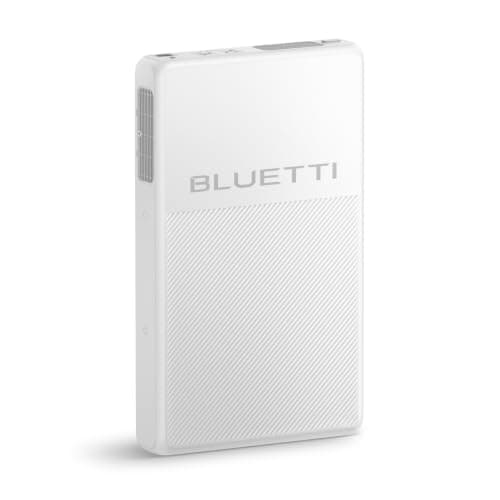 Bluetti FridgePower If the problem you are solving is specifically the refrigerator, this is the unit designed for that problem — the 4 W standby and storm auto-charge are genuine engineering answers to it. | Purpose-built refrigerator backup | 9.0/10 | $899.00 |
| 2 | 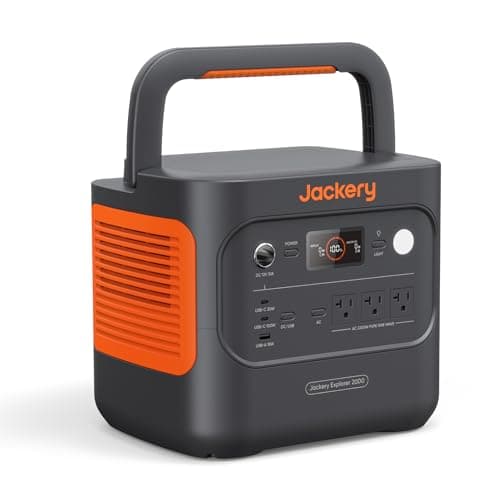 Jackery Explorer 2000 v2 The most sensible battery backup for most homes: enough capacity to carry a fridge and electronics through a typical outage, indoors, silently. | The default 2 kWh home backup battery | 8.9/10 | $898.99 |
| 3 | 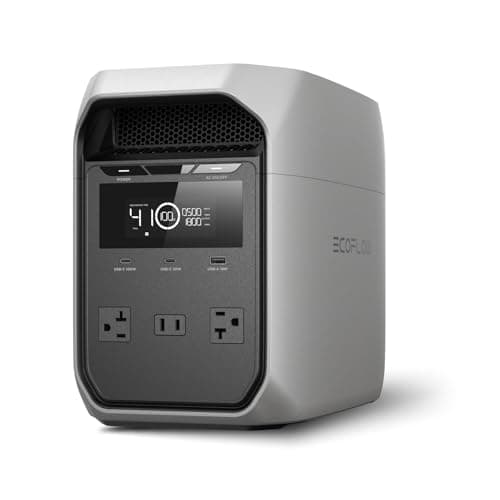 EcoFlow DELTA 3 Classic The best-value battery on the site: UPS-grade switchover, 1,800 W and a 45-minute recharge for roughly half what the 2 kWh units cost. | Best value 1 kWh with UPS | 8.6/10 | $499.00 |
| 4 | 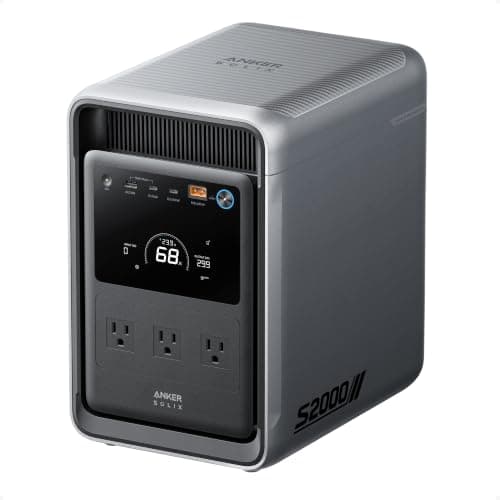 Anker SOLIX S2000 The endurance choice: the lowest idle draw and the longest cycle life here, with an output ceiling deliberately traded away to get them. | Longest fridge runtime per watt-hour | 8.7/10 | $679.99 |
#ad Prices as of October 5, 2026; they may have changed since. Scores are our editorial judgment from published specifications, not test results — how we pick. How we are funded.
When a generator makes more sense
If your outages run for days, a battery empties and a generator does not. If you also need a furnace blower, a well pump or a sump pump covered, you are buying a generator anyway and the fridge is nearly free on top. And if the budget is tight, a 3,500 running-watt inverter generator costs less than a 2 kWh battery while running considerably more.
The generator route, and the thing to buy before it
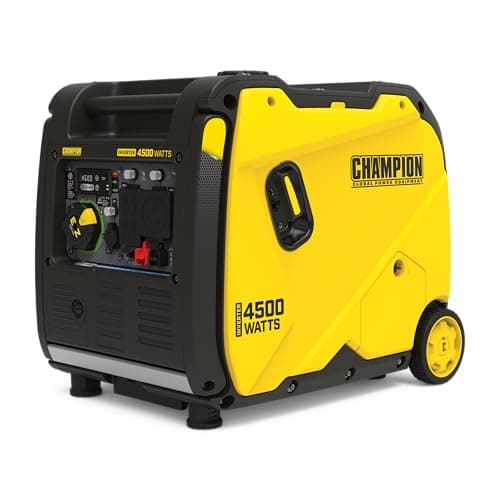
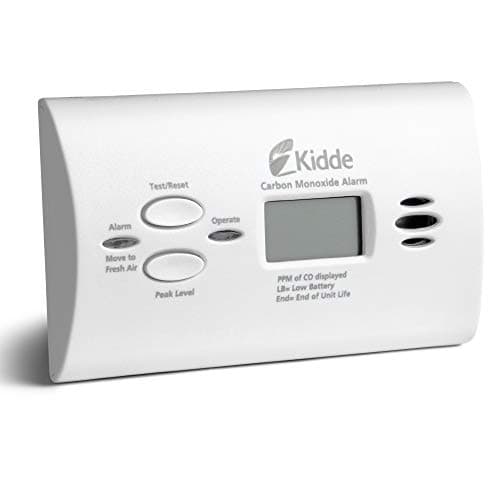
A quiet inverter generator covers a fridge and a good deal more. The CO alarm is a twenty-dollar purchase that addresses the way generators actually kill people — buy it first either way.
After the power comes back
FoodSafety.gov's rule is temperature, not instinct. Refrigerated food held above 40 F for more than two hours should be discarded. Frozen food that still contains ice crystals, or is at 40 F or below, can be refrozen. An appliance thermometer in each compartment removes the argument entirely, which is why it is worth the few dollars before anything happens.
Questions people actually ask
How long will food stay cold in a refrigerator without power?
FoodSafety.gov's guidance is about 4 hours if the door stays closed. A full freezer holds for about 48 hours, or 24 hours if half full. Keeping the doors shut is by far the most effective thing you can do and it costs nothing.
What size power station do I need to run a refrigerator?
The surge rating matters more than the capacity: you need about 3,000 watts of surge to start a compressor reliably, since both published charts put the fridge's surge at 2,200 watts. For duration, a 2,042 Wh unit works out at roughly 30-40 hours of cycling on our arithmetic.
Can I plug my fridge into a generator with an extension cord?
Yes — a refrigerator is a plug-in appliance, so a cord works and no electrician is needed. The constraint is placement: the generator must still be at least 20 feet from the house per CPSC guidance, so you need a cord long enough to achieve that.
Is it bad to keep restarting a fridge during an outage?
Repeated short-cycling is harder on a compressor than steady running, which is one practical argument for a battery with UPS switchover: under 10 milliseconds means the compressor never stops at all. It is not a reason to avoid a generator, but it is a genuine advantage of the battery route.
Should I throw food away after a power outage?
Judge by temperature, not smell. FoodSafety.gov's guidance is to discard refrigerated food held above 40 F for more than two hours. Frozen food that still has ice crystals or is at 40 F or below can be refrozen. An appliance thermometer in each compartment makes this a measurement rather than a guess.
Will a small 1000 watt generator run a refrigerator?
Only if its peak rating covers the 2,200 watt start-up surge, and most 1,000 watt machines do not — Westinghouse's iGen1500c, for instance, publishes 1,500 peak watts. Check the peak figure against your fridge's nameplate before relying on it.
Sources
- FoodSafety.gov — food safety during a power outageThe 4-hour refrigerator and 48-hour full-freezer guidance, and the 40 F / 140 F safe-temperature thresholds.
- Eugene Water & Electric Board — Generator Sizing ConsiderationsPublished running and additional-starting watt figures quoted on this page.
- US Consumer Product Safety Commission — Portable Generator Information CenterThe placement, never-indoors and CO-alarm guidance this site repeats on every generator page.
Read next
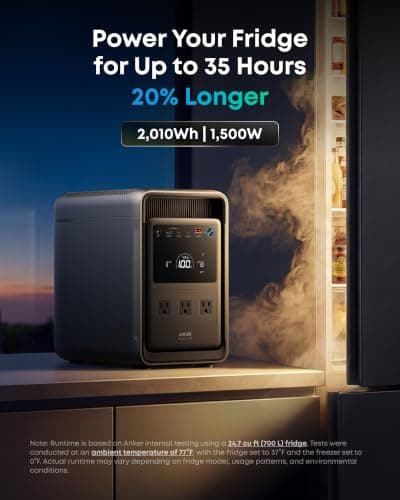
Reference
How Long Does Food Last in a Power Outage?
The published fridge and freezer timings, the 40 F safe threshold, and what to discard or refreeze after power returns.
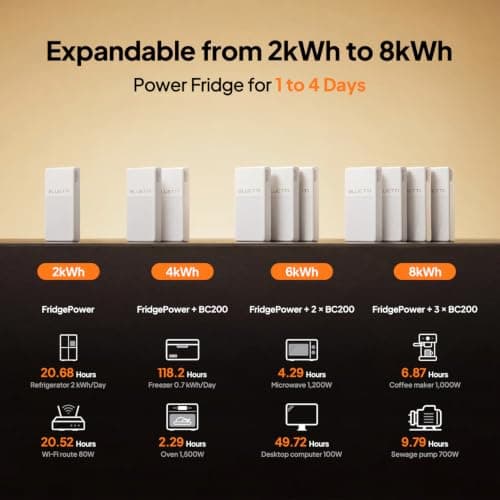
Best for a Refrigerator
Best Power Station for a Refrigerator
Power stations that reliably start a fridge compressor, ranked on surge, idle draw and UPS switchover.
Top pick · Bluetti FridgePower
$899.00View on Amazon40% off
Guide
Generator Size for a Refrigerator and Deep Freezer
Sizing for a fridge plus a chest freezer, including why only one surge counts and when a battery beats a generator.

Guide
How Long Will a Power Station Run a Fridge?
The runtime calculation shown in full, the manufacturer claims, and why a cycling fridge lasts far longer than its running watts suggest.
Guide
Generator Carbon Monoxide Safety
The CPSC placement rules, why a garage with the door open is still unsafe, and the battery CO alarm that should be your first purchase.