Outage Prep
How to Hook Up a Well Pump to a Generator
This is the load where extension cords stop working and the connection becomes the whole project.
Written byMike M.
Published
Disclosure: we earn a commission on purchases made through links on this page, at no cost to you. It does not affect what we recommend or what we say about it — how we are funded.
The short answer
A residential well pump is hard-wired and almost always 240 volts, so it cannot be reached with an extension cord. You need a transfer switch or an interlock kit, installed by a licensed electrician, and a generator with a 240 volt outlet — which rules out most inverter generators. EWEB's chart puts a 1/3 HP pump at 1,000 running watts with a 2,000 watt additional surge; larger pumps surge considerably harder.
Losing a well means no water at all — not for drinking, not for washing, not for flushing. It is one of the few outage consequences that becomes urgent within hours, which is why people are willing to do the work to cover it.
Why a cord cannot do this
Two reasons, both absolute:
- It is hard-wired. There is no plug. The pump's feed runs from a breaker in your panel to a pressure switch or control box, and there is no point in that chain where a cord can be inserted safely.
- It is 240 volts. A standard household cord carries 120 V. A 240 V load needs both hot legs, which means the connection has to happen at the panel.
So the connection options are a transfer switch or an interlock kit, and both are licensed electrical work. There is no DIY shortcut here that is not dangerous.
What the generator needs
Requirements for a well pump
- 240 V outlet
- L14-30R or 14-50R — mandatory
- Running watts (1/3 HP)
- 1,000 W, published
- Additional starting watts
- 2,000 W, published
- Realistic whole-house total
- ~4,400 W running
EWEB published figures for a 1/3 HP pump. Pumps above that size are not in either chart we cite — read the nameplate on your pressure switch or control box.
The 240 V requirement is the one that quietly eliminates options. Most inverter generators have no 240 V output at all — the Honda EU2200i and EU3000iS, the Champion 4,500 W units, the Westinghouse iGen5000 series and most WEN inverters. If you are on a well, you need one of the minority that does: the Westinghouse iGen12000DFc or ecoGen10000, the DuroMax iH series, WEN's DF680iX, or any conventional-frame machine.
The surge, which is the real engineering problem
A 1/3 HP pump's 2,000 watt additional surge is manageable. A deep well pump is a different matter: SoftStartUSA's listing states that deep well pumps typically need 65-75 amps to start, which at 240 volts is a very large instantaneous draw.
Generators absorb that partly through their peak rating and partly through the rotating inertia of the alternator, which is why a machine can start a load that momentarily exceeds its nameplate. But an undersized generator will bog down, the voltage will sag, and the pump motor will draw heavy current while failing to start — which is how pump motors burn out.
Two ways through. Buy enough generator: 5,000 to 6,500 running watts for a typical house with a 1/3 HP pump, more for a deep well. Or reduce the surge with a soft starter — SoftStartUSA publishes a claimed inrush reduction of up to 50% and states it will start pumps on generators as small as 3,000 watts, covering 0.5-1.5 HP 120 V pumps and all 240 V pumps up to 3.5 HP.
Reduce the surge, or size for it
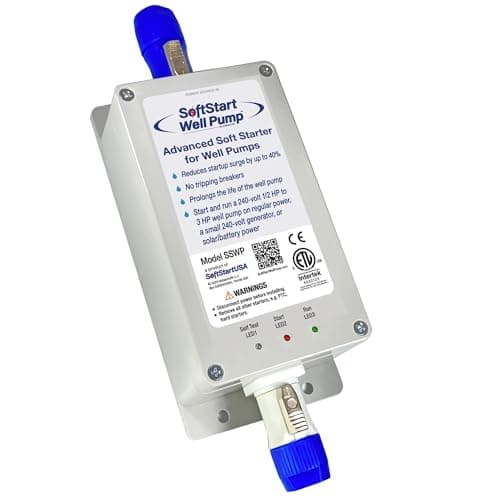
Running a well pump on a smaller generator
SoftStartUSA SoftStart Well Pump Soft Starter
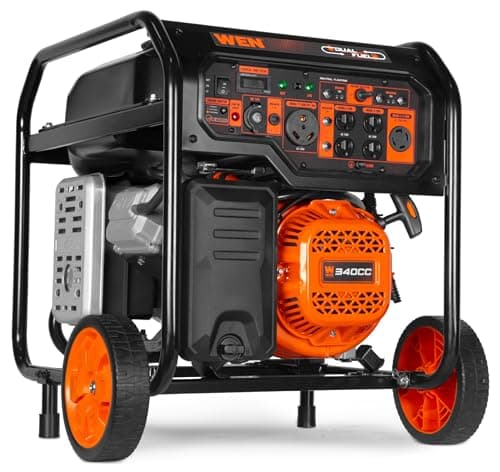
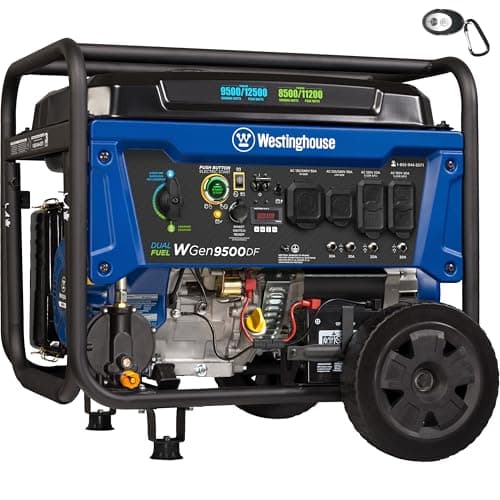
The soft starter is wiring work at the pump control. Verify your pump's horsepower and voltage against the published compatibility range first.
The practical sequence during an outage
- 1Start the generator outdoors, 20 feet from the house, exhaust away. Let it stabilize.
- 2Main breaker off, then generator breaker on (interlock), or transfer switch to generator.
- 3Switch the well pump circuit on first, while the generator is lightly loaded and has full surge headroom.
- 4Then add the fridge, then the furnace, then lighting and electronics.
- 5Expect the pump to cycle. Keep headroom reserved for it rather than loading the generator to its limit.
A useful detail: a well pump only runs when the pressure tank calls for it, so its average draw is far below its running watts. But the surge has to be available every single time, which is why reserving headroom matters more than the average suggests.
The short answer
Connection hardware for a 240 V well pump
| # | Product | Best for | Score | Price |
|---|---|---|---|---|
| 1 | 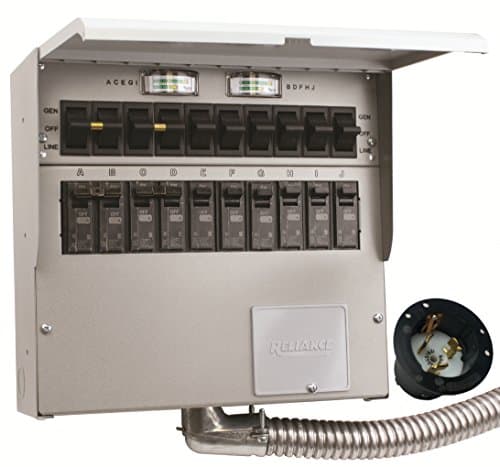 Reliance Controls A510A Pro/Tran2 10-Circuit 50A Buy this only if your generator genuinely exceeds 7,500 running watts — then it is the switch that lets you actually use what you paid for. | Using a big generator's full output | 8.8/10 | $524.00 |
| 2 | 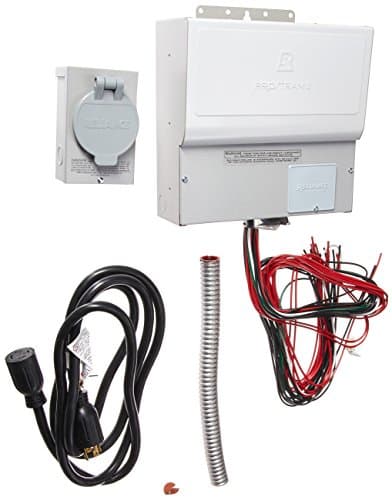 Reliance Controls 310CRK 10-Circuit 30A Kit The standard answer for connecting a portable generator properly: ten circuits, 30 A, from the brand electricians recognize. | The ten-circuit default | 8.6/10 | $474.76 |
| 3 | 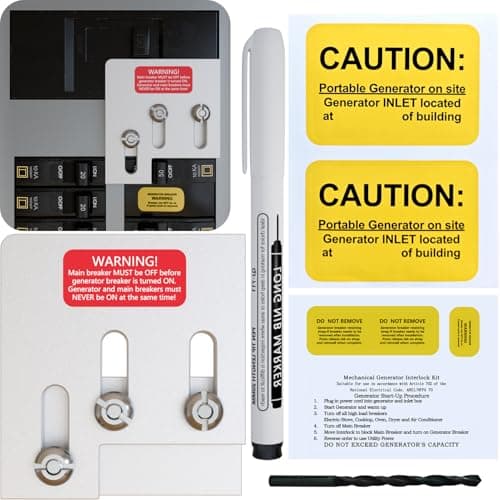 SPZOCE Interlock Kit — Square D QO/Homeline 150/200A The cheapest correct way to connect a generator to the whole panel, provided your panel is a Square D QO or Homeline with the exact spacing stated — measure first. | Square D QO and Homeline, 150-200A | 8.5/10 | $26.99 |
#ad Prices as of October 5, 2026; they may have changed since. Scores are our editorial judgment from published specifications, not test results — how we pick. How we are funded.
Sizing detail: generator size for a well pump. Machine recommendations: best generator for a well pump.
Questions people actually ask
Can I run a well pump with an extension cord from a generator?
No. A residential well pump is hard-wired and almost always 240 volts, so there is no plug to connect a cord to and a standard cord carries only 120 volts. You need a transfer switch or an interlock kit, installed by an electrician.
What size generator do I need for a well pump?
For a 1/3 HP pump as part of a realistic essential-circuit plan, about 4,400 running watts and 5,700 starting watts. The pump alone needs roughly 1,250 running and 3,000 starting. Deeper wells with larger pumps surge much harder — read the nameplate.
Does a well pump need a 240 volt generator?
Almost certainly. Residential well pumps above the smallest sizes are 240 volt, which means the generator needs an L14-30R or 14-50R outlet. This rules out most inverter generators, which have no 240 volt output at all.
Will a soft starter let my well pump run on a smaller generator?
Often. SoftStartUSA publishes a claimed inrush reduction of up to 50% and states it will start pumps on generators as small as 3,000 watts. It reduces the surge only — the generator still has to carry the pump's running load continuously.
Why does my well pump trip my generator?
Almost always insufficient surge headroom at the moment it starts. Either the generator is too small for the pump's inrush, or it was already heavily loaded when the pump called. Switch the pump circuit on first, while the generator is lightly loaded, and keep headroom reserved for its cycling.
Sources
- Eugene Water & Electric Board — Generator Sizing ConsiderationsPublished running and additional-starting watt figures quoted on this page.
- SoftStartUSA — well pump soft starter listingThe 65-75 amp deep-well starting-current claim and the published pump compatibility range.
- US Consumer Product Safety Commission — Portable Generator Information CenterThe placement, never-indoors and CO-alarm guidance this site repeats on every generator page.
Read next
Guide
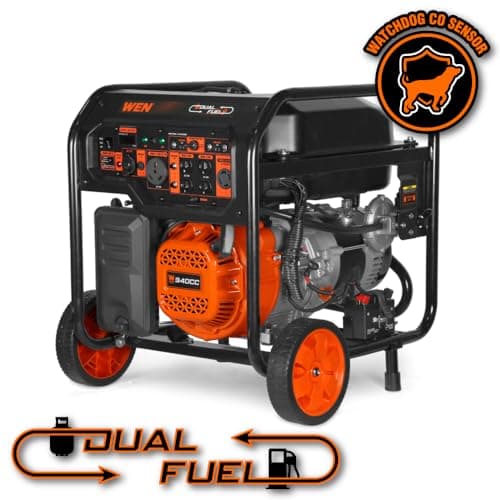
What Size Generator for a Well Pump?
Well pump sizing from the published 1/3 HP figures, what changes on larger pumps, and the soft-starter route.
Best for a Well Pump
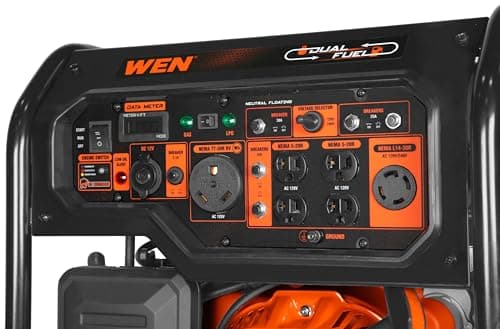
Best Generator for a Well Pump
Generators with the 240V outlets and surge headroom a well pump needs, plus the soft-starter alternative.
Top pick · WEN DF8000X 8,000W Dual Fuel
$623.17View on AmazonBest Transfer Switch
The Best Generator Transfer Switches
Transfer switches ranked on circuit count, amp rating and kit completeness, from 6-circuit 30A to 10-circuit 50A.
Top pick · Reliance Controls 310CRK 10-Circuit 30A Kit
$474.76View on Amazon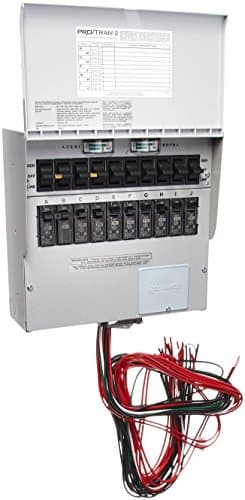
Guide
How to Run Your House on a Generator
Connection options ranked, the correct start-up sequence, load management, and the back-feeding practice to never attempt.
Best Interlock Kit
The Best Generator Interlock Kits
Interlock kits by panel brand with the published breaker-spacing figures, and the factory kit that removes fit risk.
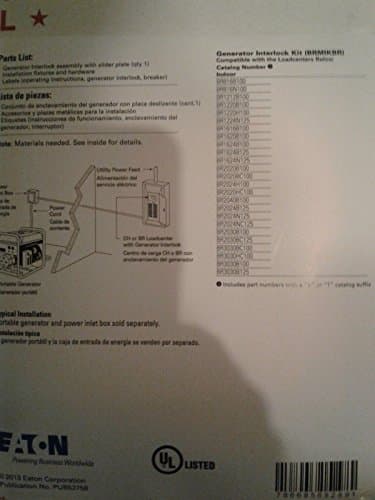
Top pick · Eaton BRMIKBR Factory Interlock Kit 100-125A
$84.00View on Amazon