Costs
Power Station vs Generator: Total Cost
A battery costs more up front and then costs almost nothing. For small loads and short outages, it often wins over five years.
Written byMike M.
Published
Disclosure: we earn a commission on purchases made through links on this page, at no cost to you. It does not affect what we recommend or what we say about it — how we are funded.
The short answer
A generator is cheaper per watt to buy and has a running cost forever: fuel, oil, filters, spark plugs, stabilizer, and a connection costing a meaningful fraction of the machine. A battery costs more per watt up front and then costs almost nothing — no fuel, no maintenance, no installation, and LiFePO4 packs rated from 3,000 to 10,000 cycles. For small loads and short outages the battery frequently wins over five years. With a well pump or multi-day outages, it does not come close.
This comparison is almost never run properly, because people compare purchase prices. The purchase price is the one line where the generator wins most clearly, and it is not the whole story.
The cost lines, side by side
| Cost | Generator | Battery power station |
|---|---|---|
| Purchase, per watt | Lower | Higher |
| Installation | Transfer switch, inlet, cord, electrician, permit | None — it plugs in |
| Fuel | Every hour of use | Grid electricity, negligible |
| Oil, filters, spark plugs | Annually | None |
| Fuel stabilizer | Ongoing | None |
| Stale-fuel failures | A real and recurring risk | None |
| Replacement horizon | Engine life | 3,000-10,000 cycles published |
| Safety equipment | CO alarms, running cover | None required |
Two lines deserve a closer look because they are the ones people leave out.
The installation line, which only one side has
A generator needs a transfer switch or interlock kit, an inlet box, a cord, and a licensed electrician plus a permit — or it cannot reach a furnace, a well pump or a sump pump. On a correctly sized setup that is commonly a meaningful fraction of the machine's cost.
A battery plugs into the wall. There is no installation, no permit, no electrician, and no inspection. For a like-for-like comparison, the generator's connection has to be in the generator's column.
The exception: if you only intend to run cords to plug-in appliances, the generator has no installation cost either — and then the comparison is much closer, which is worth knowing.
The maintenance line, and the failure it prevents
A generator needs oil, an air filter, a spark plug and fuel stabilizer, plus a quarterly test run. A battery needs nothing at all.
But the bigger cost is not the parts — it is the stale-fuel failure. STA-BIL states its storage stabilizer keeps gasoline fresh up to 24 months, which is an admission about untreated fuel. A generator that will not start because the fuel sat is the most common failure in this category, and it is a cost with no equivalent on the battery side.
Several machines reduce the risk by design — WEN's fuel shutoff runs the carburetor dry, DuroMax's iH series includes a battery tender — and running on propane removes it entirely. But the discipline is still required, and discipline has a failure rate.
Where the generator wins, decisively
The cases where a battery is not competitive
- A well pump
- ~2,000 W surge — batteries cannot
- Central air conditioning
- Sustained high load
- Electric heat or water heating
- 4,500 W+ continuous
- Multi-day outages
- A battery runs out; fuel does not
- Whole-panel backup
- No 240 V on portable batteries
EWEB published figures for the loads. The 240 V exception is Anker's SOLIX F3800, which publishes 120 V and 240 V output — and is priced like the installed system it really is.
None of those is a close call. If your essential list includes a well pump or multi-day outages, the generator is the correct purchase and the cost comparison is academic.
Where the battery wins
Small essential loads and short outages — which, for a great many households, is the actual situation. A refrigerator, lighting, a modem, phones, a CPAP, perhaps a gas furnace blower if it happens to be plugged in rather than hard-wired.
For that list, the battery wins on cost and on everything else: it runs indoors with no carbon monoxide risk, makes no noise at 3am, needs no fuel stored in the garage, needs no electrician, and units with UPS switchover under 10 ms mean the fridge never actually loses power.
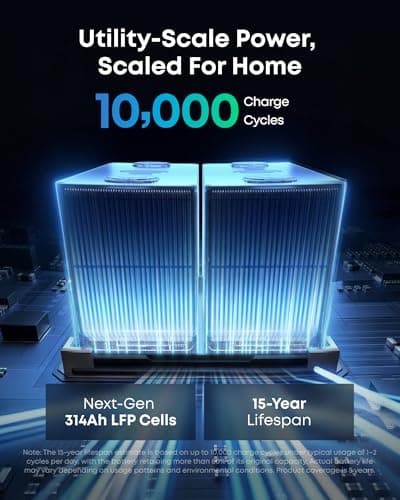
The published cycle life makes the replacement horizon generous: 3,000 to 10,000 cycles on the units here, against perhaps 10-20 cycles a year of actual outage use. Anker's SOLIX S2000 publishes 10,000 cycles and a stated 15-year lifespan.
The combination that is cheaper than either extreme
A modest generator plus a modest battery, which is underused and often the best total-cost answer for a house with mixed needs.
The generator runs by day, covering the motor loads and recharging the battery at full speed. At night it is off — no noise, no fuel burn, no carbon monoxide — and the battery runs the fridge and electronics silently indoors. You buy a smaller generator than you otherwise would, and a smaller battery, and get better coverage than either alone.
The short answer
A battery, a generator, and the pairing that beats both
| # | Product | Best for | Score | Price |
|---|---|---|---|---|
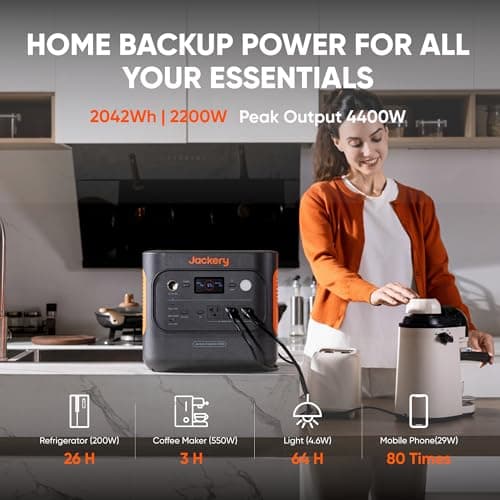
| 1 | 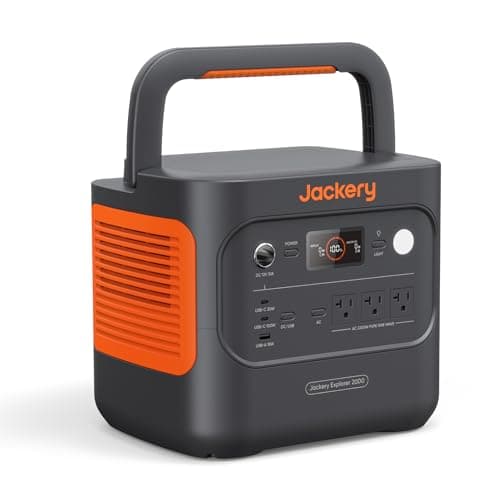 Jackery Explorer 2000 v2 The most sensible battery backup for most homes: enough capacity to carry a fridge and electronics through a typical outage, indoors, silently. | The default 2 kWh home backup battery | 8.9/10 | $898.99 |
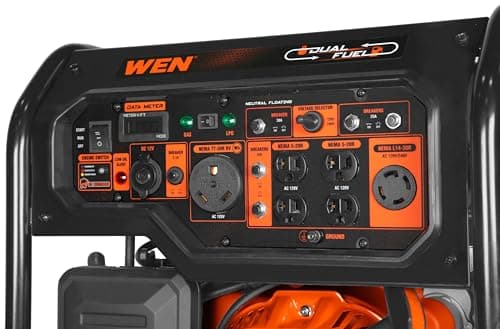
| 2 | 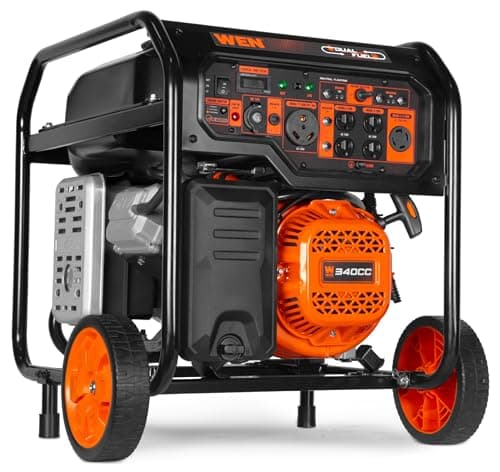 WEN DF8000X 8,000W Dual Fuel The best-value correctly-sized home backup generator here: enough for every essential circuit, dual fuel, CO shutoff, a real transfer-switch outlet, and no money spent on capacity you will not use. | Essential circuits, dual fuel, lowest cost | 8.5/10 | $623.17 |
| 3 | 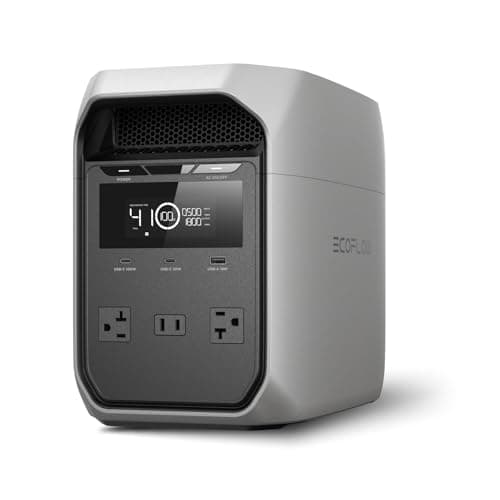 EcoFlow DELTA 3 Classic The best-value battery on the site: UPS-grade switchover, 1,800 W and a 45-minute recharge for roughly half what the 2 kWh units cost. | Best value 1 kWh with UPS | 8.6/10 | $499.00 |
| 4 | 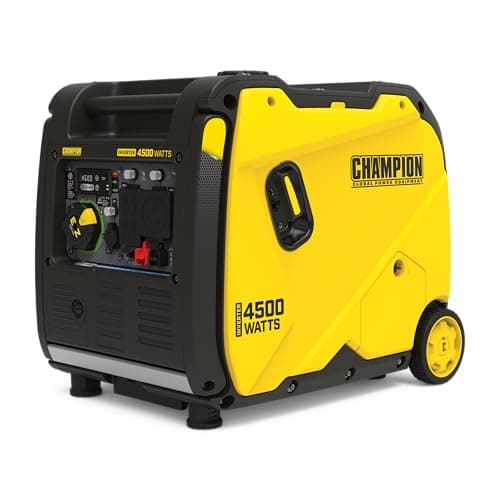 Champion 4,500W RV Ready Inverter The best balance of quiet, clean power and real output for cord-based backup: enough for the essentials, under 3% THD, half the price of the Honda equivalent. | Quiet backup at a sane price | 8.5/10 | $674.10 |
| 5 | 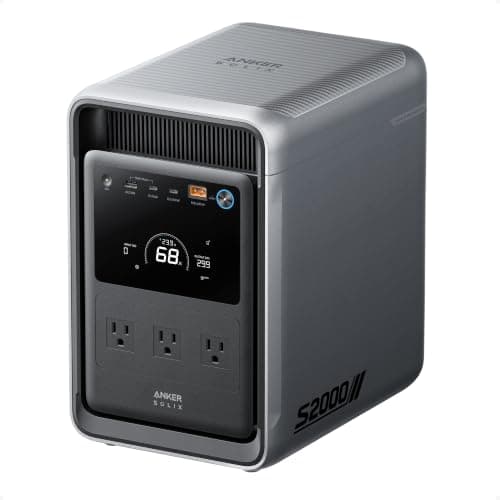 Anker SOLIX S2000 The endurance choice: the lowest idle draw and the longest cycle life here, with an output ceiling deliberately traded away to get them. | Longest fridge runtime per watt-hour | 8.7/10 | $679.99 |
#ad Prices as of October 5, 2026; they may have changed since. Scores are our editorial judgment from published specifications, not test results — how we pick. How we are funded.
How to decide for your own house
- 1List what you need running. Use the calculator.
- 2Check for motor loads. A well pump or air conditioning settles it for the generator.
- 3Check your typical outage length. Hours favors a battery; days favors fuel.
- 4Check whether your loads are plug-in or hard-wired. Hard-wired means a connection cost on the generator side.
- 5Then compare, with the installation and maintenance lines included on the generator's side.
Most households that run that honestly find the answer is smaller and simpler than they expected — which is the recurring theme of this whole site.
Questions people actually ask
Is a power station cheaper than a generator over time?
Often, for small loads and short outages. A battery has no fuel, oil, filters, stabilizer or installation cost, and published cycle life runs from 3,000 to 10,000 cycles against perhaps 10-20 cycles a year of real use. A generator is cheaper per watt to buy and has recurring costs forever.
What costs does a generator have that a battery does not?
Installation (transfer switch, inlet box, cord, electrician, permit), fuel, oil, air filters, spark plugs, fuel stabilizer, carbon monoxide alarms, a running cover, and the risk of a stale-fuel failure. A battery plugs into the wall and needs nothing.
When is a generator clearly the better buy?
With any motor load a battery cannot start — a well pump needs about 2,000 extra watts to start on published figures — with central air or electric heat, with multi-day outages, or when you need to feed hard-wired circuits through a panel.
Does a battery power station need maintenance?
Essentially none. Keep it charged, and if it has a low idle draw (4-6 watts on the best units) leave it plugged in permanently. There is no fuel to go stale, no oil to change and no filter to replace.
Is buying both a generator and a battery wasteful?
Usually the opposite. The generator runs by day covering motor loads and recharging the battery; the battery runs the fridge silently indoors overnight. You can buy a smaller machine of each than you otherwise would and get better coverage than either alone.
How long does a power station last before it needs replacing?
Published LiFePO4 cycle claims on the units here run from 3,000 to 10,000 cycles, with stated lifespans of 10 to 16 years — Anker's SOLIX S2000 publishes 10,000 cycles and 15 years. At outage-only use of perhaps 10-20 cycles a year, that is far beyond what you will use.
Sources
- Eugene Water & Electric Board — Generator Sizing ConsiderationsPublished appliance running-watt figures used in the load arithmetic on this page.
- STA-BIL Storage Fuel Stabilizer — manufacturer listingThe 24-month treated-gasoline claim, cited in the maintenance discussion.
Read next
Battery vs Engine
Portable Power Station vs Generator
Battery against generator on surge capability, runtime, placement and cost, with the two facts that decide it.
Guide
What a Home Backup Generator Costs
The variables that drive generator price, the connection cost people forget, and where the money is best spent.

Best Overall Power Station
The Best Home Backup Power Stations
Battery power stations ranked for home backup on surge, capacity, recharge speed and cycle life.
Top pick · Jackery Explorer 2000 v2
$898.99View on Amazon10% off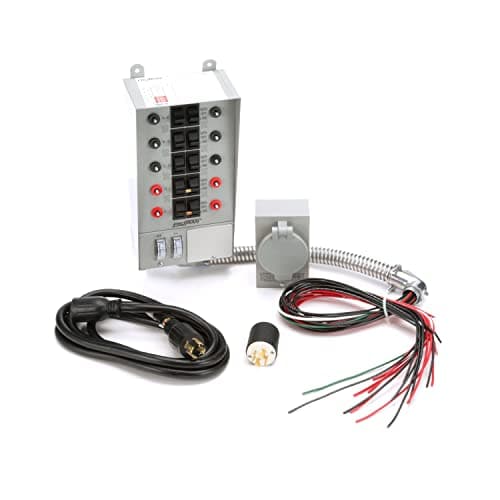
Guide
What Transfer Switch Installation Costs
What a transfer switch installation quote consists of, the hardware choices that reduce labor, and how to compare quotes.
Comparison
LiFePO4 vs Lithium-Ion
Why LiFePO4 is the correct chemistry for backup power, with the published cycle claims that decide it.