Review
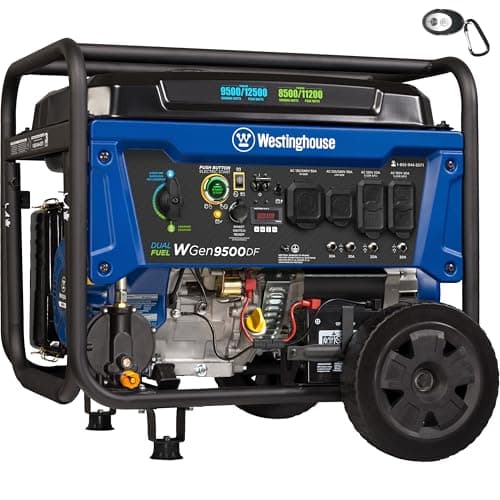
Westinghouse WGen9500DF Review
A close reading of the WGen9500DF's published specification against real household loads, including its missing CO shutdown.
Top pick · Westinghouse WGen9500DF 12,500W Dual Fuel
$999.00View on AmazonHub
What each machine's published specification actually means for a house, including the figures its maker does not publish.
Disclosure: we earn a commission on purchases made through links on this page, at no cost to you. It does not affect what we recommend or what we say about it — how we are funded.
These pages take one machine at a time and answer the question a roundup cannot fit: what does this specification actually mean for my house, and what is this manufacturer not telling me?
It is a close reading of the published specification, the outlet configuration, the fuel figures and the warranty, set against what a house actually demands — plus an explicit note wherever a manufacturer omits something its competitors publish.
It is not a test report. We have not run these machines, we do not own them, and we do not operate a test lab. The category is full of pages claiming hands-on testing of a dozen 250 lb generators, and we are not going to join them — our methodology page says exactly what we do and do not do. The compensation is that the gaps in a spec sheet are visible to anyone willing to read carefully, and reading carefully is the whole job here.
Each product carries per-criterion scores and a headline figure out of ten. These are our editorial judgments, compiled from the published specification against what we think matters for home backup. They are ordinary page content and nothing more — we deliberately never emit them as structured review data, because a score derived from a spec sheet is not a product review rating and marking it up as one would misrepresent what it is.
The scores also weight differently by category, which is intentional: fuel flexibility matters for a generator and is meaningless for a transfer switch, while panel fit certainty is the whole story for an interlock kit.
If you came here from a search for one model, read its page and then follow the link back to the roundup it appears in — the comparative context usually changes the decision. If you do not yet know which model you want, start at the sizing calculator instead; it is a better use of ten minutes.
Picks
Each tile carries the top pick from that page with a live price, so you can act from here rather than having to read a review first.
Review
A close reading of the WGen9500DF's published specification against real household loads, including its missing CO shutdown.
Top pick · Westinghouse WGen9500DF 12,500W Dual Fuel
$999.00View on Amazon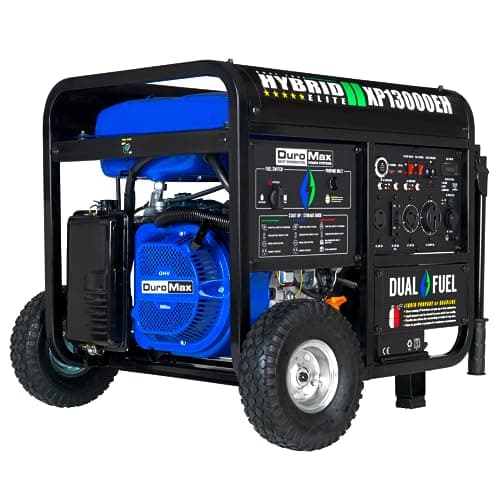
Review
The XP13000EH's all-metal construction assessed, plus the per-fuel running watts DuroMax declines to publish.
Top pick · DuroMax XP13000EH 13,000W Dual Fuel
$1,299.00View on Amazon13% off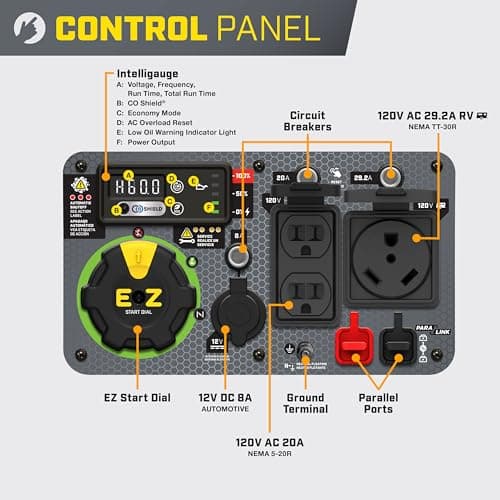
Review
Champion's 4,500W inverter read against real household loads, including the no-240V limitation.
Top pick · Champion 4,500W RV Ready Inverter
$674.10View on Amazon10% off
Review
The EU2200i's published figures and what they do and do not make it suitable for in home backup.
Top pick · Honda EU2200i 2,200W Inverter
$1,199.00View on Amazon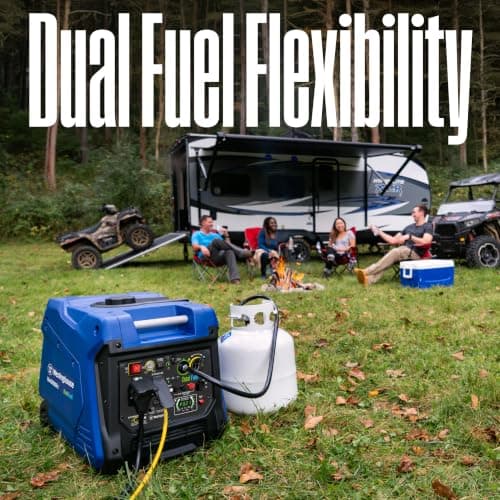
Review
The iGen5000DFc's published noise, fuel and output figures, and the 240V limitation it shares with its class.
Top pick · Westinghouse iGen5000DFc 5,000W Dual Fuel Inverter
$999.00View on Amazon23% off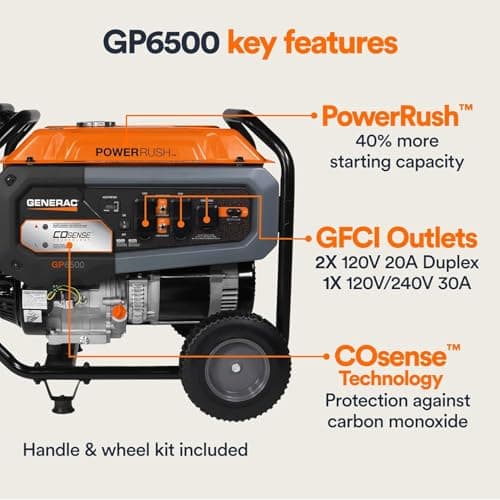
Review
Generac's GP portable range: COsense, PowerRush and the service network, against gasoline-only operation.
Top pick · Generac 8,125W Starting Portable
$899.00View on Amazon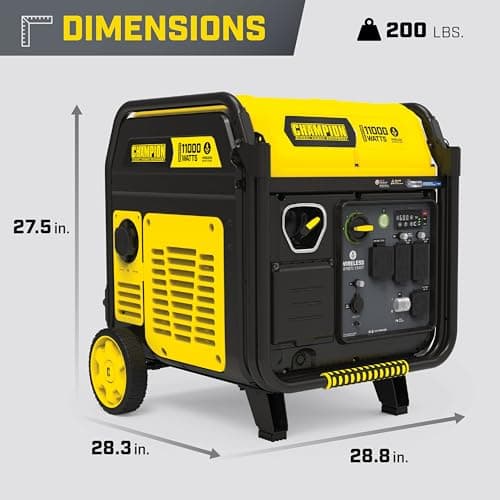
Review
Why we cannot review Predator generators from published data, and the comparable machines we can.
Top pick · Champion 11,000W Remote Start Inverter
$1,899.00View on Amazon
Review
Jackery's Explorer and HomePower lines for home backup, with published capacity, cycle life and expansion figures.
Top pick · Jackery Explorer 2000 v2
$898.99View on Amazon10% off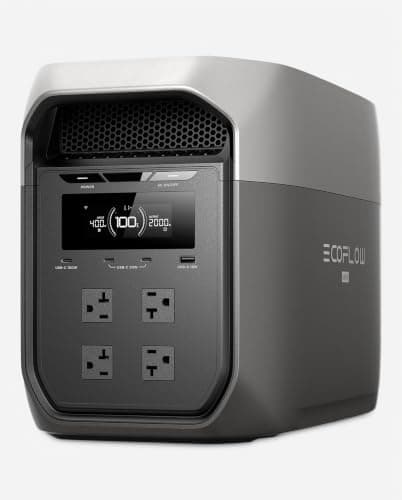
Review
EcoFlow's DELTA 2 Max, DELTA 3 Max and DELTA 3 Classic compared, including what X-Boost can and cannot do.
Top pick · EcoFlow DELTA 3 Max
$879.00View on Amazon27% off
Review
Bluetti's FridgePower, AC200PL and AC180 assessed, including the 4W standby draw and storm-alert charging.
Top pick · Bluetti FridgePower
$899.00View on Amazon40% off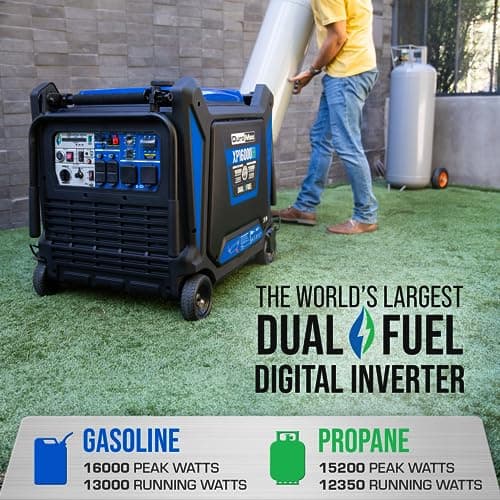
Review
The XP16000iH's 13,000 running watts assessed, and why at 368 lb the right comparison is a standby system.
Top pick · DuroMax XP16000iH 16,000W Dual Fuel Inverter
$4,866.50View on Amazon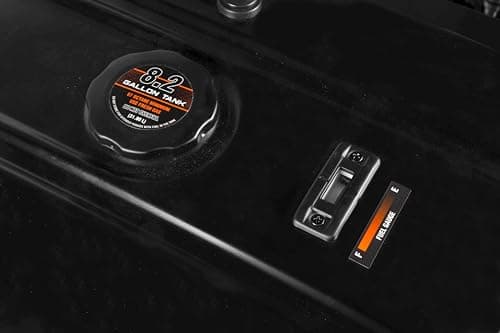
Review
WEN's TF-1450X tri-fuel: all three fuels' published output, both transfer-switch outlets, and the thinner support network.
Top pick · WEN TF-1450X 14,500W Tri-Fuel
$1,199.99View on Amazon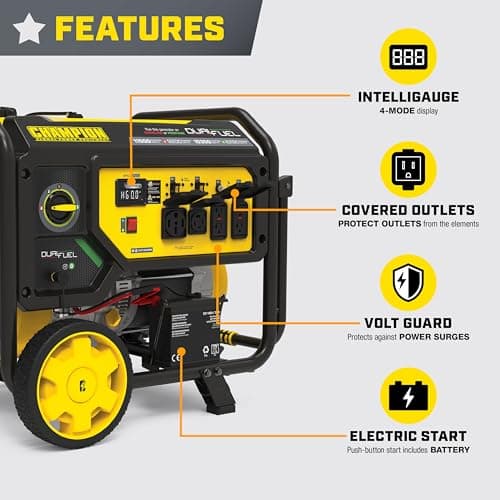
Brand Comparison
Each major brand's best home backup generator compared on published specifications, with omissions marked.
Top pick · Champion 11,500W Dual Fuel Electric Start
$989.99View on Amazon10% offNo. We do not operate a test lab and we never claim otherwise. Every specification on this site is attributed to the manufacturer or the published chart it came from, and our contribution is a careful reading of those specs against what a house actually demands — including noting what a manufacturer has left out.
The manufacturer's own published listing data, retrieved programmatically rather than retyped. Where two sources disagree, both figures appear. Where a manufacturer does not publish something its competitors do, the review says so rather than filling the gap with an estimate.
They are our editorial judgment of how well a product's published specification serves home backup use, scored on criteria chosen for its category. They are page content only and are deliberately never published as structured review data, because a score compiled from a spec sheet is not a tested product rating.
Because the honest answer sometimes is "this is good, and that one is better for you". A machine can be well built and still be the wrong size, the wrong fuel, or missing the outlet your transfer switch needs. We would rather say so than rank everything highly.
No. No manufacturer pays for placement, provides product, or sees a page before it publishes. The site earns commission on Amazon purchases made through its links, which is disclosed on every commercial page and explained in full on the affiliate disclosure page, and it has no bearing on ranking or on what a review says.