Model Reviews
EcoFlow DELTA for Home Backup
The fastest recharge and the best UPS switchover here. Plus one feature whose limits need stating plainly.
Written byMike M.
Published
Disclosure: we earn a commission on purchases made through links on this page, at no cost to you. It does not affect what we recommend or what we say about it — how we are funded.
The short answer
EcoFlow's DELTA 2 Max publishes 2,048 Wh, 2,400 W, 15 outlets, 0-80% in 43 minutes, 1,000 W of solar input and expansion to 6 kWh. The DELTA 3 Max publishes the same capacity with a sub-10 ms UPS transfer and up to 3,400 W in X-Boost mode. The DELTA 3 Classic publishes 1,024 Wh, 1,800 W, a 3,600 W surge and sub-10 ms UPS at 26.7 lb — the best-value unit on this site.
The range, published side by side
| Model | Capacity | Output | Recharge to 80% | UPS |
|---|---|---|---|---|
| DELTA 3 Classic | 1,024 Wh | 1,800 W / 3,600 W surge | 45 min | Under 10 ms |
| DELTA 3 Max | 2,048 Wh | 2,400 W / 3,400 W X-Boost | 1.13 h | Under 10 ms |
| DELTA 2 Max | 2,048 Wh | 2,400 W | 43 min | Not published |
The recharge speed, which is more useful than it looks
0-80% in 43 minutes on the DELTA 2 Max is the fastest AC charge figure in this registry. Its practical consequence is specific: outages often flicker back for an hour or two during restoration work, and at this rate a 90-minute window refills the unit completely for another full day of fridge duty.
That turns a partial restoration from an annoyance into a genuine resupply, and it is a capability slower units simply do not have. See how to recharge a power station in an outage.
The UPS switchover, which changes how you use it
Both DELTA 3 models publish a sub-10 millisecond transfer time. The effect is that anything plugged in through the unit never loses power: the fridge compressor does not stop, the modem does not reboot, a computer does not shut down.
For a refrigerator this also removes the surge problem entirely. Both published wattage charts put a fridge's start-up surge at 2,200 watts — but a compressor that never stops never has to restart. That is worth more than a few hundred extra watt-hours.
It means the sensible way to own one of these is permanently connected, with the fridge or a home office behind it, so an outage simply does not register.
X-Boost, and its real limits
That is not a criticism of the feature, which is genuinely useful — it lets a 1,800 W unit run appliances its rating would otherwise reject. It is a statement that the number means something narrower than it appears.
Solar input: the figure that decides a solar kit
The DELTA 2 Max publishes 1,000 W of solar input, which is double what several rivals accept and the specification that makes solar genuinely useful rather than decorative. Bluetti's AC180, for comparison, caps at 500 W.
Combined with a 2,400 W total input, EcoFlow states 0-80% in 43 minutes by combining solar and AC. And the unit expands from 2 kWh to 6 kWh with up to two extra batteries, so both the panel side and the battery side have real headroom.
The honest expectation on panels themselves: a 400 W rating is measured under standard test conditions, and real output depends on angle, cloud, season and heat. Plan on a partial daily recharge. See best solar generators.
The value pick, and why it is the Classic
The DELTA 3 Classic publishes 1,024 Wh, 1,800 W continuous, a 3,600 W surge, sub-10 ms UPS, 0-80% in 45 minutes, LiFePO4 rated for 10+ years of daily use with EV-grade cell-to-chassis construction, at 26.7 lb.
That is UPS-grade switchover and a fridge-capable surge rating for roughly half what the 2 kWh units cost. For a household whose problem is specifically "keep the fridge and the modem alive", it is the best value on this site — and the capacity, at roughly 15-20 hours of fridge duty on our arithmetic, covers most outages.
Where EcoFlow loses to rivals
Cycle life. The DELTA 2 Max publishes 3,000 cycles to 80%, against Jackery's HomePower at 6,000+ and Anker's SOLIX S2000 at 10,000. For outage-only use of perhaps 10-20 cycles a year, 3,000 is far beyond what you will use — but for daily solar cycling it becomes the dominant cost factor.
Idle draw. EcoFlow does not publish a standby figure, where Bluetti's FridgePower publishes 4 W and Anker's S2000 publishes 6 W. Since UPS switchover invites permanent connection, this is the figure you would most want to know.
Weight. The DELTA 2 Max at 50.7 lb is the heaviest 2 kWh unit here, against Jackery's 39.5 lb.
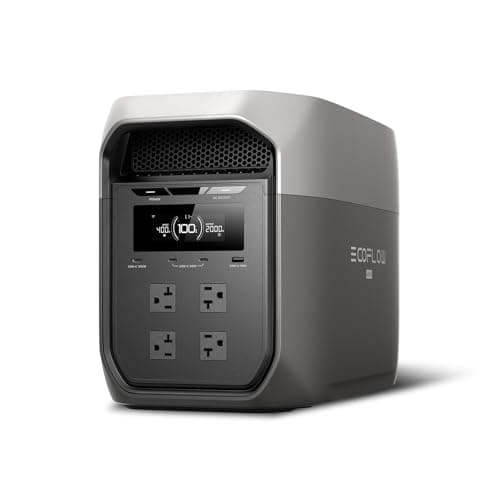
- Capacity
- 2,048 Wh
- AC output
- 2,400 W / 3,400 W boost
- Switchover
- Under 10 ms (mfr)
#1 · UPS-grade switchover for a fridge
EcoFlow DELTA 3 Max
The best battery here for keeping specific things running without interruption — the sub-10 ms transfer is a real functional difference, not a spec-sheet flourish.
#ad Price as of October 5, 2026; it may have changed since. How we are funded.
What is good
- A sub-10 ms switchover means plugged-in equipment never notices the outage — this is what makes it genuinely usable for a fridge, a modem or a home office
- 3,400 W in X-Boost handles appliances the 2,400 W rating would reject
- Usually cheaper than the DELTA 2 Max it replaces
What is not
- X-Boost works by reducing voltage to resistive loads; it is not a true 3,400 W inverter and should not be relied on for motors
- Slower AC recharge than the DELTA 2 Max (1.13 h versus 43 min to 80%)
- EcoFlow does not publish a weight for this listing
Published specification & our scoring
- 2,048 Wh LFP battery, 2,400 W output (manufacturer)
- Up to 3,400 W continuous in X-Boost mode (manufacturer)
- Under 10 ms transfer time for home backup (manufacturer)
- 0-80% in 1.13 hours with X-Stream charging (manufacturer)
- Manufacturer states a 10-year daily-use design life
- Usable capacity
- 9
- Output ceiling
- 8
- UPS behavior
- 10
- Recharge speed
- 8
- Cycle life
- 9
- Value
- 9
Specification figures are the manufacturer’s published values. Scores are our editorial judgment from those figures and are never published as structured review data — how we pick.
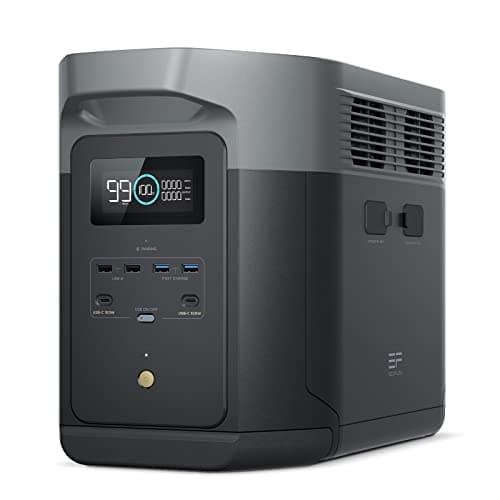
- Capacity
- 2,048 Wh (to 6 kWh)
- AC output
- 2,400 W
- Outlets
- 15
#2 · Most outlets, expandable to 6 kWh
EcoFlow DELTA 2 Max
The best choice if solar recharging is part of your plan: 1,000 W of solar input and a 43-minute AC recharge make it the hardest unit here to actually run flat.
#ad Price as of October 5, 2026; it may have changed since. How we are funded.
What is good
- 43 minutes to 80% is the fastest recharge here — it means a two-hour window of restored grid power refills it completely
- 1,000 W of solar input is double what most 2 kWh units accept, which is the difference between solar being useful and decorative
- 15 outlets means no adapter juggling in the dark
What is not
- 50.7 lb — the heaviest 2 kWh unit here
- 3,000 cycles against Jackery HomePower's 6,000
- 2,400 W output, so still no motor loads
Published specification & our scoring
- 2,048 Wh, 2,400 W output, 15 outlets (manufacturer)
- 0-80% in 43 minutes combining up to 1,000 W solar with AC input (manufacturer)
- LFP chemistry rated 3,000 cycles to 80% capacity (manufacturer)
- Expandable from 2 kWh to 6 kWh with up to two extra batteries (manufacturer)
- Published weight 50.7 lb
- Usable capacity
- 9
- Recharge speed
- 10
- Solar input
- 10
- Output ceiling
- 7
- Cycle life
- 8
- Value
- 8
Specification figures are the manufacturer’s published values. Scores are our editorial judgment from those figures and are never published as structured review data — how we pick.
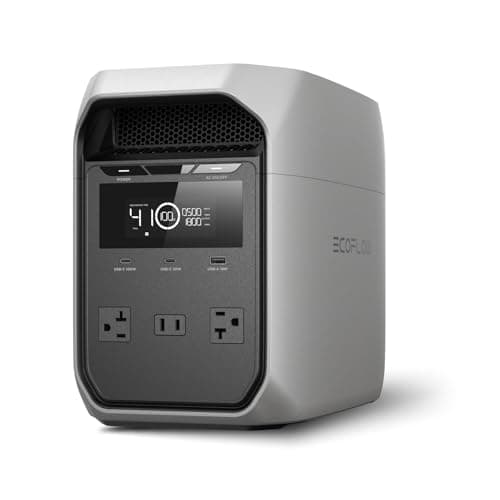
- Capacity
- 1,024 Wh
- AC output
- 1,800 W / 3,600 W surge
- Switchover
- Under 10 ms (mfr)
#3 · Best value 1 kWh with UPS
EcoFlow DELTA 3 Classic
The best-value battery on the site: UPS-grade switchover, 1,800 W and a 45-minute recharge for roughly half what the 2 kWh units cost.
#ad Price as of October 5, 2026; it may have changed since. How we are funded.
What is good
- UPS behavior at a 1 kWh price point — you can put the fridge or the home office behind it permanently
- 1,800 W continuous is higher than Jackery's 1,500 W at similar capacity
- 45 minutes to 80% and 26.7 lb
What is not
- 1,024 Wh is a single night of fridge duty, not a weekend
- X-Boost's surge figure does not apply to motor loads
- No expansion battery option on the Classic
Published specification & our scoring
- 1,024 Wh, 1,800 W output with 3,600 W surge via X-Boost (manufacturer)
- 0-80% in 45 minutes with X-Stream AC charging (manufacturer)
- Under 10 ms UPS switchover (manufacturer)
- LiFePO4 cells rated for 10+ years of daily use, EV-grade cell-to-chassis design (manufacturer)
- Published weight 26.7 lb
- Usable capacity
- 6
- Output ceiling
- 7
- UPS behavior
- 10
- Recharge speed
- 10
- Portability
- 9
- Value
- 10
Specification figures are the manufacturer’s published values. Scores are our editorial judgment from those figures and are never published as structured review data — how we pick.
The solar kit, and the rivals on idle draw and cycle life
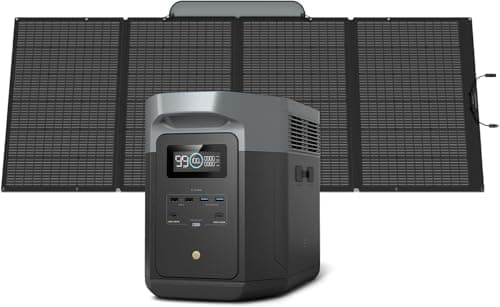
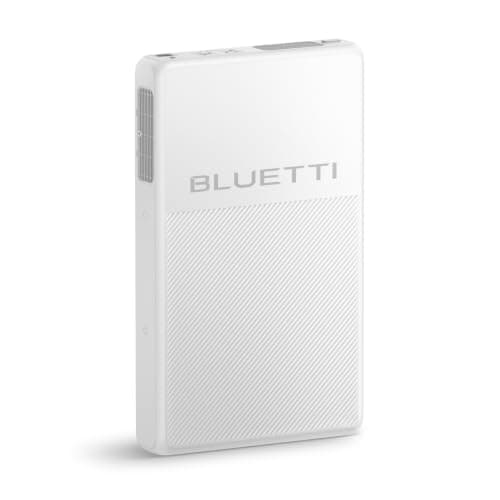
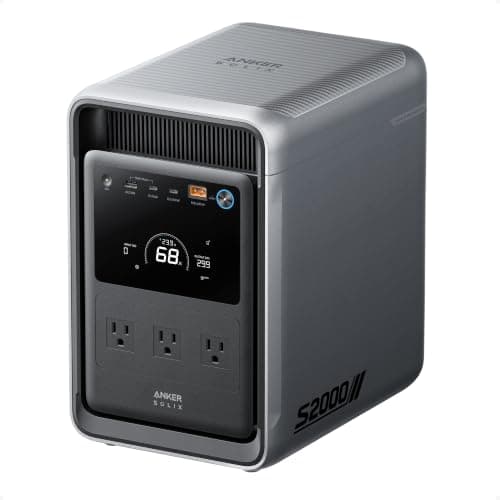
EcoFlow's solar kit adds a 400 W panel with 1,000 W of input headroom. Bluetti's FridgePower publishes a 4 W idle draw; Anker's S2000 publishes 10,000 cycles.
Questions people actually ask
Is EcoFlow DELTA good for home backup?
Yes, and particularly for two published figures: 0-80% in 43 minutes on the DELTA 2 Max, the fastest recharge here, and sub-10 millisecond UPS switchover on the DELTA 3 models, which means plugged-in equipment never notices the outage.
What is EcoFlow X-Boost and does it really work?
It reduces voltage to resistive loads so they draw less current, letting an 1,800 W unit run appliances its rating would reject. It works for heaters and kettles and should not be relied on for motors — a compressor fed reduced voltage draws heavy current while struggling to start.
Which EcoFlow DELTA is best value?
The DELTA 3 Classic: 1,024 Wh, 1,800 W, a 3,600 W surge that clears a fridge compressor's published 2,200 watt start-up, sub-10 ms UPS and 0-80% in 45 minutes, at 26.7 lb — for roughly half what the 2 kWh units cost.
How much solar can an EcoFlow DELTA take?
The DELTA 2 Max publishes 1,000 W of solar input, double what several rivals accept, which is what makes adding panels later genuinely useful. Bluetti's AC180 for comparison caps at 500 W, limiting its solar story permanently.
Does EcoFlow publish its idle power draw?
No, which is a gap given that UPS switchover invites leaving the unit permanently connected. Bluetti's FridgePower publishes 4 watts and Anker's SOLIX S2000 publishes 6 watts — figures worth knowing for a device left plugged in for months.
How many cycles does an EcoFlow DELTA last?
The DELTA 2 Max publishes 3,000 cycles to 80% capacity. That is far beyond outage-only use of perhaps 10-20 cycles a year, but it is lower than Jackery's HomePower at 6,000+ or Anker's SOLIX S2000 at 10,000 if you intend to cycle daily.
Sources
- Eugene Water & Electric Board — Generator Sizing ConsiderationsPublished appliance running and additional-starting watt figures used to judge what this machine's output actually covers.
Read next
Best Overall Power Station
The Best Home Backup Power Stations
Battery power stations ranked for home backup on surge, capacity, recharge speed and cycle life.
Top pick · Jackery Explorer 2000 v2
$898.99View on Amazon10% off
Guide
How to Recharge a Power Station in an Outage
The four recharge routes during an outage, with published charge speeds and the realistic limits of each.

Best for a Refrigerator
Best Power Station for a Refrigerator
Power stations that reliably start a fridge compressor, ranked on surge, idle draw and UPS switchover.
Top pick · Bluetti FridgePower
$899.00View on Amazon40% off
Review
Jackery for Home Backup
Jackery's Explorer and HomePower lines for home backup, with published capacity, cycle life and expansion figures.
Best Solar Kit
Best Solar Generators for Home Backup
Battery-plus-panel kits ranked on solar input ceiling and capacity, with honest expectations for real-world panel output.
Top pick · Jackery Explorer 2000 v2 + 2x200W Solar
$1,329.00View on Amazon19% off