Battery vs Engine
Portable Power Station vs Generator
Battery against generator on surge capability, runtime, placement and cost, with the two facts that decide it.
Top pick · Jackery Explorer 2000 v2
$898.99View on Amazon10% offHub
Six or seven decisions stand between a reader and the right purchase. Each page here takes one and settles it.
Disclosure: we earn a commission on purchases made through links on this page, at no cost to you. It does not affect what we recommend or what we say about it — how we are funded.
Buying backup power is not one decision. It is a short sequence of forks, and getting stuck on any one of them stops the whole project. These pages exist because the forks are where people actually stall — not at "which model" but at "which kind".
Every one of them names the cases where each side wins, rather than declaring an overall victor. That is not fence-sitting. Most of these forks genuinely do have two right answers depending on one or two facts about your house, and a page that pretends otherwise is useless to half its readers.
Where a comparison involves products, both sides carry live prices and buy links, because a comparison that sends you away to search for the thing you just decided on has wasted your time. Where a comparison involves installation, we say plainly what is licensed work and what is not.
And where a figure is a manufacturer's claim rather than something independently verified, the page says so. We do not run a test lab — see our methodology — so every specification here is attributed to whoever published it, including the places where two published sources disagree.
If you only read one line of each
That last one is the most common misunderstanding in this category: an inlet box is where the cord plugs in, a transfer switch is what stops back-feeding. A compliant setup usually needs both.
Picks
Each tile carries the top pick from that page with a live price, so you can act from here rather than having to read a review first.
Battery vs Engine
Battery against generator on surge capability, runtime, placement and cost, with the two facts that decide it.
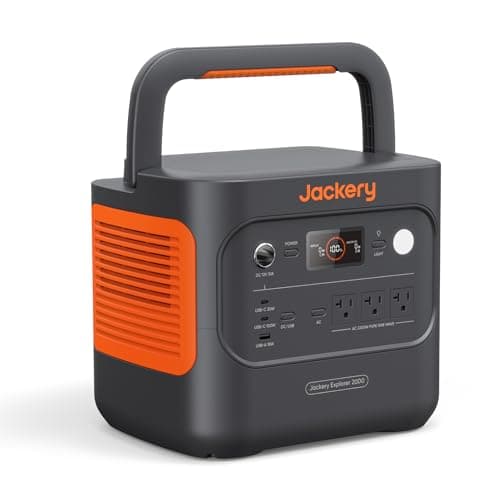
Top pick · Jackery Explorer 2000 v2
$898.99View on Amazon10% off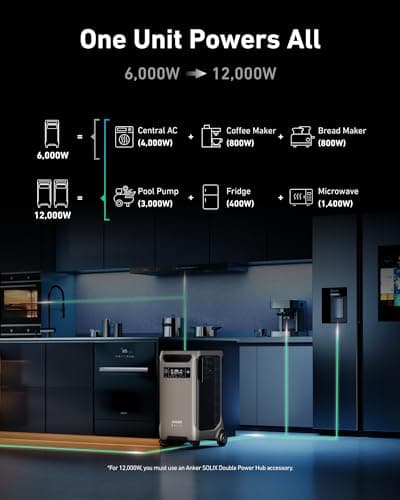
Comparison
Installed home battery systems against generators, and the expandable portable units that sit between them.
Top pick · Anker SOLIX F3800
$1,979.99View on Amazon10% off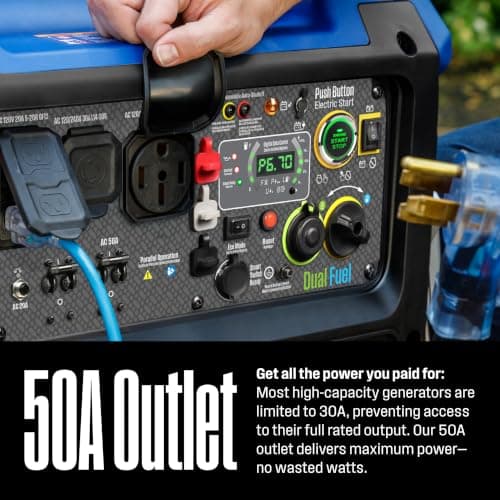
Inverter vs Conventional
Inverter against conventional generators on published noise, THD, fuel economy and output per dollar.
Top pick · Westinghouse iGen12000DFc 12,000W Dual Fuel Inverter
$1,899.00View on Amazon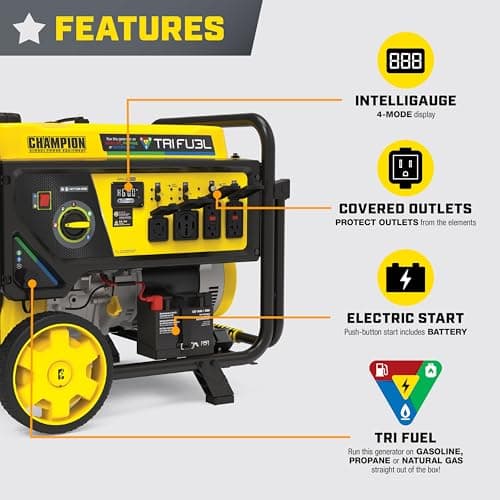
Fuel Comparison
Gasoline, dual fuel and tri-fuel compared on published per-fuel output, storage life and what survives a long outage.
Top pick · Champion 12,500W Tri-Fuel Home Backup
$1,259.99View on Amazon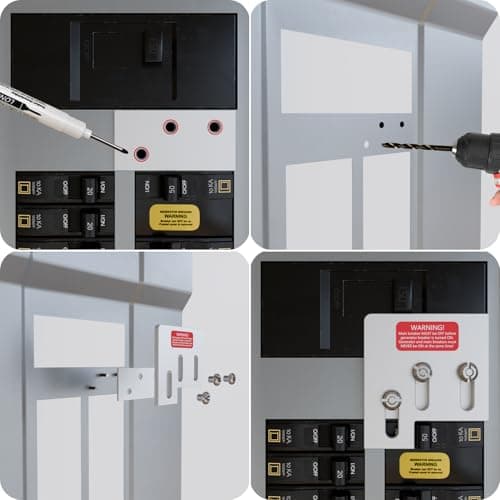
Connection Comparison
Interlock kit against transfer switch on cost, circuit access, load management, panel fit and inspection risk.
Top pick · SPZOCE Interlock Kit — Square D QO/Homeline 150/200A
$26.99View on Amazon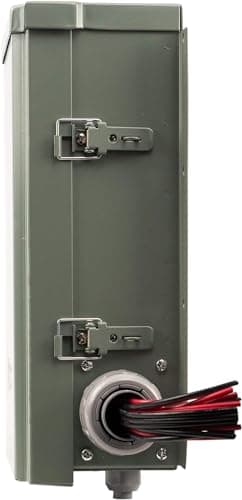
Comparison
Why an inlet box and a transfer switch are complementary rather than alternatives, and which switches include an inlet.
Top pick · Connecticut Electric EmerGen EGS1012KG2 50A 10-Circuit
$379.99View on Amazon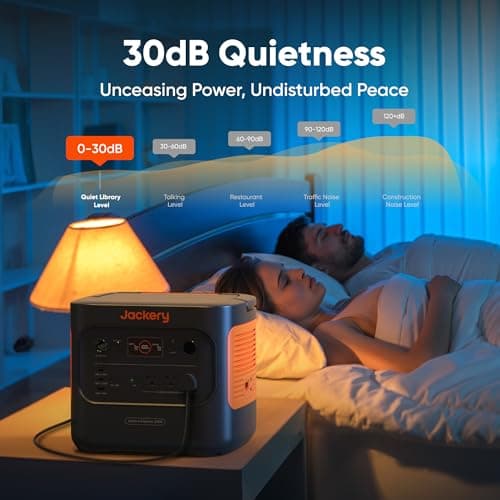
Comparison
Solar kits against gas generators on refueling, output, surge capability and real-world panel performance.
Top pick · Jackery Explorer 2000 v2 + 2x200W Solar
$1,329.00View on Amazon19% off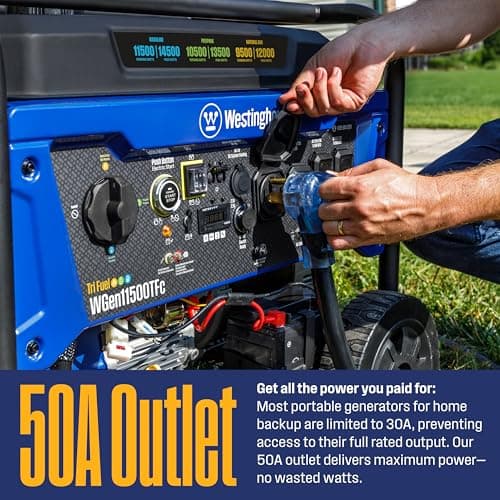
Comparison
Portable against permanently installed standby generators, and where the top of the portable range starts to overlap.
Top pick · Westinghouse WGen11500TFc 14,500W Tri-Fuel
$1,499.00View on AmazonA battery is better for small loads, short outages and anyone who needs to run indoors or quietly. A generator is better for motor loads like well pumps and sump pumps, and for outages measured in days. The surge requirement of your largest load is usually the deciding fact.
A transfer switch is a sub-panel with a fixed set of circuits fed from either source. An interlock kit is a plate on your existing panel that stops the main breaker and a generator breaker being on together, giving access to every circuit. The kit is far cheaper; the switch manages load for you.
It is quieter, more fuel-efficient at light load and produces cleaner power, and it costs significantly more per watt. For a machine run a few days a year in a place where noise is not an issue, a conventional frame is often the rational buy.
Usually yes, and this is a common misunderstanding. The inlet box is the weatherproof outdoor socket your generator cord plugs into; the transfer switch is what prevents your generator from back-feeding the utility. Some transfer switches include an integrated inlet, which removes the need for a separate box.
An installed home battery is silent, maintenance-free and seamless, and it is substantially more expensive per kilowatt-hour of backup than a generator. It makes most sense where outages are short and frequent, where solar is already installed, or where running an engine is not practical.