Generator Sizing
What Size Generator for a Well Pump?
The running load is modest. The start-up surge is what stalls undersized generators, and on a deep well it is brutal.
Written byMike M.
Published
Disclosure: we earn a commission on purchases made through links on this page, at no cost to you. It does not affect what we recommend or what we say about it — how we are funded.
The short answer
EWEB's published chart puts a 1/3 HP water well pump at 1,000 running watts with 2,000 additional starting watts. On its own that needs a generator with about 1,250 running watts and 3,000 starting watts. In a realistic essential-circuit plan — pump, fridge, furnace blower and lighting — you are looking at roughly 4,400 running watts and 5,700 starting watts. Pumps larger than 1/3 HP surge considerably harder and are not in the published chart: read the nameplate.
A well pump is the load that most often turns a modest generator purchase into a large one, and it does so for one reason: the surge. Losing the well means no drinking water, no flushing and no washing, so it is also one of the loads people least want to leave off the list.
What the published figure actually covers
| Pump | Running watts | Additional starting watts | Source |
|---|---|---|---|
| Water well pump, 1/3 HP | 1,000 | 2,000 | EWEB |
| Sump pump, 1/3 HP | 800 | 1,300 | EWEB |
| Sump pump, 1/2 HP | 1,050 | 2,200 | EWEB |
Many residential wells, and most deep ones, use pumps well above 1/3 HP. Neither chart we cite publishes figures for them, so we will not print one. What we can quote is a manufacturer's statement: SoftStartUSA's listing for its well-pump soft starter says that deep well pumps typically need 65-75 amps to start. At 240 volts that is 15,600 to 18,000 watts of instantaneous draw — a figure no portable generator meets as a steady rating, and one that only gets handled because it lasts a fraction of a second and the generator's peak rating plus its rotating inertia absorb it.
The realistic whole-house version
Nobody runs a well pump on its own. Here is the load that actually matters:
Well, heat, fridge and lights
- Well pump, 1/3 HP
- 1,000 W
- Refrigerator
- 700 W
- Furnace blower, 1/3 HP
- 700 W
- Sump pump, 1/3 HP
- 800 W
- Lighting + electronics
- 300 W
- Total running
- 3,500 W
- Largest surge (fridge, 2,200 W)
- +2,200 W
- Starting watts needed
- 5,700 W
- Derated running minimum
- 4,400 W
On a 1/3 HP pump the refrigerator's surge is actually larger than the pump's, so the fridge sets the starting requirement. On a 1/2 HP or larger pump that reverses, and the pump dominates.
4,400 running watts and 5,700 starting watts is a 5,000-6,500 running-watt dual fuel generator through a 30 amp transfer switch. That is the standard, correct answer for a house on a well with gas heat.
The cheaper route: attack the surge
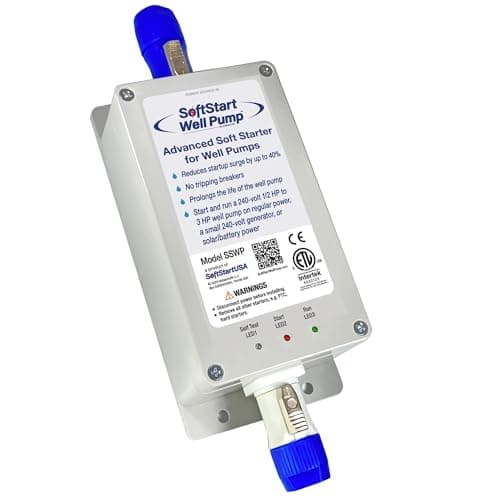
If your pump is large enough that its surge is driving your generator two classes up, there is an alternative worth pricing. A well-pump soft starter ramps the motor rather than slamming it on. SoftStartUSA publishes a claimed inrush reduction of up to 50%, and states it will start pumps on generators as small as 3,000 watts, covering 0.5-1.5 HP 120 V pumps and all 240 V pumps up to 3.5 HP.
If that claim holds for your pump, the saving on the generator is typically several times the soft starter's cost — and you keep the benefit permanently, because gentler starts are easier on the pump too. Two caveats, both real: it is wiring work at the pump control, which is licensed in most places, and it reduces the surge, not the running load. The generator still has to carry the pump continuously.
Soft starter, or more generator
Running a well pump on a smaller generator
SoftStartUSA SoftStart Well Pump Soft Starter
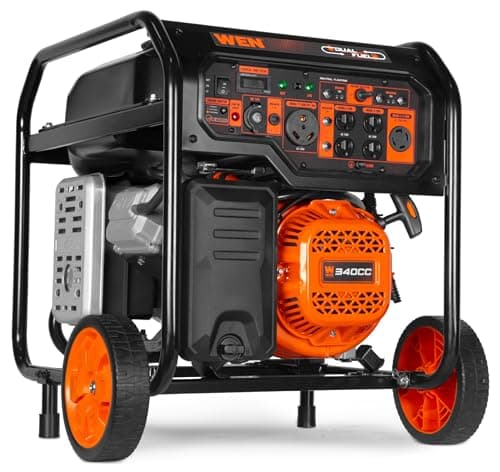
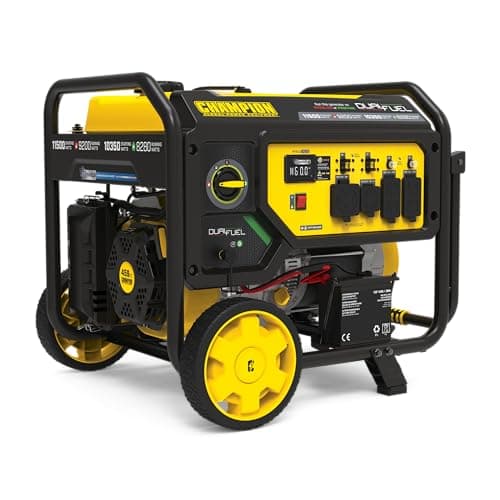
Published propane numbers you can plan on
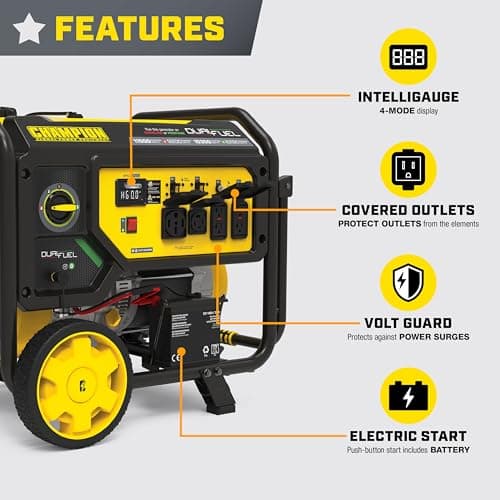
Champion 11,500W Dual Fuel Electric Start
Price the soft starter against the difference between the two generators before deciding. On a large pump it usually wins; on a 1/3 HP pump it is unnecessary.
Connection notes specific to wells
A well pump is hard-wired and 240 volts, which has two consequences. First, you cannot reach it with an extension cord — it needs a transfer switch or interlock kit, no exceptions. Second, your generator must actually have a 240 V outlet: most inverter generators do not, which quietly rules out a large part of that category for anyone on a well.
Practical guide to the hookup side: how to hook up a well pump to a generator. Machine recommendations: best generator for a well pump.
Questions people actually ask
How big of a generator do I need to run a well pump?
For a 1/3 HP pump alone, about 1,250 running watts and 3,000 starting watts using EWEB's published figures. In a realistic plan alongside a fridge, furnace and lighting, about 4,400 running watts and 5,700 starting watts. Larger pumps surge much harder — read the nameplate.
How many watts does a well pump use?
EWEB's chart lists a 1/3 HP water well pump at 1,000 running watts with 2,000 additional watts to start. Pumps above 1/3 HP are not in the published chart; one soft-starter manufacturer states deep well pumps typically draw 65-75 amps to start, which at 240 volts is a very large instantaneous figure.
Will a 5000 watt generator run a well pump?
A 1/3 HP pump, yes, comfortably, and with room for a fridge, a furnace blower and lighting alongside it. A larger deep-well pump may not start on a 5,000 watt machine depending on its inrush, which is why the nameplate matters more than a generic figure.
Can a battery power station run a well pump?
Generally not, because almost no portable battery can supply a 2,000-plus watt motor surge. A soft starter changes that calculation — one manufacturer explicitly markets starting pumps on solar and off-grid systems — but a generator remains the straightforward answer for a well.
Do I need a 240 volt generator for a well pump?
Almost certainly yes: residential well pumps above the smallest sizes are 240 volt and hard-wired. That means a generator with an L14-30R or 14-50R outlet and a transfer switch or interlock kit. Most inverter generators have no 240 volt output at all.
Is a soft starter worth it for a well pump on a generator?
On a larger pump, frequently yes. The manufacturer claims up to 50% inrush reduction and compatibility with 0.5-1.5 HP 120 V and up to 3.5 HP 240 V pumps. If it moves you down a generator class the saving usually exceeds its cost, and gentler starting is easier on the pump as well.
Sources
- Eugene Water & Electric Board — Generator Sizing ConsiderationsPublic-utility wattage chart: the running and additional-starting figures quoted on this page, and the add-the-single-largest-surge method.
- SoftStartUSA — well pump soft starter listingManufacturer claims quoted on this page: 65-75 A typical deep-well starting current, up to 50% inrush reduction, and the published pump compatibility range.
Read next
Best for a Well Pump
Best Generator for a Well Pump
Generators with the 240V outlets and surge headroom a well pump needs, plus the soft-starter alternative.
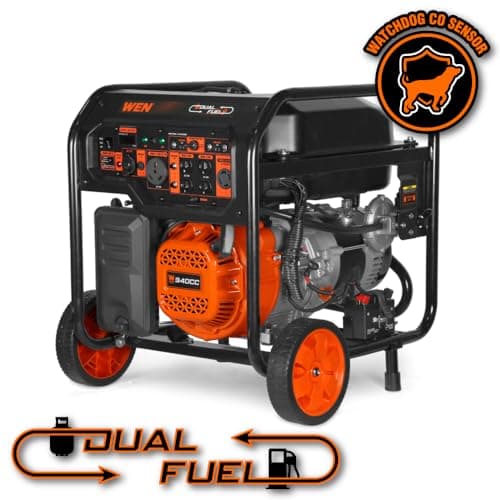
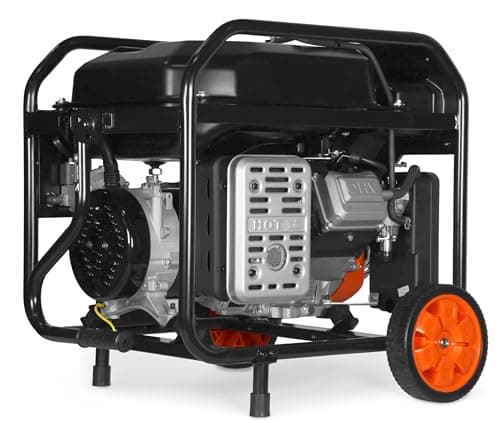
Top pick · WEN DF8000X 8,000W Dual Fuel
$623.17View on Amazon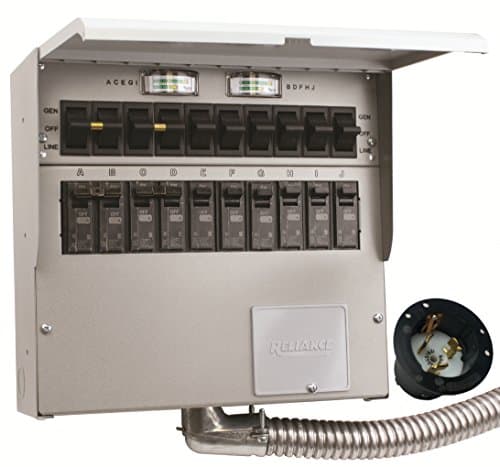
Guide
How to Hook Up a Well Pump to a Generator
What a well pump needs from a generator and from the connection, including the 240V requirement and the soft-starter route.
Guide
Starting Watts vs Running Watts
What the surge figure means, why motors need it, and how to read the peak-watt number on a generator box.
Reference
Appliance Wattage Chart
The site's reference wattage table, with each row's source named and both figures shown wherever the published charts disagree.
Best Transfer Switch
The Best Generator Transfer Switches
Transfer switches ranked on circuit count, amp rating and kit completeness, from 6-circuit 30A to 10-circuit 50A.
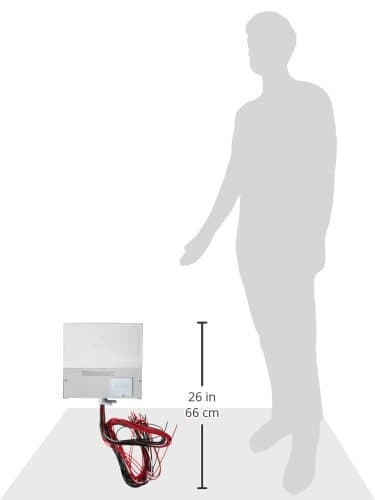
Top pick · Reliance Controls 310CRK 10-Circuit 30A Kit
$474.76View on Amazon