Generator Sizing
What Size Generator for a 30 Amp Camper?
A 30 amp RV service is 3,600 watts on a single 120-volt leg — and your air conditioner wants most of it.
Written byMike M.
Published
Disclosure: we earn a commission on purchases made through links on this page, at no cost to you. It does not affect what we recommend or what we say about it — how we are funded.
The short answer
A 30 amp RV service is a single 120-volt leg at 30 amps, which is 3,600 watts maximum. A generator with 3,500 to 4,000 running watts matches it well: enough to run a 13,500 BTU air conditioner plus lights and a fridge, with surge headroom for the compressor. Going much above 4,000 running watts buys nothing on a 30 amp hookup, because the TT-30R outlet cannot pass more than 3,600 watts.
RV electrical confuses people because the number on the plug is amps, not watts, and because 30 amp and 50 amp RV services are not simply bigger and smaller versions of each other — they are wired differently.
What 30 amps actually means
The 30 amp RV service
- Connector
- TT-30 (3-prong)
- Voltage
- 120 V, single leg
- Current
- 30 A
- Maximum power
- 3,600 W
- Practical continuous
- ~2,880 W (80%)
A TT-30 plug looks like a 240 V connector to people used to household wiring, but it is not — it is one 120 V hot leg, a neutral and a ground. 120 V times 30 A is 3,600 W.
That 3,600 watt ceiling is a hard limit of the connection. A 9,500 running-watt generator plugged into a 30 amp RV through its TT-30R outlet delivers 3,600 watts, the same as a 4,000 watt machine, because the outlet and the RV's own breaker say so.
Where the 3,600 watts goes
In most 30 amp campers, the air conditioner is the dominant load and everything else is housekeeping. A 13,500 BTU RV air conditioner is the common fitment, and Honda's listing for the EU3000iS names "most 13,500 BTU RV AC units" explicitly as being within its 3,000 watt capability — which tells you the running load sits well under 3,000 watts but the start-up surge is what demands the capacity.
Add a refrigerator on electric, some lighting, a water pump cycling and device charging, and you are comfortably inside 3,600 watts — provided the AC compressor can start. Which is the whole game.
Why an inverter generator, specifically, for RV use
Three reasons that all happen to matter more in a campground than at home:
- Noise. Campgrounds have quiet hours and neighbors ten feet away. Published figures of 53-61 dBA against about 74 dBA for a conventional frame is not a marginal difference.
- Weight. You are carrying it. A 53 lb inverter against a 200 lb open-frame machine decides whether it comes along at all.
- Clean power. RV electronics, converters and modern AC control boards all benefit, and most inverter machines publish THD below 3%.
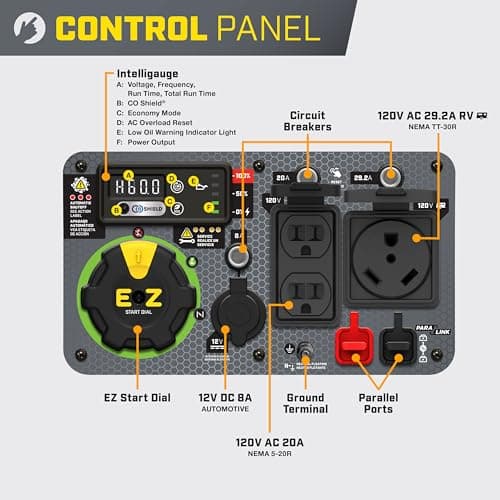
There is also a practical convenience: most inverter generators in this class include a TT-30R outlet specifically for RV use, so the RV's own cord plugs straight in with no adapter. Champion's 4,500 W units, WEN's 56432i and Westinghouse's iGen5000 series all list one.
The parallel option, which suits RVs particularly well
Two smaller inverter generators linked with a parallel kit produce the combined output of both, and for RV use that is often better than one larger machine: each unit is light enough for one person, you can take only one for a trip that does not need AC, and if one fails you still have power.
Champion's ParaLINK kit states that linking two 2,500 W-or-higher Champion inverters provides enough power to start and run two 15,000 BTU RV air conditioners. The constraint is brand compatibility: parallel kits generally only link units from the same maker, and often only within a model range.
The short answer
Generators that match a 30 amp camper
| # | Product | Best for | Score | Price |
|---|---|---|---|---|
| 1 | 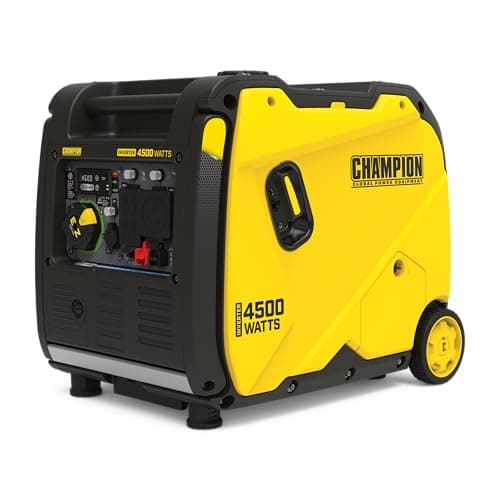 Champion 4,500W RV Ready Inverter The best balance of quiet, clean power and real output for cord-based backup: enough for the essentials, under 3% THD, half the price of the Honda equivalent. | Quiet backup at a sane price | 8.5/10 | $674.10 |
| 2 | 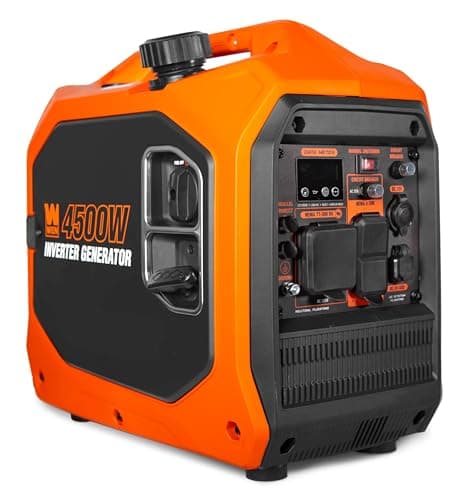 WEN 56432i 4,500W Inverter The cheapest honest route to 3,600 watts of clean power at a weight one person can move — accepting no CO shutoff and pull-start only. | Cheapest clean 3,600 running watts | 7.7/10 | $471.74 |
| 3 | 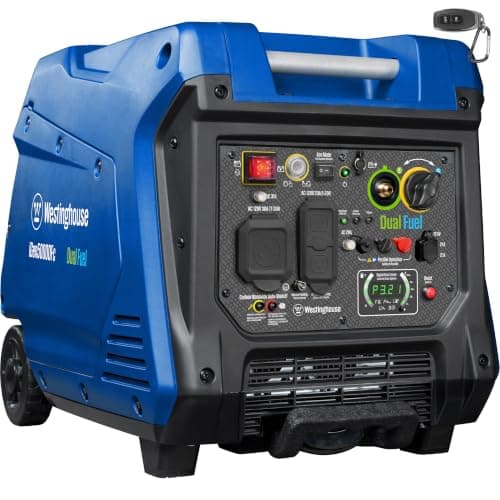 Westinghouse iGen5000DFc 5,000W Dual Fuel Inverter The quietest way to get around 4,000 running watts on either fuel, provided you are running cords rather than a transfer switch. | Quietest dual fuel at 4,000 running watts | 8.6/10 | $999.00 |
| 4 | 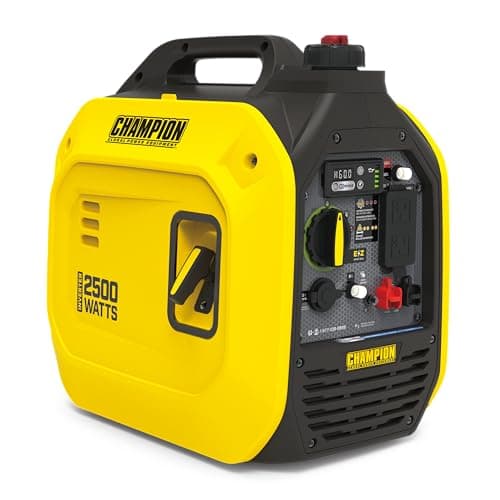 Champion 2,500W Ultralight Inverter The best-documented ultralight inverter: a real 53 dBA figure at a stated distance, 39.7 lb, and a parallel path if you need more later. | Published 53 dBA at 39.7 lb | 7.4/10 | $518.25 |
#ad Prices as of October 5, 2026; they may have changed since. Scores are our editorial judgment from published specifications, not test results — how we pick. How we are funded.
If you would rather run two small units
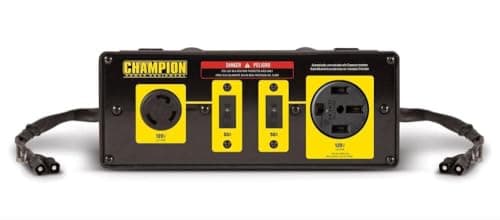
Champion ParaLINK — links two 2,500 W-or-higher Champion inverters. Brand-specific; it will not link a Champion to a WEN or a Honda.
If you have a 50 amp RV
Different wiring entirely: two 120 V legs at 50 amps each, 12,000 watts total, usually on a 14-50 connector. See what size generator for a 50 amp RV — the answer is a much larger machine, and it is worth checking whether you actually need the full service.
Questions people actually ask
What size generator do I need for a 30 amp camper?
3,500 to 4,000 running watts matches it well. A 30 amp RV service is 120 volts at 30 amps, which is 3,600 watts maximum, so anything substantially larger cannot deliver its extra capacity through the TT-30 connection anyway.
How many watts is a 30 amp RV hookup?
3,600 watts. A 30 amp RV service is a single 120-volt leg at 30 amps, and 120 multiplied by 30 is 3,600. It is not a 240-volt connection, despite the TT-30 plug looking unfamiliar to people used to household wiring.
Will a 3500 watt generator run my RV air conditioner?
A 13,500 BTU RV air conditioner is usually within reach, provided the generator's peak rating covers the compressor surge while the fridge and lights are already running. Honda lists its 3,000 watt EU3000iS as suitable for most 13,500 BTU RV AC units, which suggests the running load is well under 3,000 watts.
Can I use a bigger generator on a 30 amp RV?
You can plug it in safely, but you cannot use the extra capacity: the TT-30 outlet and the RV's own breaker cap delivery at 3,600 watts. You would be carrying and fueling capacity the connection cannot pass.
Is it better to run two small generators in parallel for an RV?
Often yes. Two units are each one-person portable, you can take just one when air conditioning is not needed, and a failure does not leave you with nothing. Champion states its ParaLINK kit linking two 2,500 W-plus inverters provides enough power for two 15,000 BTU RV air conditioners. Parallel kits are brand-specific.
Read next
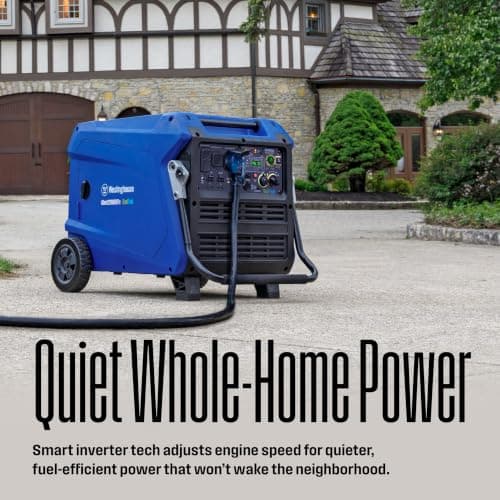
Guide
What Size Generator for a 50 Amp RV?
What a 50 amp RV service provides, what a big rig actually draws, and the honest answer about not needing the full 12,000 watts.
Best for RV
Best Inverter Generators for an RV
Inverter generators for RV use, matched to the 3,600 watt ceiling of a 30 amp service, with the TT-30R outlet called out.
Top pick · Champion 4,500W RV Ready Inverter
$674.10View on Amazon10% off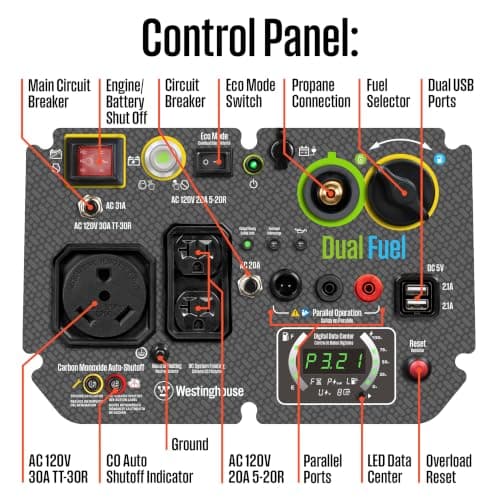
Best Quiet Inverter
Best Quiet Inverter Generators for Home Backup
Inverter generators ranked on published noise and THD figures, with the brands that publish no measurable claim named.
Top pick · Westinghouse iGen5000DFc 5,000W Dual Fuel Inverter
$999.00View on Amazon23% off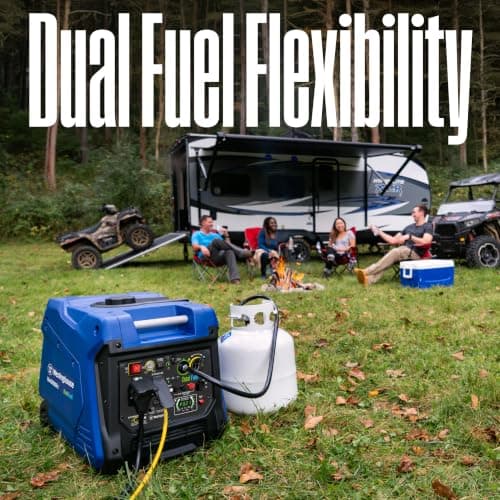
Guide
How Quiet Is a Quiet Generator?
Published decibel ratings side by side with their measurement conditions, and what a dB difference actually means.
Guide
What Size Generator Do I Need?
The core sizing method: total running watts, add the single biggest surge, derate for continuous running, then match a wattage class.