Costs
Propane vs Gasoline for a Generator
Propane is usually not cheaper to run. It wins on something else entirely, and that something else is worth more.
Written byMike M.
Published
Disclosure: we earn a commission on purchases made through links on this page, at no cost to you. It does not affect what we recommend or what we say about it — how we are funded.
The short answer
Propane carries fewer BTU per gallon than gasoline, so a generator burns more volume of propane for the same work — which usually makes it dearer per unit of energy, not cheaper. It also costs about 10% of the generator's output, consistently across manufacturers' published figures. Its advantages are elsewhere and they are substantial: propane stores indefinitely while gasoline degrades in months, and a tank swap is cleaner and safer than pouring gasoline near a hot engine.
The claim that propane is "cheaper to run" is repeated constantly and is usually wrong. Here is the actual comparison on each axis that matters.
Energy content: gasoline wins
Propane has a lower energy density per gallon than gasoline. The practical consequence is that a generator consumes more gallons of propane to produce the same watt-hours. So even at an identical price per gallon, propane costs more per unit of work.
Two further things usually push the propane cost up rather than down: an exchange-cage tank swap is typically dearer per gallon than a refill, and exchange tanks are generally filled to around 80% of their nominal capacity, so a "20 lb" tank holds less than the number implies.
Put your own local prices into the fuel cost calculator rather than trusting any general claim — including this one.
Output: gasoline wins, by about 10%
| Machine | Running watts, gasoline | Running watts, propane | Penalty |
|---|---|---|---|
| Westinghouse WGen10500DFc | 10,500 W | 9,500 W | 9.5% |
| Westinghouse WGen9500DF | 9,500 W | 8,500 W | 10.5% |
| Champion 11,500 W dual fuel | 9,200 W | 8,280 W | 10.0% |
| WEN DF1100T | 8,300 W | 7,500 W | 9.6% |
| WEN DF8000X | 6,500 W | 5,850 W | 10.0% |
| Westinghouse WGen5300DFc | 5,300 W | 4,800 W | 9.4% |
Storage: propane wins, decisively
This is the axis that decides the argument, and it is not close.
Modern pump gasoline contains ethanol, which draws moisture from the air. The fuel oxidizes, leaves gums and varnish in a carburetor's small passages, and in enough quantity the ethanol-water mixture separates out and corrodes. STA-BIL states its storage stabilizer keeps gasoline fresh for up to 24 months — which is an admission about how short untreated gasoline's life is.
Propane in a sealed tank does none of that. Not in a year, not in five. No stabilizer, no rotation schedule, no gummed carburetor.
For a machine that runs perhaps ten hours a year, storage life is the dominant real-world property, because the most common generator failure is not wear — it is a machine that will not start because the fuel sat.
Refueling: propane wins on safety
Related benefits: propane generally burns cleaner with less carbon deposit and less oil contamination, and there is no ethanol to corrode fuel system components.
Availability in an outage: propane usually wins
Gas station pumps are electric. In a regional outage they do not work, and the stations with backup power have queues measured in hours. Propane exchange cages do not need electricity to operate, so they are often restocked and accessible while pumps are still dead.
You can also simply hold more propane, because it does not go bad. Four tanks in the garage is a legitimate standing plan; forty gallons of gasoline rotated annually is a chore.
The summary, honestly
Who wins what
- Cost per unit of work
- Gasoline
- Output from the same machine
- Gasoline, by ~10%
- Storage life
- Propane, decisively
- Refueling safety
- Propane
- Availability in an outage
- Propane, usually
- Engine cleanliness
- Propane
Which is why dual fuel is the sensible answer: run gasoline when you have fresh gasoline and want maximum output, and propane when the machine has been sitting or the stations are dead.
And the reason to buy dual fuel rather than choosing a side: you do not have to. Run whichever fuel the situation hands you.
The option that beats both on cost and runtime
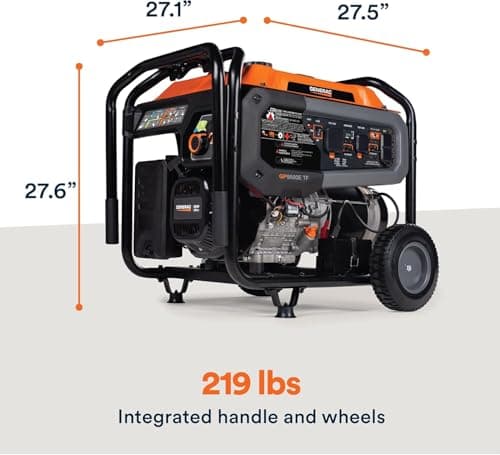
Natural gas, if you have a line. It is generally the cheapest per BTU, it needs no storage, and it does not run out — Generac's tri-fuel listing describes connecting to a natural gas line for virtually unlimited runtime.
The costs: a larger output derating of 15-25% rather than 10%, and a licensed gas connection on the house side that must be arranged in advance. See best tri-fuel generators.
The short answer
Dual fuel, and the tri-fuel upgrade
| # | Product | Best for | Score | Price |
|---|---|---|---|---|
| 1 | 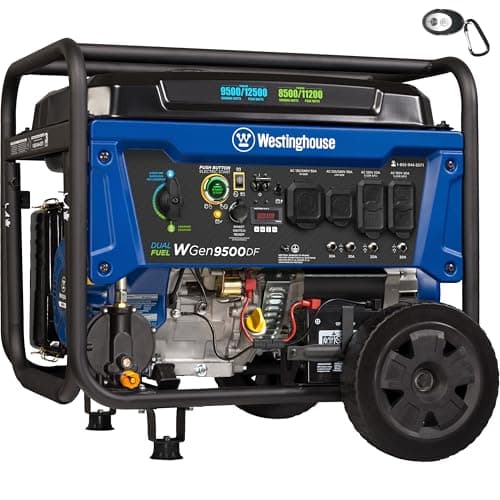 Westinghouse WGen9500DF 12,500W Dual Fuel The most broadly sensible home backup generator on the market: enough running watts for a whole essential-circuit panel, both transfer-switch outlets, and dual fuel — with the caveat that it has no CO shutoff. | The default whole-house pick | 8.8/10 | $999.00 |
| 2 | 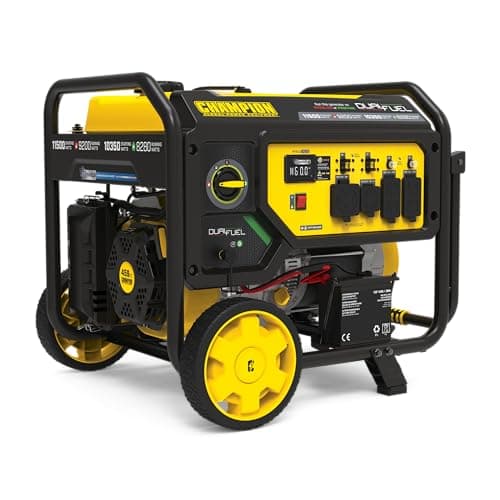 Champion 11,500W Dual Fuel Electric Start The most honestly specified generator in its class, with CO shutoff and the best after-sale support in the category. | Published propane numbers you can plan on | 8.7/10 | $989.99 |
| 3 | 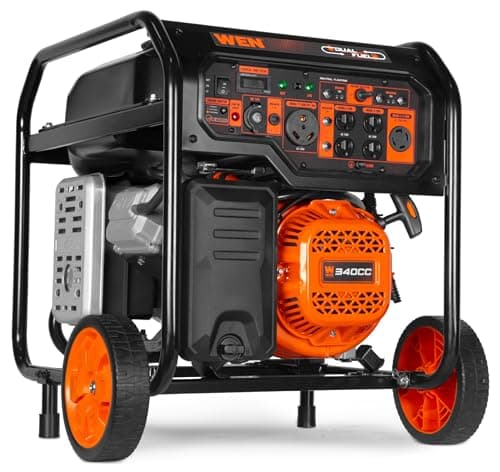 WEN DF8000X 8,000W Dual Fuel The best-value correctly-sized home backup generator here: enough for every essential circuit, dual fuel, CO shutoff, a real transfer-switch outlet, and no money spent on capacity you will not use. | Essential circuits, dual fuel, lowest cost | 8.5/10 | $623.17 |
| 4 | 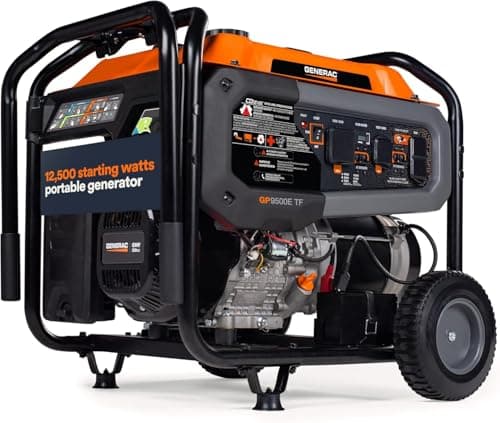 Generac 12,500W Starting Tri-Fuel The cheapest credible way to get a generator onto your home's natural gas line, which is the one fuel supply an outage usually does not interrupt. | Natural-gas hookup at the best price | 9.1/10 | $920.00 |
| 5 | 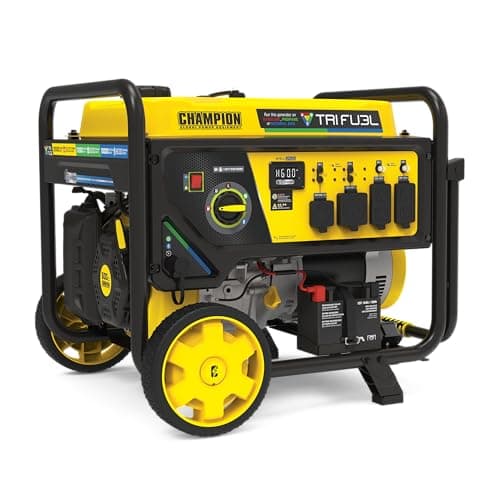 Champion 12,500W Tri-Fuel Home Backup The most complete tri-fuel package on the shelf: three fuels, both hoses, every output figure published, CO shutdown included. | Tri-fuel with both hoses in the box | 9.0/10 | $1,259.99 |
#ad Prices as of October 5, 2026; they may have changed since. Scores are our editorial judgment from published specifications, not test results — how we pick. How we are funded.
One of each, whichever way you go
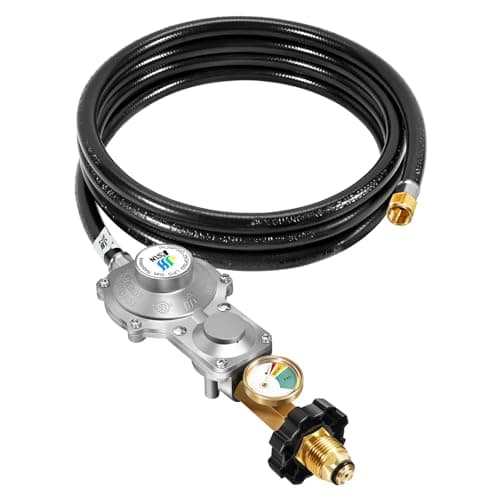
Running a dual fuel generator on a tank
GasSaf 10 ft Two-Stage Propane Regulator + Hose
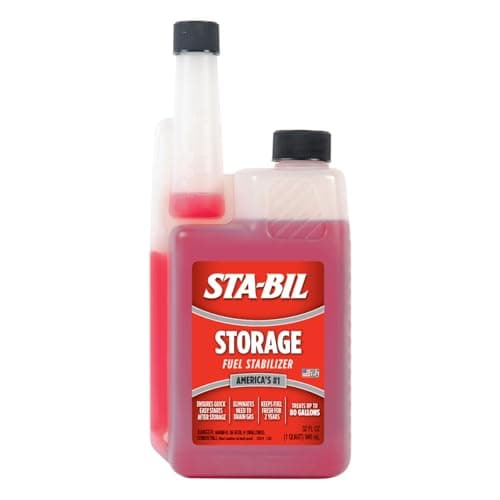
A two-stage regulator holds propane pressure steady as the tank empties. Stabilizer keeps whatever gasoline you store usable. Both are small purchases that make the fuel plan actually work.
Questions people actually ask
Is propane cheaper than gasoline for a generator?
Usually not per unit of work. Propane carries fewer BTU per gallon, so a generator burns more volume for the same output even at a similar per-gallon price. Exchange-cage swaps are also typically dearer than refills, and exchange tanks are filled to about 80% of nominal capacity.
How much power do you lose running on propane?
About 10%, remarkably consistently. Every machine in this registry that publishes both fuels lands within a point of it: Westinghouse's WGen9500DF goes from 9,500 to 8,500 running watts, Champion's 11,500 W from 9,200 to 8,280.
Why use propane if it costs more and gives less power?
Storage. Propane in a sealed tank does not degrade, while gasoline with ethanol deteriorates within months and a gummed carburetor is the most common reason a stored generator will not start. Propane also makes refueling safer — no liquid fuel near a hot engine.
How long does propane last in storage?
Indefinitely in a sealed tank. It does not oxidize or absorb moisture the way gasoline does, which is why there is no stabilizer and no rotation schedule. That is the single strongest argument for dual fuel on a machine that sits unused.
Is it easier to get propane or gasoline in an outage?
Usually propane. Gas station pumps are electric and do not work in a regional outage, while propane exchange cages need no power to operate and are often restocked while pumps are still dead. You can also hold more propane, because it does not go bad.
Is natural gas cheaper than both?
Generally yes per BTU, and it needs no storage and does not run out. The costs are a larger output derating of 15-25% versus gasoline, and a licensed gas connection on the house side that has to be arranged in advance rather than during a storm.
Sources
- US Energy Information Administration — Gasoline and Diesel Fuel UpdateWhere to find the current national and regional gasoline price to put into the fuel cost calculator. We do not reproduce the figure, because it changes weekly.
- US Energy Information Administration — Propane and Heating Oil PricesWhere to find current residential propane prices for the same purpose.
- STA-BIL Storage Fuel Stabilizer — manufacturer listingThe 24-month treated-gasoline claim cited as evidence of untreated fuel's short life.
Read next
Guide
Generator Fuel Cost Calculator
An interactive running-cost calculator using your own fuel price and load, with the formula shown.
Guide
Is a Dual Fuel Generator Worth It?
The real argument for dual fuel — fuel storage, not running cost — plus the honest case against it.

Guide
Generator Fuel Storage and Stabilizer
Fuel degradation, stabilizer shelf-life claims, safe storage quantities and containers, and the propane alternative.
Fuel Comparison
Dual Fuel vs Tri-Fuel vs Gasoline
Gasoline, dual fuel and tri-fuel compared on published per-fuel output, storage life and what survives a long outage.
Best Dual Fuel
Best Dual Fuel Generators for Home Backup
Dual fuel generators ranked on both fuels' published running watts, with the brands that decline to publish propane figures named.
Top pick · Westinghouse WGen9500DF 12,500W Dual Fuel
$999.00View on Amazon