Outage Prep
Hurricane Season Power Preparation
Multi-day outages change the calculation. Runtime and fuel logistics matter more than how many watts the machine makes.
Written byMike M.
Published
Disclosure: we earn a commission on purchases made through links on this page, at no cost to you. It does not affect what we recommend or what we say about it — how we are funded.
The short answer
- Fuel logistics beat wattage. In a multi-day regional outage, gas stations have no power either. Propane or natural gas is the plan that survives day three.
- Charge everything before landfall — batteries, phones, power stations. Several power stations publish storm alerts that fast-charge themselves automatically.
- Heat is not the problem; humidity and refrigeration are. Prioritize the fridge, fans and the sump pump.
- Buy before the season, not before the storm. Generators, cords and fuel cans are the first things to sell out.
Every piece of generic generator advice assumes an outage of hours. Hurricane-season outages can run for days or weeks across a whole region, and that changes which features actually matter. The machine that is best for a six-hour outage is often not the one you want on day four.
The thing that changes: fuel logistics
In a regional outage the gas stations have no power either. Their pumps are electric. The ones with backup generators have queues measured in hours, and the roads may not be passable.
So the question stops being "how many watts" and becomes "how do I keep this running on day four". That reorders the priorities considerably:
What matters in a multi-day outage
- 1. Fuel that does not require a trip
- Natural gas, then propane
- 2. Runtime per tank
- Fewer refuels, fewer night trips
- 3. Fuel efficiency at light load
- Inverter machines with eco mode
- 4. Running watts
- Still matters, but less than above
Note that raw wattage drops to fourth. A 13,000 watt generator with an empty tank is worth nothing; a 6,500 watt machine plumbed to a gas line runs indefinitely.
Natural gas is the strongest answer, if you have a line
A plumbed natural gas supply does not run out, which removes the entire fuel logistics problem. Generac's tri-fuel listing states it plainly: connect to a natural gas line for virtually unlimited runtime.
The costs are real and worth stating: natural gas reduces output by roughly 15-25% versus gasoline (Champion's tri-fuel drops from 10,000 to 8,000 running watts; WEN's TF-1450X from 11,500 to 8,750), and the house-side gas quick-connect is licensed gas work that has to be arranged in advance — not in the week before a storm.
Several machines include both hoses. Champion's 12,500 W tri-fuel ships with natural gas and propane hoses in the box, which is unusual and removes a delivery-day disappointment. See best tri-fuel generators.
Propane if you do not
Propane's advantages compound in a long outage: it stores indefinitely so you can hold a real quantity, tank swaps are clean and fast compared with pouring gasoline, and exchange cages are often restocked when gas pumps are still dead.
The output penalty is about 10% — Westinghouse's WGen9500DF publishes 9,500 running watts on gasoline and 8,500 on propane. That is a small price for a fuel that is still usable on day ten.
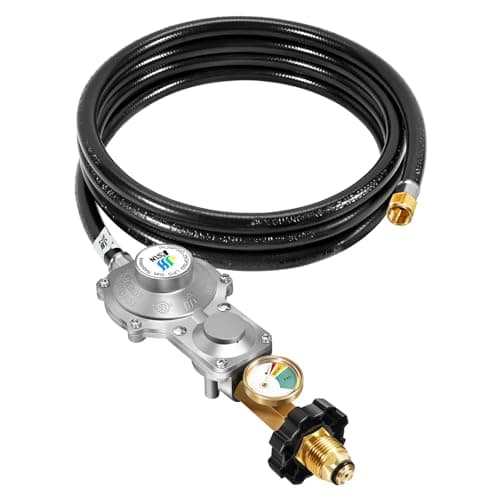
A two-stage regulator matters here, because it holds output pressure steady as a tank empties. GasSaf's 10-foot unit publishes an 11 inch water column output and up to 180,000 BTU, and the 10-foot length keeps the tank well away from the hot machine.
What to do in the week before a storm
- 1Fill every fuel container and add stabilizer, even to fuel you expect to burn soon.
- 2Test-run the generator under load. Thirty minutes, actual load, not idle.
- 3Charge every battery to full — power stations, phones, tool batteries, the generator's starting battery.
- 4Check the CO alarms and replace batteries. Then check them again, because this is the one that matters.
- 5Fill the freezer with sealed water jugs — thermal mass plus drinking water when they melt.
- 6Fill bathtubs and containers with water for flushing and washing if you are on a well.
- 7Site and secure the generator's running position. A machine blown over is a machine not running.
What the load list looks like in hot-weather outages
Different from winter. Heat is not the problem; the fridge, the freezer, fans and humidity are. The sump pump matters because hurricanes bring water, and in many coastal areas the sump pump is the difference between a damp basement and a flooded one.
Air conditioning is the question everyone asks, and the honest answer is in running AC on a generator: a single bedroom window unit is a proportionate load, and central air generally is not. In a multi-day outage, fuel spent on central air is fuel you do not have for the fridge on day four.
The short answer
Machines for multi-day outages
| # | Product | Best for | Score | Price |
|---|---|---|---|---|
| 1 | 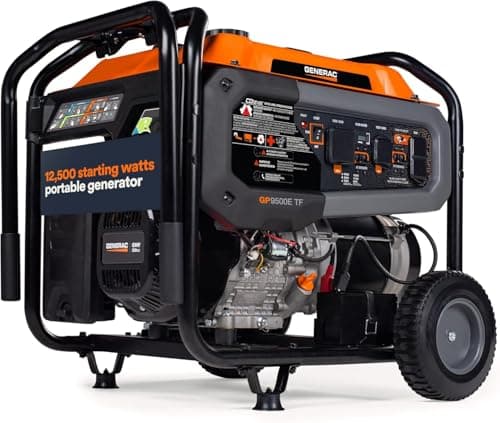 Generac 12,500W Starting Tri-Fuel The cheapest credible way to get a generator onto your home's natural gas line, which is the one fuel supply an outage usually does not interrupt. | Natural-gas hookup at the best price | 9.1/10 | $920.00 |
| 2 | 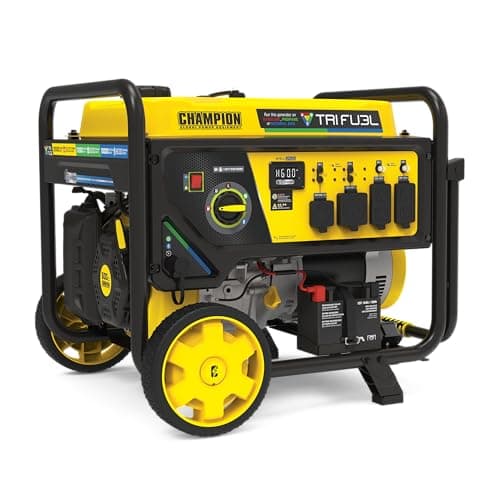 Champion 12,500W Tri-Fuel Home Backup The most complete tri-fuel package on the shelf: three fuels, both hoses, every output figure published, CO shutdown included. | Tri-fuel with both hoses in the box | 9.0/10 | $1,259.99 |
| 3 | 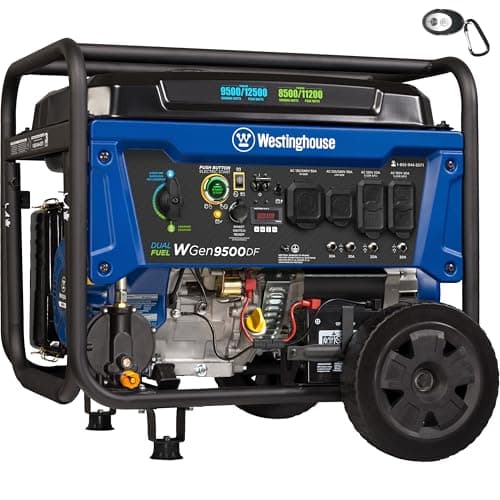 Westinghouse WGen9500DF 12,500W Dual Fuel The most broadly sensible home backup generator on the market: enough running watts for a whole essential-circuit panel, both transfer-switch outlets, and dual fuel — with the caveat that it has no CO shutoff. | The default whole-house pick | 8.8/10 | $999.00 |
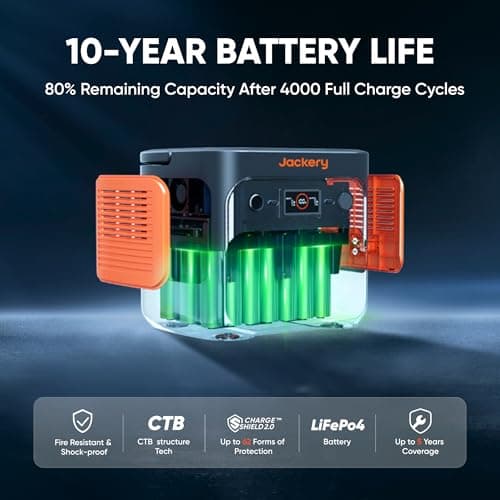
| 4 | 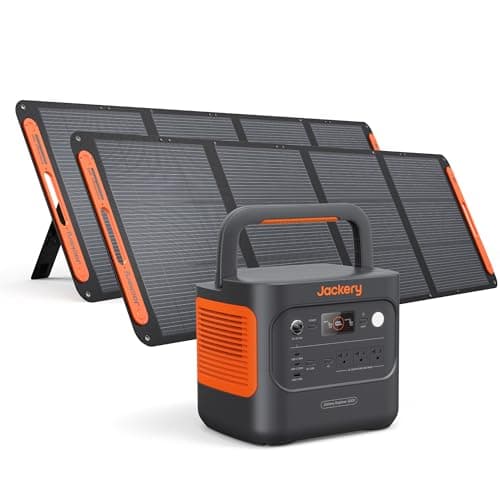 Jackery Explorer 2000 v2 + 2x200W Solar The most complete solar backup package here: enough capacity for a fridge and enough panel area to put something back each day. | The complete 2 kWh solar kit | 8.7/10 | $1,329.00 |
#ad Prices as of October 5, 2026; they may have changed since. Scores are our editorial judgment from published specifications, not test results — how we pick. How we are funded.
Note the solar kit in that list. For a genuinely long outage, solar is the only fuel that arrives without a trip. 400 W of panels will not refill 2 kWh in a day in real conditions, but a partial daily recharge turns a one-day battery into a several-day one — see best solar generators.
Long-outage kit
Running a dual fuel generator on a tank
GasSaf 10 ft Two-Stage Propane Regulator + Hose
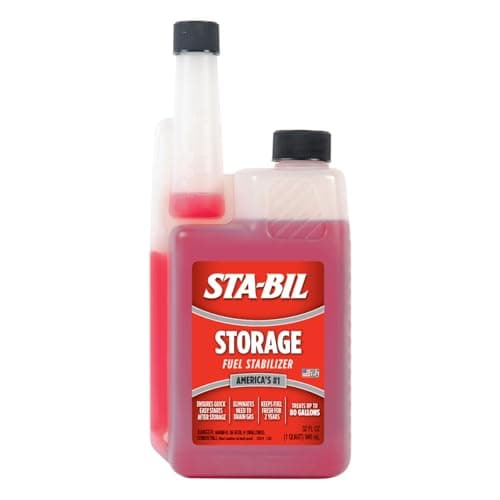
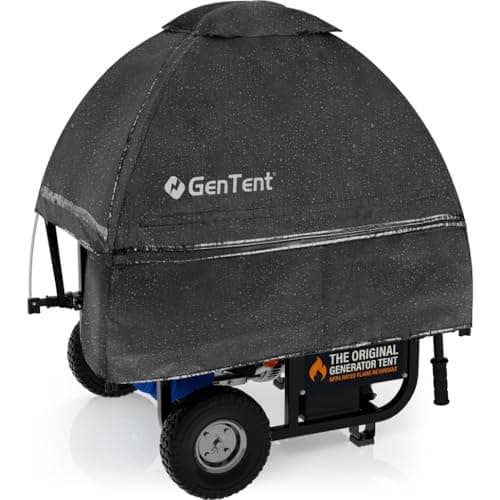
Two-stage propane regulator for steady pressure as tanks empty; stabilizer for everything stored; a running cover, because the storm does not stop when the power does.
Questions people actually ask
What size generator do I need for hurricane season?
Size it the same way as any outage — from your actual load — but weight the decision toward fuel flexibility and runtime rather than peak wattage. A 6,500 running-watt machine on a natural gas line is more useful on day four than a 13,000 watt machine with an empty tank.
How much fuel should I store for a hurricane?
Work it from your machine's published runtime at your actual load, then multiply by the number of days you are preparing for. A 7.5 gallon tank running 9.5 hours at half load means roughly three tanks a day. Check your local storage limits, and consider propane, which does not degrade.
Is propane or gasoline better for a long outage?
Propane, for a long outage specifically. It stores indefinitely so you can hold a real quantity, tank swaps are faster and cleaner than pouring gasoline, and exchange cages are often restocked while gas pumps are still without power. The output penalty is about 10%.
Should I buy a generator before or during hurricane season?
Before — generators, cords, fuel cans and stabilizer are the first items to sell out when a storm is forecast, and the gas-line connection a tri-fuel machine needs is licensed work that takes scheduling. Buying in the week before landfall means buying whatever is left.
Will solar panels recharge my power station in an outage?
Partially, and that is still valuable. 400 W of panels will not refill a 2 kWh battery in a day under real conditions — angle, cloud and season all take their cut — but a partial daily recharge turns a one-day battery into a several-day one, and it is the only fuel that needs no trip.
Can I run air conditioning through a multi-day outage?
A single bedroom window unit, yes. Central air, generally not sensibly — the sustained load is high and in a multi-day outage the fuel spent on it is fuel you will want for the refrigerator later. Sleeping comfortably in one room is most of the real benefit.
Sources
- Ready.gov — Power OutagesFederal preparedness guidance on outage planning referenced in the checklist sections.
- US Consumer Product Safety Commission — Portable Generator Information CenterThe placement, never-indoors and CO-alarm guidance this site repeats on every generator page.
Read next
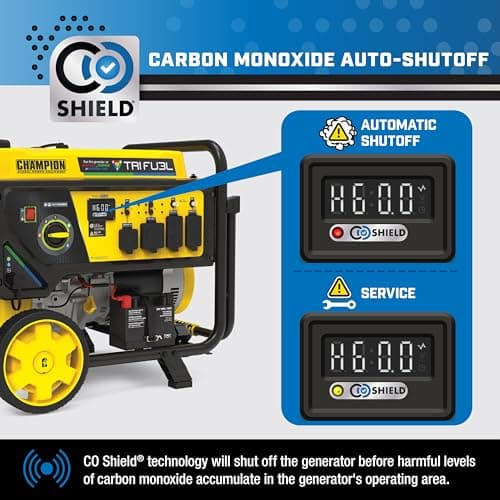
Best Tri-Fuel
Best Tri-Fuel Generators
Tri-fuel generators with all three fuels' published running watts, and the natural gas derating stated plainly.
Top pick · Champion 12,500W Tri-Fuel Home Backup
$1,259.99View on Amazon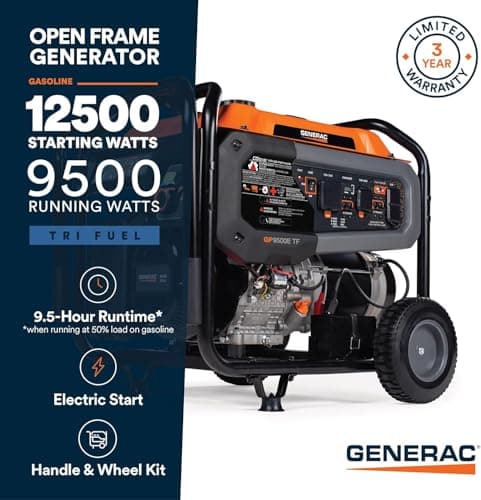
Guide
How Long Will a Generator Run?
Published runtime figures across fuels and loads, and why fuel choice matters more than tank size.

Guide
Generator Fuel Storage and Stabilizer
Fuel degradation, stabilizer shelf-life claims, safe storage quantities and containers, and the propane alternative.
Best Solar Kit
Best Solar Generators for Home Backup
Battery-plus-panel kits ranked on solar input ceiling and capacity, with honest expectations for real-world panel output.
Top pick · Jackery Explorer 2000 v2 + 2x200W Solar
$1,329.00View on Amazon19% off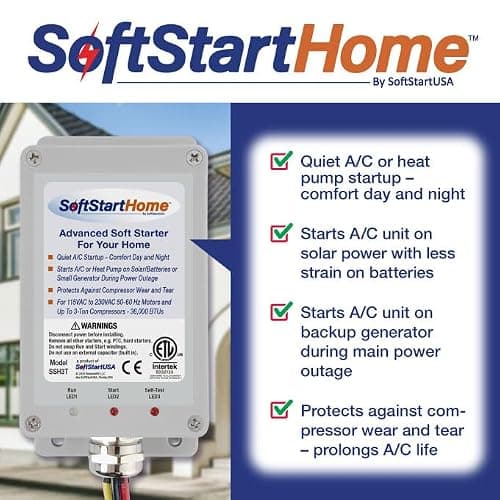
Guide
Running Air Conditioning on a Generator
The practical side of running AC on generator power: sequencing, soft starters, and backing up one room instead of the house.