Power Stations
Best Solar Generators for Home Backup
The panels are not the interesting specification. The unit's solar input ceiling is, because that decides whether solar is useful or decorative.
Written byMike M.
Published
Disclosure: we earn a commission on purchases made through links on this page, at no cost to you. It does not affect what we recommend or what we say about it — how we are funded.
The short answer
Jackery's Explorer 2000 v2 with two 200 W panels is the most complete solar backup kit: 2,042 Wh, 2,200 W output and 400 W of folding panels. EcoFlow's DELTA 2 Max with a 400 W panel is the better choice if you intend to expand, because the unit accepts up to 1,000 W of solar and 6 kWh of battery. Expect real-world panel output well below the rating — angle, cloud and season all take a cut.
Solar is the only fuel that arrives without a trip, which is exactly why it matters in a multi-day outage. But the marketing around "solar generators" oversells what a few folding panels do, so here is the honest version.
The short answer
Quick picks
| # | Product | Best for | Score | Price |
|---|---|---|---|---|
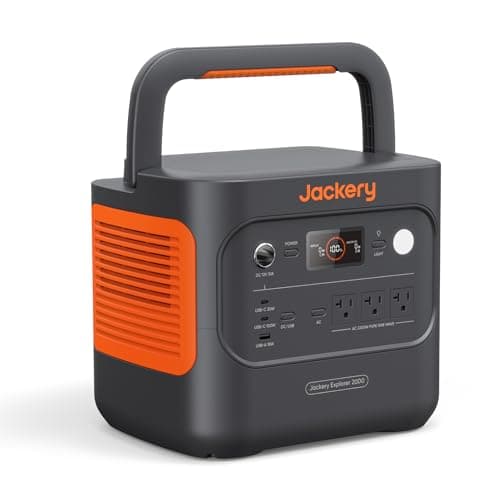
| 1 | 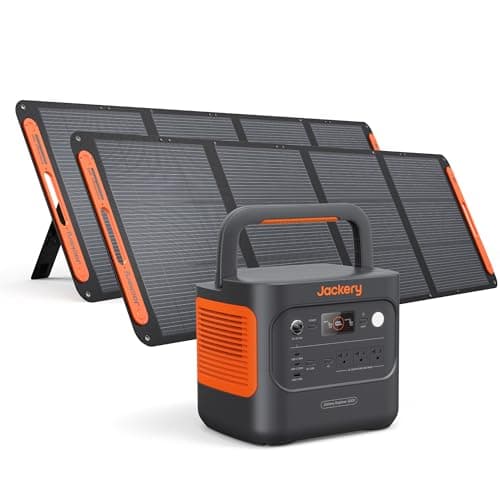 Jackery Explorer 2000 v2 + 2x200W Solar The most complete solar backup package here: enough capacity for a fridge and enough panel area to put something back each day. | The complete 2 kWh solar kit | 8.7/10 | $1,329.00 |
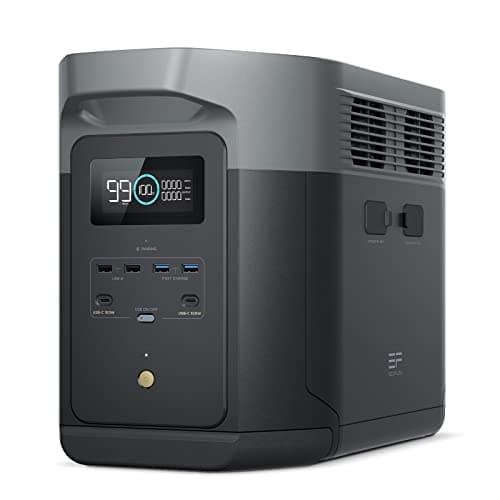
| 2 | 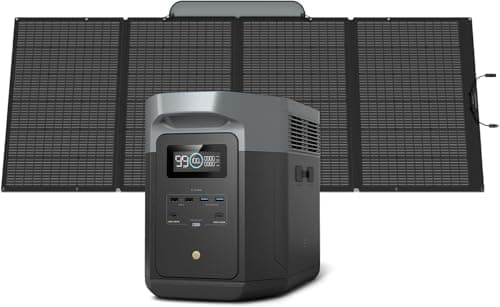 EcoFlow DELTA 2 Max + 400W Solar The right solar kit if you intend to expand: 1,000 W of solar headroom and 6 kWh of battery headroom from the same hardware. | Fastest solar recharge | 8.6/10 | $1,529.00 |
| 3 | 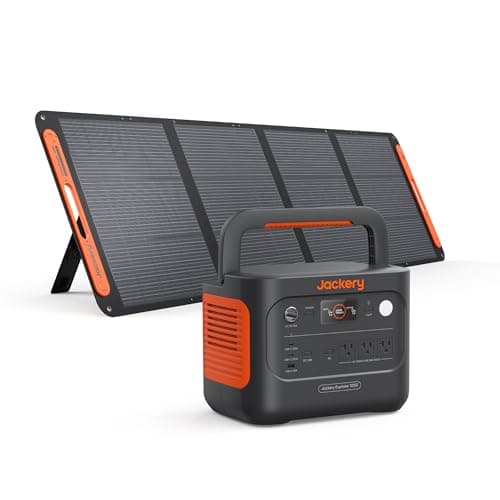 Jackery Explorer 1000 v2 + 200W Solar A sensible starting point: enough battery for the fridge overnight and enough panel to extend it, without the 2 kWh price. | Entry solar kit | 7.8/10 | $699.00 |
| 4 | 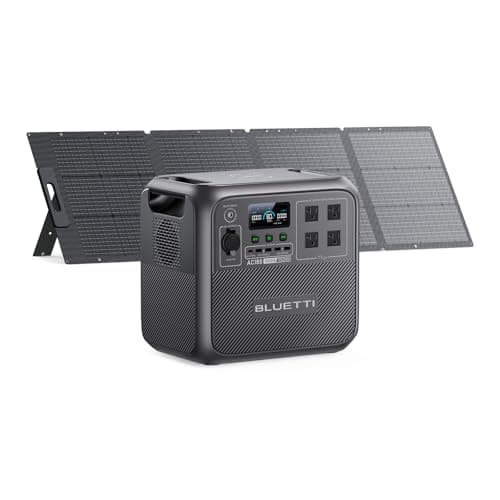 Bluetti AC180 + 200W Solar The budget entry into solar backup with enough output for a refrigerator — limited mainly by its 500 W solar input ceiling. | Cheapest solar kit that runs a fridge | 7.7/10 | $729.00 |
#ad Prices as of October 5, 2026; they may have changed since. Scores are our editorial judgment from published specifications, not test results — how we pick. How we are funded.
The specification that decides everything: input ceiling
| Unit | Max solar input | Capacity | Panels in kit |
|---|---|---|---|
| EcoFlow DELTA 2 Max | 1,000 W | 2,048 Wh | 1 x 400 W |
| Bluetti AC200PL | 1,200 W | 2,304 Wh | Sold separately |
| Jackery Explorer 2000 v2 | Not published on listing | 2,042 Wh | 2 x 200 W |
| Bluetti AC180 | 500 W | 1,152 Wh | 1 x 200 W |
This is why EcoFlow's DELTA 2 Max and Bluetti's AC200PL rank highly: 1,000 W and 1,200 W of input respectively means adding panels later actually helps. Bluetti's AC180 caps at 500 W, which makes its solar story fundamentally limited however many panels you own.
What 400 watts of panels really delivers
What that means practically: solar does not make a battery infinite. It turns a one-day battery into a several-day one by putting some energy back each day, which is a genuinely valuable transformation — just not the one the word "generator" in "solar generator" implies.
One large panel or several small ones
EcoFlow's kit includes a single 400 W panel; Jackery's 2 kWh kit includes two 200 W panels. The trade-off is real either way.
- One large panel: half the cables, half the setup time, one thing to carry. Bulkier and more awkward to angle.
- Two smaller panels: easier to position, easier to store, and you can deploy only one when that is all you need. More cabling and more to set up.
For outage use specifically, the smaller folding panels are usually more practical, because they are deployed in a hurry on whatever surface is available rather than installed.
When a solar kit is worth buying
It is worth it if your outages run for days. A battery charged from the wall before the storm covers a one-day outage with no panels needed; it is day three where solar earns its place.
It is also worth it if the battery has a secondary use — camping, a job site, an RV — because panels make it genuinely off-grid rather than just portable.
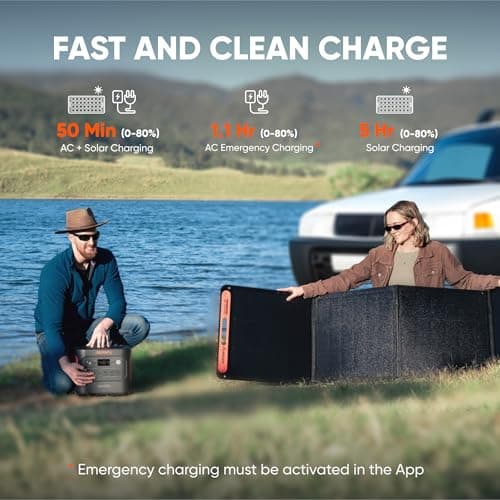
It is not worth it for short outages. If your power comes back in four hours, the panels are expensive luggage, and the money is better spent on more capacity or a unit with faster AC recharge: EcoFlow's DELTA 2 Max publishes 0-80% in 43 minutes, which means a brief grid restoration refills it completely.
The cheaper alternative worth considering
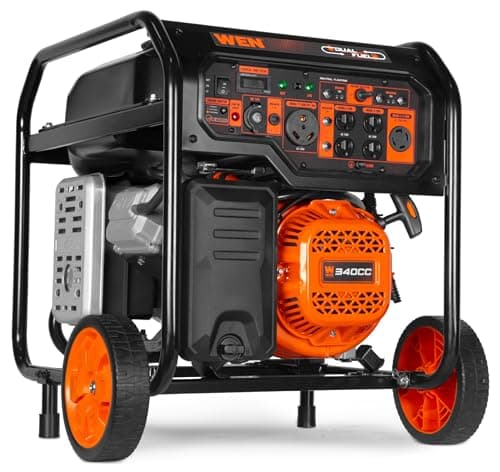
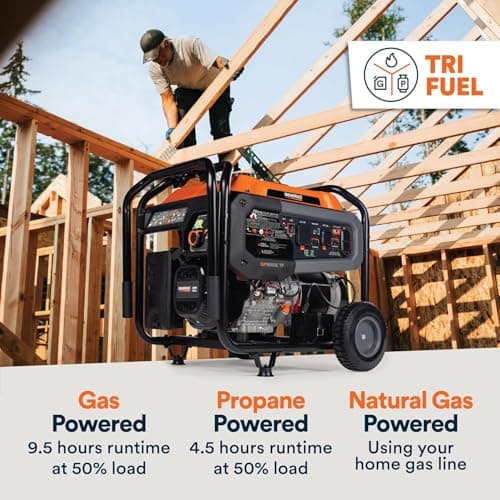
A dual fuel generator plus a smaller battery. The generator recharges the battery quickly and runs the heavy loads; the battery runs the fridge and electronics silently indoors overnight so the generator is not running at 3am. That combination costs less than a large solar kit and handles motor loads a battery cannot.
Solar's unique advantage is that it needs no fuel at all, which matters in a regional outage where fuel is genuinely hard to get. Weigh that against its cost honestly — see portable power station vs generator.
Or buy the battery and panels separately
Buying a unit with a high solar input ceiling now and panels later spreads the cost, and lets you match panel size to where you will actually put them.
- Capacity
- 2,042 Wh
- Solar
- 2 x 200 W panels
- AC output
- 2,200 W
#1 · The complete 2 kWh solar kit
Jackery Explorer 2000 v2 + 2x200W Solar
The most complete solar backup package here: enough capacity for a fridge and enough panel area to put something back each day.
#ad Price as of October 5, 2026; it may have changed since. How we are funded.
What is good
- 400 W of panels is enough to meaningfully recharge 2 kWh over a clear day — this is the configuration that turns a battery into an indefinite supply
- Buying the kit is normally cheaper than the unit plus panels separately
- The panels fold and store, so this does not require a roof installation
What is not
- 400 W of panels in real conditions — angle, cloud, winter sun — delivers far less than 400 W; plan on a partial recharge, not a full one
- Two 200 W panels take up real floor and storage space
- Still 2,200 W output, so still no motor loads
Published specification & our scoring
- 2,042 Wh capacity, 2,200 W AC output (manufacturer)
- Two 200 W solar panels included
- 0-80% in 66 minutes on AC, or a full charge from solar (manufacturer)
- Manufacturer states 41% lighter and 34% smaller than the previous generation at 39.5 lb
- LiFePO4 battery
- Usable capacity
- 9
- Solar capability
- 9
- Output ceiling
- 7
- Portability
- 8
- Cycle life
- 9
- Value
- 9
Specification figures are the manufacturer’s published values. Scores are our editorial judgment from those figures and are never published as structured review data — how we pick.
- Capacity
- 2,048 Wh
- Solar
- 1 x 400 W panel
- Recharge
- 0-80% in 43 min AC (mfr)
#2 · Fastest solar recharge
EcoFlow DELTA 2 Max + 400W Solar
The right solar kit if you intend to expand: 1,000 W of solar headroom and 6 kWh of battery headroom from the same hardware.
#ad Price as of October 5, 2026; it may have changed since. How we are funded.
What is good
- One 400 W panel instead of two 200 W panels means half the cabling and half the setup time
- The unit accepts up to 1,000 W of solar, so there is real headroom to add panels later
- Expandable battery capacity as well as panel capacity
What is not
- A single 400 W panel is large and rigid — harder to position than two smaller folding panels
- More expensive than the Jackery 2 kWh kit
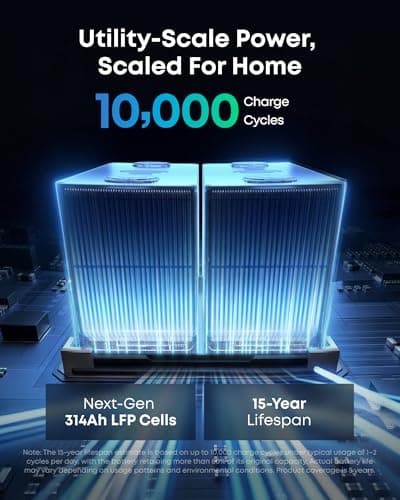
- 3,000 cycles against Anker's 10,000
Published specification & our scoring
- 2,048 Wh capacity with a single 400 W solar panel included
- 0-80% in 43 minutes with a combined 2,400 W solar and AC input (manufacturer)
- LiFePO4 rated 3,000 cycles to 80% capacity (manufacturer)
- Accepts up to 1,000 W of solar input in total
- Expandable to 6 kWh with extra batteries
- Usable capacity
- 9
- Solar capability
- 10
- Expandability
- 10
- Output ceiling
- 7
- Portability
- 6
- Value
- 8
Specification figures are the manufacturer’s published values. Scores are our editorial judgment from those figures and are never published as structured review data — how we pick.
- Capacity
- 1,070 Wh
- Solar
- 1 x 200 W panel
- AC output
- 1,500 W / 3,000 W surge
#3 · Entry solar kit
Jackery Explorer 1000 v2 + 200W Solar
A sensible starting point: enough battery for the fridge overnight and enough panel to extend it, without the 2 kWh price.
#ad Price as of October 5, 2026; it may have changed since. How we are funded.
What is good
- The cheapest way into a battery-plus-solar setup that can actually run a refrigerator
- 3,000 W surge handles fridge compressor startup
- One panel is easy to deploy and store
What is not
- 200 W of panels against 1,070 Wh means a full solar recharge takes a long, clear day
- 1,070 Wh is one night of fridge duty
- No expansion option
Published specification & our scoring
- 1,070 Wh capacity, 1,500 W AC output with 3,000 W surge (manufacturer)
- One 200 W solar panel included
- 0-100% in one hour on AC emergency charging (manufacturer)
- LFP battery holding over 70% capacity after its rated cycle life (manufacturer)
- Three pure sine wave AC ports, two USB-C, one USB-A, DC car port
- Usable capacity
- 6
- Solar capability
- 6
- Output ceiling
- 6
- Portability
- 9
- Cycle life
- 9
- Value
- 9
Specification figures are the manufacturer’s published values. Scores are our editorial judgment from those figures and are never published as structured review data — how we pick.
- Capacity
- 1,152 Wh
- Solar
- 1 x 200 W panel
- AC output
- 1,800 W
#4 · Cheapest solar kit that runs a fridge
Bluetti AC180 + 200W Solar
The budget entry into solar backup with enough output for a refrigerator — limited mainly by its 500 W solar input ceiling.
#ad Price as of October 5, 2026; it may have changed since. How we are funded.
What is good
- 1,800 W output with a panel included, at the lowest kit price here
- No power brick — the single-cable 1,440 W charging is genuinely less to carry and lose
- Eleven outlets
What is not
- 500 W solar input ceiling limits how much you can expand the panel side
- 200 W against 1,152 Wh is a slow solar recharge
- No published cycle count on this listing
Published specification & our scoring
- 1,152 Wh capacity, 1,800 W output, with one 200 W solar panel included (manufacturer)
- 1,440 W AC flash charge through a single cable with no separate adapter (manufacturer)
- Eleven outlets
- 500 W maximum solar input
- LiFePO4 chemistry; app control
- Usable capacity
- 6
- Output ceiling
- 7
- Solar capability
- 5
- Recharge speed
- 9
- Portability
- 7
- Value
- 10
Specification figures are the manufacturer’s published values. Scores are our editorial judgment from those figures and are never published as structured review data — how we pick.
Questions people actually ask
What is the best solar generator for home backup?
Jackery's Explorer 2000 v2 with two 200 W panels is the most complete kit at 2,042 Wh and 2,200 W output. EcoFlow's DELTA 2 Max with a 400 W panel is better if you plan to expand, because the unit accepts up to 1,000 W of solar and 6 kWh of battery.
How long does it take to charge a power station with solar?
Longer than the arithmetic suggests. A 400 W panel rating is measured under standard test conditions — full perpendicular sun, specified temperature — and real output depends on angle, cloud, season and heat. Plan on a partial daily recharge rather than a full one.
How many solar panels do I need for a 2kWh power station?
The practical limit is the unit's solar input ceiling rather than the capacity. EcoFlow's DELTA 2 Max accepts 1,000 W and Bluetti's AC200PL 1,200 W, so panels can be added usefully. Bluetti's AC180 caps at 500 W, which limits its solar story regardless of how many panels you buy.
Are solar generators worth it?
For outages lasting days, yes — solar is the only fuel that needs no trip. For outages of a few hours, no: a battery charged from the wall beforehand covers it, and a unit with fast AC recharge (43 minutes to 80% on the best here) is more useful than panels.
Is one 400W panel better than two 200W panels?
For outage use, two smaller folding panels are usually more practical — easier to position and store, and you can deploy just one. One large panel means less cabling and faster setup but is bulkier and harder to angle.
Can I use any solar panel with a power station?
Not reliably. Voltage range, connector type and the unit's maximum input all have to match, and exceeding the voltage window can damage the charge controller. Buying the manufacturer's panels or a kit avoids the compatibility question entirely.
Sources
- Eugene Water & Electric Board — Generator Sizing ConsiderationsPublished appliance running and additional-starting watt figures used in the capacity arithmetic on this page.
Read next
Best Overall Power Station
The Best Home Backup Power Stations
Battery power stations ranked for home backup on surge, capacity, recharge speed and cycle life.
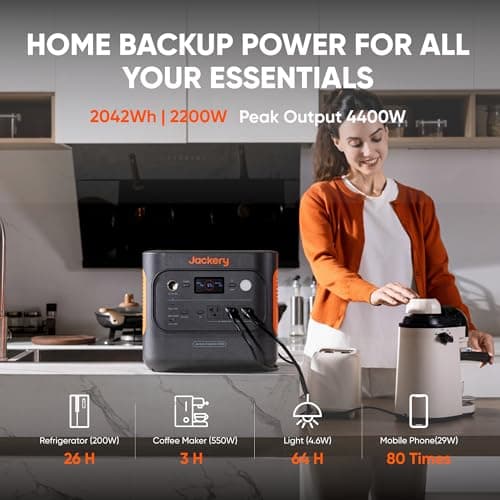
Top pick · Jackery Explorer 2000 v2
$898.99View on Amazon10% off
Guide
How to Recharge a Power Station in an Outage
The four recharge routes during an outage, with published charge speeds and the realistic limits of each.
Comparison
Solar Generator vs Gas Generator
Solar kits against gas generators on refueling, output, surge capability and real-world panel performance.
Guide
Hurricane Season Power Preparation
Preparing for long outages: the fuel logistics problem, why natural gas or propane wins, and a week-before checklist.
Comparison
LiFePO4 vs Lithium-Ion
Why LiFePO4 is the correct chemistry for backup power, with the published cycle claims that decide it.