Outage Prep
How to Run Your House on a Generator
Three legitimate ways to get power into the house, one way that kills people, and a start-up order that matters more than you would think.
Written byMike M.
Published
Disclosure: we earn a commission on purchases made through links on this page, at no cost to you. It does not affect what we recommend or what we say about it — how we are funded.
The short answer
- 1Connect properly — a transfer switch, an interlock kit, or cords to individual plug-in appliances. Never a double-male cord into a dryer outlet.
- 2Start the generator outside, at least 20 feet from the house, exhaust pointed away, and let it stabilize before loading it.
- 3Switch over, then add loads largest-motor-first while the generator is lightly loaded.
- 4Shed load before adding more. Nothing stops you overloading it except you.
The three legitimate connections, cheapest first
Cords to plug-in appliances
No electrician, no permit, nothing permanent. Run a heavy-duty cord from the generator to a refrigerator, a plug-in space heater, a lamp, a sump pump that plugs into a receptacle in the pit.
The limitation is absolute and it is the reason the other two options exist: you cannot reach anything hard-wired. No furnace, no well pump, no hard-wired sump pump, no 240 V anything. For a lot of households that leaves out exactly the loads they wanted most.
An interlock kit
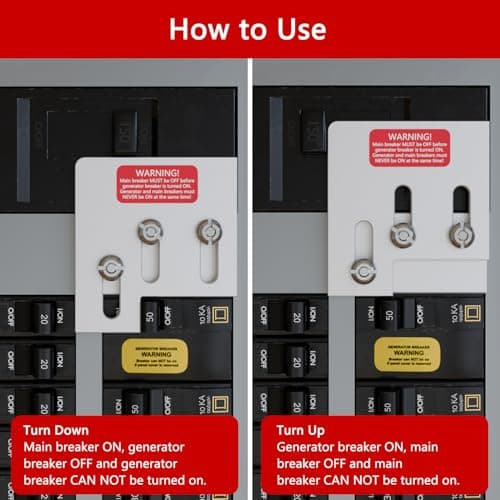
A steel plate on your existing panel cover that makes it mechanically impossible for the main breaker and a new generator breaker to be on simultaneously. Cheapest proper connection, and it gives you access to every circuit in the panel rather than a pre-chosen six or ten.
Two requirements. The plate must match your panel brand, amperage and breaker spacing exactly — see panel compatibility. And the install (the generator breaker, the inlet box, the feeder) is licensed electrical work, permitted and inspected in most jurisdictions.
A transfer switch
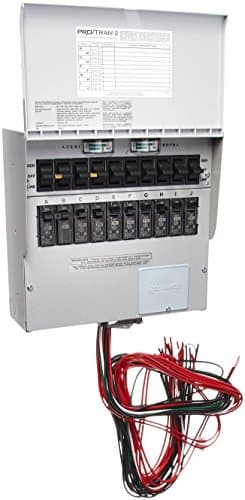
A sub-panel with a fixed set of circuits, each switchable between utility and generator and never both. More expensive, but it manages the load for you: the circuits were chosen at installation to total less than the generator can carry, so overloading is much harder.
Six or ten circuits is the usual choice. Six covers fridge, furnace, well pump, sump and two lighting circuits with nothing spare; ten adds kitchen outlets, a bathroom and room for later. Full comparison: interlock kit vs transfer switch.
The short answer
Connection hardware
| # | Product | Best for | Score | Price |
|---|---|---|---|---|
| 1 | 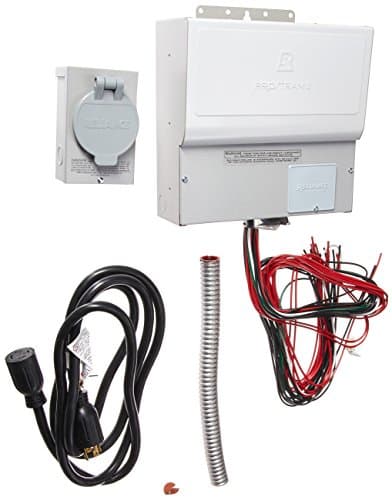 Reliance Controls 310CRK 10-Circuit 30A Kit The standard answer for connecting a portable generator properly: ten circuits, 30 A, from the brand electricians recognize. | The ten-circuit default | 8.6/10 | $474.76 |
| 2 | 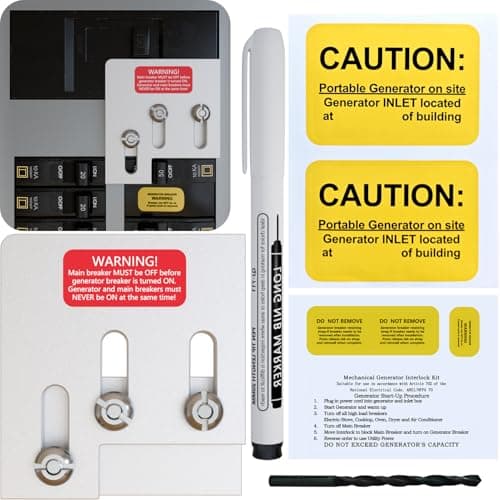 SPZOCE Interlock Kit — Square D QO/Homeline 150/200A The cheapest correct way to connect a generator to the whole panel, provided your panel is a Square D QO or Homeline with the exact spacing stated — measure first. | Square D QO and Homeline, 150-200A | 8.5/10 | $26.99 |
| 3 | 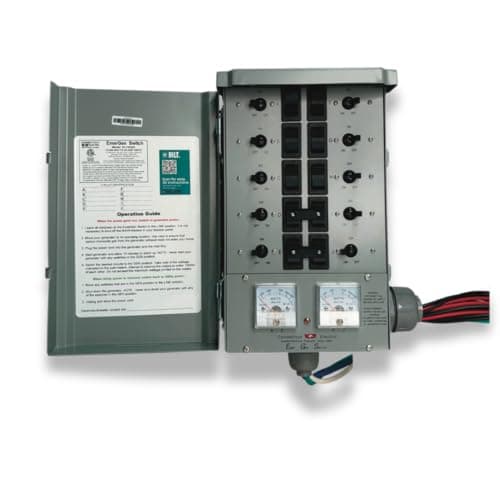 Connecticut Electric EmerGen EGS1012KG2 50A 10-Circuit The simplest way to do a 50 A installation correctly: everything matched in one box, including the cord people most often get wrong. | 50A kit with inlet and cord | 9.0/10 | $379.99 |
| 4 | 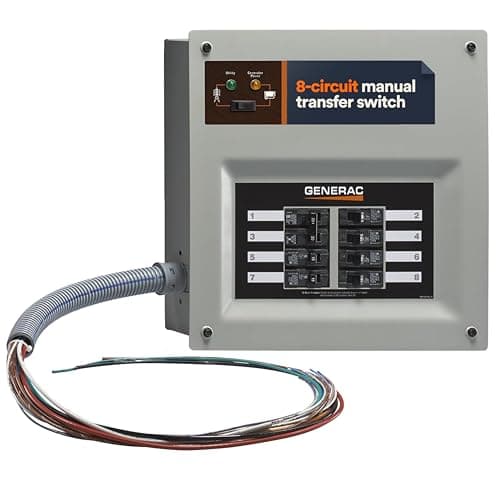 Generac HomeLink 6852 30A Manual Choose this if a standby generator is a genuine plan for later; otherwise the Reliance kits do the same job for less. | A path to automatic later | 8.0/10 | $368.87 |
#ad Prices as of October 5, 2026; they may have changed since. Scores are our editorial judgment from published specifications, not test results — how we pick. How we are funded.
The start-up sequence, which genuinely matters
- 1Site and start the generator outdoors — 20 feet minimum, exhaust away from the house. Let it run for a minute to stabilize before you load it.
- 2Turn off the main breaker (interlock) or set the transfer switch to generator. On an interlock this order is not optional: main off first, always.
- 3Slide the interlock and switch on the generator breaker, or move the transfer switch circuits across.
- 4Add the biggest motor loads first — well pump, then fridge, then furnace — while the generator is lightly loaded and has maximum surge headroom.
- 5Add the steady loads last: lighting, electronics, chargers.
Step 4 is the one people get wrong. Surge headroom is whatever the generator is not already using. Start a fridge needing 2,200 watts of surge when the machine is at 90% of its running rating and it will bog down or trip. Start the same fridge first, when the generator is nearly unloaded, and it goes without complaint.
Load management during the outage
With a transfer switch, the circuit selection does most of this for you. With an interlock kit, it is entirely manual, and here is the discipline that works:
- Decide your standing set — the circuits that stay on: fridge, furnace, water, lighting. Add up their running watts from the wattage chart and make sure they total well under the generator's rating.
- Treat everything else as one-at-a-time. Microwave OR coffee maker OR toaster, never two. They each run for minutes, so this costs you nothing.
- Reserve headroom for cycling loads. A sump pump cycles unpredictably and needs its surge available whenever the pit fills — do not have that headroom borrowed by the microwave.
- Never run a machine flat out for days. The 80% derating we apply in sizing exists for this reason.
Shutting down
Reverse it: shed loads, switch back to utility (or main breaker on, generator breaker off, in that order), then shut the generator down and let it cool before refueling or covering it. If it is going back into storage for months, add fuel stabilizer first — that is the step that decides whether it starts next time.
Questions people actually ask
How do I connect a generator to my house?
Through a transfer switch or an interlock kit, both installed by a licensed electrician, or with extension cords to individual plug-in appliances. Hard-wired loads — furnace, well pump, 240 V circuits — can only be reached by a transfer switch or interlock.
Can I back-feed my house through a dryer outlet?
No. A double-male cord into an appliance outlet energizes the whole panel including the utility feed, which can kill a line worker, and it leaves live exposed pins on the cord. It is the most dangerous practice in generator ownership and an interlock plate costs a small fraction of a transfer switch.
What order should I turn things on when running on a generator?
Biggest motor loads first — well pump, fridge, furnace — while the generator is lightly loaded and has maximum surge headroom, then steady loads like lighting and electronics. Starting a 2,200 watt surge load on a nearly fully loaded generator is what makes it trip.
Do I need a permit to install a transfer switch?
In most US jurisdictions, yes. A transfer switch, interlock kit and inlet box are permanent wiring on the supply side of your panel, which is licensed work requiring a permit and an inspection. Check with your local authority having jurisdiction.
How do I avoid overloading my generator?
Define a standing set of circuits whose running watts total well under the generator's rating, then treat kitchen appliances as strictly one at a time. Keep surge headroom in reserve for cycling loads like a sump pump. A generator with a live wattage meter makes this considerably easier.
Can I run my furnace from a generator with an extension cord?
Only if your furnace is plugged into a receptacle, which some are. Most are hard-wired, in which case you need a transfer switch or interlock kit. It is worth checking — if yours happens to be plugged in, a cord is a legitimate and much cheaper route.
Sources
- US Consumer Product Safety Commission — Portable Generator Information CenterThe placement, never-indoors and CO-alarm guidance this site repeats on every generator page.
- Eugene Water & Electric Board — Generator Sizing ConsiderationsPublished running and additional-starting watt figures quoted on this page.
Read next
Best Transfer Switch
The Best Generator Transfer Switches
Transfer switches ranked on circuit count, amp rating and kit completeness, from 6-circuit 30A to 10-circuit 50A.
Top pick · Reliance Controls 310CRK 10-Circuit 30A Kit
$474.76View on Amazon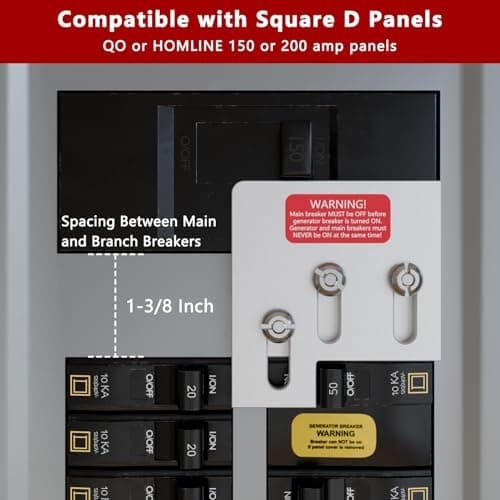
Connection Comparison
Interlock Kit vs Transfer Switch
Interlock kit against transfer switch on cost, circuit access, load management, panel fit and inspection risk.
Guide
The Dangers of Back-Feeding a Generator
What back-feeding does electrically, why it is lethal to line workers, and the inexpensive compliant alternatives.
Guide
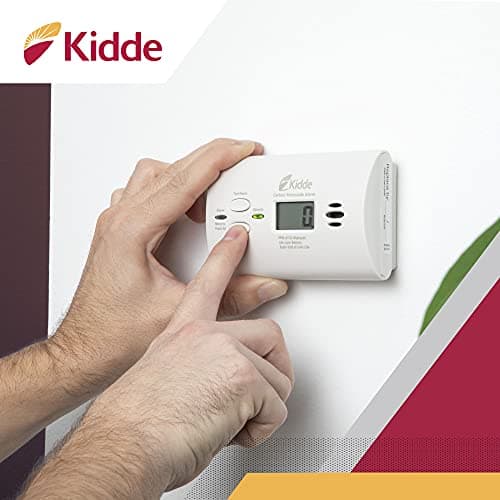
Generator Carbon Monoxide Safety
The CPSC placement rules, why a garage with the door open is still unsafe, and the battery CO alarm that should be your first purchase.
Guide
Starting Watts vs Running Watts
What the surge figure means, why motors need it, and how to read the peak-watt number on a generator box.