Model Reviews
Westinghouse WGen9500DF Review
The most broadly sensible home backup generator sold, with one omission we are not going to gloss over.
Written byMike M.
Published
Disclosure: we earn a commission on purchases made through links on this page, at no cost to you. It does not affect what we recommend or what we say about it — how we are funded.
The short answer
Westinghouse publishes 9,500 running and 12,500 peak watts on gasoline, 8,500 running and 11,200 peak on propane, from a 457cc OHV engine with a cast-iron sleeve. Both 240 V outlets — an L14-30R and a 14-50R — are transfer-switch ready, and it includes remote key-fob start. It has no carbon monoxide shutdown, which several competitors at this price include. Published weight is 210 lb and the warranty is three years.
Published specification
- Running watts, gasoline
- 9,500 W
- Peak watts, gasoline
- 12,500 W
- Running watts, propane
- 8,500 W
- Peak watts, propane
- 11,200 W
- Engine
- 457cc OHV, cast-iron sleeve
- 240 V outlets
- L14-30R + 14-50R
- Start
- Remote key fob, electric, recoil
- CO shutdown
- None
- Weight
- 210 lb
- Warranty
- 3 years
Manufacturer published figures from the live product listing. Westinghouse publishes both fuels' running AND peak watts, which is more than several competitors do and is what makes honest sizing possible.
What 9,500 running watts actually covers
Using EWEB's published appliance figures, a demanding essential-circuit list — refrigerator at 700 W, furnace blower at 700 W, well pump at 1,000 W, sump pump at 800 W, lighting and electronics at 300 W — totals about 3,500 running watts.
So 9,500 running watts is not just adequate for that; it is nearly three times it. Add a 12,000 BTU window air conditioner at EWEB's published 3,250 running watts and you are at 6,750, still comfortably inside. That is the headroom that makes this machine the default recommendation: it covers the realistic list and the ambitious list.
The propane figure of 8,500 running watts matters as much, because propane is the fuel that still works after a year in storage. Many machines do not publish a propane running figure at all.
The outlets are the quiet reason to buy it
An L14-30R and a 14-50R, both transfer-switch ready, plus two 120V 5-20R GFCI duplexes. That combination keeps every connection option open: a 30 amp transfer switch or interlock now, a 50 amp installation later, or an RV in between.
It matters because the alternative is a specific and expensive mistake. WEN's DF1100T, for instance, publishes an L5-30R — 120 V only — which will not serve a standard 240 V transfer switch. The WGen9500DF leaves no such trap.
One practical note on using that capacity: a 30 amp transfer switch passes only about 7,200 watts at 240 V, so pairing this machine with a 30 amp switch strands over 2,000 watts. See transfer switch amp rating guide.
The omission
If that matters to you — and it reasonably might — the WGen10500DFc adds the shutdown plus 1,000 more running watts for more money. That is the straight upgrade.
The other things worth knowing
Remote start is more useful than it sounds. It means starting the generator from inside the house, without going out into the weather that caused the outage. On a machine that will be started in storms, in the dark, that is not a luxury feature.
210 lb is a two-person move on anything but flat, dry ground. If the machine lives on a pad beside the inlet box, irrelevant. If it has to cross a lawn in a storm, it matters every single time — and a generator that is hard to move tends to get run somewhere it should not be.
The cast-iron sleeve and automatic low-oil shutdown are the right specifications for a machine that may run for days unattended, and the digital hour meter makes the maintenance schedule followable.
It is plug-and-play: Westinghouse includes the remote key fob, a 12V battery charger, oil, an oil funnel and a tool kit.
Who should buy something else
- If 3,500 running watts is your real load — a house with gas heat and no well pump — this is roughly three times the generator you need. WEN's DF8000X at 6,500 running watts costs appreciably less and still has an L14-30R and a CO shutdown.
- If you have a natural gas line, a tri-fuel machine removes refueling from your plan entirely. Generac's 12,500 W tri-fuel publishes the same 9,500 running watts on gasoline and adds natural gas.
- If noise matters, this is an open-frame machine with no published decibel figure. Westinghouse's iGen12000DFc publishes 12,000 peak watts at as low as 64 dBA with under 3% THD.
- If you want a CO shutdown at this output, the WGen10500DFc or Champion's 11,500 W dual fuel.
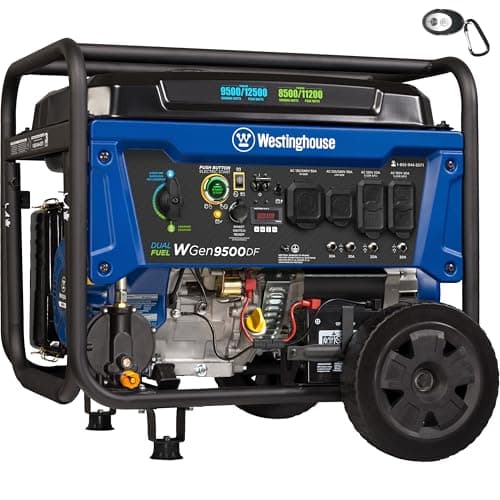
- Running watts
- 9,500 W gas / 8,500 W LP
- Starting watts
- 12,500 W gas
- Outlets
- L14-30R + 14-50R
#1 · The default whole-house pick
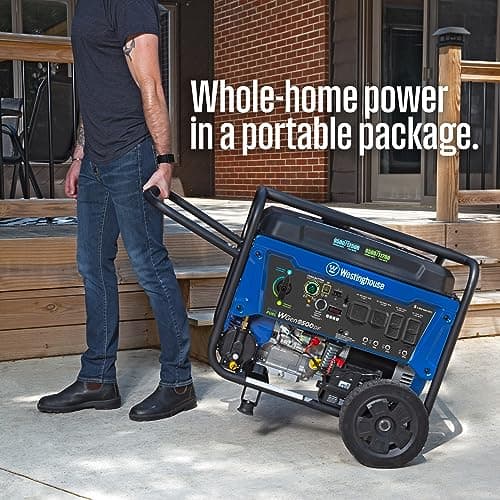
Westinghouse WGen9500DF 12,500W Dual Fuel
The most broadly sensible home backup generator on the market: enough running watts for a whole essential-circuit panel, both transfer-switch outlets, and dual fuel — with the caveat that it has no CO shutoff.
#ad Price as of October 5, 2026; it may have changed since. How we are funded.
What is good
- 9,500 running watts covers a well pump, furnace blower, fridge and a lot of lighting simultaneously — the load most homes actually need
- Both the L14-30R and the 14-50R are transfer-switch ready, so it fits a 30A interlock setup now and a 50A panel later
- Dual fuel means a propane tank is a legitimate plan when the gas stations have no power either
- Remote start matters more than it sounds: you start it from inside without going out in the weather
What is not
- 210 lb is a two-person move on anything but flat, dry ground
- No carbon monoxide shutdown on this model — several competitors at this price include one, and you must supply your own CO alarm indoors
- 9,500 W will not carry central air plus a well pump plus everything else; see the sizing guide before assuming it will
Published specification & our scoring
- 9,500 running / 12,500 peak watts on gasoline (manufacturer)
- 8,500 running / 11,200 peak watts on propane (manufacturer)
- 457cc Westinghouse 4-stroke OHV engine with cast-iron sleeve
- Remote key-fob start, electric start and recoil backup
- Two 120V 5-20R GFCI, one L14-30R 30A, one 14-50R 50A — all transfer-switch ready
- Automatic low-oil shutdown and digital hour meter
- Published weight 210 lb
- 3-year limited warranty (manufacturer)
- Output headroom
- 9
- Fuel flexibility
- 9
- Transfer-switch fit
- 10
- Runtime
- 8
- Safety features
- 6
- Value
- 9
Specification figures are the manufacturer’s published values. Scores are our editorial judgment from those figures and are never published as structured review data — how we pick.
The upgrade, the cheaper alternative, and the thing to buy either way
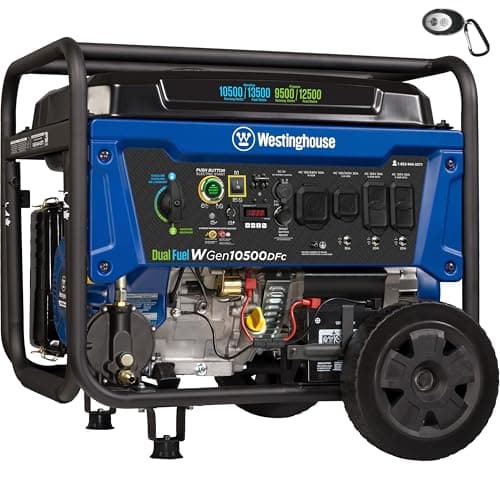
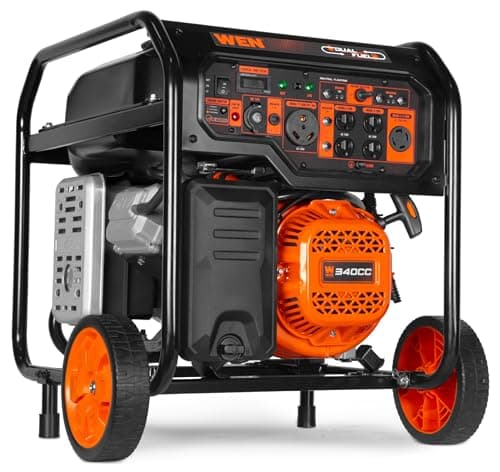
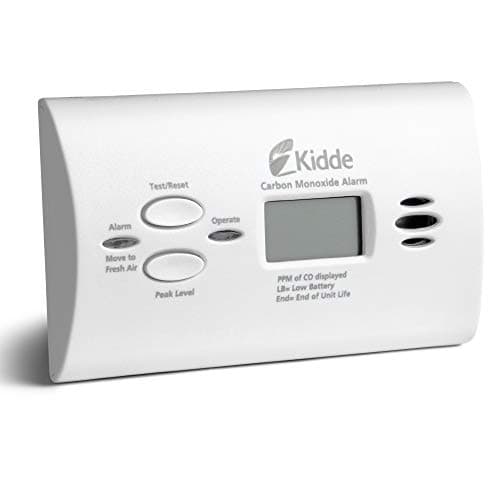
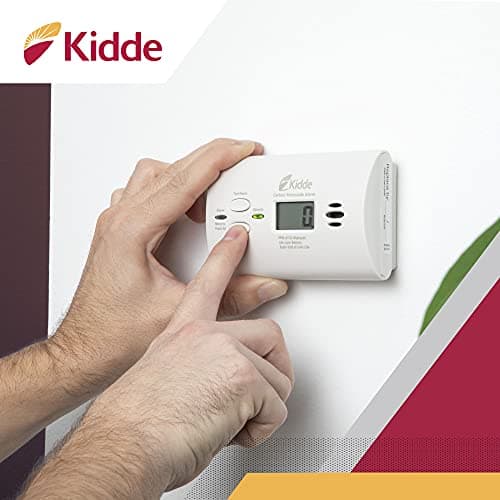
The WGen10500DFc adds the CO shutdown this model lacks. The DF8000X is the right size for a smaller load. The battery CO alarm is a twenty-dollar purchase that addresses how generators actually kill people.
Questions people actually ask
How many watts is the Westinghouse WGen9500DF?
Westinghouse publishes 9,500 running and 12,500 peak watts on gasoline, and 8,500 running and 11,200 peak on propane. Size from the running figure on the fuel you intend to use — the peak number is what the machine holds for a second or two to start a motor.
Does the WGen9500DF have a carbon monoxide shutdown?
No, and that is its main omission at this price — several competitors include one, as does Westinghouse's own WGen10500DFc. A shutdown monitors the generator's own operating area rather than your house, so a battery-powered CO alarm indoors is essential regardless.
Is the WGen9500DF transfer switch ready?
Yes, on both 240 volt outlets — an L14-30R and a 14-50R, both transfer-switch ready. That keeps a 30 amp or 50 amp connection open. Note a 30 amp switch passes only about 7,200 watts, so a 50 amp connection is needed to use the machine's full output.
Will the WGen9500DF run a whole house?
Every essential circuit including a well pump, with headroom for a window air conditioner. Using published appliance figures, a demanding essential list totals about 3,500 running watts against this machine's 9,500. Central air or electric heat are a different question.
How much does the WGen9500DF weigh?
210 lb, per Westinghouse. That is a two-person move on anything but flat dry ground, so plan where it will live. If it has to cross a lawn in a storm, consider whether a lighter machine would actually get used correctly.
Is the WGen9500DF or WGen10500DFc better?
The WGen10500DFc adds 1,000 running watts and a carbon monoxide shutdown for more money. If the CO shutdown matters to you — and it reasonably might — that is the straight upgrade. Otherwise the WGen9500DF is the better value.
Sources
- Eugene Water & Electric Board — Generator Sizing ConsiderationsPublished appliance running and additional-starting watt figures used to judge what this machine's output actually covers.
- US Consumer Product Safety Commission — Portable Generator Information CenterThe placement and carbon monoxide guidance referenced in the safety notes on this page.
Read next
Best Overall Home Backup
The Best Home Backup Generators
Nine conventional-frame generators ranked for whole-house backup, with per-fuel running watts and transfer-switch fit.
Top pick · Westinghouse WGen9500DF 12,500W Dual Fuel
$999.00View on Amazon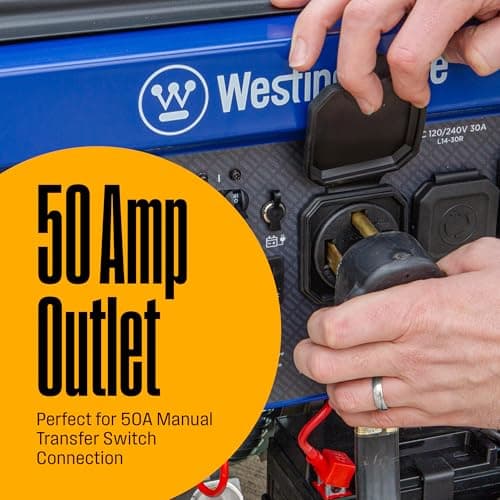
Best Dual Fuel
Best Dual Fuel Generators for Home Backup
Dual fuel generators ranked on both fuels' published running watts, with the brands that decline to publish propane figures named.
Top pick · Westinghouse WGen9500DF 12,500W Dual Fuel
$999.00View on Amazon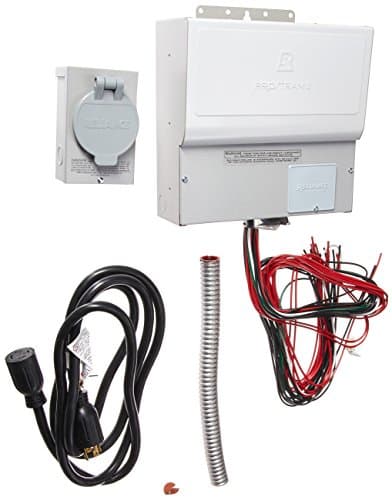
Guide
Transfer Switch Amp Rating Guide
Matching transfer switch amp rating to generator output, with the arithmetic and the whole-chain cost implications.
Guide
Generator Carbon Monoxide Safety
The CPSC placement rules, why a garage with the door open is still unsafe, and the battery CO alarm that should be your first purchase.
Review
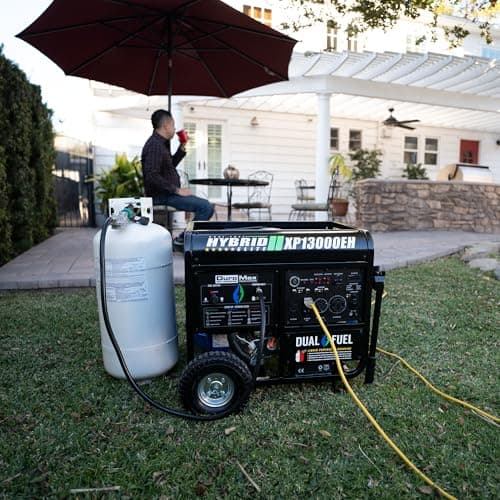
DuroMax XP13000EH Review
The XP13000EH's all-metal construction assessed, plus the per-fuel running watts DuroMax declines to publish.