Power Stations
Best Power Station for a CPAP
A purpose-built DC battery beats a general power station of the same capacity, and the reason is two conversion steps you can skip.
Written byMike M.
Published
Disclosure: we earn a commission on purchases made through links on this page, at no cost to you. It does not affect what we recommend or what we say about it — how we are funded.
The short answer
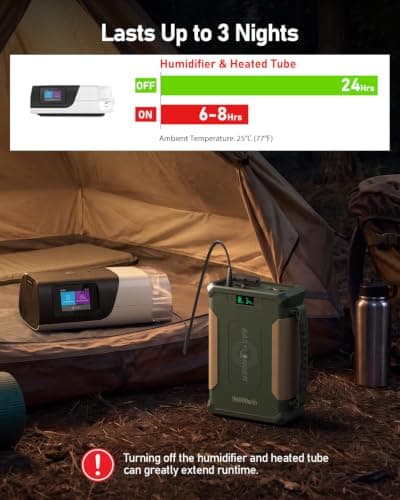
A purpose-built DC CPAP battery is the better buy: EASYLONGER's ES960 publishes 297.6 Wh LiFePO4 with four cables included and compatibility across ResMed AirSense 10/11, AirCurve, AirMini and Philips DreamStation, claiming 2+ nights without a humidifier or heated tube. A general 300 Wh power station spends part of its capacity on two conversion steps. Turn the humidifier and heated tube off on battery — they are by far the largest loads.
The efficiency point that decides this category
Most CPAP machines run on DC internally and accept a DC input. If you power one from a general AC power station, the battery's inverter converts DC to AC, and the CPAP's own power supply converts it back to DC. Two conversions, each losing energy.
Run it from a DC battery with the right cable and you skip both. The result is visible in the claims: a purpose-built 297.6 Wh CPAP battery claims 2+ nights, while a general-purpose 292 Wh power station is a similar capacity doing the same job less efficiently.
What drives runtime, in order
- DC input vs AC inverter
- Two conversions skipped
- Humidifier off
- The single biggest saving
- Heated tube off
- Second biggest
- Pressure setting
- Higher pressure, more work
EASYLONGER's 2+ night claim is explicitly stated as being without humidifier or heated tube. Both are resistive heating elements and dominate consumption — confirm with your supplier that running without them suits you.
The short answer
Quick picks
| # | Product | Best for | Score | Price |
|---|---|---|---|---|
| 1 | 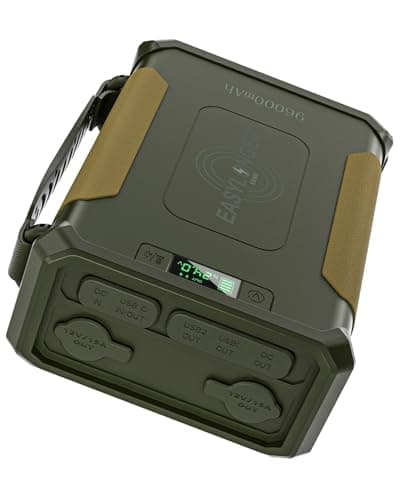 EASYLONGER ES960 CPAP Battery If the backup power question is specifically about a CPAP, a purpose-built DC battery outlasts a general power station of the same capacity — buy this rather than a bigger box. | CPAP specifically | 7.5/10 | $269.99 |
| 2 | 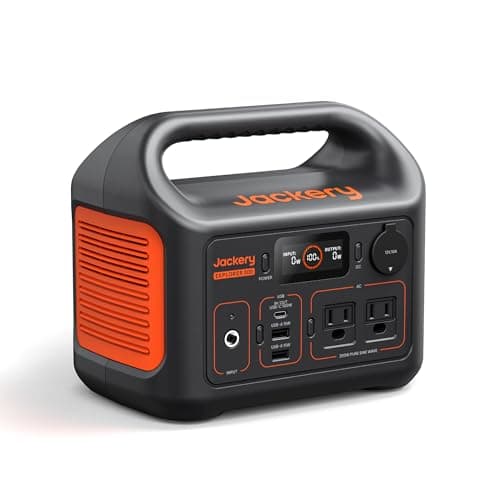 Jackery Explorer 300 Buy this for devices and medical equipment, not appliances — and at 7.5 lb and 4,000 cycles, it is the easiest preparedness purchase on the site. | Phones, laptops, a CPAP | 7.3/10 | $259.00 |
| 3 | 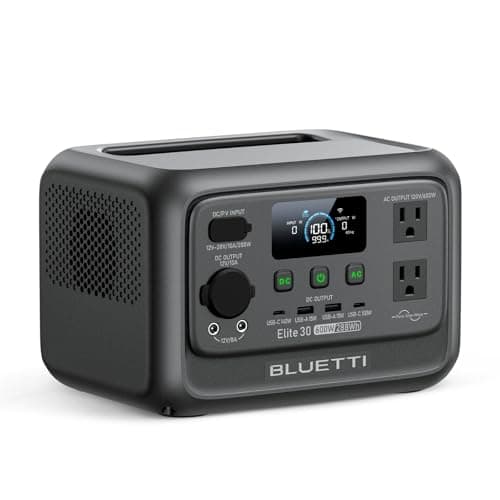 Bluetti Elite 30 V2 The small power station with genuinely useful output, as long as you understand 288 Wh means that output lasts minutes, not hours. | Highest output of the small units | 7.0/10 | $249.99 |
| 4 | 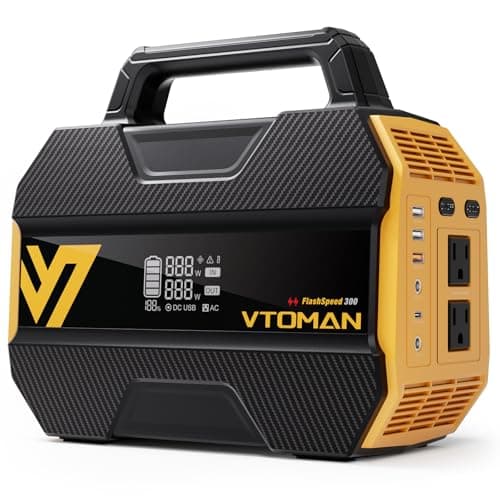 VTOMAN FlashSpeed 300 Worth choosing over similar budget units for one reason: it recharges from ordinary USB-C, which makes it genuinely useful away from a wall outlet. | USB-C recharging anywhere | 6.5/10 | $149.99 |
#ad Prices as of October 5, 2026; they may have changed since. Scores are our editorial judgment from published specifications, not test results — how we pick. How we are funded.
Check compatibility specifically, not generally
EASYLONGER's listing names the machines it works with: ResMed S9, AirSense 10/11, AirCurve 10/11 and AirMini; Philips DreamStation; and also Sefam S.Box, Resvent iBreeze, Apex iCH and the Löwenstein Prisma series. Four cables are included.
Find your machine on that list, or ask your supplier. A DC battery with the wrong cable is useless, and this is the detail people most often get wrong buying a general power station for CPAP duty — they buy the capacity and discover there is no DC route to the machine.
One more practical note: the ES960 is listed as FSA/HSA eligible, which can make it effectively cheaper than its price suggests.
When a general power station is the better choice
If the CPAP is one item on a longer list. A 1-2 kWh general unit runs the CPAP and the fridge, lights and devices, which a single-purpose CPAP battery cannot. The efficiency penalty on the CPAP is real but modest against the versatility.
If you go that route, look for a unit with low idle draw so it can live plugged in and always be full — Anker's SOLIX S2000 publishes 6 W and Bluetti's FridgePower 4 W — and ideally UPS switchover so it takes over without anyone being awake.
For a multi-night outage, a battery plus a generator to recharge it is the combination that works: the CPAP runs silently indoors overnight, and the generator tops the battery up during the day.
For a longer list, or a longer outage
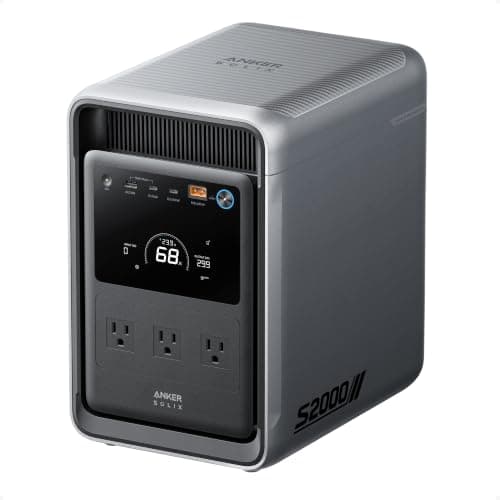
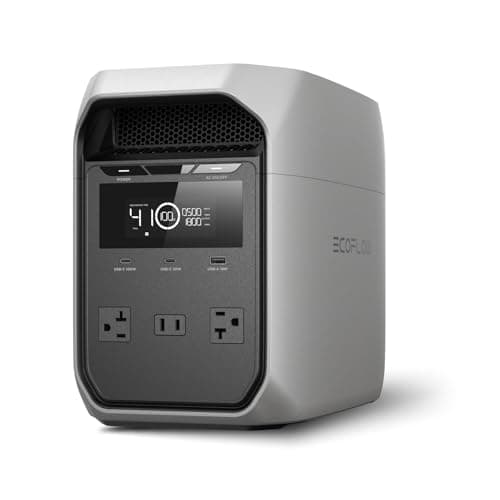
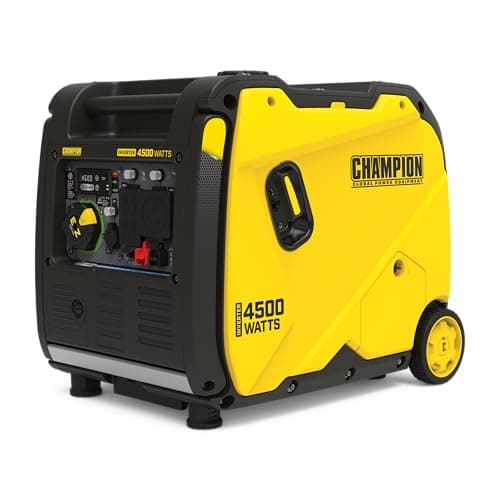
Two general-purpose batteries with low idle draw, and a quiet inverter generator for recharging when the outage exceeds any battery.
- Capacity
- 297.6 Wh
- CPAP nights
- 2+ (mfr)
- Chemistry
- LiFePO4
#1 · CPAP specifically
EASYLONGER ES960 CPAP Battery
If the backup power question is specifically about a CPAP, a purpose-built DC battery outlasts a general power station of the same capacity — buy this rather than a bigger box.
#ad Price as of October 5, 2026; it may have changed since. How we are funded.
What is good
- Ships with the DC cables for the common CPAP machines, which is the part people get wrong buying a general-purpose power station
- Running the CPAP on DC rather than through an AC inverter is substantially more efficient — it is why this gets two nights where a 300 Wh power station gets one
- FSA/HSA eligibility can make it effectively cheaper
What is not
- Single-purpose: it is a CPAP battery, not a general power station
- The 2+ night figure assumes no humidifier and no heated tube — with either, expect roughly one night
- Check your specific machine against the compatibility list before buying
Published specification & our scoring
- 297.6 Wh LiFePO4 battery pack (manufacturer)
- Manufacturer states 2+ nights of CPAP use without a humidifier or heated tube; runtime varies
- Four cables included; compatible with ResMed S9, AirSense 10/11, AirCurve 10/11, AirMini and Philips DreamStation (manufacturer)
- Also listed as compatible with Sefam S.Box, Resvent iBreeze, Apex iCH and Löwenstein Prisma (manufacturer)
- FSA/HSA eligible (manufacturer)
- Fit for purpose
- 10
- Efficiency
- 9
- Usable capacity
- 4
- Versatility
- 3
- Value
- 8
- Brand support
- 5
Specification figures are the manufacturer’s published values. Scores are our editorial judgment from those figures and are never published as structured review data — how we pick.
- Capacity
- 292 Wh
- AC output
- 300 W / 600 W peak
- Weight
- 7.5 lb
#2 · Phones, laptops, a CPAP
Jackery Explorer 300
Buy this for devices and medical equipment, not appliances — and at 7.5 lb and 4,000 cycles, it is the easiest preparedness purchase on the site.
#ad Price as of October 5, 2026; it may have changed since. How we are funded.
What is good
- 4,000 cycles at 7.5 lb — this will outlive several phones
- 292 Wh covers two nights of a CPAP without a humidifier, or a week of phone charging
- Small enough that it lives in a cupboard and gets used, rather than being a project
What is not
- 300 W will not start a refrigerator — do not buy it for that
- Solar panel sold separately
- No 240V, no high-draw appliances at all
Published specification & our scoring
- 292 Wh capacity, 300 W rated output with 600 W peak (manufacturer)
- Two AC outlets, a 100 W USB-C PD port, two USB-A, a 120 W car port
- LiFePO4 chemistry rated for over 4,000 charge cycles to 70% capacity (manufacturer)
- Published weight 7.5 lb
- Solar panel not included
- Usable capacity
- 3
- Output ceiling
- 3
- Cycle life
- 10
- Portability
- 10
- Recharge speed
- 7
- Value
- 9
Specification figures are the manufacturer’s published values. Scores are our editorial judgment from those figures and are never published as structured review data — how we pick.
- Capacity
- 288 Wh
- AC output
- 600 W / 1,500 W surge
- Weight
- 9.4 lb
#3 · Highest output of the small units
Bluetti Elite 30 V2
The small power station with genuinely useful output, as long as you understand 288 Wh means that output lasts minutes, not hours.
#ad Price as of October 5, 2026; it may have changed since. How we are funded.
What is good
- 600 W continuous is double the usual 300 W at this size — enough for a small appliance, not just devices
- 1,500 W surge gives it a real chance at starting a small fridge compressor
- 9.4 lb
What is not
- 288 Wh at 600 W draw is under 30 minutes — the output is only useful in short bursts
- Costs more than twice the budget 300 W units
- Power Lifting mode reduces voltage and should not be used for motors
Published specification & our scoring
- 288 Wh capacity, 600 W continuous with 1,500 W surge in Power Lifting mode (manufacturer)
- Manufacturer states 600 W output is twice what comparable units provide
- UltraCell technology and smart cooling cut power consumption by 50% (manufacturer)
- Published weight 9.4 lb; LFP chemistry
- Output ceiling
- 6
- Usable capacity
- 3
- Portability
- 10
- Cycle life
- 8
- Value
- 7
- Brand support
- 7
Specification figures are the manufacturer’s published values. Scores are our editorial judgment from those figures and are never published as structured review data — how we pick.
- Capacity
- 230 Wh
- AC output
- 300 W
- Input
- 100 W USB-C PD
#4 · USB-C recharging anywhere
VTOMAN FlashSpeed 300
Worth choosing over similar budget units for one reason: it recharges from ordinary USB-C, which makes it genuinely useful away from a wall outlet.
#ad Price as of October 5, 2026; it may have changed since. How we are funded.
What is good
- Recharging over USB-C PD means a laptop charger, a car adapter or a solar panel with a USB-C output all work — no proprietary brick to lose
- Seven outlets on a unit this small
- LiFePO4 at the budget end
What is not
- 230 Wh is the smallest capacity here
- 300 W output limits it to devices
- VTOMAN has limited long-term support history
Published specification & our scoring
- 230 Wh capacity, 300 W output (manufacturer)
- 100 W USB-C Power Delivery input for recharging (manufacturer)
- Seven outlets: two AC, one 100 W USB-C, plus DC and USB-A
- LiFePO4 battery
- Usable capacity
- 3
- Output ceiling
- 3
- Recharge flexibility
- 9
- Portability
- 10
- Value
- 9
- Brand support
- 4
Specification figures are the manufacturer’s published values. Scores are our editorial judgment from those figures and are never published as structured review data — how we pick.
Questions people actually ask
What is the best power station for a CPAP?
A purpose-built DC CPAP battery such as EASYLONGER's ES960 — 297.6 Wh LiFePO4 with four cables and a published compatibility list, claiming 2+ nights without a humidifier. It outlasts a general AC power station of the same capacity because it skips two conversion steps.
How many nights will a CPAP battery last?
EASYLONGER claims 2+ nights from its 297.6 Wh pack, stated explicitly as being without the humidifier or heated tube. With either of those running, expect roughly one night, because both are resistive heating elements that dominate consumption.
Can I run my CPAP from a regular power station?
Yes, and many people do. The caveat is efficiency: the battery's inverter converts DC to AC and the CPAP's supply converts it back, losing energy twice. If your machine accepts DC input, using it directly extends runtime noticeably from the same capacity.
Should I use the humidifier on battery power?
Generally no — it is a heating element and by far the largest load, which is why multi-night runtime claims are stated without it. Confirm with your equipment supplier that running without the humidifier and heated tube is appropriate for you.
Is a CPAP battery FSA or HSA eligible?
The EASYLONGER ES960's listing states it is FSA/HSA eligible, which can make it effectively cheaper. Eligibility varies by plan and by product, so confirm with your administrator before assuming.
What else should I do to prepare for an outage with a CPAP?
Call your equipment supplier, because many provide or recommend a matched battery and know your machine's real consumption. Also register with your utility's medical priority list if you qualify — it can affect restoration order and means they notify you of planned outages.
Sources
- EASYLONGER ES960 CPAP battery — manufacturer listingThe 297.6 Wh capacity, 2+ nights-without-humidifier claim, FSA/HSA eligibility and the published CPAP compatibility list.
Read next
Guide
Backup Power for Medical Devices
Backup power for CPAP machines and other medical equipment, including why a DC battery outlasts a general power station.
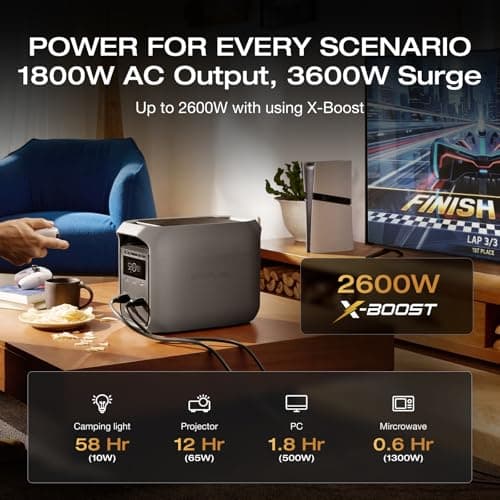
Best Budget Pick
Best Budget Power Stations
Budget power stations worth owning, with honest limits on what 300 watts of output can do.
Top pick · EcoFlow DELTA 3 Classic
$499.00View on Amazon11% off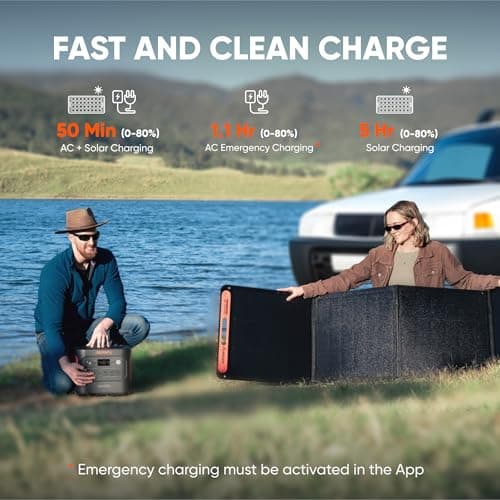
Best Overall Power Station
The Best Home Backup Power Stations
Battery power stations ranked for home backup on surge, capacity, recharge speed and cycle life.
Top pick · Jackery Explorer 2000 v2
$898.99View on Amazon10% off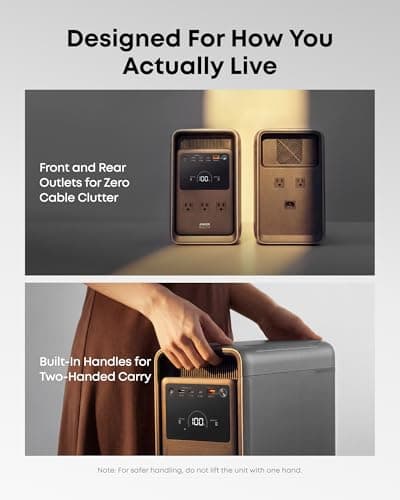
Comparison
LiFePO4 vs Lithium-Ion
Why LiFePO4 is the correct chemistry for backup power, with the published cycle claims that decide it.
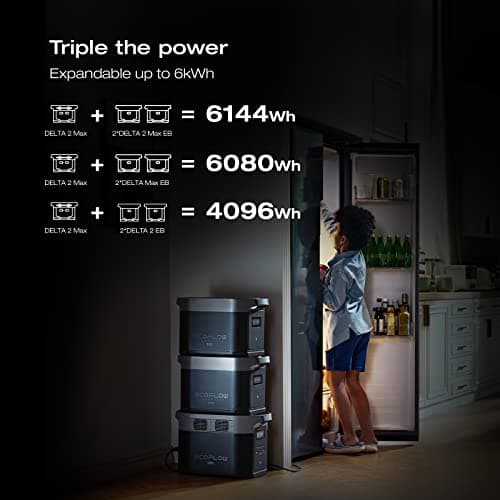
Guide
How to Recharge a Power Station in an Outage
The four recharge routes during an outage, with published charge speeds and the realistic limits of each.