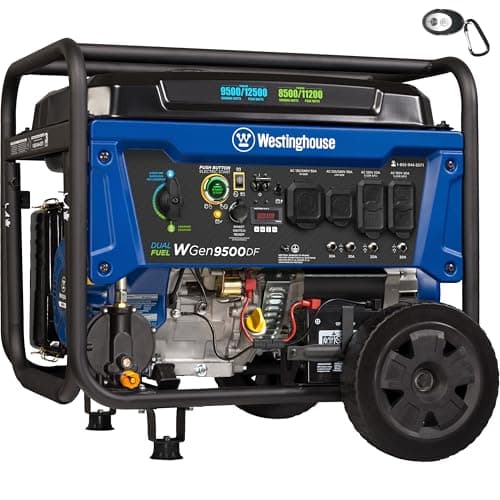
Sub-hub
Portable Generators
Conventional-frame portable generator roundups, from whole-house machines down to apartment-scale units.
Hub
Three families, three different jobs. Which one you want is decided by your load, your fuel plan and how close your neighbors are.
Disclosure: we earn a commission on purchases made through links on this page, at no cost to you. It does not affect what we recommend or what we say about it — how we are funded.
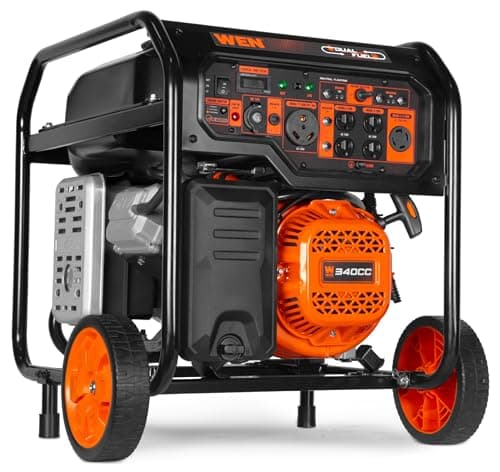
Sub-hub
Conventional-frame portable generator roundups, from whole-house machines down to apartment-scale units.
Sub-hub
Dual-fuel and tri-fuel generator roundups and guides, including propane conversion and the per-fuel output penalties.
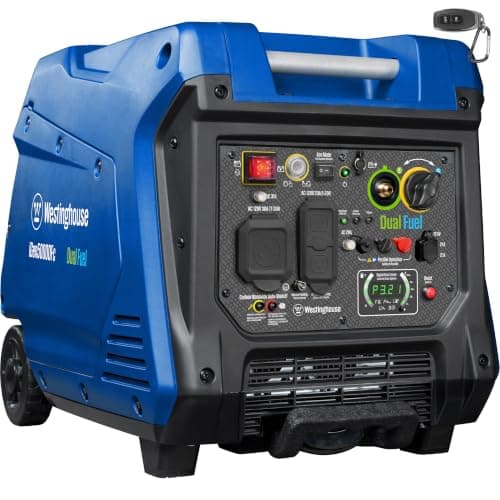
Sub-hub
Inverter generator roundups and the noise and power-quality guides behind them.
Generator listings are written to make every machine sound like the obvious choice, and they mostly do it by leading with the biggest number on the spec sheet. Peak watts. Starting watts. Surge watts. The figure you can actually plan around — running watts, on the fuel you intend to use — is usually further down, and on some machines it is not published at all.
This hub is organized around the three decisions that actually separate generators, in the order they matter.
Running watts on your chosen fuel is the number. Everything else is secondary. If you have not worked out your load, the sizing calculator takes about two minutes and will usually tell you that you need less generator than you thought.
What each class of running capacity covers
Running watts, not peak. Pair anything above roughly 7,500 running watts with a 50 A transfer switch or an interlock kit, or the connection becomes the bottleneck.
This matters more than most buyers expect, and it matters most on day three of an outage when the gas stations have no power either.
Worked through properly in is a dual fuel generator worth it and dual fuel vs tri-fuel vs gas.
A conventional generator runs its engine at a fixed speed and gives you more watts per dollar. An inverter generator varies engine speed to match demand, which makes it dramatically quieter, substantially more fuel-efficient at light load, and produces cleaner power — low total harmonic distortion, which matters for modern furnace control boards and anything with a circuit board in it.
The honest trade-off: at the same output an inverter machine costs noticeably more and has electronics that a plain alternator does not. For a machine that runs a few days a year, many people are right to take the cheaper conventional frame. For a machine running in a suburb at 2am next to a neighbor's bedroom, the noise difference is worth real money. How quiet is a quiet generator puts published decibel figures side by side, including which manufacturers state their measurement distance and which do not.
They buy the generator and nothing else. A generator with no transfer switch or interlock kit means extension cords through a window, which rules out the furnace, the well pump and the sump pump — the three loads you most wanted. A generator with no carbon monoxide alarm inside the house means the one risk that actually kills generator owners is unmonitored. And a generator with no fuel stabilizer in the tank will very likely refuse to start the next time you need it.
Budget for the connection and the safety equipment at the same time as the machine. On a correctly sized setup they are perhaps 30% of the total, and the generator is useless without them.
Picks
Each tile carries the top pick from that page with a live price, so you can act from here rather than having to read a review first.
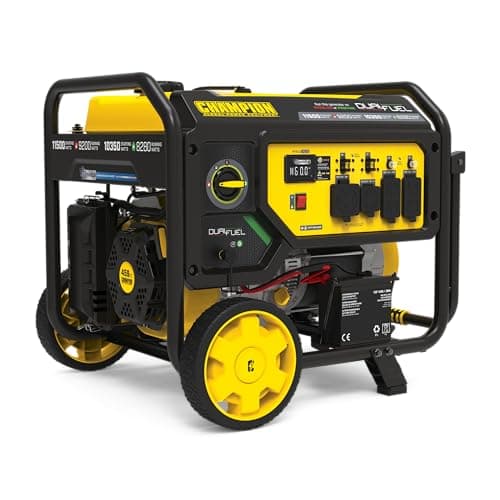
Guide
Brand-by-brand assessment based on what each publishes and omits, plus service network and positioning.
Top pick · Champion 11,500W Dual Fuel Electric Start
$989.99View on Amazon10% off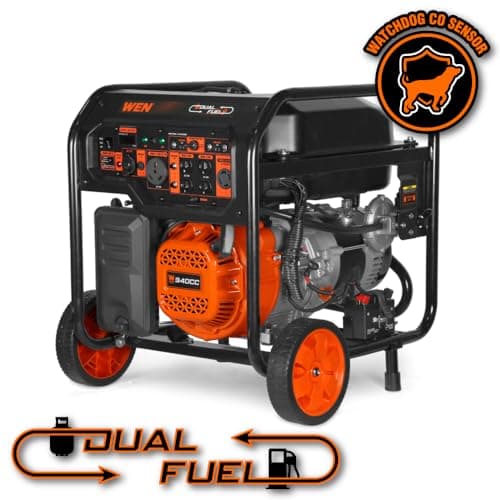
Best for a Well Pump
Generators with the 240V outlets and surge headroom a well pump needs, plus the soft-starter alternative.
Top pick · WEN DF8000X 8,000W Dual Fuel
$623.17View on Amazon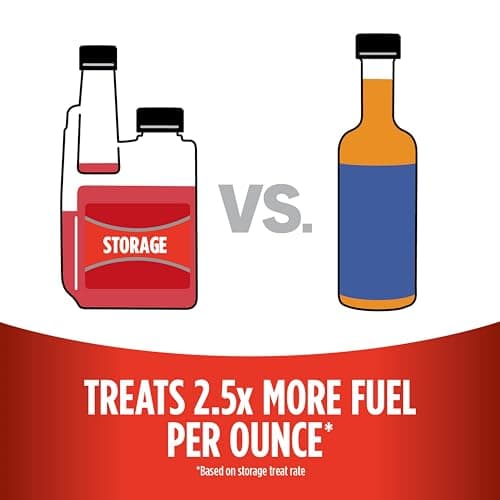
Guide
A maintenance schedule built around the real failure mode of a standby-duty generator: fuel, battery and the quarterly test run.
Top pick · STA-BIL Storage Fuel Stabilizer, 32 oz
$13.58View on AmazonRunning watts is the steady power a device needs once it is going. Starting watts is the extra surge a motor or compressor needs in the moment it starts, often two or three times its running figure. Generators publish both; size from running watts and confirm the generator's surge covers your largest single start-up.
In most cases yes, for one reason: propane stores indefinitely while gasoline degrades in months. The output penalty on propane is roughly 10%, and the ability to keep running from tanks when gas stations have no power is exactly the scenario you bought a generator for.
The CPSC's guidance is at least 20 feet away, outdoors, with the exhaust directed away from doors, windows and vents. Never in a garage, basement or crawlspace, even with the door open. This is also why cord length matters: a 25-foot cord is the practical minimum.
For most things, no — fridges, pumps, lights and heaters do not care. It matters for anything with sensitive electronics, including some modern furnace control boards. Several conventional machines now publish total harmonic distortion below 5%, which makes the inverter premium less necessary than it used to be.
It depends entirely on what your house's simultaneous load is, and on the connection. An 11,500 running-watt tri-fuel machine through a 50 amp transfer switch can run most homes including a window AC. A 30 amp switch caps throughput at about 7,200 watts no matter how large the generator, so the connection decides as much as the engine.
The published guidance on the machines we cover centers on an oil change after the first few hours and then on an hours-run interval, plus an air filter and spark plug annually. The practical rule that matters more: run it under load for half an hour every few months and add fuel stabilizer, because stale fuel is the most common reason a generator will not start when it is needed.