Generator Sizing
What Size Generator to Run a Furnace?
If your heat is gas, this is the cheapest critical load in your house to back up. If it is electric, it may be the most expensive.
Written byMike M.
Published
Disclosure: we earn a commission on purchases made through links on this page, at no cost to you. It does not affect what we recommend or what we say about it — how we are funded.
The short answer
A gas or propane furnace needs only its blower, igniter and controls powered. EWEB's chart puts a 1/3 HP furnace fan blower at 700 running watts with 1,400 additional starting watts, so a generator with about 900 running watts and 2,100 starting watts runs it alone. An electric furnace or heat pump is an entirely different load, is not in either published chart, and frequently exceeds what a portable generator can supply.
This is the single most reassuring fact in home backup power: in a house with gas heat, the fuel for your heating is already there during an outage. The gas keeps flowing. All that is missing is a few hundred watts of electricity to move the air.
Gas and propane furnaces
What a gas furnace actually needs
- Blower motor, 1/3 HP
- 700 W running
- Blower start-up surge
- +1,400 W
- Igniter and control board
- Tens of watts
- Starting watts needed
- ~2,100 W
- Derated running minimum
- ~900 W
EWEB's published 1/3 HP blower figures. Larger blowers exist — a 1/2 HP or variable-speed ECM blower differs — and the data plate inside the furnace cabinet gives yours.
900 running watts. That is one small inverter generator, or a modest battery power station. It is also why the furnace is nearly always on the essential-circuit list: the benefit is enormous and the cost in watts is trivial.
Two details worth knowing. Variable-speed ECM blowers — increasingly common on newer furnaces — generally draw less than an older fixed-speed blower at low fire, which helps. And the furnace's data plate is inside the cabinet and gives the real figure for your unit, which beats any chart.
The power-quality question that actually bites
Modern furnaces have electronic control boards, and some of them are fussy about the waveform they are fed. A conventional generator with high total harmonic distortion can, on some units, cause a board to lock out or misread — which presents as a furnace that simply will not run on generator power despite having plenty of watts available.
This is the strongest practical argument for inverter power in home backup. Most inverter generators publish total harmonic distortion below 3%. A handful of conventional machines do too: Westinghouse states under 5% THD on its WGen11500TFc and WGen14500TFc, and the ecoGen10000 publishes under 3% on an open frame. Where a manufacturer publishes no THD figure at all, you are taking a chance you do not need to take for a 900 watt load.
Electric furnaces and heat pumps
Here the picture changes completely, and we are going to be straightforward about the limits of what we can tell you.
An electric resistance furnace heats with elements, which means it draws its full rating continuously with no surge at all. Residential electric furnaces are commonly rated in the 10-20 kW region — which is 10,000 to 20,000 watts, continuously, exceeding every portable generator in this site's registry. Neither chart we cite publishes electric furnace figures, and we are not going to invent one.
A heat pump is better, because it moves heat rather than making it, but it has a compressor with a substantial surge, and most heat pumps have electric resistance backup strips that engage in cold weather — exactly when you need them.
What people actually do, and what we would suggest: leave electric heat off the backup list. Back up the fridge, the water, the sump pump and the lighting, and heat with something that does not need the grid — a propane or kerosene heater rated for indoor use, used exactly as its instructions require. That is dramatically cheaper than a generator sized for an electric furnace, and in most cases it is the only practical option.
The short answer
Picks for a gas furnace, from quiet to whole-house
| # | Product | Best for | Score | Price |
|---|---|---|---|---|
| 1 | 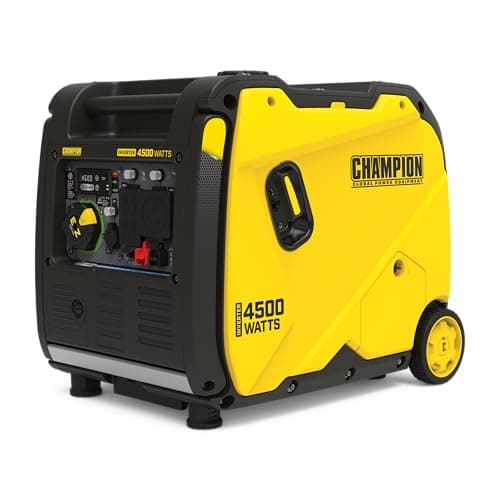 Champion 4,500W RV Ready Inverter The best balance of quiet, clean power and real output for cord-based backup: enough for the essentials, under 3% THD, half the price of the Honda equivalent. | Quiet backup at a sane price | 8.5/10 | $674.10 |
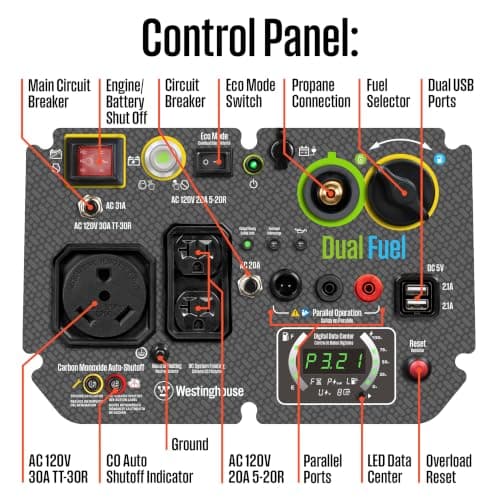
| 2 | 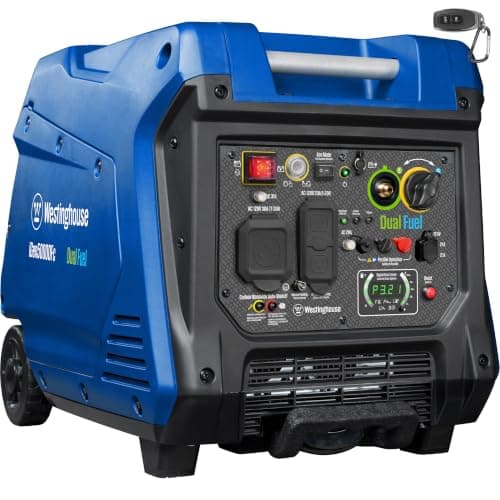 Westinghouse iGen5000DFc 5,000W Dual Fuel Inverter The quietest way to get around 4,000 running watts on either fuel, provided you are running cords rather than a transfer switch. | Quietest dual fuel at 4,000 running watts | 8.6/10 | $999.00 |
| 3 | 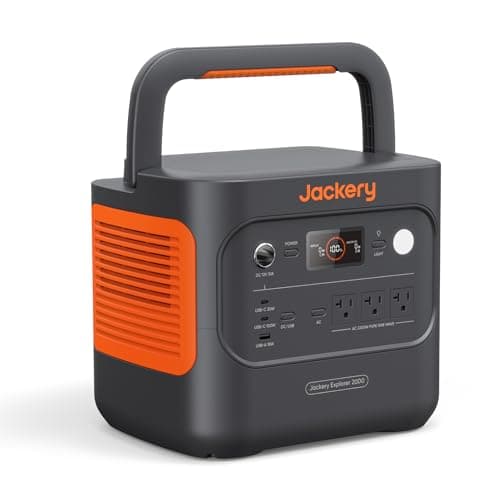 Jackery Explorer 2000 v2 The most sensible battery backup for most homes: enough capacity to carry a fridge and electronics through a typical outage, indoors, silently. | The default 2 kWh home backup battery | 8.9/10 | $898.99 |
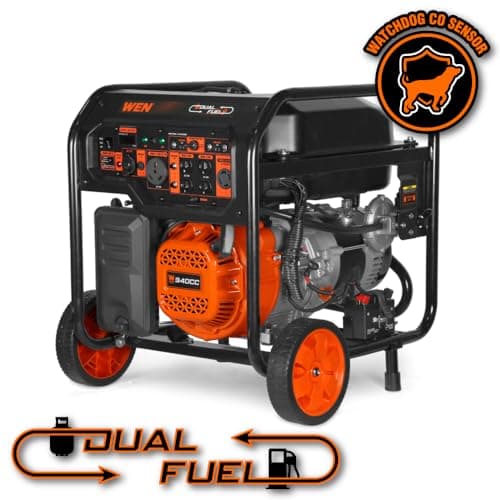
| 4 | 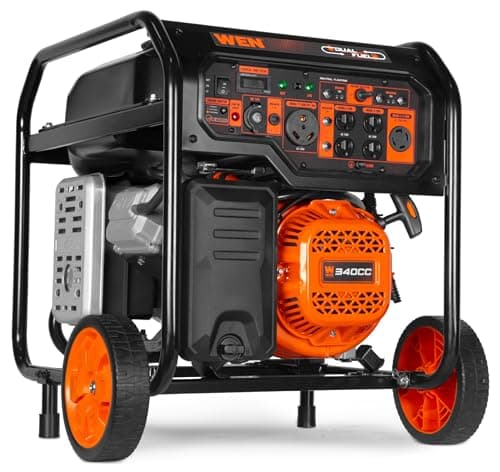 WEN DF8000X 8,000W Dual Fuel The best-value correctly-sized home backup generator here: enough for every essential circuit, dual fuel, CO shutoff, a real transfer-switch outlet, and no money spent on capacity you will not use. | Essential circuits, dual fuel, lowest cost | 8.5/10 | $623.17 |
#ad Prices as of October 5, 2026; they may have changed since. Scores are our editorial judgment from published specifications, not test results — how we pick. How we are funded.
If the furnace is one item on a longer list — and it usually is — run the load calculator rather than sizing for it in isolation. Related: how to run your house on a generator covers getting power to a hard-wired furnace in the first place.
Questions people actually ask
How many watts does a gas furnace use?
EWEB's chart lists a 1/3 HP furnace fan blower at 700 running watts with 1,400 additional starting watts. Add a small amount for the igniter and control board. The data plate inside your furnace cabinet gives the figure for your specific unit, which is better than any chart.
Will a 2000 watt generator run my furnace?
A gas furnace with a 1/3 HP blower, probably yes — it needs about 900 running watts and 2,100 starting watts, so a 2,000 watt machine with a 2,500 watt peak covers it. Check that the peak rating covers the 1,400 watt blower surge, and bear in mind nothing else can be running at the same time.
Can a battery power station run a furnace?
A gas furnace, yes: 700 running watts is well within a 1 kWh unit, and a 2 kWh battery runs one for roughly two and a half hours continuously — longer in practice, since a furnace cycles. Check the surge rating covers the 1,400 watt blower start-up.
Why won't my furnace run on my generator?
The most common cause is not insufficient watts but power quality: some modern furnace control boards lock out on the high total harmonic distortion of a conventional generator. Inverter generators publish THD below 3%, and a few conventional machines publish under 5%. Testing it on a mild day is the way to find out.
What size generator do I need for an electric furnace?
Likely more than a portable generator provides. Residential electric resistance furnaces are commonly rated in the 10-20 kW region and draw that continuously with no surge. Neither chart we cite publishes a figure, so read the data plate and take it to an electrician before buying.
Can I run a heat pump on a generator?
It is harder than a gas furnace and easier than an electric furnace. The compressor has a significant surge, and most heat pumps have electric resistance backup strips that engage in cold weather. Read the nameplate on the outdoor unit and the air handler, and consider a soft starter for the compressor.
Sources
- Eugene Water & Electric Board — Generator Sizing ConsiderationsPublic-utility wattage chart: the running and additional-starting figures quoted on this page, and the add-the-single-largest-surge method.
Read next
Guide
What Size Generator Do I Need?
The core sizing method: total running watts, add the single biggest surge, derate for continuous running, then match a wattage class.
Guide
How to Run Your House on a Generator
Connection options ranked, the correct start-up sequence, load management, and the back-feeding practice to never attempt.
Best Quiet Inverter
Best Quiet Inverter Generators for Home Backup
Inverter generators ranked on published noise and THD figures, with the brands that publish no measurable claim named.
Top pick · Westinghouse iGen5000DFc 5,000W Dual Fuel Inverter
$999.00View on Amazon23% off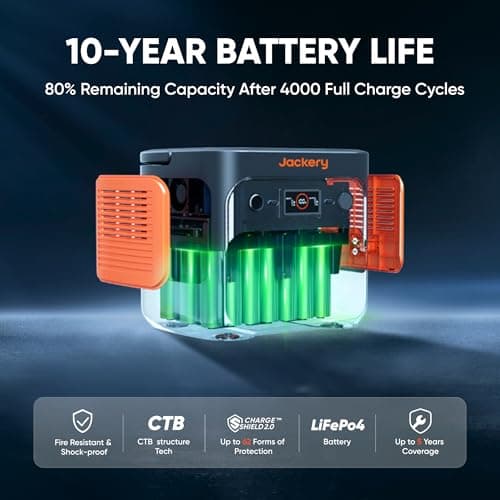
Guide
Can a Power Station Run a Furnace?
Battery backup for a furnace: easy for gas, impossible for electric, with the wiring question in between.
Reference
Appliance Wattage Chart
The site's reference wattage table, with each row's source named and both figures shown wherever the published charts disagree.