Outage Prep
Winter Storm Power Outage Checklist
Cold outages are the expensive ones. Frozen pipes cost more than everything else on this site combined.
Written byMike M.
Published
Disclosure: we earn a commission on purchases made through links on this page, at no cost to you. It does not affect what we recommend or what we say about it — how we are funded.
The short answer
- Before: fuel stabilized and stocked, generator test-run under load, battery CO alarms checked, freezer filled with water jugs.
- During: heat one room rather than the house, keep faucets trickling to reduce pipe-freeze risk, fridge and freezer doors shut.
- Generator: cold starts are harder — electric start and a charged battery matter far more in winter than in summer.
- Priority order: heat and water first, refrigeration second, comfort last.
A summer outage is uncomfortable. A winter outage can take out your plumbing, and a burst pipe in a wall is a five-figure event. That difference should drive how you prepare and what you prioritize once it happens.
Before the season: six things
- 1Test-run the generator under load for half an hour. Not idle — under actual load. Finding out it will not start in October beats finding out in January.
- 2Add fuel stabilizer to everything stored, and rotate anything over a year old. STA-BIL states its storage product keeps gasoline fresh up to 24 months when added while fresh.
- 3Check the starting battery on an electric-start machine. Cold weather both reduces battery capacity and makes the engine harder to turn — a battery that was marginal in autumn will fail in a freeze.
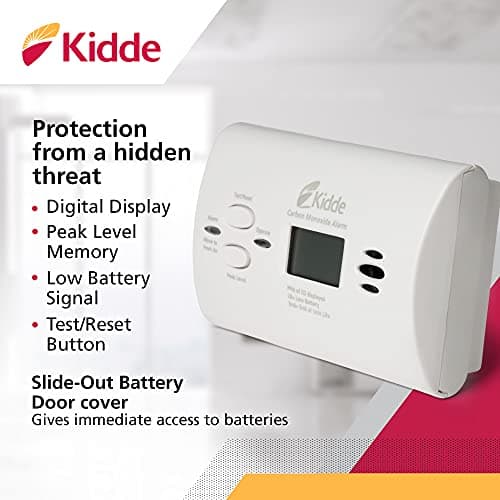
- 4Test the CO alarms and check their expiry dates. Sensors have a finite service life, commonly 7-10 years.
- 5Fill freezer space with sealed water jugs. It takes a half-full freezer from about 24 hours of safe holding to about 48.
- 6Know where your water shutoff is, and make sure you could find it in the dark. This is the frozen-pipe mitigation that costs nothing.
The pipe problem, which outranks everything
Water expands when it freezes, and a pipe in an unheated wall or crawlspace is where it does the damage. Two mitigations, both cheap and both effective:
- Keep faucets trickling. Moving water is substantially harder to freeze than still water, and a trickle relieves the pressure that actually bursts pipes. Do it on the fixtures served by pipes in exterior walls or unheated spaces.
- Open cabinet doors under sinks on exterior walls, so whatever warmth the room has reaches the pipes.
If you are on a well, note the uncomfortable interaction: a trickling faucet requires the well pump to cycle, which requires power. That is one more argument for having the well pump on your backed-up circuits — see how to hook up a well pump.
If the house will be unoccupied and unheated for an extended outage, shutting the water off and draining the system is the thorough answer, and worth doing if you are leaving.
Heat: the one load that actually matters in winter
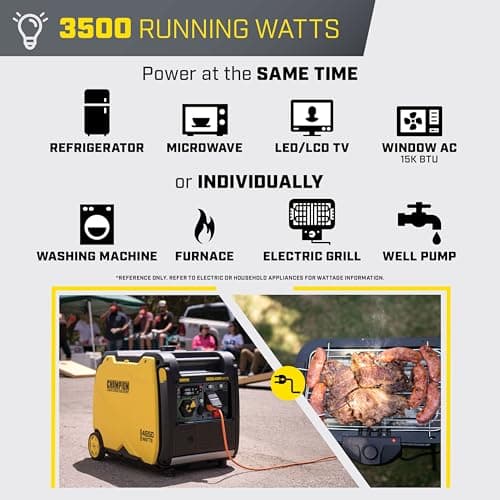
If you have a gas or propane furnace, you are in good shape: EWEB's chart puts a 1/3 HP furnace blower at 700 running watts with a 1,400 watt surge, so a small inverter generator or a 2 kWh battery runs it. The fuel is already there.
If you have electric heat, you very likely cannot run it from a portable generator — an electric furnace draws its full rating continuously and is commonly rated in the 10-20 kW region. The honest plan is to heat one room with something that does not need the grid, and back up the fridge, water and lighting with power equipment.
During the outage, in priority order
What to power, in what order
- 1. Furnace blower
- 700 W — prevents the pipe problem
- 2. Well pump, if you have one
- 1,000 W — water and trickling
- 3. Sump pump, if you have one
- 800-1,050 W — snowmelt matters too
- 4. Refrigerator
- 700 W — 4 hours of grace first
- 5. Lighting and devices
- ~300 W — cheap, do it
- Last
- Everything else
Published EWEB running-watt figures. This order is deliberate: items 1-3 prevent damage, item 4 prevents loss, item 5 is comfort that costs almost nothing.
Other winter-specific points worth having in mind:
- Close off rooms you are not using and concentrate the heat. A furnace running against the whole house loses the argument; one or two rooms it can win.
- Generators get harder to start as it gets colder, so if you anticipate needing it, starting it before the temperature drops further is easier than starting it after.
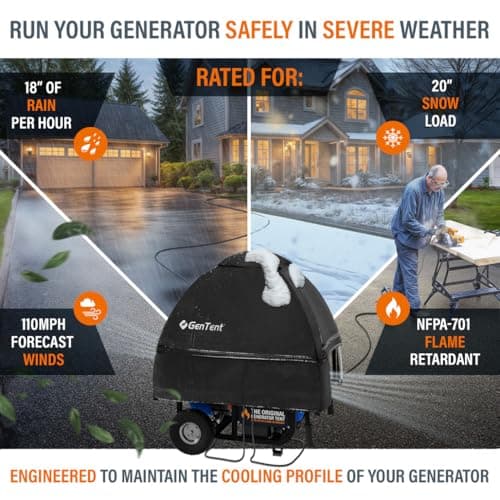
- Snow and ice are a cover problem. A running cover handles it; see using a generator in rain. Also clear snow from around the exhaust and intake.
- Cords stiffen in cold. RVGUARD publishes a jacket rated from -40 F to 221 F; a cheap cord that cracks in a freeze is a failure at the worst time.
The short answer
Winter outage kit
| # | Product | Best for | Score | Price |
|---|---|---|---|---|
| 1 | 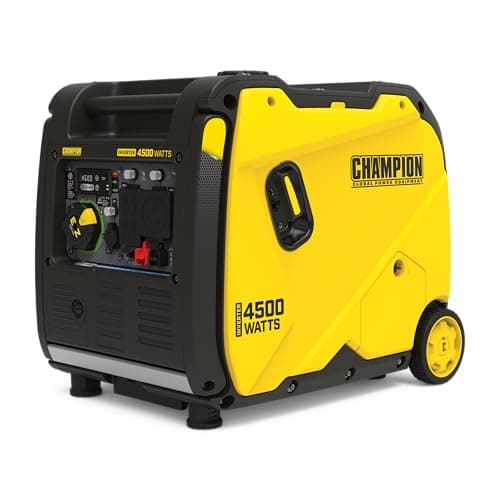 Champion 4,500W RV Ready Inverter The best balance of quiet, clean power and real output for cord-based backup: enough for the essentials, under 3% THD, half the price of the Honda equivalent. | Quiet backup at a sane price | 8.5/10 | $674.10 |
| 2 | 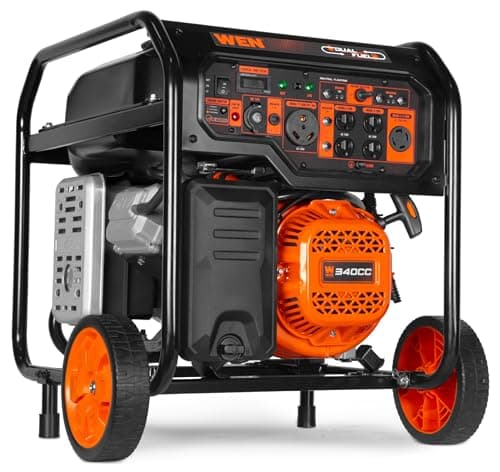 WEN DF8000X 8,000W Dual Fuel The best-value correctly-sized home backup generator here: enough for every essential circuit, dual fuel, CO shutoff, a real transfer-switch outlet, and no money spent on capacity you will not use. | Essential circuits, dual fuel, lowest cost | 8.5/10 | $623.17 |
| 3 | 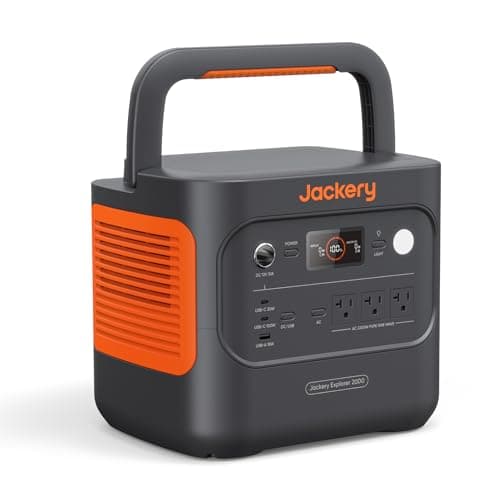 Jackery Explorer 2000 v2 The most sensible battery backup for most homes: enough capacity to carry a fridge and electronics through a typical outage, indoors, silently. | The default 2 kWh home backup battery | 8.9/10 | $898.99 |
| 4 | 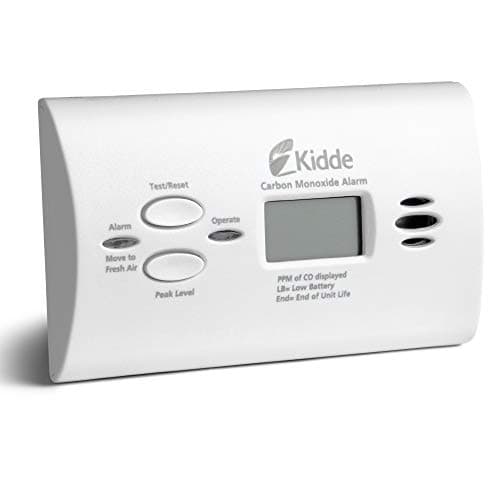 Kidde KN-COPP-B-LPM Battery CO Alarm Buy this before you buy the generator. Battery-powered CO detection is the one piece of equipment that addresses the way generators actually kill people. | The one accessory nobody should skip | 9.6/10 | $23.45 |
#ad Prices as of October 5, 2026; they may have changed since. Scores are our editorial judgment from published specifications, not test results — how we pick. How we are funded.
The three winter-specific items
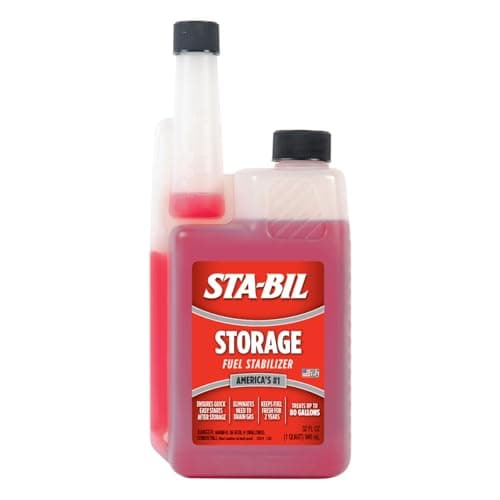
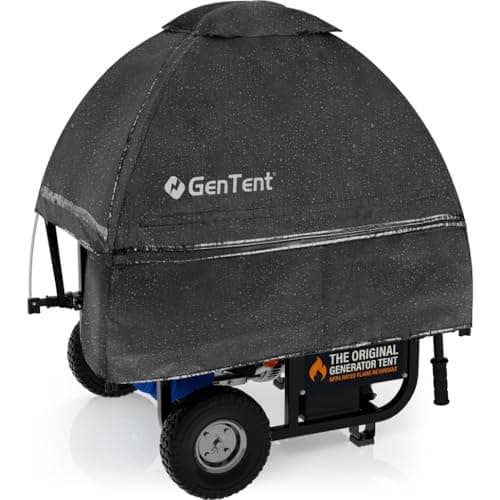
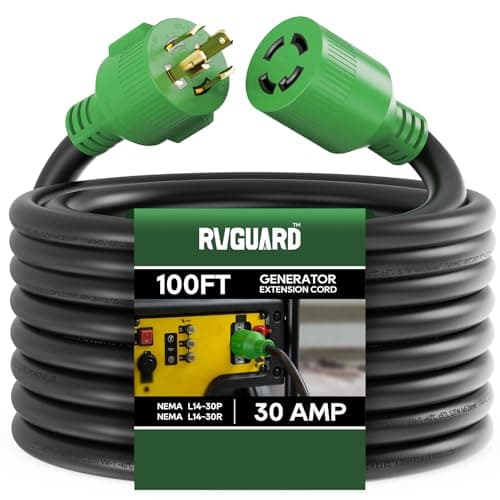
Stabilizer so the fuel still works; a running cover for snow; a cord with a published cold-weather jacket rating.
Questions people actually ask
How do I keep my pipes from freezing during a power outage?
Keep faucets served by pipes in exterior walls or unheated spaces trickling — moving water is harder to freeze and a trickle relieves the pressure that actually bursts pipes. Open cabinet doors under sinks on exterior walls. If the house will be unoccupied for a long outage, shut the water off and drain the system.
What size generator do I need for a winter outage?
If your heat is gas, a surprisingly small one: EWEB puts a 1/3 HP furnace blower at 700 running watts with a 1,400 watt surge. Add a well pump and a sump pump and you are at roughly 4,400 running watts. Electric heat is a different problem and usually cannot be run from a portable generator.
Why won't my generator start in cold weather?
Cold reduces battery capacity and makes the engine harder to turn, so a marginal starting battery fails in a freeze. Oil is also thicker. Check and charge the battery before winter; some machines publish cold-start features or include a battery tender for exactly this reason.
Can I use a grill or camp stove to heat my house?
No. Charcoal grills, camp stoves and unvented propane appliances all produce carbon monoxide, and a sealed winter house is the worst case for it. Use only heating appliances rated for indoor use, exactly as instructed, with working battery CO alarms on every sleeping level.
What should I power first in a winter outage?
Heat, then water, then the sump pump — the three whose failure causes damage rather than inconvenience. Refrigeration next, since you have about four hours of grace. Lighting and device charging last, though they cost so little that there is rarely a reason to leave them off.
Sources
- Eugene Water & Electric Board — Generator Sizing ConsiderationsPublished running and additional-starting watt figures quoted on this page.
- FoodSafety.gov — food safety during a power outageThe 4-hour refrigerator and 48-hour full-freezer guidance, and the 40 F / 140 F safe-temperature thresholds.
- Ready.gov — Power OutagesFederal preparedness guidance on outage planning referenced in the checklist sections.
- US Consumer Product Safety Commission — Portable Generator Information CenterThe placement, never-indoors and CO-alarm guidance this site repeats on every generator page.
Read next
Guide
Generator Carbon Monoxide Safety
The CPSC placement rules, why a garage with the door open is still unsafe, and the battery CO alarm that should be your first purchase.
Guide
Can You Run a Generator in the Rain?
How to run a generator safely in wet weather, what running covers actually do, and the enclosures that are never acceptable.

Guide
Generator Fuel Storage and Stabilizer
Fuel degradation, stabilizer shelf-life claims, safe storage quantities and containers, and the propane alternative.
Guide
What Size Generator to Run a Furnace?
Furnace blower sizing from published figures, the gas-versus-electric divide, and why power quality matters for modern control boards.
Guide
Hurricane Season Power Preparation
Preparing for long outages: the fuel logistics problem, why natural gas or propane wins, and a week-before checklist.