Power Stations
Best Budget Power Stations
Under $300 buys devices, lights and a CPAP — not appliances. Here is what is genuinely worth owning at that price.
Written byMike M.
Published
Disclosure: we earn a commission on purchases made through links on this page, at no cost to you. It does not affect what we recommend or what we say about it — how we are funded.
The short answer
Under $300, insist on LiFePO4 chemistry and understand the limit: 300 watts of output runs devices, LED lighting and a CPAP, and will not start a refrigerator, a microwave or anything with a heating element. Bluetti's Elite 30 V2 is the standout at 600 W continuous and 1,500 W surge for 288 Wh at 9.4 lb. If a fridge is the actual goal, EcoFlow's DELTA 3 Classic at 1,800 W is the cheapest unit that genuinely does it.
Budget power stations are either a sensible purchase or a waste, depending entirely on whether the buyer understands what 300 watts means. So that first.
What 300 watts actually runs
| Load | Published watts | On a 300 W unit? |
|---|---|---|
| Phone charger | 20 W (EWEB) | Yes, easily |
| Laptop | 60 W (EWEB) | Yes |
| LED bulb | 15 W (EWEB) | Yes, many |
| AM/FM radio | 100 W (EWEB) | Yes |
| CPAP (no humidifier) | Tens of watts | Yes, a night or two |
| Refrigerator | 400-700 W + 2,200 W surge | No |
| Microwave | 800-1,000 W (both charts) | No |
| Space heater | 1,500 W (both charts) | No |
| Coffee maker | 800-1,000 W (both charts) | No |
If that first group is what you want covered — phones, a laptop, lights, a router, a CPAP — a budget unit is a genuinely good buy, and its small size means it actually gets used rather than living in a cupboard. If you want the second group, no amount of budget shopping gets you there and you need the $500 bracket.
The short answer
Quick picks
| # | Product | Best for | Score | Price |
|---|---|---|---|---|
| 1 | 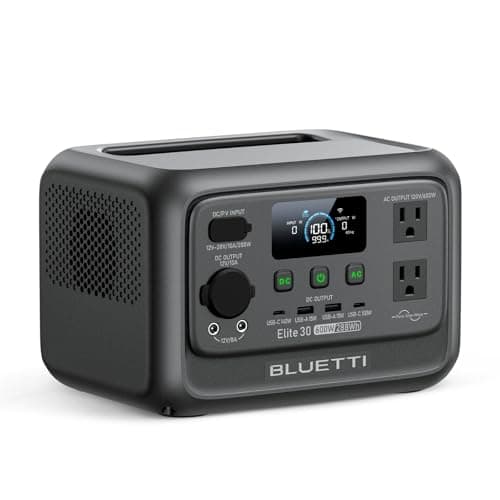 Bluetti Elite 30 V2 The small power station with genuinely useful output, as long as you understand 288 Wh means that output lasts minutes, not hours. | Highest output of the small units | 7.0/10 | $249.99 |
| 2 | 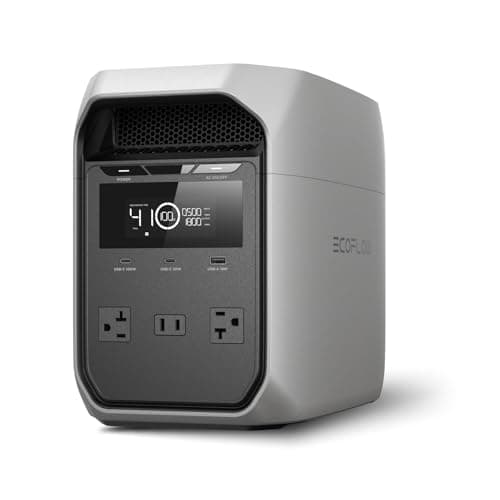 EcoFlow DELTA 3 Classic The best-value battery on the site: UPS-grade switchover, 1,800 W and a 45-minute recharge for roughly half what the 2 kWh units cost. | Best value 1 kWh with UPS | 8.6/10 | $499.00 |
| 3 | 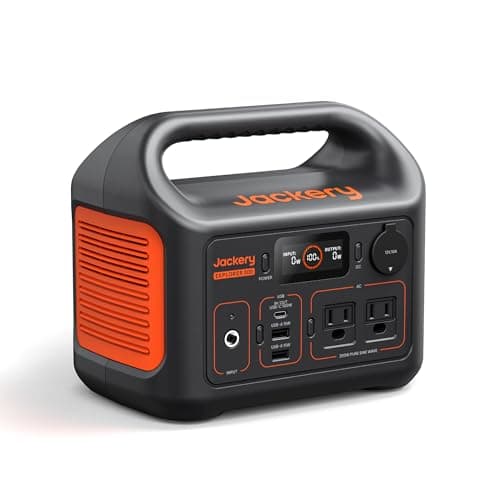 Jackery Explorer 300 Buy this for devices and medical equipment, not appliances — and at 7.5 lb and 4,000 cycles, it is the easiest preparedness purchase on the site. | Phones, laptops, a CPAP | 7.3/10 | $259.00 |
| 4 | 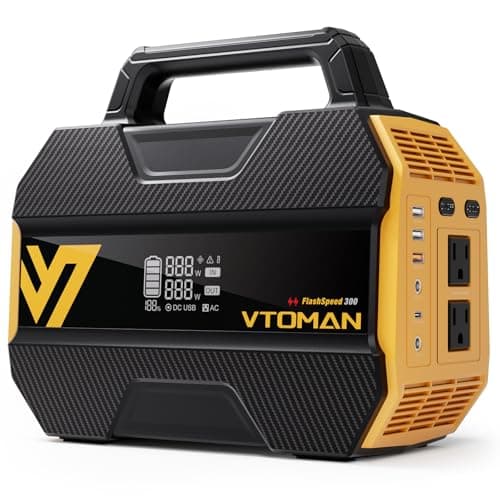 VTOMAN FlashSpeed 300 Worth choosing over similar budget units for one reason: it recharges from ordinary USB-C, which makes it genuinely useful away from a wall outlet. | USB-C recharging anywhere | 6.5/10 | $149.99 |
| 5 | 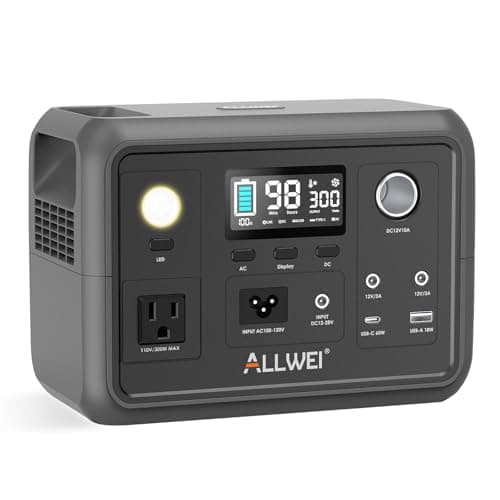 ALLWEI PPS300 300W The budget floor for a battery worth owning: real LiFePO4 chemistry, enough for devices and lights, nothing more. | Cheapest LiFePO4 device backup | 6.6/10 | $149.00 |
#ad Prices as of October 5, 2026; they may have changed since. Scores are our editorial judgment from published specifications, not test results — how we pick. How we are funded.
Insist on LiFePO4
Older lithium chemistries are rated for a few hundred cycles; LiFePO4 (LFP) claims here run from 4,000 cycles upward. Jackery's Explorer 300 publishes over 4,000 charge cycles to 70% capacity at 7.5 lb; ALLWEI's PPS300 publishes LFP cells with a stated 10-year performance.
For a device that sits on a shelf and gets used a handful of times a year, LFP means it is still working in a decade. At this price it is available, so there is no reason to accept less.
The standout: more output than its size suggests
Bluetti's Elite 30 V2 publishes 600 W continuous with a 1,500 W surge from 288 Wh at 9.4 lb — the manufacturer notes that 600 W is twice what comparable units provide, and that is accurate for this bracket.
What that buys: a small appliance rather than only devices, and a genuine chance at starting a small fridge compressor. What it does not buy is duration — 288 Wh at a 600 W draw is under 30 minutes. High output and small capacity is a short-burst combination, and it is important to understand which of those two you actually need.
The recharging detail worth paying for
VTOMAN's FlashSpeed 300 publishes a 100 W USB-C Power Delivery input, which means it recharges from a laptop charger, a car USB-C adapter or a USB-C solar panel. No proprietary brick to lose, and genuinely useful away from a wall outlet.
For a unit that may live in a car or a bag, that is more valuable than a slightly larger battery.
The brand-support trade-off, stated plainly
ALLWEI and VTOMAN are small brands with limited long-term support history. Jackery, EcoFlow, Bluetti and Anker are established with real warranty operations.
At $120 against $150 for similar specifications, that difference is worth the thirty dollars for most people — a power station is a battery with electronics, and a warranty claim is a real possibility over ten years. We rank the established brands above the budget ones for that reason, not because the specifications are worse.
If a refrigerator is the real goal
Then skip this bracket. The cheapest unit that genuinely does it is EcoFlow's DELTA 3 Classic: 1,024 Wh, 1,800 W continuous, 3,600 W surge via X-Boost, and a sub-10 ms UPS switchover at 26.7 lb. That surge figure is what clears the fridge's 2,200 watt start-up, and nothing in the under-$300 bracket does.
It is several times the price of a 300 W unit and it does something none of them can. Buying two budget units instead does not add up to it — they do not combine.
- Capacity
- 288 Wh
- AC output
- 600 W / 1,500 W surge
- Weight
- 9.4 lb
#1 · Highest output of the small units
Bluetti Elite 30 V2
The small power station with genuinely useful output, as long as you understand 288 Wh means that output lasts minutes, not hours.
#ad Price as of October 5, 2026; it may have changed since. How we are funded.
What is good
- 600 W continuous is double the usual 300 W at this size — enough for a small appliance, not just devices
- 1,500 W surge gives it a real chance at starting a small fridge compressor
- 9.4 lb
What is not
- 288 Wh at 600 W draw is under 30 minutes — the output is only useful in short bursts
- Costs more than twice the budget 300 W units
- Power Lifting mode reduces voltage and should not be used for motors
Published specification & our scoring
- 288 Wh capacity, 600 W continuous with 1,500 W surge in Power Lifting mode (manufacturer)
- Manufacturer states 600 W output is twice what comparable units provide
- UltraCell technology and smart cooling cut power consumption by 50% (manufacturer)
- Published weight 9.4 lb; LFP chemistry
- Output ceiling
- 6
- Usable capacity
- 3
- Portability
- 10
- Cycle life
- 8
- Value
- 7
- Brand support
- 7
Specification figures are the manufacturer’s published values. Scores are our editorial judgment from those figures and are never published as structured review data — how we pick.
- Capacity
- 1,024 Wh
- AC output
- 1,800 W / 3,600 W surge
- Switchover
- Under 10 ms (mfr)
#2 · Best value 1 kWh with UPS
EcoFlow DELTA 3 Classic
The best-value battery on the site: UPS-grade switchover, 1,800 W and a 45-minute recharge for roughly half what the 2 kWh units cost.
#ad Price as of October 5, 2026; it may have changed since. How we are funded.
What is good
- UPS behavior at a 1 kWh price point — you can put the fridge or the home office behind it permanently
- 1,800 W continuous is higher than Jackery's 1,500 W at similar capacity
- 45 minutes to 80% and 26.7 lb
What is not
- 1,024 Wh is a single night of fridge duty, not a weekend
- X-Boost's surge figure does not apply to motor loads
- No expansion battery option on the Classic
Published specification & our scoring
- 1,024 Wh, 1,800 W output with 3,600 W surge via X-Boost (manufacturer)
- 0-80% in 45 minutes with X-Stream AC charging (manufacturer)
- Under 10 ms UPS switchover (manufacturer)
- LiFePO4 cells rated for 10+ years of daily use, EV-grade cell-to-chassis design (manufacturer)
- Published weight 26.7 lb
- Usable capacity
- 6
- Output ceiling
- 7
- UPS behavior
- 10
- Recharge speed
- 10
- Portability
- 9
- Value
- 10
Specification figures are the manufacturer’s published values. Scores are our editorial judgment from those figures and are never published as structured review data — how we pick.
- Capacity
- 292 Wh
- AC output
- 300 W / 600 W peak
- Weight
- 7.5 lb
#3 · Phones, laptops, a CPAP
Jackery Explorer 300
Buy this for devices and medical equipment, not appliances — and at 7.5 lb and 4,000 cycles, it is the easiest preparedness purchase on the site.
#ad Price as of October 5, 2026; it may have changed since. How we are funded.
What is good
- 4,000 cycles at 7.5 lb — this will outlive several phones
- 292 Wh covers two nights of a CPAP without a humidifier, or a week of phone charging
- Small enough that it lives in a cupboard and gets used, rather than being a project
What is not
- 300 W will not start a refrigerator — do not buy it for that
- Solar panel sold separately
- No 240V, no high-draw appliances at all
Published specification & our scoring
- 292 Wh capacity, 300 W rated output with 600 W peak (manufacturer)
- Two AC outlets, a 100 W USB-C PD port, two USB-A, a 120 W car port
- LiFePO4 chemistry rated for over 4,000 charge cycles to 70% capacity (manufacturer)
- Published weight 7.5 lb
- Solar panel not included
- Usable capacity
- 3
- Output ceiling
- 3
- Cycle life
- 10
- Portability
- 10
- Recharge speed
- 7
- Value
- 9
Specification figures are the manufacturer’s published values. Scores are our editorial judgment from those figures and are never published as structured review data — how we pick.
- Capacity
- 230 Wh
- AC output
- 300 W
- Input
- 100 W USB-C PD
#4 · USB-C recharging anywhere
VTOMAN FlashSpeed 300
Worth choosing over similar budget units for one reason: it recharges from ordinary USB-C, which makes it genuinely useful away from a wall outlet.
#ad Price as of October 5, 2026; it may have changed since. How we are funded.
What is good
- Recharging over USB-C PD means a laptop charger, a car adapter or a solar panel with a USB-C output all work — no proprietary brick to lose
- Seven outlets on a unit this small
- LiFePO4 at the budget end
What is not
- 230 Wh is the smallest capacity here
- 300 W output limits it to devices
- VTOMAN has limited long-term support history
Published specification & our scoring
- 230 Wh capacity, 300 W output (manufacturer)
- 100 W USB-C Power Delivery input for recharging (manufacturer)
- Seven outlets: two AC, one 100 W USB-C, plus DC and USB-A
- LiFePO4 battery
- Usable capacity
- 3
- Output ceiling
- 3
- Recharge flexibility
- 9
- Portability
- 10
- Value
- 9
- Brand support
- 4
Specification figures are the manufacturer’s published values. Scores are our editorial judgment from those figures and are never published as structured review data — how we pick.
- Capacity
- 256 Wh
- AC output
- 300 W / 600 W peak
- Chemistry
- LiFePO4
#5 · Cheapest LiFePO4 device backup
ALLWEI PPS300 300W
The budget floor for a battery worth owning: real LiFePO4 chemistry, enough for devices and lights, nothing more.
#ad Price as of October 5, 2026; it may have changed since. How we are funded.
What is good
- LiFePO4 chemistry at this price is unusual; most sub-$150 units use the shorter-lived NMC
- 256 Wh is several days of phone and tablet charging, or a run of LED lighting
- Cheap enough to buy as a second unit rather than agonize over
What is not
- 300 W will not run any appliance with a motor or a heating element
- One AC outlet only
- ALLWEI is a small brand with limited support history
Published specification & our scoring
- 256 Wh capacity, 300 W continuous with 600 W peak (manufacturer)
- LiFePO4 (LFP) cells; manufacturer states 10-year performance
- One AC outlet, two DC5521, one car port, USB ports — six outputs total
- Usable capacity
- 3
- Output ceiling
- 3
- Cycle life
- 8
- Portability
- 10
- Value
- 10
- Brand support
- 4
Specification figures are the manufacturer’s published values. Scores are our editorial judgment from those figures and are never published as structured review data — how we pick.
Questions people actually ask
What is the best budget power station?
Bluetti's Elite 30 V2 for output — 600 W continuous and 1,500 W surge from 288 Wh at 9.4 lb, roughly double the output of comparable units at the price. Jackery's Explorer 300 is the pick if cycle life matters more, publishing over 4,000 cycles at 7.5 lb.
Can a 300W power station run a refrigerator?
No. A fridge needs about 2,200 watts to start its compressor per both published charts, which is far beyond a 300 watt unit's surge capability. The cheapest unit that genuinely runs a fridge is in the $500 bracket with 1,800 W output and a 3,600 W surge.
What can you run on a 300W power station?
Phone chargers (20 W), a laptop (60 W), LED lighting (15 W a bulb), a radio (100 W) and a CPAP without its humidifier. Nothing with a motor, compressor or heating element — no fridge, microwave, kettle, coffee maker or space heater.
Is LiFePO4 worth it in a budget power station?
Yes, and at this price it is available so there is no reason to accept less. Published LFP cycle claims here start at over 4,000 cycles against a few hundred for older chemistries, which for a device used a handful of times a year means it still works in a decade.
Are cheap off-brand power stations safe?
The specifications are often comparable; the difference is support. ALLWEI and VTOMAN have limited long-term warranty history against Jackery, EcoFlow, Bluetti and Anker. For a thirty-dollar difference, the established brand is usually the better buy over a ten-year life.
Can I combine two small power stations?
No. Unlike generators, portable power stations do not parallel, so two 300 watt units are two separate 300 watt units rather than one 600 watt one. If you need more output, you need a larger unit.
Sources
- Eugene Water & Electric Board — Generator Sizing ConsiderationsPublished appliance running and additional-starting watt figures used in the capacity arithmetic on this page.
Read next
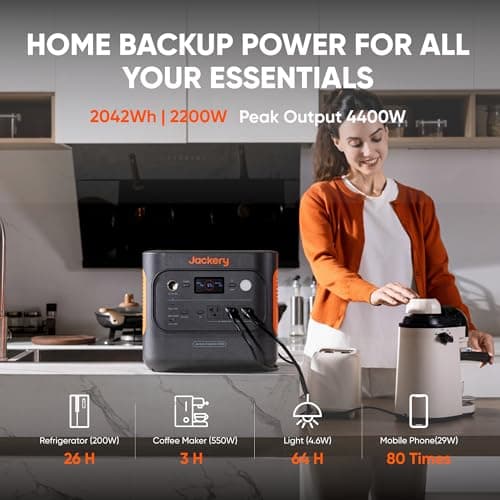
Best Overall Power Station
The Best Home Backup Power Stations
Battery power stations ranked for home backup on surge, capacity, recharge speed and cycle life.
Top pick · Jackery Explorer 2000 v2
$898.99View on Amazon10% off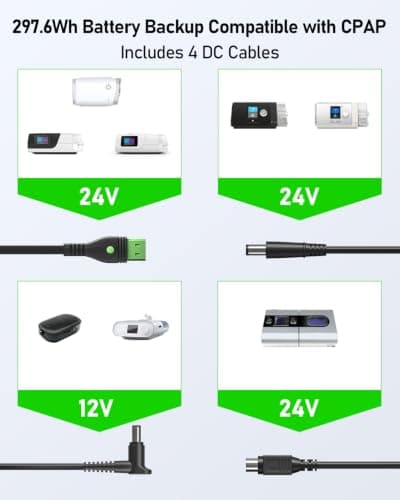
Best for CPAP
Best Power Station for a CPAP
CPAP backup power options, with the DC-versus-AC efficiency point and the compatibility checks that matter.
Top pick · EASYLONGER ES960 CPAP Battery
$269.99View on Amazon10% off
Comparison
LiFePO4 vs Lithium-Ion
Why LiFePO4 is the correct chemistry for backup power, with the published cycle claims that decide it.
Best Preparedness Gifts
Emergency Preparedness Gifts That Get Used
Outage preparedness gifts by budget, with what to check before buying and what each recipient will still need.
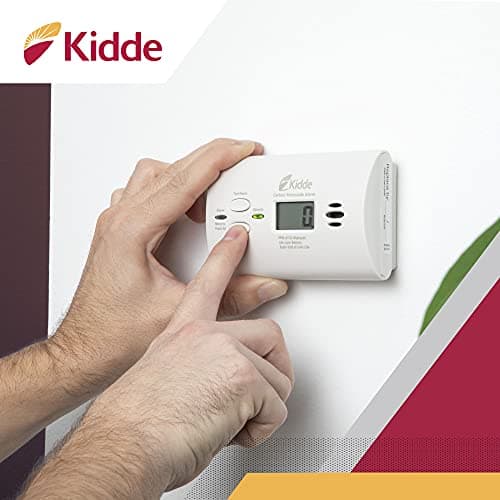
Top pick · Kidde KN-COPP-B-LPM Battery CO Alarm
$23.45View on Amazon22% off
Best for a Refrigerator
Best Power Station for a Refrigerator
Power stations that reliably start a fridge compressor, ranked on surge, idle draw and UPS switchover.
Top pick · Bluetti FridgePower
$899.00View on Amazon40% off