Outage Prep
Can You Run a Generator in the Rain?
Yes, with a proper running cover. No, by moving it into the garage — and that distinction is not a technicality.
Written byMike M.
Published
Disclosure: we earn a commission on purchases made through links on this page, at no cost to you. It does not affect what we recommend or what we say about it — how we are funded.
The short answer
Running a portable generator in rain or snow requires a purpose-made running cover — a canopy that sheds water away from the electrical panel while leaving the exhaust and air intake completely open to the atmosphere. Moving the generator into a garage, shed, carport or under a tarp is never acceptable: those are enclosures, and the CPSC's guidance prohibits operating a generator in any partly enclosed space even with doors and windows open.
This question matters more than most because of a simple coincidence: the weather that causes outages is the weather generators least like. You will almost never need to run one on a clear, dry day.
The actual risk from water
Water on the control panel, in the outlets, or on the alternator windings creates a shock hazard and can damage the machine. The generator is producing voltage; water is a conductor; the two combination is exactly what you would expect it to be.
Standing water matters too. A generator sitting in a puddle, or on ground that is pooling, is a worse situation than one in rain on a well-drained surface. Site it on something raised and draining — a concrete pad, a paver, a dry section of driveway — not on a lawn that is filling up.
What a running cover does
A purpose-made running cover is a canopy on a frame. It sheds rain and snow away from the sensitive parts while leaving the exhaust and the engine's air intake fully open. GenTent's listing describes it precisely: designed for safely operating open-frame portable generators outdoors in rain, snow, ice and sleet, with a waterproof water-shedding canopy that directs precipitation away from the electrical components.
The engineering point is that it is not an enclosure. Air flows through freely, the exhaust discharges to the atmosphere, and the carbon monoxide situation is unchanged from running uncovered. That is the whole design requirement.
Checking fitment, which is where people go wrong
- GenTent Universal
- 78-104 in frame perimeter
- Porch Shield
- 36 x 28 x 20 in
- IGAN
- Specified by wattage, 3,500-12,000 W
- All of them
- Open-frame generators only
Manufacturer fitment specifications. A perimeter or dimensional figure is far more reliable than a wattage range — measure your frame. None of these fit an enclosed inverter generator.
The enclosures people try, and why each fails
| Attempted solution | Why it fails |
|---|---|
| Garage with the door open | An open door does not provide enough air exchange; CO accumulates in the space |
| Shed or outbuilding | An enclosure, regardless of how many windows are open |
| Under a tarp | Traps exhaust, blocks the air intake, and can contact a hot exhaust |
| Carport or covered porch | Partly enclosed, and usually close to the house and its openings |
| Plastic storage bin with holes | An enclosure with inadequate ventilation and a fire risk |
The tarp deserves a specific note because it is the most common improvisation. A tarp draped over a running generator blocks the cooling airflow the engine needs, traps the exhaust underneath it, and can be drawn against a hot exhaust where it will melt or ignite. It is worse than nothing.
What enclosed inverter generators do differently
An enclosed inverter generator has its own case, which gives it meaningfully better weather tolerance than an open frame — Westinghouse's iGen5000DFc, for instance, publishes a double-insulated cover as part of its noise reduction, and that case is also protection from the elements.
That is not the same as being rated for operation in rain, and no manufacturer in our registry claims it is. Check the manual for your specific machine. What it does mean is that the running covers above will not fit an enclosed machine, and that for a light shower an enclosed unit is in a better position than an open-frame one.
The short answer
Running covers for open-frame generators
| # | Product | Best for | Score | Price |
|---|---|---|---|---|
| 1 | 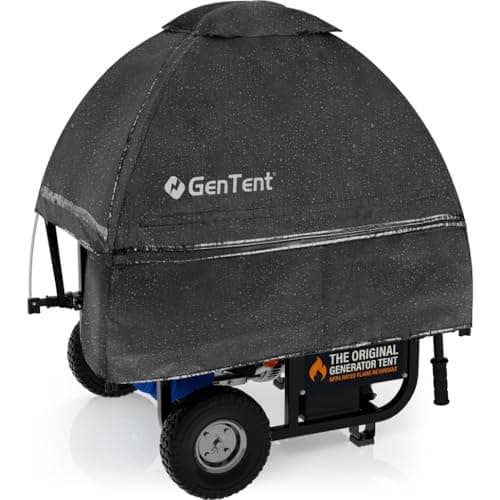 GenTent Universal Open Frame Generator Tent The right answer to running in a storm, with one firm caveat: weather protection is not ventilation, and placement rules do not change because the generator is covered. | Running a generator in real weather | 9.1/10 | $159.99 |
| 2 | 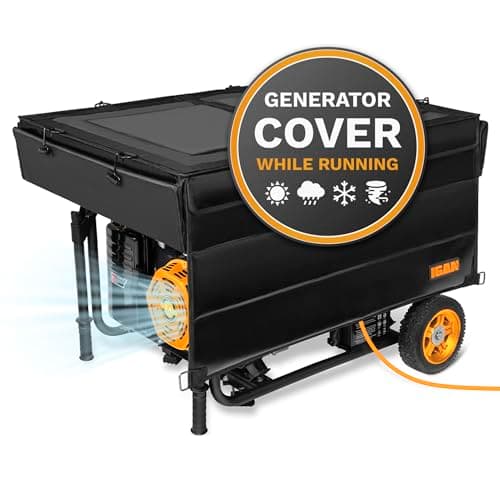 IGAN Running Generator Cover, 3,500-12,000W A capable mid-price running cover; confirm fit by measuring your frame rather than trusting the wattage range. | Mid-price running cover | 8.3/10 | $99.99 |
| 3 | 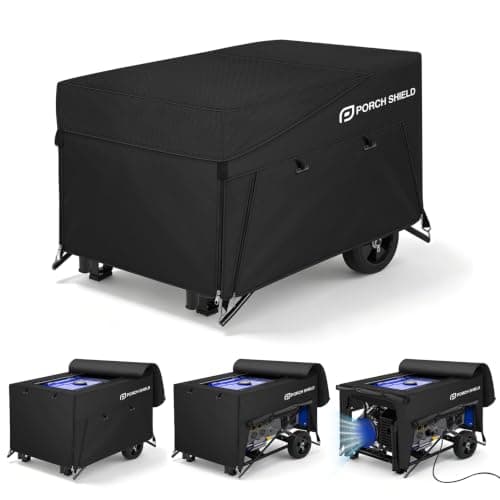 Porch Shield Running Generator Cover, 36 x 28 x 20 in The value running cover, and the one whose published dimensions let you verify fit before buying. | Cheapest cover with stated dimensions | 8.2/10 | $79.99 |
#ad Prices as of October 5, 2026; they may have changed since. Scores are our editorial judgment from published specifications, not test results — how we pick. How we are funded.
A wet-weather routine that works
- 1Site it on raised, draining ground — a pad or paver, not a lawn that pools.
- 2Fit the running cover before starting, not after, and check the exhaust and intake are clear.
- 320 feet minimum from the house, exhaust pointed away. Unchanged by the cover.
- 4Keep cord connections off the ground. A twist-lock connector sitting in a puddle is a problem the generator's own weatherproofing does not solve.
- 5Dry your hands before touching the panel. Obvious, routinely forgotten at 2am.
On that fourth point, cord choice matters: PlugSaf's generator cords publish IP65 weather resistance and RVGUARD's publishes a jacket rated from -40 F to 221 F. In a winter storm a cord that stiffens and cracks is a real failure mode, so cold-weather rating is worth checking. See generator extension cords.
Questions people actually ask
Can you run a generator in the rain?
Yes, with a purpose-made running cover that sheds water away from the electrical components while leaving the exhaust and air intake fully open. Without a cover, running in rain creates a shock hazard and can damage the machine.
Can I put a tarp over my generator while it runs?
No. A tarp blocks the cooling airflow the engine needs, traps the exhaust underneath, and can be drawn against a hot exhaust where it will melt or ignite. It is worse than nothing. Use a cover designed for running operation.
Can I run a generator in my garage during a storm?
No, under any circumstances, including with the door fully open. The CPSC's guidance prohibits operating a generator in a garage, basement, crawlspace or any partly enclosed space even with doors and windows open, because carbon monoxide accumulates faster than an opening clears it.
Does a generator cover stop carbon monoxide?
No, and it is not meant to. A running cover addresses water only. The generator still goes outdoors at least 20 feet from the house with the exhaust pointed away, and you still need battery-powered CO alarms indoors.
Are inverter generators better in the rain?
An enclosed inverter generator's case gives it better weather tolerance than an open frame, but no manufacturer in our registry rates one for operation in rain. Check your machine's manual. The running covers sold for open frames will not fit an enclosed unit.
How do I keep cord connections dry?
Keep them off the ground and out of puddles, and use cords with a published weather rating — PlugSaf's publish IP65 and RVGUARD's publish a -40 F to 221 F jacket. In winter a cord that stiffens and cracks is a genuine failure mode.
Sources
- US Consumer Product Safety Commission — Portable Generator Information CenterThe placement, never-indoors and CO-alarm guidance this site repeats on every generator page.
- GenTent Universal Open Frame Generator Tent — manufacturer listingThe water-shedding canopy description and the 78-104 inch perimeter fitment specification.
Read next
Guide
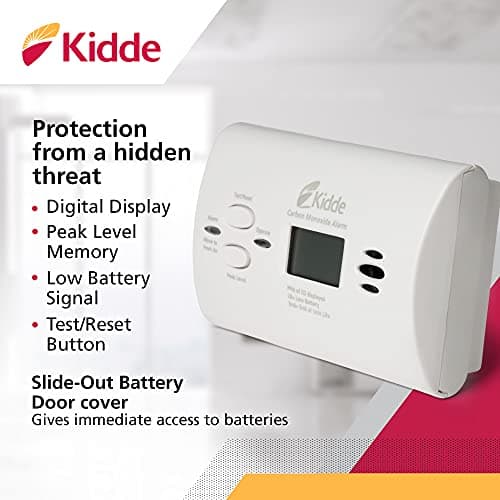
Generator Carbon Monoxide Safety
The CPSC placement rules, why a garage with the door open is still unsafe, and the battery CO alarm that should be your first purchase.
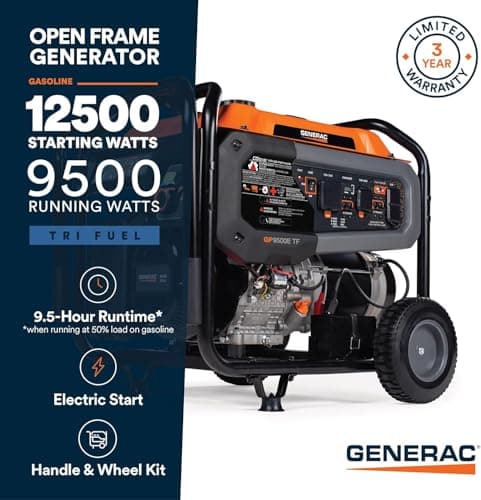
Guide
Hurricane Season Power Preparation
Preparing for long outages: the fuel logistics problem, why natural gas or propane wins, and a week-before checklist.
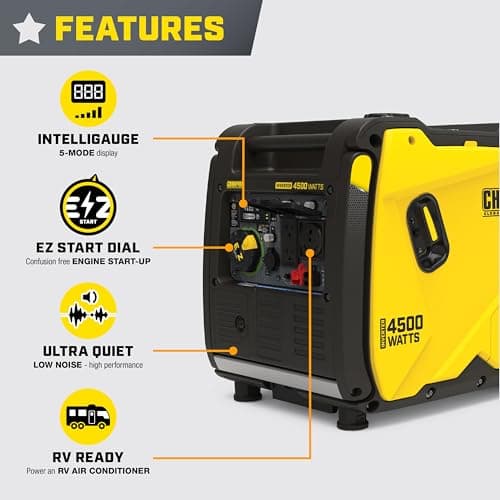
Guide
Winter Storm Power Outage Checklist
Before-the-storm and during-the-storm checklists for a winter outage, with the pipe-freeze risk front and center.
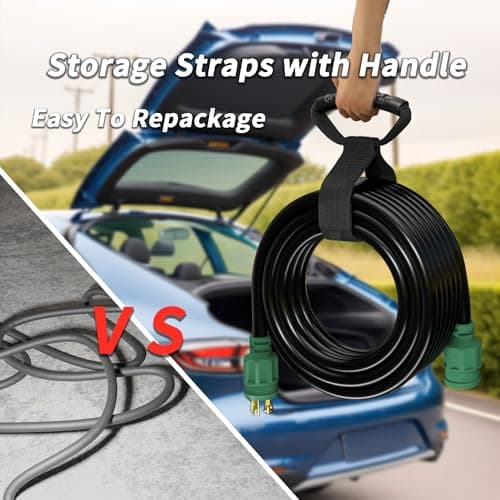
Best Generator Cord
The Best Generator Extension Cords
Generator cords by gauge, length and connector type, with the certification and connector-match checks that matter.
Top pick · PlugSaf 25 ft 30A L14-30 Cord, 10 AWG
$58.99View on Amazon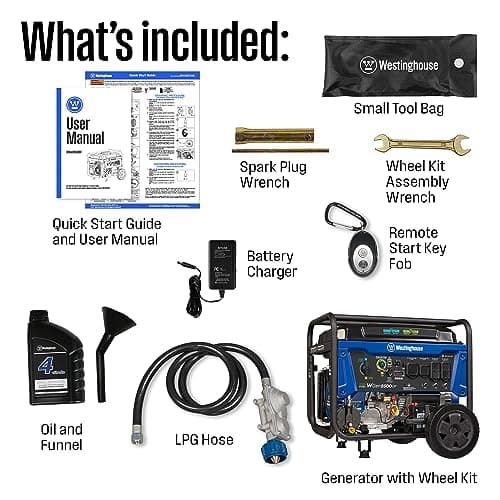
Best Overall Home Backup
The Best Home Backup Generators
Nine conventional-frame generators ranked for whole-house backup, with per-fuel running watts and transfer-switch fit.
Top pick · Westinghouse WGen9500DF 12,500W Dual Fuel
$999.00View on Amazon