Power Stations
Can a Power Station Run a Furnace?
A gas furnace, yes, easily. An electric furnace, no — and the gap between those two answers is the largest on this site.
Written byMike M.
Published
Disclosure: we earn a commission on purchases made through links on this page, at no cost to you. It does not affect what we recommend or what we say about it — how we are funded.
The short answer
A gas or propane furnace, yes: EWEB's chart puts a 1/3 HP furnace fan blower at 700 running watts with a 1,400 watt additional surge, which a 2 kWh battery runs for roughly two and a half hours continuously — and far longer in practice, since a furnace cycles. An electric resistance furnace, no: those are commonly rated in the 10-20 kW region and draw it continuously, exceeding every portable battery by an order of magnitude. The remaining obstacle for a gas furnace is that it is usually hard-wired.
The gas furnace case: easy, with one wiring problem
During an outage the gas keeps flowing. All that is missing is a few hundred watts of electricity for the blower, the igniter and the control board. That is a battery-sized load.
A gas furnace against a 2 kWh battery
- Blower, 1/3 HP, running
- 700 W (EWEB)
- Blower start-up surge
- +1,400 W (EWEB)
- Continuous runtime, 2,042 Wh
- ~2.5 hours
- Realistic runtime (cycling)
- Far longer
Our arithmetic at 88% inverter efficiency for the continuous figure. A furnace cycles — it runs until the house reaches temperature, then stops — so a battery lasts considerably longer than the continuous number suggests, especially in mild cold.
The surge requirement of 1,400 watts is modest and most 1 kWh units clear it. Check the surge rating rather than the continuous output: a unit with 1,800 W continuous and 3,600 W surge handles this comfortably.
The obstacle: most furnaces are hard-wired
Go and look. It takes a minute, and the answer determines whether your furnace backup costs a few hundred dollars or a few thousand. A furnace plugged into a receptacle is the best news in home backup power.
The short answer
Quick picks
| # | Product | Best for | Score | Price |
|---|---|---|---|---|
| 1 | 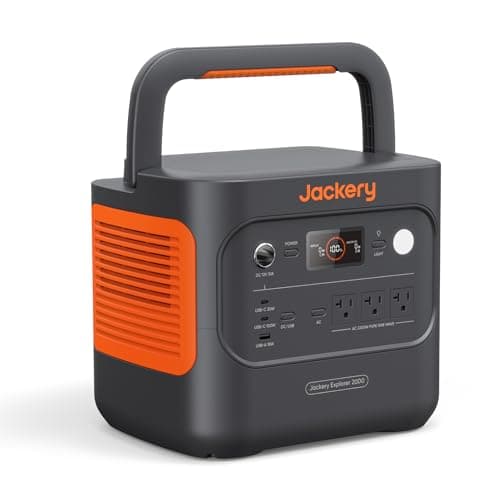 Jackery Explorer 2000 v2 The most sensible battery backup for most homes: enough capacity to carry a fridge and electronics through a typical outage, indoors, silently. | The default 2 kWh home backup battery | 8.9/10 | $898.99 |
| 2 | 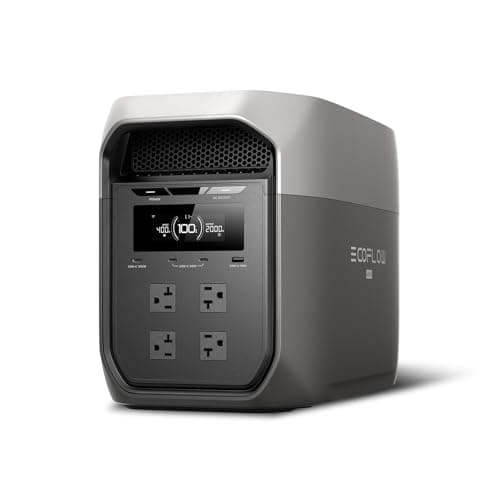 EcoFlow DELTA 3 Max The best battery here for keeping specific things running without interruption — the sub-10 ms transfer is a real functional difference, not a spec-sheet flourish. | UPS-grade switchover for a fridge | 8.8/10 | $879.00 |
| 3 | 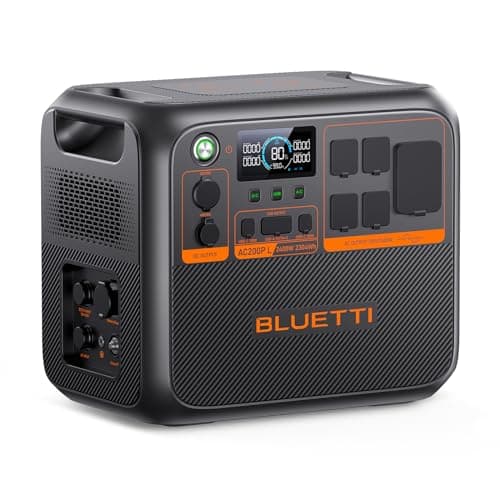 Bluetti AC200PL The most watt-hours for the money, with the honest trade-off being 72 lb and a less polished app than its rivals. | Largest capacity under $1,000 | 8.5/10 | $949.98 |
| 4 | 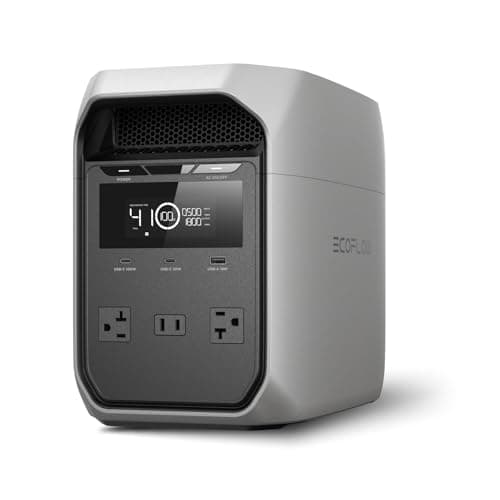 EcoFlow DELTA 3 Classic The best-value battery on the site: UPS-grade switchover, 1,800 W and a 45-minute recharge for roughly half what the 2 kWh units cost. | Best value 1 kWh with UPS | 8.6/10 | $499.00 |
| 5 | 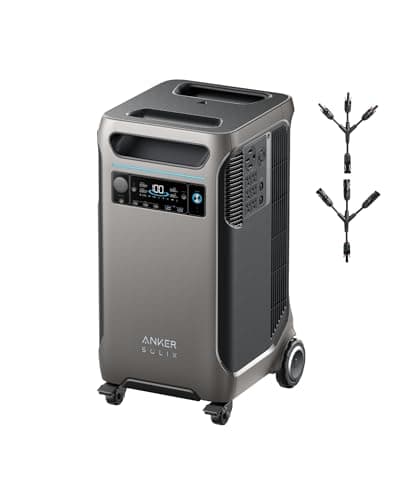 Anker SOLIX F3800 The only battery here that can genuinely stand in for a generator on 240V circuits, priced like the installed system it really is. | 240V loads from a battery | 8.4/10 | $1,979.99 |
#ad Prices as of October 5, 2026; they may have changed since. Scores are our editorial judgment from published specifications, not test results — how we pick. How we are funded.
The power quality question
Modern furnaces have electronic control boards, and some are fussy about waveform quality — a board can lock out on a dirty supply, which presents as a furnace that will not run despite plenty of watts being available.
Battery power stations are generally better than generators here, because an inverter producing a pure sine wave from DC is inherently clean. Several units publish "pure sine wave" AC output explicitly, including Jackery's Explorer 1000 v2. If a furnace control board is your concern, a battery is the safer supply.
Electric furnaces and heat pumps: the honest answer
Neither chart we cite publishes figures for an electric furnace or a heat pump, and we are not going to invent them. What we can say from the arithmetic:
An electric resistance furnace heats with elements, which means it draws its full rating continuously with no surge. Residential units are commonly rated in the 10-20 kW region. Against a portable battery's 1,500-2,400 watt output ceiling, that is not a close call — it is two orders of magnitude of mismatch, and no battery in this registry can even switch one on.
A heat pump is better, because it moves heat rather than making it, but it has a compressor with a substantial surge and most heat pumps have electric resistance backup strips that engage in cold weather — precisely when you need them. Read the nameplate on the outdoor unit and the air handler.
What people actually do, and what we would suggest: back up the fridge, water, sump pump and lighting with power equipment, and heat with something that does not need the grid — a propane or kerosene heater rated for indoor use, used exactly as its instructions require, with working battery CO alarms. That is dramatically cheaper than any attempt to power electric heat.
The one battery that is a different category
Anker's SOLIX F3800 publishes 3,840 Wh with 120 V and 240 V output — the manufacturer cites powering a dryer — and modular expansion plus compatibility with a Smart Generator for automatic start-stop runtime extension.
That 240 V capability is what lets a battery feed circuits the way a generator does, which makes it the only unit here that could genuinely be part of a hard-wired furnace plan. It is priced like the installed system it really is, and using the 240 V output properly means an electrician and a compatible transfer arrangement. At that budget, compare it honestly against a permanently installed standby generator.
Questions people actually ask
Can a power station run a gas furnace?
Yes. EWEB's chart puts a 1/3 HP furnace blower at 700 running watts with a 1,400 watt surge, which a 1-2 kWh battery handles easily. The real obstacle is usually that the furnace is hard-wired, so there is no plug to connect to.
How long will a power station run a furnace?
A 2,042 Wh battery runs a 700 watt blower for roughly two and a half hours continuously on our arithmetic — but considerably longer in practice, because a furnace cycles rather than running constantly. In mild cold it may run only a fraction of each hour.
Can a power station run an electric furnace?
No. Residential electric resistance furnaces are commonly rated in the 10-20 kW region and draw that continuously. Against a portable battery's 1,500-2,400 watt output ceiling, no unit in this registry could even switch one on.
Is my furnace plugged in or hard-wired?
Go and look, because the answer determines the cost of your whole plan. Some furnaces plug into a receptacle near the unit, in which case a cord from a battery works with no electrician. Most are hard-wired, which means the connection has to happen at the panel.
Is a battery better than a generator for a furnace control board?
Generally yes. An inverter producing a pure sine wave from DC is inherently clean, where a conventional generator's higher harmonic distortion can cause some modern control boards to lock out. Several batteries publish pure sine wave output explicitly.
Can a battery run a heat pump?
Not realistically. A heat pump's compressor has a substantial surge, and most heat pumps have electric resistance backup strips that engage in cold weather — exactly when you need heat. Read the nameplate on the outdoor unit and air handler, and expect a generator to be the answer.
Sources
- Eugene Water & Electric Board — Generator Sizing ConsiderationsPublished appliance running and additional-starting watt figures used in the capacity arithmetic on this page.
Read next
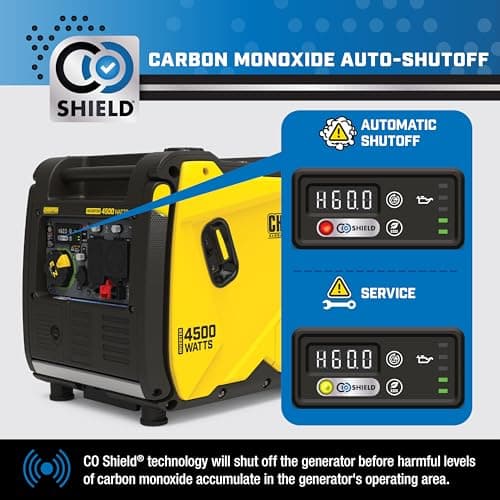
Guide
What Size Generator to Run a Furnace?
Furnace blower sizing from published figures, the gas-versus-electric divide, and why power quality matters for modern control boards.
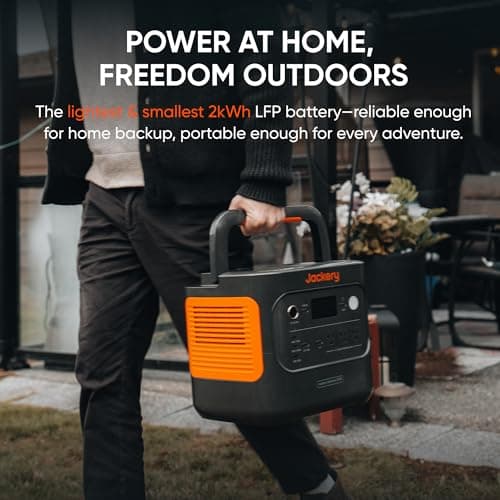
Best Overall Power Station
The Best Home Backup Power Stations
Battery power stations ranked for home backup on surge, capacity, recharge speed and cycle life.
Top pick · Jackery Explorer 2000 v2
$898.99View on Amazon10% off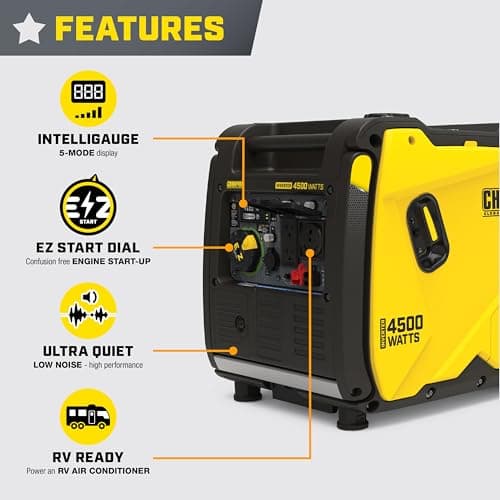
Guide
Winter Storm Power Outage Checklist
Before-the-storm and during-the-storm checklists for a winter outage, with the pipe-freeze risk front and center.
Battery vs Engine
Portable Power Station vs Generator
Battery against generator on surge capability, runtime, placement and cost, with the two facts that decide it.
Guide
How to Run Your House on a Generator
Connection options ranked, the correct start-up sequence, load management, and the back-feeding practice to never attempt.