Model Reviews
Bluetti for Home Backup
One purpose-built unit that is the best-engineered answer to a specific problem, and one that is simply the most watt-hours for the money.
Written byMike M.
Published
Disclosure: we earn a commission on purchases made through links on this page, at no cost to you. It does not affect what we recommend or what we say about it — how we are funded.
The short answer
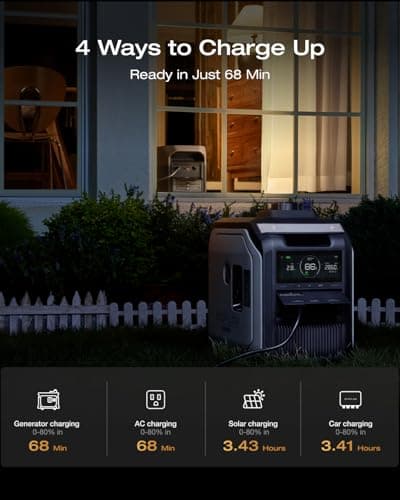
Bluetti's FridgePower publishes 2,016 Wh, 1,800 W, an ultra-low 4 W standby draw, a 10 ms DualGuard UPS transfer, a 75 mm slim case built to sit beside a refrigerator, and app storm alerts that automatically start fast charging. The AC200PL publishes 2,304 Wh and 2,400 W — the most capacity per dollar here — at 72 lb. The AC180 is the cheapest unit that genuinely runs a fridge, limited by a 500 W solar input ceiling.
The range, published side by side
| Model | Capacity | Output | Weight | Notable |
|---|---|---|---|---|
| FridgePower | 2,016 Wh | 1,800 W | 41.9 lb | 4 W idle, 10 ms UPS, storm alert |
| AC200PL | 2,304 Wh | 2,400 W | 72 lb | 1,200 W solar, TT-30 port |
| AC180 | 1,152 Wh | 1,800 W / 2,700 W peak | 37.4 lb | 1 h full charge, 500 W solar |
| Elite 30 V2 | 288 Wh | 600 W / 1,500 W surge | 9.4 lb | Double the usual small-unit output |
The FridgePower is the most thoughtfully engineered unit here
It is purpose-built for one job and every design choice reflects that. Four specifications worth calling out:
Why each of these matters
- 4 W standby draw
- Most units waste 20-30 W idling
- 10 ms DualGuard UPS
- The fridge never stops, so never restarts
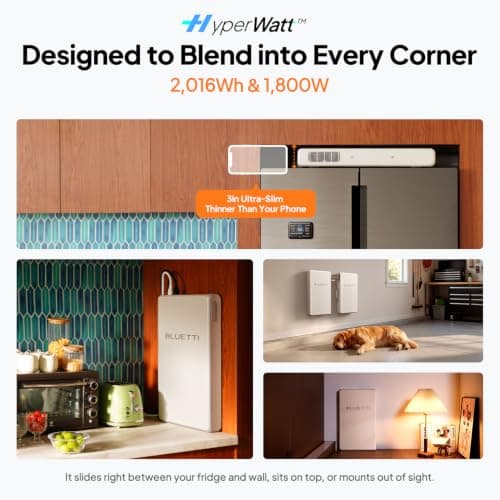
- 75 mm slim case
- Fits where a fridge actually lives
- Storm alert auto-charge
- Full on the day, without anyone remembering
Manufacturer published figures and features. Bluetti states the low standby consumption gives 26% longer runtime as a result.
That last row is the one we would single out. A backup device's hardest problem is being charged on an unpredictable day, and it is a human-memory problem rather than an engineering one. A unit that watches the weather forecast and tops itself up is a genuine engineering answer to it, and no other product in this registry does anything comparable.
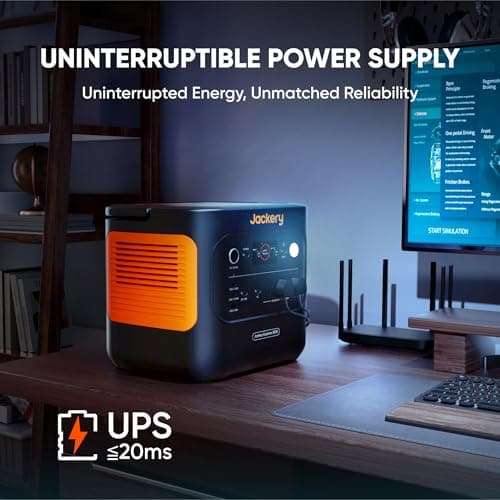
The 10 ms UPS matters nearly as much: both published wattage charts put a fridge's start-up surge at 2,200 watts, and a compressor that never stops never has to restart against it.
Its cost is versatility. The slim purpose-built shape is less useful for camping or a job site than a conventional box, and the 1,800 W ceiling is built for a fridge rather than for a house. It also needs the app and a network connection for the storm-alert feature to work.
The AC200PL: most watt-hours for the money, at a weight
2,304 Wh is the largest capacity in this registry and the AC200PL is routinely the cheapest route to over 2 kWh. It publishes 2,400 W across four AC outlets, 0-80% in 60 minutes at 2,400 W AC input, 1,200 W of solar input — the highest here — plus a 30A TT-30 port, a 48V/8A DC port for RV battery charging, and two 100 W USB-C PD ports.
The TT-30 port is more useful than it first appears: it lets the unit feed an RV or a 30A inlet-style load directly rather than through adapters.
The AC180: the cheapest fridge-capable unit
1,152 Wh with 1,800 W output and a 2,700 W peak, a full recharge in one hour at 1,440 W AC input through a single cable with no separate adapter, eight outlets, and a UPS function — at 37.4 lb.
The single-cable charging detail is a genuine convenience: no power brick to carry or lose. And 1,800 W with a 2,700 W peak clears a fridge's published 2,200 watt surge, which makes this the price floor for a battery that genuinely runs a refrigerator overnight.
Its limitation is the 500 W solar input ceiling, half what the AC200PL and EcoFlow's DELTA 2 Max accept. That caps its solar story permanently however many panels you buy. Bluetti also does not publish a cycle count for this model.
Where Bluetti loses
App and firmware reputation is weaker than Jackery's or EcoFlow's, which matters for the FridgePower specifically since its best feature depends on the app.
Cycle life documentation is patchier: the AC200PL publishes 3,000+ cycles and a ~10-year lifespan, but the AC180's listing states no cycle count. Anker's SOLIX S2000 publishes 10,000 cycles for comparison.
Weight, on the AC200PL specifically, as above.
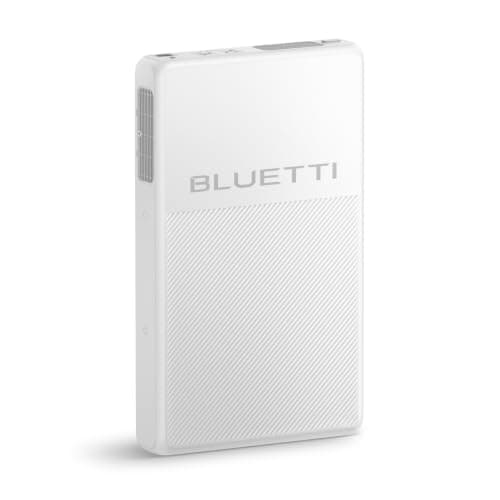
- Capacity
- 2,016 Wh
- AC output
- 1,800 W
- Standby draw
- 4 W (mfr)
#1 · Purpose-built refrigerator backup
Bluetti FridgePower
If the problem you are solving is specifically the refrigerator, this is the unit designed for that problem — the 4 W standby and storm auto-charge are genuine engineering answers to it.
#ad Price as of October 5, 2026; it may have changed since. How we are funded.
What is good
- 4 W standby draw is the specification that matters most for a device left plugged in for months — most power stations waste 20-30 W doing nothing
- The storm alert auto-charge is the single most practically useful feature on any battery here: it tops itself up before the outage
- 75 mm deep means it actually fits where a fridge lives, instead of becoming a floor obstacle
What is not
- 1,800 W ceiling — it is built for a fridge, not for the house
- Purpose-built shape makes it less useful for camping or job-site duty than a conventional unit
- Requires the app and a network connection for the storm-alert feature to work
Published specification & our scoring
- 2,016 Wh LFP battery, 1,800 W output (manufacturer)
- Ultra-low 4 W standby consumption; manufacturer states 26% longer runtime as a result
- DualGuard UPS with a 10 ms switch to battery (manufacturer)
- 75 mm slim design purpose-built to sit beside or behind a refrigerator (manufacturer)
- Storm alert push notifications that trigger automatic fast charging; Alexa and Google Home (manufacturer)
- Published weight 41.9 lb
- Usable capacity
- 9
- Standby efficiency
- 10
- UPS behavior
- 10
- Output ceiling
- 7
- Form factor
- 10
- Value
- 8
Specification figures are the manufacturer’s published values. Scores are our editorial judgment from those figures and are never published as structured review data — how we pick.
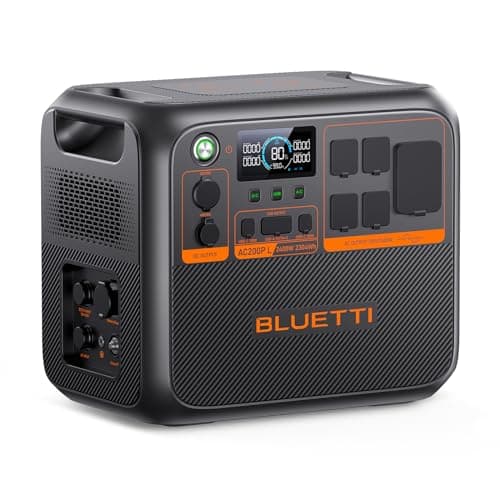
- Capacity
- 2,304 Wh
- AC output
- 2,400 W
- Ports
- 4 AC + TT-30 + 48V
#2 · Largest capacity under $1,000
Bluetti AC200PL
The most watt-hours for the money, with the honest trade-off being 72 lb and a less polished app than its rivals.
#ad Price as of October 5, 2026; it may have changed since. How we are funded.
What is good
- 2,304 Wh is the most capacity per dollar in this roundup
- The TT-30 port lets it feed an RV or a 30A inlet-style load directly
- 1,200 W solar input, matching EcoFlow's best
What is not
- 72 lb — this is a two-handed lift and it will stay where you put it
- Bluetti's app and firmware have a weaker reputation than Jackery's or EcoFlow's
- Still 2,400 W, so still no motor loads
Published specification & our scoring
- 2,304 Wh capacity, 2,400 W across four AC outlets (manufacturer)
- 0-80% in 60 minutes at 2,400 W AC input; up to 1,200 W solar input (manufacturer)
- LiFePO4 rated 3,000+ cycles, around a 10-year lifespan (manufacturer)
- A 30A TT-30 port, a 48V/8A DC port, a car port, two 100 W USB-C PD
- 48V RV port for charging an RV battery (manufacturer)
- Published weight 72 lb
- Usable capacity
- 10
- Output ceiling
- 7
- Solar input
- 10
- Recharge speed
- 9
- Portability
- 5
- Value
- 10
Specification figures are the manufacturer’s published values. Scores are our editorial judgment from those figures and are never published as structured review data — how we pick.
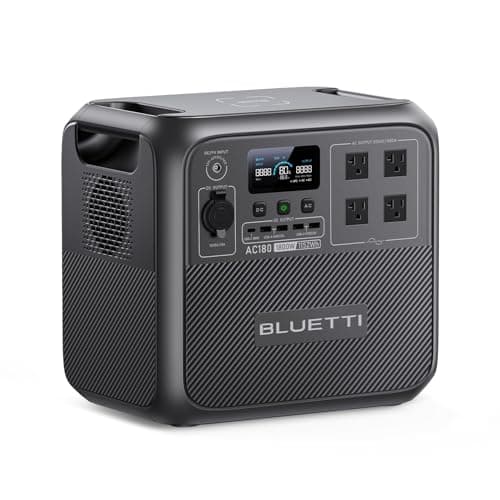
- Capacity
- 1,152 Wh
- AC output
- 1,800 W / 2,700 W peak
- Recharge
- 1 h at 1,440 W (mfr)
#3 · 1.1 kWh at the lowest price
Bluetti AC180
The cheapest battery that will actually run a refrigerator overnight, with solar input as its main compromise.
#ad Price as of October 5, 2026; it may have changed since. How we are funded.
What is good
- 1,152 Wh and 1,800 W for well under $500 is the price floor for a battery that can genuinely carry a fridge overnight
- One-hour full recharge
- UPS function included
What is not
- 500 W solar input is half what the EcoFlow and larger Bluetti units accept
- Bluetti does not publish a cycle count for this model on the listing
- 37.4 lb for 1.1 kWh is heavy relative to Jackery's 23.8 lb for 1.07 kWh
Published specification & our scoring
- 1,152 Wh LiFePO4 battery, 1,800 W output with 2,700 W peak (manufacturer)
- Full recharge in one hour at 1,440 W AC input (manufacturer)
- 500 W solar input; 2.8-3.3 hours solar-only charge (manufacturer)
- Eight outlets; UPS function for emergency power (manufacturer)
- App control; published weight 37.4 lb
- Usable capacity
- 6
- Output ceiling
- 7
- Recharge speed
- 9
- Solar input
- 5
- Portability
- 7
- Value
- 10
Specification figures are the manufacturer’s published values. Scores are our editorial judgment from those figures and are never published as structured review data — how we pick.
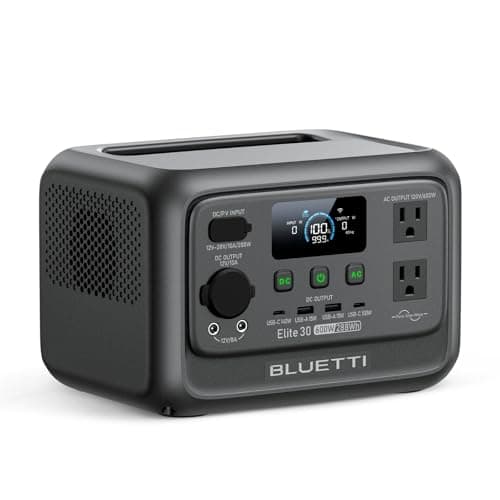
- Capacity
- 288 Wh
- AC output
- 600 W / 1,500 W surge
- Weight
- 9.4 lb
#4 · Highest output of the small units
Bluetti Elite 30 V2
The small power station with genuinely useful output, as long as you understand 288 Wh means that output lasts minutes, not hours.
#ad Price as of October 5, 2026; it may have changed since. How we are funded.
What is good
- 600 W continuous is double the usual 300 W at this size — enough for a small appliance, not just devices
- 1,500 W surge gives it a real chance at starting a small fridge compressor
- 9.4 lb
What is not
- 288 Wh at 600 W draw is under 30 minutes — the output is only useful in short bursts
- Costs more than twice the budget 300 W units
- Power Lifting mode reduces voltage and should not be used for motors
Published specification & our scoring
- 288 Wh capacity, 600 W continuous with 1,500 W surge in Power Lifting mode (manufacturer)
- Manufacturer states 600 W output is twice what comparable units provide
- UltraCell technology and smart cooling cut power consumption by 50% (manufacturer)
- Published weight 9.4 lb; LFP chemistry
- Output ceiling
- 6
- Usable capacity
- 3
- Portability
- 10
- Cycle life
- 8
- Value
- 7
- Brand support
- 7
Specification figures are the manufacturer’s published values. Scores are our editorial judgment from those figures and are never published as structured review data — how we pick.
The solar kit, and the rivals on weight and cycle life
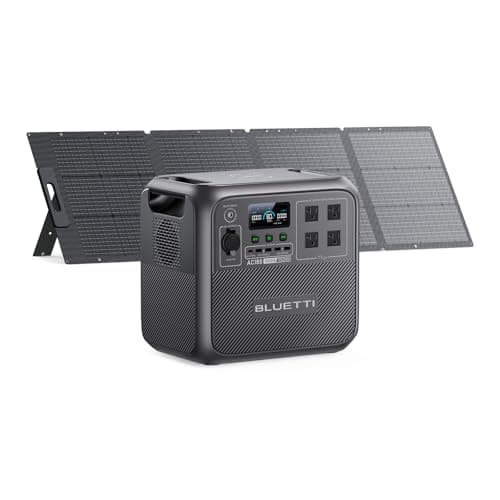
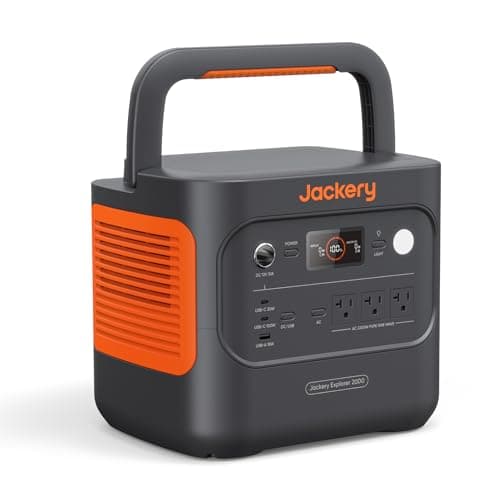
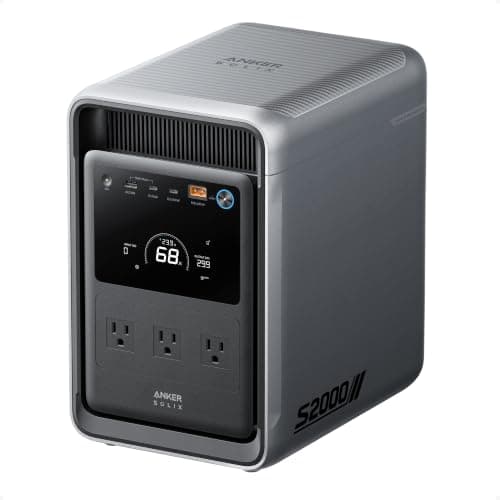
Bluetti's AC180 solar kit is the budget entry to solar backup. Jackery's 2 kWh unit is 32 lb lighter than the AC200PL. Anker's S2000 publishes 10,000 cycles and a 6 W idle draw.
Questions people actually ask
Is Bluetti good for home backup?
Yes, and the FridgePower is the best-engineered single-purpose unit here: 2,016 Wh with a 4 W standby draw, a 10 ms UPS transfer, a 75 mm slim case for behind a fridge, and app storm alerts that start fast charging automatically before weather arrives.
What is special about the Bluetti FridgePower?
Four things: a 4 watt standby draw where most units waste 20-30, a 10 millisecond UPS transfer so the compressor never stops, a 75 mm case designed to fit where a fridge lives, and automatic storm-alert charging — which solves the human-memory problem of being charged on the day.
Which Bluetti has the most capacity for the money?
The AC200PL at 2,304 Wh with 2,400 W output and 1,200 W of solar input, the highest solar ceiling here. The trade-off is 72 lb, nearly double Jackery's 39.5 lb for a similar capacity, which makes it a unit that stays where you put it.
Will a Bluetti AC180 run a refrigerator?
Yes. It publishes 1,800 W output with a 2,700 W peak, which clears a fridge's published 2,200 watt start-up surge, and 1,152 Wh gives roughly 17-22 hours of cycling fridge duty on our arithmetic. It is the price floor for a genuinely fridge-capable battery.
What is the AC180's main limitation?
A 500 W solar input ceiling, half what the AC200PL and EcoFlow's DELTA 2 Max accept, which caps its solar recharging permanently however many panels you buy. Bluetti also publishes no cycle count for this model.
Is Bluetti's app reliable?
Its app and firmware reputation is weaker than Jackery's or EcoFlow's, which matters for the FridgePower in particular, because its best feature — storm-alert automatic charging — depends on the app and a network connection.
Sources
- Eugene Water & Electric Board — Generator Sizing ConsiderationsPublished appliance running and additional-starting watt figures used to judge what this machine's output actually covers.
- FoodSafety.gov — food safety during a power outageThe 4-hour refrigerator guidance that frames how much capacity a fridge plan needs.
Read next
Best for a Refrigerator
Best Power Station for a Refrigerator
Power stations that reliably start a fridge compressor, ranked on surge, idle draw and UPS switchover.
Top pick · Bluetti FridgePower
$899.00View on Amazon40% off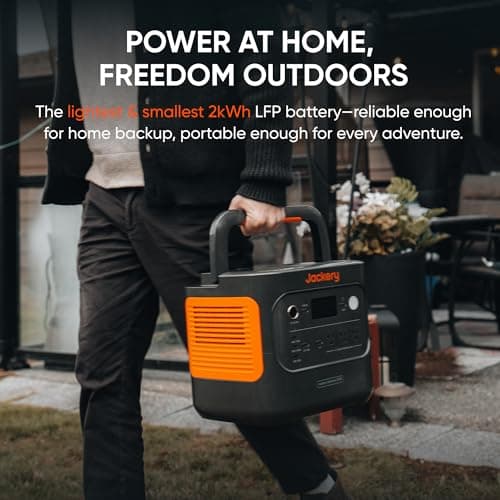
Best Overall Power Station
The Best Home Backup Power Stations
Battery power stations ranked for home backup on surge, capacity, recharge speed and cycle life.
Top pick · Jackery Explorer 2000 v2
$898.99View on Amazon10% off
Guide
Keep Your Refrigerator Running Through an Outage
The free measures first, then battery and generator options for a refrigerator, with published wattage and food-safety figures.
Review
EcoFlow DELTA for Home Backup
EcoFlow's DELTA 2 Max, DELTA 3 Max and DELTA 3 Classic compared, including what X-Boost can and cannot do.
Best Solar Kit
Best Solar Generators for Home Backup
Battery-plus-panel kits ranked on solar input ceiling and capacity, with honest expectations for real-world panel output.
Top pick · Jackery Explorer 2000 v2 + 2x200W Solar
$1,329.00View on Amazon19% off