Generator Sizing
What Size Generator for a 50 Amp RV?
12,000 watts on paper. Far less in practice — and knowing the difference saves you a very large generator.
Written byMike M.
Published
Disclosure: we earn a commission on purchases made through links on this page, at no cost to you. It does not affect what we recommend or what we say about it — how we are funded.
The short answer
A 50 amp RV service is two 120-volt legs at 50 amps each — 12,000 watts in total, on a 14-50 connector. Fully matching it needs a generator of roughly 12,000 peak watts with a 14-50R outlet. In practice most 50 amp rigs draw far less: two 15,000 BTU air conditioners plus appliances is commonly in the 6,000-8,000 watt region, which a 7,500-9,000 running-watt machine covers comfortably.
The 50 amp RV question is the one where buyers most often spend money they did not need to, because the service rating and the actual draw are a long way apart.
What 50 amps actually is
The 50 amp RV service
- Connector
- NEMA 14-50 (4-prong)
- Configuration
- Two 120 V legs
- Current
- 50 A per leg
- Maximum power
- 12,000 W
- Practical continuous
- ~9,600 W (80%)
Two 120 V legs at 50 A each: 120 x 50 x 2 = 12,000 W. Note this is NOT four times a 30 amp service even though 50 is less than twice 30 — the extra leg is where most of the difference comes from.
A 50 amp service is roughly three and a half times a 30 amp one, which is why big rigs use it. Two air conditioners, a residential refrigerator, an electric water heater and a washer-dryer all become possible.
But what does the rig actually draw?
Almost never 12,000 watts, because almost nothing in an RV runs continuously and simultaneously. The honest way to find your number is the same as for a house: list what genuinely runs at the same time.
| Load | Typical situation |
|---|---|
| Two 15,000 BTU air conditioners | The dominant load in hot weather |
| Residential refrigerator | Cycling, modest average |
| Electric water heater | Large, but switchable and often propane-capable |
| Microwave, coffee maker | Minutes at a time, one at a time |
| Washer / dryer | Rarely while boondocking |
| Lighting, converter, devices | Small |
Champion's ParaLINK parallel kit listing provides a useful data point: it states that two linked Champion inverters of 2,500 watts or higher provide enough power to start and run two 15,000 BTU RV air conditioners. That suggests the big-ticket load in a 50 amp rig is well within a 7,000-9,000 watt machine, not 12,000.
What you need in the outlet, not just the output
This catches people out. To plug a 50 amp RV cord straight in, the generator needs a NEMA 14-50R outlet. Plenty of large generators have an L14-30R (30 amp twist-lock) and no 14-50R, which means an adapter and a 30 amp ceiling regardless of the engine's capability.
Machines in this site's registry that publish a 14-50R include the Westinghouse WGen9500DF, WGen10500DFc, WGen11500TFc, iGen12000DFc and ecoGen10000; the WEN DF1100T and TF-1450X; and the DuroMax XP13000HX and XP15000HX. Check the outlet list, not just the wattage.
Inverter or conventional for a big rig
At this output the case for an inverter machine is weaker than it is at 3,500 watts, but it is not nothing. The Westinghouse iGen12000DFc publishes 12,000 peak watts at under 3% THD, as low as 64 dBA, both a 14-50R and an L14-30R, and dual fuel — which is close to the ideal specification for a 50 amp rig, at a price premium over the conventional alternative.
If noise in a campground is the deciding factor, that premium is defensible. If you are mostly running at a site with hookups and the generator is for occasional boondocking, a conventional 9,500-11,500 running-watt dual fuel machine does the same job for appreciably less.
The short answer
Generators that suit a 50 amp rig
| # | Product | Best for | Score | Price |
|---|---|---|---|---|
| 1 | 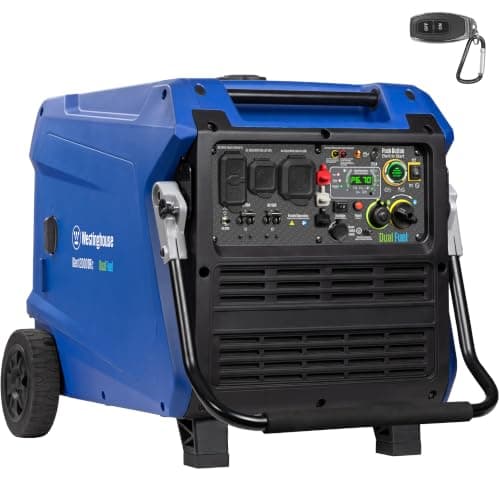 Westinghouse iGen12000DFc 12,000W Dual Fuel Inverter The best technical answer for whole-house backup if the budget allows: transfer-switch-ready output, inverter-clean power, and far less noise than the conventional alternative. | Whole-house backup with clean power | 9.0/10 | $1,899.00 |
| 2 | 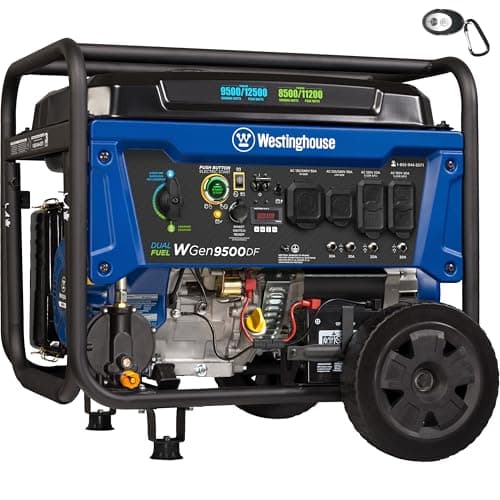 Westinghouse WGen9500DF 12,500W Dual Fuel The most broadly sensible home backup generator on the market: enough running watts for a whole essential-circuit panel, both transfer-switch outlets, and dual fuel — with the caveat that it has no CO shutoff. | The default whole-house pick | 8.8/10 | $999.00 |
| 3 | 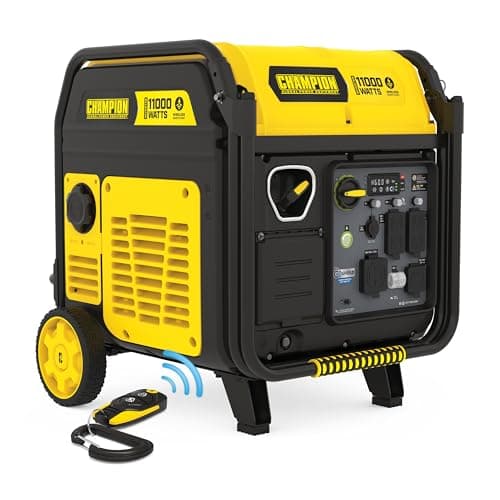 Champion 11,000W Remote Start Inverter A quiet, well-documented 9,000-running-watt inverter whose Cold Start Technology is more useful than the spec sheet suggests — but it only runs on gasoline. | Quiet whole-house, gasoline | 8.1/10 | $1,899.00 |
| 4 | 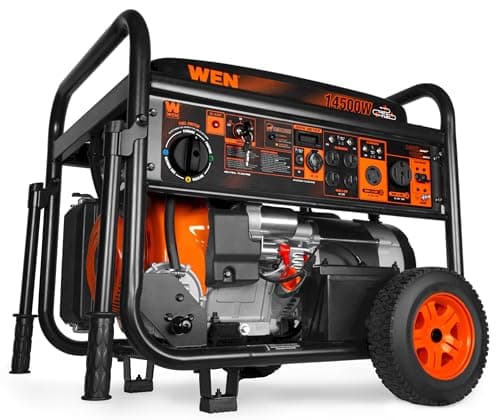 WEN TF-1450X 14,500W Tri-Fuel The value play in the 11,500-running-watt tri-fuel bracket, as long as you are comfortable with a thinner support network. | Tri-fuel value at high output | 8.8/10 | $1,199.99 |
#ad Prices as of October 5, 2026; they may have changed since. Scores are our editorial judgment from published specifications, not test results — how we pick. How we are funded.
Worth also reading what size generator for a 30 amp camper, because the honest question for many 50 amp owners is whether they need the second leg at all when boondocking — and running on 30 amps deliberately is a legitimate, much cheaper plan.
Questions people actually ask
What size generator do I need for a 50 amp RV?
To match the full service, about 12,000 peak watts with a NEMA 14-50R outlet. In practice most 50 amp rigs draw far less — two 15,000 BTU air conditioners plus appliances is commonly in the 6,000-8,000 watt region — so a 7,500-9,000 running-watt machine with a 14-50R usually runs everything that matters.
How many watts is a 50 amp RV hookup?
12,000 watts. A 50 amp RV service is two separate 120-volt legs at 50 amps each, so 120 x 50 x 2. It is roughly three and a half times a 30 amp service, not twice, because of the second leg.
Will a 7500 watt generator run a 50 amp RV?
Usually yes for everything you actually need, including two air conditioners, provided you switch the water heater to propane and do not run the washer-dryer and kitchen appliances simultaneously. It will not supply the full 12,000 watt service, but very few rigs ever draw that.
Do I need a 14-50 outlet on the generator?
To plug a 50 amp RV cord in directly, yes — a NEMA 14-50R. Many large generators have only an L14-30R twist-lock, which means an adapter and a 30 amp ceiling no matter how large the engine. Check the published outlet list, not just the wattage.
Can I run my 50 amp RV on a 30 amp generator?
Yes, with an adapter, and it is a legitimate plan for boondocking: you get 3,600 watts, which runs one air conditioner, the fridge and lighting. Many 50 amp owners deliberately buy a smaller generator and manage load, which is far cheaper and lighter than a 12,000 watt machine.
Read next
Guide
What Size Generator for a 30 Amp Camper?
What a 30 amp RV service actually provides, and which generators match it without wasting capacity.
Best for RV
Best Inverter Generators for an RV
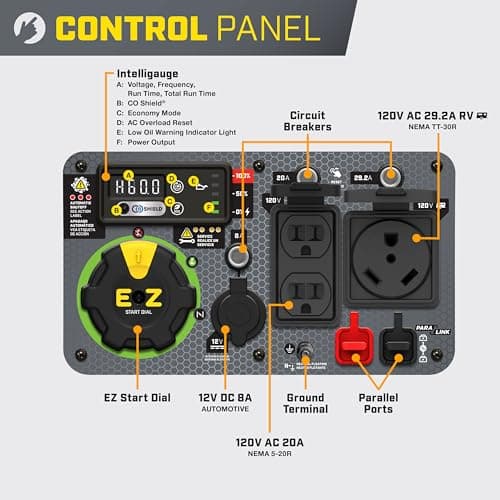
Inverter generators for RV use, matched to the 3,600 watt ceiling of a 30 amp service, with the TT-30R outlet called out.
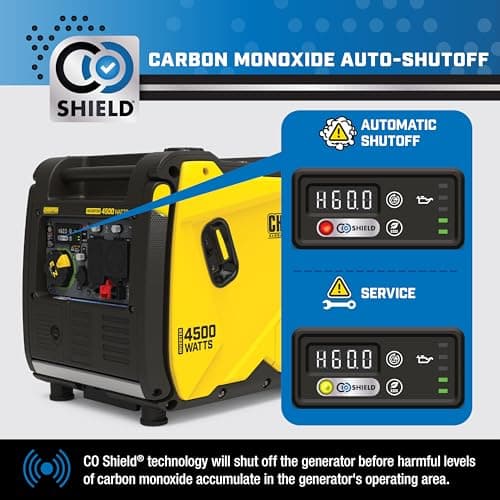
Top pick · Champion 4,500W RV Ready Inverter
$674.10View on Amazon10% off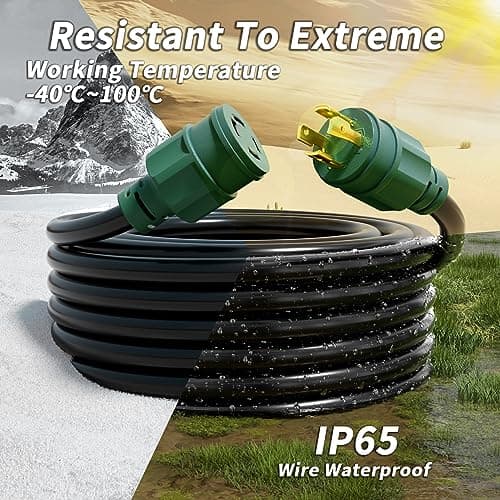
Best Generator Cord
The Best Generator Extension Cords
Generator cords by gauge, length and connector type, with the certification and connector-match checks that matter.
Top pick · PlugSaf 25 ft 30A L14-30 Cord, 10 AWG
$58.99View on Amazon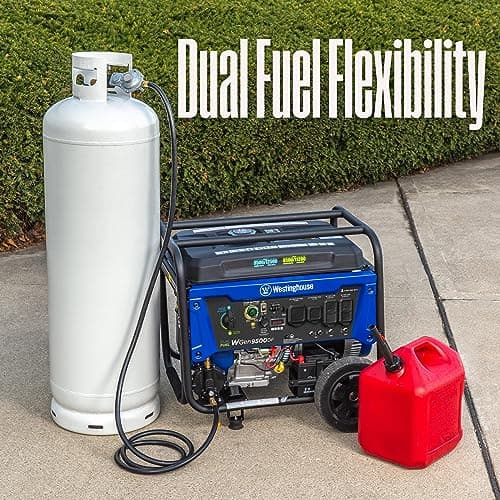
Best Overall Home Backup
The Best Home Backup Generators
Nine conventional-frame generators ranked for whole-house backup, with per-fuel running watts and transfer-switch fit.
Top pick · Westinghouse WGen9500DF 12,500W Dual Fuel
$999.00View on Amazon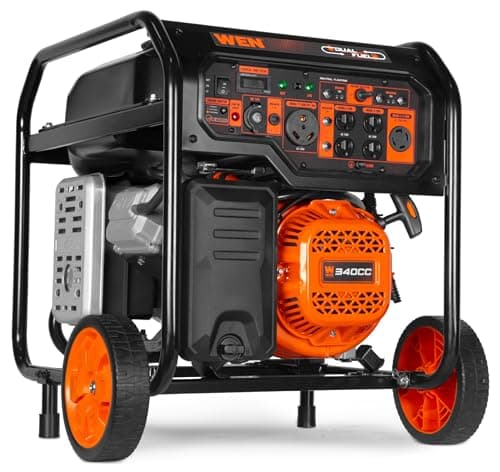
Guide
What Size Generator Do I Need?
The core sizing method: total running watts, add the single biggest surge, derate for continuous running, then match a wattage class.