Generator Sizing
What Size Generator for a Sump Pump?
The cheapest load to back up, and the one whose failure costs the most. Put it on the list before the coffee maker.
Written byMike M.
Published
Disclosure: we earn a commission on purchases made through links on this page, at no cost to you. It does not affect what we recommend or what we say about it — how we are funded.
The short answer
| Pump | Running watts | Additional starting watts | Generator minimum |
|---|---|---|---|
| Sump pump, 1/3 HP | 800 | 1,300 | 1,000 W running / 2,100 W starting |
| Sump pump, 1/2 HP | 1,050 | 2,200 | 1,350 W running / 3,250 W starting |
EWEB published figures, with our 80% derating applied to the generator minimum. These are for the pump alone; see below for a realistic whole-house total.
A sump pump is the highest-value load in this entire site relative to the watts it needs. If you have one, your basement floods without it, and a flooded basement during a storm is routinely the most expensive single consequence of a power outage. It costs about a thousand watts to prevent.
The published figures, and what the jump between them tells you
EWEB lists both common residential sizes, which is useful because it shows how the numbers scale:
| Pump | Running watts | Additional starting watts | Change |
|---|---|---|---|
| 1/3 HP | 800 | 1,300 | — |
| 1/2 HP | 1,050 | 2,200 | +31% running, +69% surge |
Check which you have — it is printed on the pump housing. The difference between 1,300 and 2,200 watts of surge can be the difference between a small inverter generator working and tripping.
In a realistic plan
Sump pump as part of an essential set
- Sump pump, 1/2 HP
- 1,050 W
- Refrigerator
- 700 W
- Furnace blower, 1/3 HP
- 700 W
- Lighting + electronics
- 300 W
- Total running
- 2,750 W
- Largest surge (fridge, 2,200 W)
- +2,200 W
- Starting watts needed
- 4,950 W
- Derated running minimum
- 3,450 W
On a 1/2 HP pump the surge figure ties with the refrigerator's at 2,200 W, so either could set the starting requirement — plan for one 2,200 W surge, not two.
3,450 running watts with 4,950 starting watts. That is a 3,500-4,000 running-watt inverter generator at the quiet end, or a mid-sized dual fuel machine if you want headroom to add a well pump later.
The thing specific to sump pumps: duty cycle
A sump pump does not run continuously. It runs when the pit fills, which in a serious storm might be every few minutes and in ordinary weather might be not at all. That has two consequences worth planning around.
First, average draw is far below running watts, which makes a battery more viable than the raw numbers suggest — right up against the second consequence, which is that the surge still has to be available every single time it cycles. A battery that can supply 2,200 watts of surge will run a sump pump for a long time on modest capacity. A battery that cannot supply the surge will not run it at all, regardless of capacity.
Second, it cycles unpredictably, which means you cannot be standing there managing load. If you are using an interlock kit rather than a transfer switch, the sump pump circuit needs to stay on and you need headroom reserved for it — not borrowed for the microwave at the moment the pit fills.
The dedicated-battery alternative worth knowing about
There is a whole product category of battery backup units built specifically for sump pumps — a deep-cycle battery and a DC pump or inverter, wired into the pit, that take over automatically. They are cheaper than a generator, fully automatic, and need nobody at home.
We do not cover them on this site because they are a plumbing product rather than a portable power one, and we would rather say that plainly than pretend our category is the only answer. If the sump pump is your only backup concern, that is the product to research, and a generator is probably more machine than you need.
If the sump pump is one of several concerns — and if you also want heat, a fridge and water — then a generator that covers all of them is the better buy, and the pump is the cheapest thing on the list.
The short answer
Picks that cover a sump pump and the rest of the essentials
| # | Product | Best for | Score | Price |
|---|---|---|---|---|
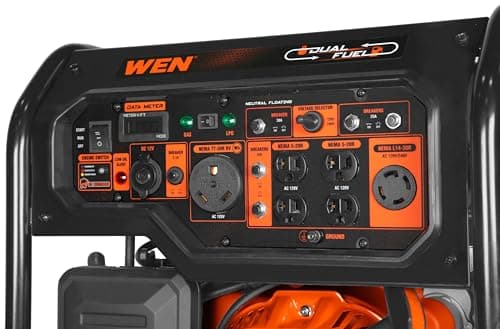
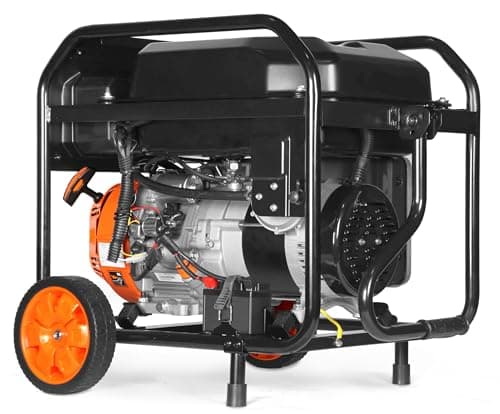
| 1 | 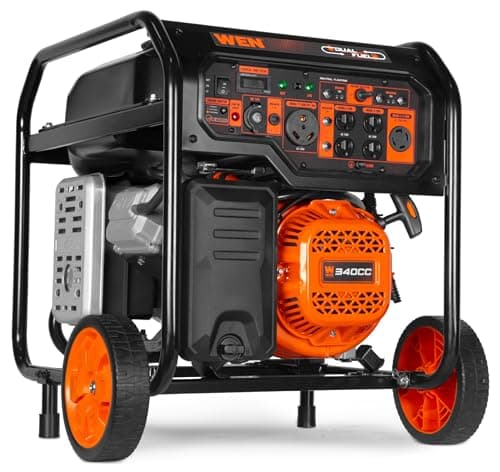 WEN DF8000X 8,000W Dual Fuel The best-value correctly-sized home backup generator here: enough for every essential circuit, dual fuel, CO shutoff, a real transfer-switch outlet, and no money spent on capacity you will not use. | Essential circuits, dual fuel, lowest cost | 8.5/10 | $623.17 |
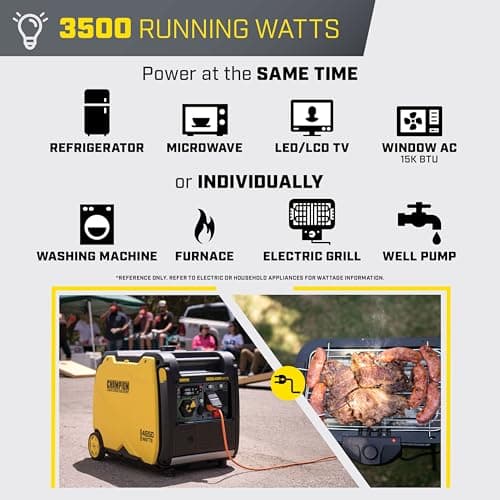
| 2 | 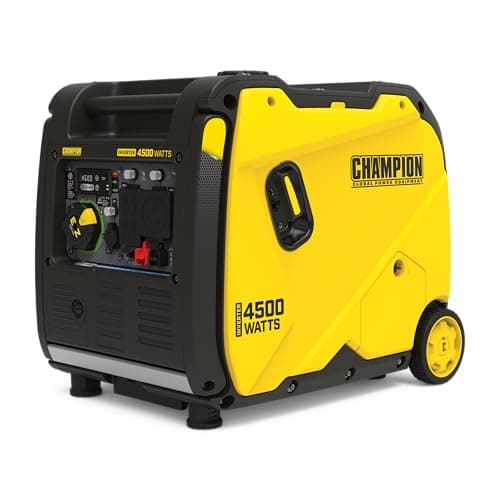 Champion 4,500W RV Ready Inverter The best balance of quiet, clean power and real output for cord-based backup: enough for the essentials, under 3% THD, half the price of the Honda equivalent. | Quiet backup at a sane price | 8.5/10 | $674.10 |
| 3 | 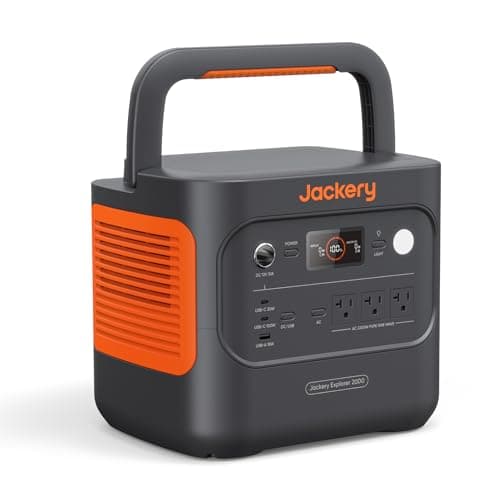 Jackery Explorer 2000 v2 The most sensible battery backup for most homes: enough capacity to carry a fridge and electronics through a typical outage, indoors, silently. | The default 2 kWh home backup battery | 8.9/10 | $898.99 |
#ad Prices as of October 5, 2026; they may have changed since. Scores are our editorial judgment from published specifications, not test results — how we pick. How we are funded.
Note the hard-wiring issue: a sump pump is often on a dedicated circuit, and if it is hard-wired you cannot reach it with a cord. See connecting a generator to your house. If yours is plugged into a receptacle in the pit, a cord from a generator will work — which makes it one of the few critical loads you can cover without an electrician.
Questions people actually ask
What size generator do I need for a sump pump?
For a 1/3 HP pump alone, about 1,000 running watts and 2,100 starting watts. For a 1/2 HP pump, about 1,350 running and 3,250 starting. In a realistic essential-circuit plan alongside a fridge and a furnace, roughly 3,450 running watts and 4,950 starting watts.
How many watts does a sump pump use?
EWEB's published chart lists a 1/3 HP sump pump at 800 running watts with 1,300 additional starting watts, and a 1/2 HP pump at 1,050 running with 2,200 additional. The size is printed on the pump housing.
Can a power station run a sump pump?
Yes, if its surge rating covers the pump's start-up — 1,300 watts for a 1/3 HP pump, 2,200 for a 1/2 HP. Because a sump pump cycles rather than running continuously, a battery lasts far longer on this load than the running figure suggests, provided it can supply the surge every time.
Is a battery backup better than a generator for a sump pump?
If the sump pump is your only concern, a dedicated sump pump battery backup wired into the pit is cheaper, fully automatic and needs nobody at home. A generator makes more sense when you also want heat, refrigeration and water, because then the pump is the cheapest load on the list.
Do I need a transfer switch for a sump pump?
Only if it is hard-wired. Many sump pumps plug into a receptacle in or near the pit, in which case an extension cord from a generator works and no electrician is needed. If yours is hard-wired on a dedicated circuit, you need a transfer switch or interlock kit.
Sources
- Eugene Water & Electric Board — Generator Sizing ConsiderationsPublic-utility wattage chart: the running and additional-starting figures quoted on this page, and the add-the-single-largest-surge method.
Read next
Guide
What Size Generator Do I Need?
The core sizing method: total running watts, add the single biggest surge, derate for continuous running, then match a wattage class.
Guide
What Size Generator for a Well Pump?
Well pump sizing from the published 1/3 HP figures, what changes on larger pumps, and the soft-starter route.
Reference
Appliance Wattage Chart
The site's reference wattage table, with each row's source named and both figures shown wherever the published charts disagree.
Guide
Winter Storm Power Outage Checklist
Before-the-storm and during-the-storm checklists for a winter outage, with the pipe-freeze risk front and center.
Best Transfer Switch
The Best Generator Transfer Switches
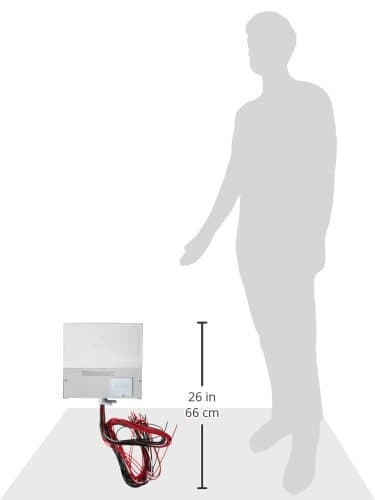
Transfer switches ranked on circuit count, amp rating and kit completeness, from 6-circuit 30A to 10-circuit 50A.
Top pick · Reliance Controls 310CRK 10-Circuit 30A Kit
$474.76View on Amazon