Transfer Switches & Connection
Transfer Switch Amp Rating Guide
The switch caps the generator, not the other way round. Getting this wrong wastes either watts or money.
Written byMike M.
Published
Disclosure: we earn a commission on purchases made through links on this page, at no cost to you. It does not affect what we recommend or what we say about it — how we are funded.
The short answer
| Rating | Passes at 240 V | Suits a generator of |
|---|---|---|
| 30 A | ~7,200 W | Up to ~7,500 running watts |
| 50 A | ~12,000 W | 7,500 - 12,000 running watts |
| 200 A automatic | Full panel | A standby generator, not a portable one |
Arithmetic from the amp rating (amps x 240 V). Reliance states a 7,500 maximum running watt generator ceiling for its 30 amp kit, which matches the calculation.
This single table prevents the two most common and most expensive mistakes in home backup power: buying a large generator that a small switch throttles, and buying a large switch for a generator that cannot fill it.
The arithmetic, and why it is a hard ceiling
Power equals volts times amps. A 30 amp switch at 240 volts passes 7,200 watts; a 50 amp switch passes 12,000. Those are limits of the switch and the conductors feeding it, and no generator overrides them.
Reliance Controls states it explicitly on the 31410CRK: designed for generators up to 7,500 maximum running watts. That is not a recommendation, it is the switch's capability.
Matching, with real machines
| Generator | Running watts | Correct switch |
|---|---|---|
| Champion 4,500 W inverter | 3,500 W | 30 A (or cords only — no 240 V) |
| WEN DF8000X | 6,500 W | 30 A |
| Generac 8,125 W | 6,500 W | 30 A |
| Westinghouse WGen5300DFc | 5,300 W | 30 A |
| Westinghouse WGen9500DF | 9,500 W | 50 A |
| Champion 11,500 W dual fuel | 9,200 W | 50 A |
| Westinghouse WGen10500DFc | 10,500 W | 50 A |
| Westinghouse WGen11500TFc | 11,500 W | 50 A |
A pattern worth noticing: the generators in the 6,500 running-watt class — WEN's DF8000X, Generac's 8,125 W — are perfectly matched to a 30 amp switch. They deliver close to its 7,200 watt ceiling and waste nothing. That pairing is the most efficient use of money in home backup, and it covers every essential circuit in a house with gas heat.
The 50 amp upgrade costs more than the switch
What changes going from 30 A to 50 A
- The switch
- Higher
- The inlet box
- Higher
- The cord
- 6/3 + 8/1 AWG vs 10 AWG
- Feeder conductors
- Larger, more labor
- Electrician time
- More
Cord gauges are from VEVOR's published specifications for its 30 and 50 amp kits. We do not quote prices in text because they move; every price on this site is live and dated.
So the decision to go 50 amp should be deliberate. If your load genuinely needs more than 7,200 watts — a well pump plus a window air conditioner, say — then it is necessary. If it does not, a 30 amp chain plus a correctly sized generator is cheaper on both the generator and the installation.
Work it from the load, not from the generator
The right order is: load, then generator, then switch. Using EWEB's published figures:
- 1Total your running watts. A fridge, furnace blower, well pump, sump pump and lighting is about 3,500 W.
- 2Derate by 80% for continuous running: 4,400 W.
- 3Pick a generator with at least that running capacity — a 6,500 W machine, comfortably.
- 4Pick the switch from the generator: 6,500 W is under 7,200, so 30 amp.
Add a 12,000 BTU window air conditioner at EWEB's published 3,250 running watts and that total becomes 6,750 W, derating to 8,500 — which needs a 9,500 W generator and therefore a 50 amp switch. One appliance moved the whole chain up a class, which is exactly why the load calculator is the first step rather than the last.
What about an interlock kit?
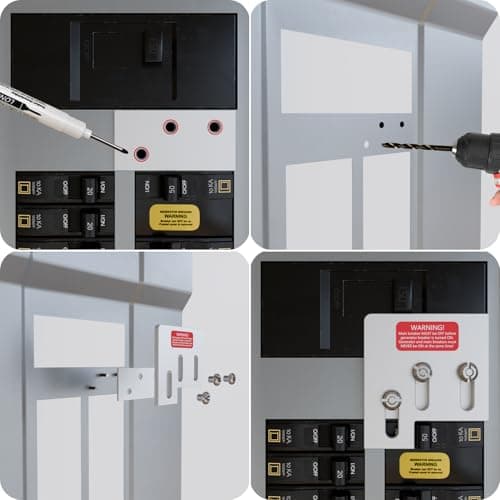
An interlock kit's capacity is set by the generator inlet breaker your electrician installs rather than by a switch rating, so it can be sized to the generator directly — a genuine advantage of the interlock route.
The corresponding disadvantage is that nothing limits your load. With a transfer switch, the chosen circuits total less than the generator can carry. With an interlock you have the whole panel and the discipline is yours. See interlock kit vs transfer switch.
The short answer
30 amp, 50 amp, and the interlock alternative
| # | Product | Best for | Score | Price |
|---|---|---|---|---|
| 1 | 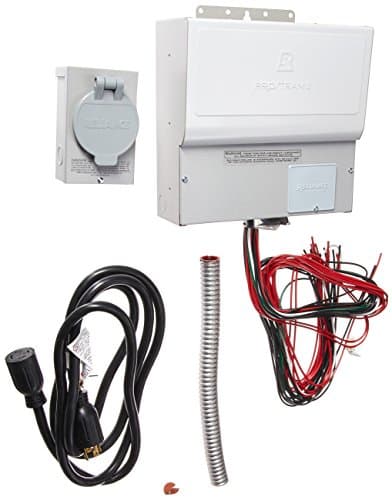 Reliance Controls 310CRK 10-Circuit 30A Kit The standard answer for connecting a portable generator properly: ten circuits, 30 A, from the brand electricians recognize. | The ten-circuit default | 8.6/10 | $474.76 |
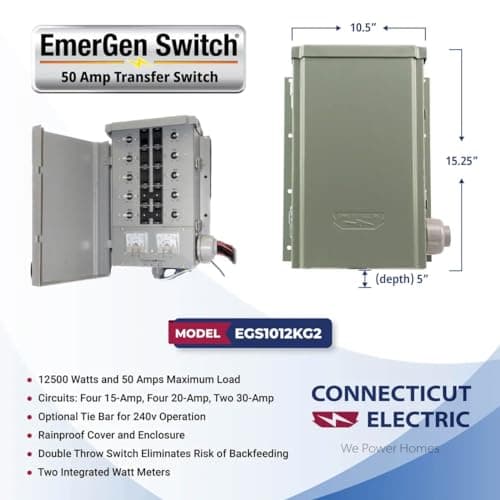
| 2 | 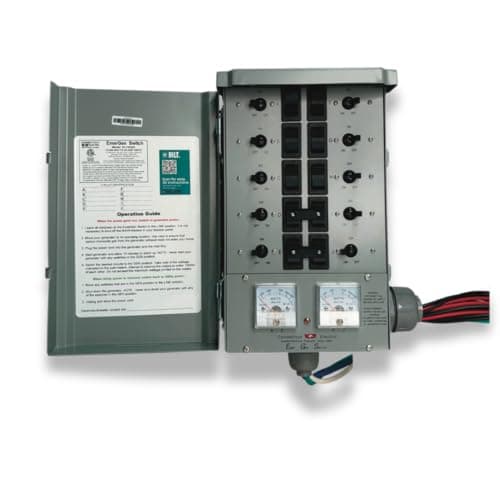 Connecticut Electric EmerGen EGS1012KG2 50A 10-Circuit The simplest way to do a 50 A installation correctly: everything matched in one box, including the cord people most often get wrong. | 50A kit with inlet and cord | 9.0/10 | $379.99 |
| 3 | 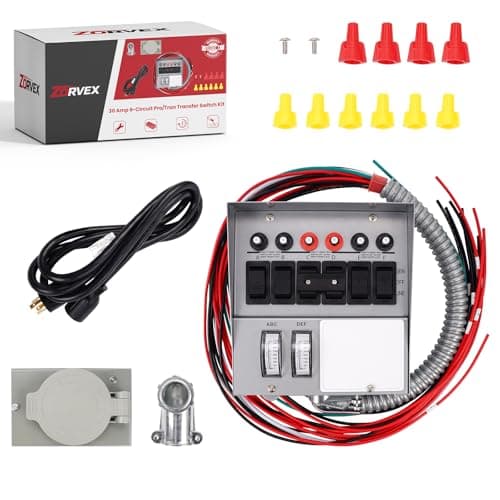 Orvex 31406CWK Pro/Tran 6-Circuit 30A The budget route to a proper transfer switch: six circuits is enough if you choose them deliberately, and the install is cheaper too. | Cheapest complete switch kit | 7.4/10 | $219.97 |
| 4 | 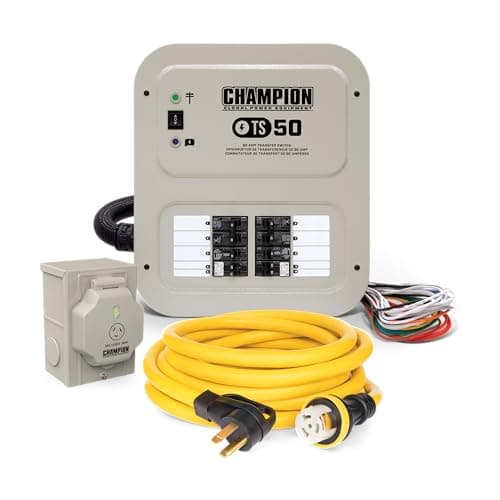 Champion 201193 50A 10-Circuit with Cord The most completely specified 50 A package: UL 1008, prewired, with a cord long enough to site the generator safely. | UL 1008 certified with a 30 ft cord | 9.0/10 | $610.72 |
| 5 | 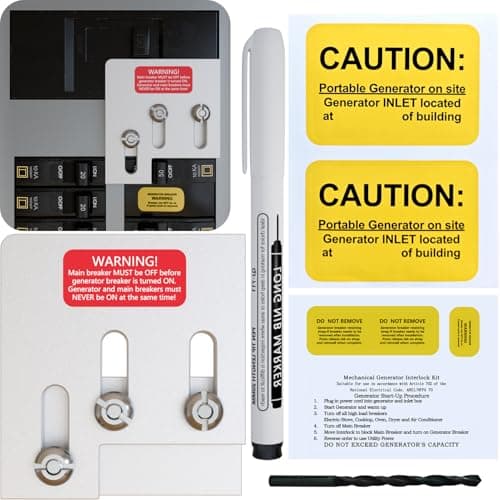 SPZOCE Interlock Kit — Square D QO/Homeline 150/200A The cheapest correct way to connect a generator to the whole panel, provided your panel is a Square D QO or Homeline with the exact spacing stated — measure first. | Square D QO and Homeline, 150-200A | 8.5/10 | $26.99 |
#ad Prices as of October 5, 2026; they may have changed since. Scores are our editorial judgment from published specifications, not test results — how we pick. How we are funded.
Questions people actually ask
How many watts can a 30 amp transfer switch handle?
About 7,200 watts at 240 volts. Reliance Controls states a 7,500 maximum running watt generator ceiling for its 30 amp kit, which matches. A larger generator cannot deliver its extra capacity through a 30 amp switch.
How many watts can a 50 amp transfer switch handle?
About 12,000 watts at 240 volts; Connecticut Electric rates its 50 amp EmerGen kit at 12,500 watts. That is more than any portable generator in this registry produces, so it is effectively whole-house for portable use.
Do I need a 50 amp transfer switch for a 9500 watt generator?
Yes, to use its full output. On a 30 amp switch a 9,500 running-watt machine delivers about 7,200 watts, stranding over 2,000 watts you paid for. The alternative is an interlock kit, whose capacity is set by the generator inlet breaker instead.
Can I use a 50 amp switch with a 30 amp generator?
Electrically yes — the switch is a ceiling, not a requirement — but you would be paying for 50 amp cord, inlet and conductors to carry 30 amps. If the generator is in the 6,500 running-watt class, the 30 amp chain is the correct and cheaper choice.
Should I size the switch or the generator first?
Neither. Size the load first, then the generator from the load with a derating, then the switch from the generator. Working backwards from a switch rating or a generator you already liked the look of is how mismatches happen.
Does an interlock kit have an amp rating?
Its capacity is set by the generator inlet breaker your electrician installs rather than by the plate, so it can be matched to the generator directly. The trade-off is that nothing limits your load, which a transfer switch's pre-chosen circuits do.
Sources
- Eugene Water & Electric Board — Generator Sizing ConsiderationsPublished appliance running-watt figures used when working out how many circuits a household actually needs.
- US Consumer Product Safety Commission — Portable Generator Information CenterThe 20-foot placement guidance that sets the minimum practical cord length referenced on this page.
Read next
Best 50A Switch
The Best 50 Amp Transfer Switches
50 amp transfer switches, which generators need one, and the whole-chain cost of the 50 amp upgrade.
Top pick · Connecticut Electric EmerGen EGS1012KG2 50A 10-Circuit
$379.99View on Amazon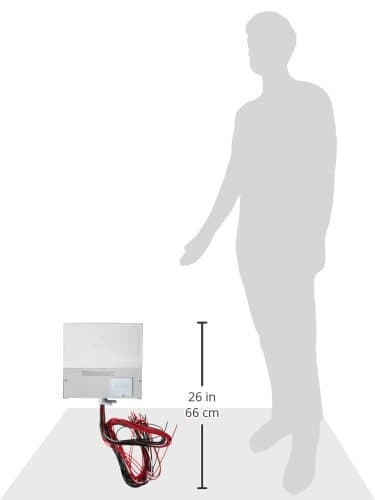
Best Transfer Switch
The Best Generator Transfer Switches
Transfer switches ranked on circuit count, amp rating and kit completeness, from 6-circuit 30A to 10-circuit 50A.
Top pick · Reliance Controls 310CRK 10-Circuit 30A Kit
$474.76View on Amazon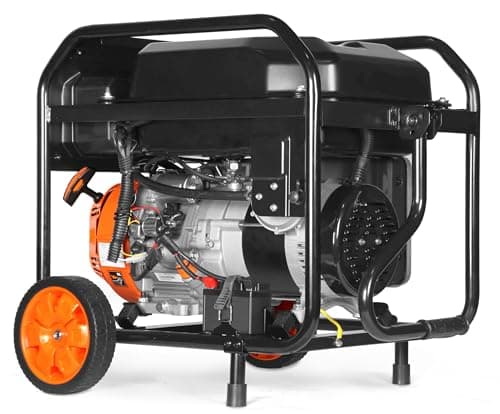
Guide
What Size Generator Do I Need?
The core sizing method: total running watts, add the single biggest surge, derate for continuous running, then match a wattage class.
Connection Comparison
Interlock Kit vs Transfer Switch
Interlock kit against transfer switch on cost, circuit access, load management, panel fit and inspection risk.
Best 10,000W Class
Best 10,000 Watt Portable Generators
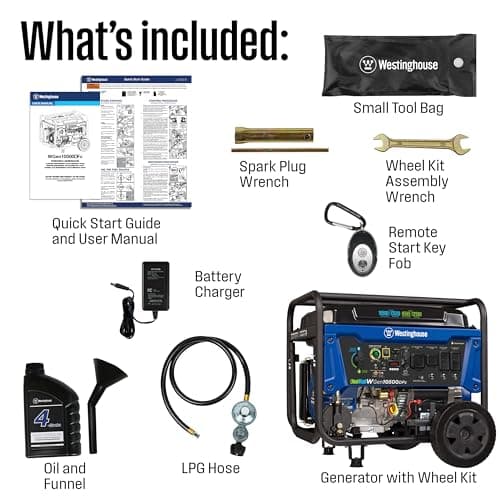
The 10,000 watt class ranked on real running watts, with the 50 amp connection requirement explained.
Top pick · Westinghouse WGen10500DFc 13,500W Dual Fuel
$1,099.00View on Amazon