Outage Prep
Generator Fuel Storage and Stabilizer
The most common reason a generator will not start when you need it is not a fault. It is the fuel.
Written byMike M.
Published
Disclosure: we earn a commission on purchases made through links on this page, at no cost to you. It does not affect what we recommend or what we say about it — how we are funded.
The short answer
- 1Add stabilizer to fuel when it is fresh. STA-BIL states its storage product keeps gasoline fresh up to 24 months.
- 2Rotate stored fuel into a car or mower at least annually, even with stabilizer.
- 3Store in approved vented containers, outside living space, away from ignition sources.
- 4Run the generator under load for 30 minutes every few months so fresh fuel reaches the carburetor.
Ask anyone who services small engines what comes through the door most often after a storm, and the answer is generators that would not start. Not broken generators — generators with gummed carburetors and varnished fuel, which is a storage failure rather than a mechanical one.
What happens to stored gasoline
Two processes, both working against you. Oxidation: the lighter fractions evaporate and the rest forms gums and varnish that block the tiny passages in a carburetor. Water absorption: ethanol in modern pump gasoline is hygroscopic, so it draws moisture out of the air, and in enough quantity the ethanol-water mixture separates out and sits at the bottom of the tank, where it corrodes.
STA-BIL's listing addresses both directly: it states the product safeguards the engine and fuel system from the effects of both ethanol and non-ethanol fuels, and keeps gasoline fresh for up to 24 months in storage.
How much fuel to keep, and the honest trade-off
This is a genuine tension and anyone who tells you otherwise is not being straight with you. More stored fuel means more runtime without leaving the house. It also means more flammable liquid in your garage, more fuel to rotate, and more to go stale.
Working it out from your own machine
- A 6.6 gal tank at half load
- ~8.5 h (WEN DF1100T, published)
- A 7.5 gal tank at 50% load
- ~9.5 h (Generac tri-fuel, published)
- A 7.5 gal tank at 25% load
- ~14 h (same machine, published)
- So 24 hours needs
- ~2 tanks at light load, ~3 at half load
Published manufacturer runtimes. Work out your own target from your machine's tank and your actual load rather than from a generic gallons figure — and check your local rules, which may cap how much you may store.
Practical approach: decide how many days of outage you are preparing for, multiply by your machine's daily consumption at your actual load, and hold that much — rotated annually. Then accept that for anything longer you will be making a trip, which is why propane and natural gas are worth considering.
Containers, and why the spout matters
Use approved fuel containers, store them outside living space, away from ignition sources and out of direct sunlight, which degrades plastic over time.
The spout is not a minor detail. You will be pouring fuel, in the dark, in bad weather, near a hot engine. A can that glugs and spills is a genuine hazard in that moment. Two designs address it: Scepter's SmartControl spout publishes a controllable flow rate with an integrated air vent, which is what stops the glugging; SureCan's design rotates a spout downward from the bottom so you never invert a full 40 lb can at all.
The short answer
Stabilizer and containers
| # | Product | Best for | Score | Price |
|---|---|---|---|---|
| 1 | 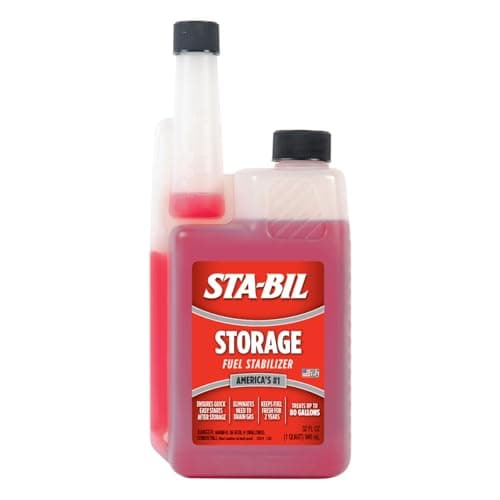 STA-BIL Storage Fuel Stabilizer, 32 oz The cheapest insurance against the most common generator failure: a machine that will not start because the fuel sat for a year. | Keeping stored gasoline usable | 9.4/10 | $13.58 |
| 2 | 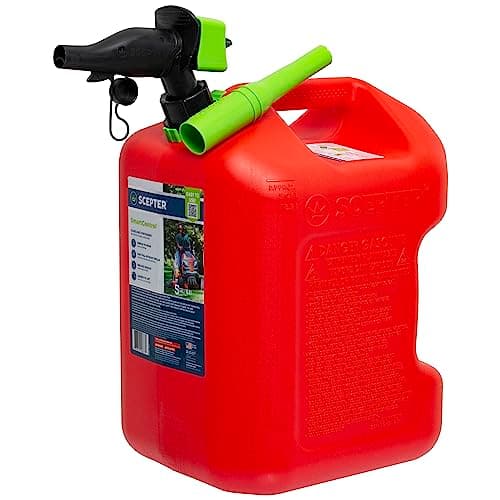 Scepter 5 Gallon Gas Can, SmartControl Spout The right fuel can: vented, controllable and fast, which matters because the dangerous part of a generator is usually refueling it. | Pouring without spilling | 9.2/10 | $41.11 |
| 3 | 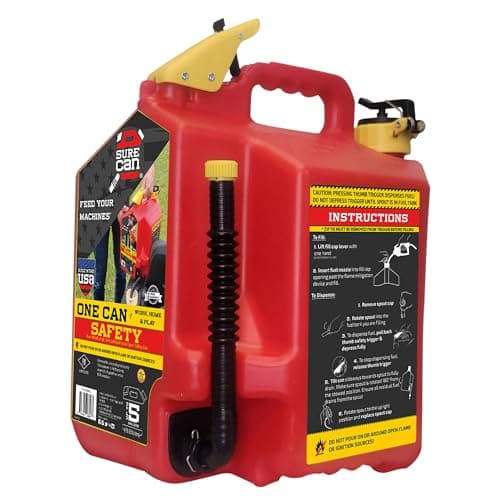 SureCan SureCan 5 Gallon, Rotating Spout Worth the premium if lifting and inverting a full can is awkward for you — the bottom-pour design removes the most dangerous moment in refueling. | Pouring without lifting and tilting | 9.0/10 | $76.50 |
#ad Prices as of October 5, 2026; they may have changed since. Scores are our editorial judgment from published specifications, not test results — how we pick. How we are funded.
Propane: the answer that avoids the problem
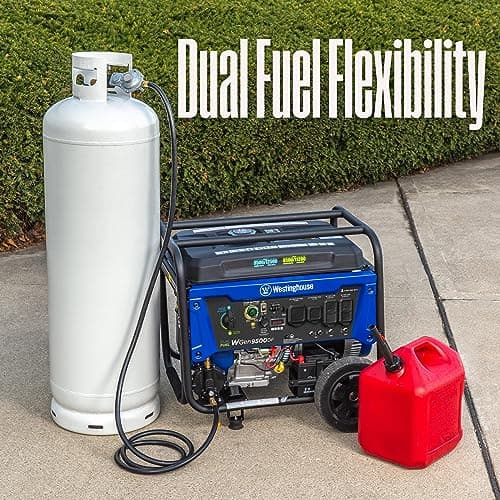
Propane in a sealed tank does not degrade. Not in a year, not in five. No stabilizer, no rotation, no gummed carburetor, no varnish. A dual fuel generator run on propane sidesteps this entire page.
The costs are real but modest: roughly 10% less output than gasoline, and fewer BTU per gallon so you burn more volume. Against that, a tank swap is cleaner and safer than pouring gasoline, and tanks are easy to store and exchange.
If you are still choosing a machine, this is the strongest practical argument for dual fuel. If you already own a gasoline-only generator, a conversion kit may be available for your model.
Propane hardware
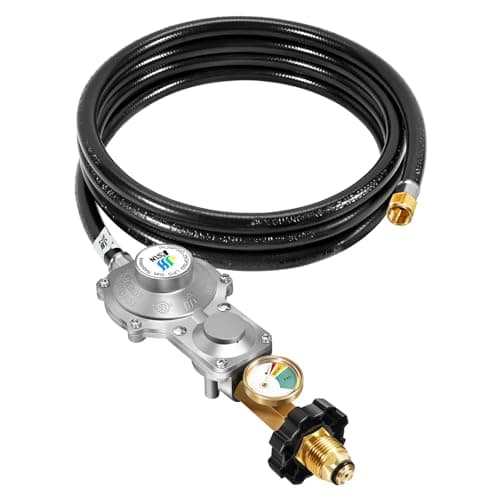
Running a dual fuel generator on a tank
GasSaf 10 ft Two-Stage Propane Regulator + Hose
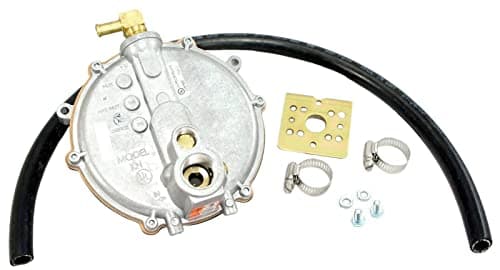
Adding natural gas to a dual fuel unit
Generic (unbranded) Natural Gas Conversion Kit — WGen9500DF
A two-stage regulator holds output pressure steady as the tank empties, and 10 feet of hose keeps the tank well away from the hot machine. Check your generator's required inlet pressure first.
The maintenance habit that matters most
Run the generator under load for about half an hour every few months. It circulates fresh fuel through the carburetor, charges the starting battery on electric-start machines, and — most valuably — tells you the machine works while it is still convenient to find out that it does not.
Several machines help with this. WEN's fuel shutoff runs the carburetor dry before shutdown, which is the single best design feature for a machine that sits unused. DuroMax's iH series includes a battery tender to keep the starting battery charged. Champion's Intelligauge tracks hours so the maintenance schedule is something you can actually follow.
Questions people actually ask
How long can you store gasoline for a generator?
Untreated pump gasoline begins degrading within months. STA-BIL states its storage stabilizer keeps gasoline fresh for up to 24 months when added while the fuel is fresh. Even with stabilizer, rotating stored fuel annually is sensible practice.
Does fuel stabilizer really work?
It slows oxidation and protects against the effects of ethanol, which are the two processes that gum a carburetor. It has to be added to fresh fuel — it will not restore fuel that has already deteriorated, and that fuel should be diluted into a car's tank rather than put in a generator.
How much fuel should I store for my generator?
Work it from your machine's published runtime at your actual load: a 7.5 gallon tank running 9.5 hours at half load means roughly three tanks for a 24-hour outage. Hold that much, rotate it annually, and check your local rules on storage quantities.
Is propane better than gasoline for a stored generator?
For storage, decisively. Propane in a sealed tank does not degrade at all, so there is no stabilizer, no rotation and no gummed carburetor. The trade is roughly 10% less output and more volume burned for the same work.
Why won't my generator start after sitting all year?
Most commonly stale fuel — gums and varnish in the carburetor, or separated ethanol and water in the tank. Fuel stabilizer added when the fuel was fresh prevents it, and a fuel shutoff that runs the carburetor dry before storage prevents it better still.
How often should I run my generator?
Under load for about half an hour every few months. It circulates fresh fuel through the carburetor, charges the starting battery on electric-start machines, and confirms the machine works while it is still convenient to discover that it does not.
Sources
- STA-BIL Storage Fuel Stabilizer — manufacturer listingThe 24-month stored-fuel claim and the ethanol / non-ethanol protection claim.
- Scepter 5 Gallon Gas Can — manufacturer listingThe controllable-flow and integrated-vent spout description quoted in the containers section.
Read next
Guide
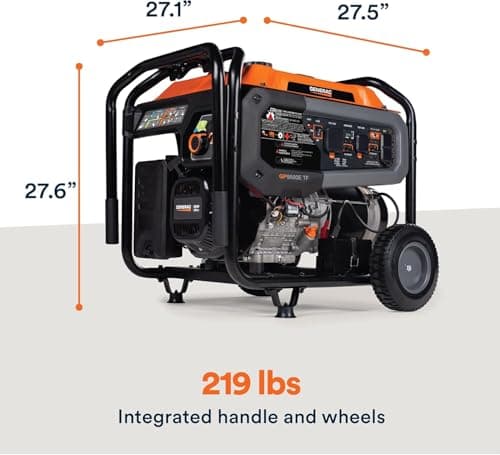
How Long Will a Generator Run?
Published runtime figures across fuels and loads, and why fuel choice matters more than tank size.
Guide
Generator Maintenance Schedule
A maintenance schedule built around the real failure mode of a standby-duty generator: fuel, battery and the quarterly test run.
Guide
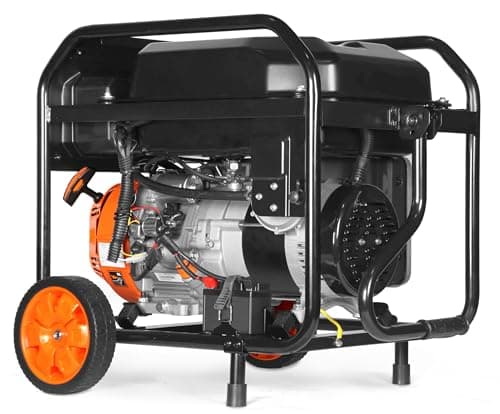
Is a Dual Fuel Generator Worth It?
The real argument for dual fuel — fuel storage, not running cost — plus the honest case against it.
Comparison
Propane vs Gasoline for a Generator
The honest propane-versus-gasoline comparison: energy density, output penalty, storage life and refueling safety.
Guide
Converting a Generator to Propane or Natural Gas
How generator conversion kits work, their unpublished output cost, and which half of the job is licensed gas work.