Generators
How Quiet Is a Quiet Generator?
Every published figure in one table, with its stated conditions. Including the machines whose makers publish nothing.
Written byMike M.
Published
Disclosure: we earn a commission on purchases made through links on this page, at no cost to you. It does not affect what we recommend or what we say about it — how we are funded.
The short answer
| Machine | Published figure | Conditions stated |
|---|---|---|
| Honda EU2200i | 48-57 dB(A) | Range given, no distance |
| Honda EU3000iS | 50-57 dB(A) | Range given, no distance |
| Westinghouse iGen5000DFc | As low as 52 dBA | No distance |
| Champion 2,500 W ultralight | 53 dBA | At 23 feet |
| Champion 4,500 W | 61 dBA | No distance |
| Champion 11,000 W | 64 dBA | At 23 feet |
| Westinghouse iGen12000DFc | As low as 64 dBA | No distance |
| Westinghouse WGen14500TFc | As low as 74 dBA | No distance |
Manufacturer published claims, quoted as stated. Only two entries here specify a measurement distance, which makes the rest not directly comparable to each other.
Generator noise claims are the least rigorous specification in the category, and comparing them is harder than it looks. This page sets out what is actually published so you can judge rather than trust.
Why a decibel figure without a distance is not a number
Sound falls off with distance. A measurement taken at 23 feet and one taken at 7 meters describe the same machine with very different numbers, and a figure with no stated distance cannot be compared to either.
In the table above, only Champion states the distance, and only on some models — 53 dBA from 23 feet for its 2,500 W ultralight and 64 dBA from 23 feet for its 11,000 W. Honda gives a range, which is informative about load variation but not about distance. Westinghouse's "as low as" figures give neither.
What "as low as" means, and why it matters
An inverter generator's entire mechanism is varying engine speed to match load. So its quietest figure is a light-load figure, and the noise climbs as you load it.
This has a direct practical consequence. A machine quoted at 52 dBA running a fridge and a couple of lights really is remarkably quiet. The same machine at 80% load, carrying a furnace blower and a sump pump as well, is substantially louder — and nobody publishes that figure. Assume the real-world noise in an outage is somewhere between the quoted figure and a conventional machine's.
What the gaps actually sound like
Decibel differences, as perceived
- +3 dB
- Double the sound energy, just noticeable
- +10 dB
- Roughly twice as loud, to a listener
- 52 to 74 dBA
- A gap of 22 dB — a different category
The decibel scale is logarithmic. This is standard acoustics rather than a product specification, and it is why the gap between an enclosed inverter machine and an open-frame one is not a marginal improvement.
The 22 dB gap between Westinghouse's iGen5000DFc at 52 dBA and its WGen14500TFc at 74 dBA is the real story of this category. It is the difference between a machine you can hold a conversation next to and one your neighbor will mention.
And note the WGen14500TFc's 74 dBA is itself quiet for an 18,000 peak watt machine — Westinghouse publishes it because it is a selling point at that output. Most conventional open-frame generators publish no noise figure at all.
What actually makes a generator quiet
- Variable engine speed, which is the inverter mechanism and the biggest single factor.
- An acoustic enclosure. Westinghouse's iGen5000DFc publishes a double-insulated cover; this is also why enclosed machines handle weather better.
- A larger muffler, which costs nothing in output and is often why one machine in a range is quieter than its sibling.
- Economy mode, which lets the engine idle down at light load. Westinghouse's iGen5000c publishes 18 hours on 3.4 gallons largely because of it.
- Engine size relative to load. A big engine at 20% load is quieter than a small engine at 90%, which is one argument against buying too small.
What you can do about noise regardless of the machine
Distance is the cheapest noise reduction available, and it is also required for safety: the CPSC's guidance puts the generator at least 20 feet from the house, and sound falls off with distance. A 50-foot cord buys you both more safety margin and a quieter outage than a 25-foot one.
What you cannot do is enclose it. Boxes, sheds, garages and tarps all reduce noise and all create a carbon monoxide hazard — see carbon monoxide safety. There is no acceptable trade there.
The short answer
The machines with the best published figures
| # | Product | Best for | Score | Price |
|---|---|---|---|---|
| 1 | 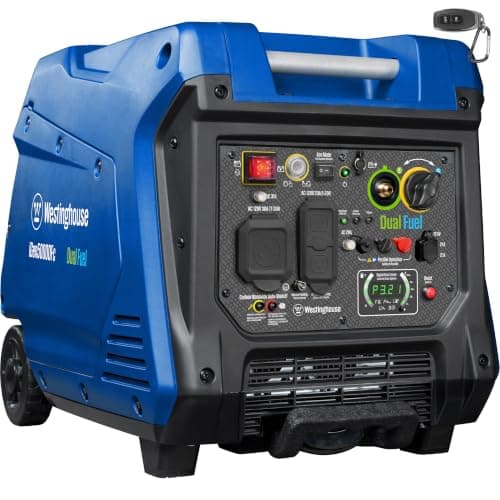 Westinghouse iGen5000DFc 5,000W Dual Fuel Inverter The quietest way to get around 4,000 running watts on either fuel, provided you are running cords rather than a transfer switch. | Quietest dual fuel at 4,000 running watts | 8.6/10 | $999.00 |
| 2 | 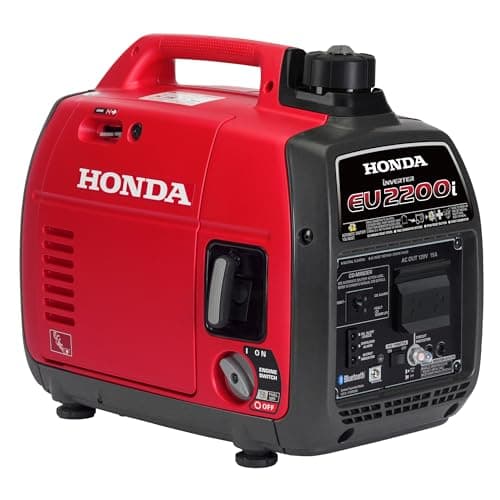 Honda EU2200i 2,200W Inverter The best small inverter generator made, and the wrong tool for whole-house backup — buy it for a fridge, a few lights and quiet, not for your panel. | The quietest credible option | 8.0/10 | $1,199.00 |
| 3 | 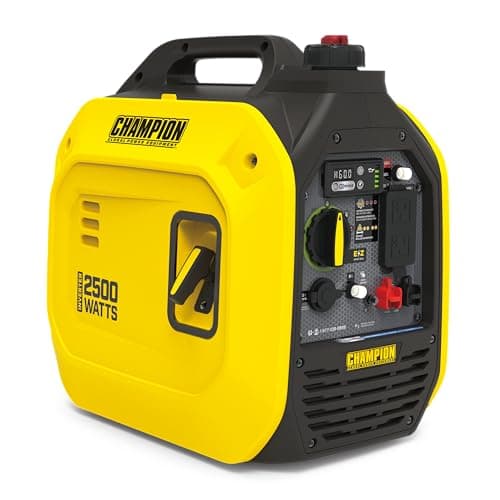 Champion 2,500W Ultralight Inverter The best-documented ultralight inverter: a real 53 dBA figure at a stated distance, 39.7 lb, and a parallel path if you need more later. | Published 53 dBA at 39.7 lb | 7.4/10 | $518.25 |
| 4 | 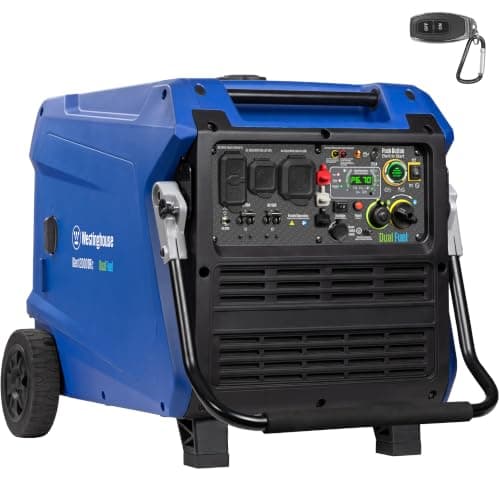 Westinghouse iGen12000DFc 12,000W Dual Fuel Inverter The best technical answer for whole-house backup if the budget allows: transfer-switch-ready output, inverter-clean power, and far less noise than the conventional alternative. | Whole-house backup with clean power | 9.0/10 | $1,899.00 |
| 5 | 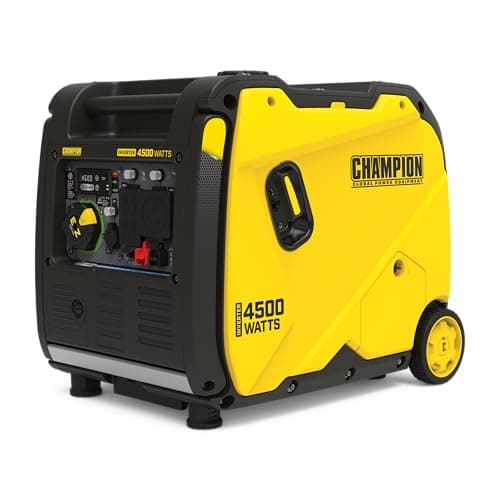 Champion 4,500W RV Ready Inverter The best balance of quiet, clean power and real output for cord-based backup: enough for the essentials, under 3% THD, half the price of the Honda equivalent. | Quiet backup at a sane price | 8.5/10 | $674.10 |
#ad Prices as of October 5, 2026; they may have changed since. Scores are our editorial judgment from published specifications, not test results — how we pick. How we are funded.
Or just move it further away
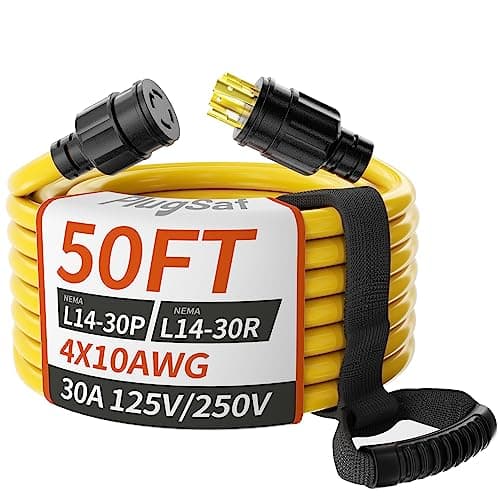
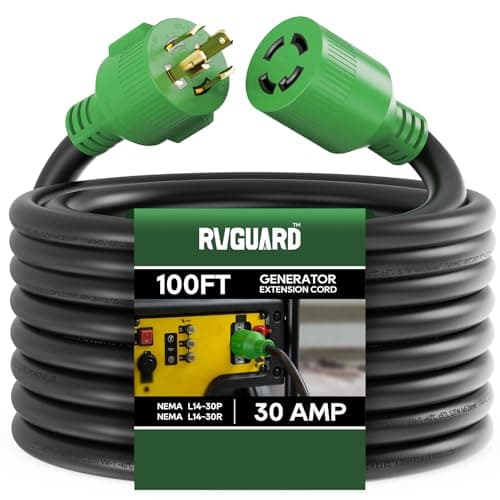
A longer cord is the cheapest noise reduction and improves your carbon monoxide margin at the same time. Note voltage drop becomes a real consideration at 100 feet.
Questions people actually ask
How many decibels is a quiet generator?
The quietest published figures in this registry are Honda's EU2200i at 48-57 dB(A) and Westinghouse's iGen5000DFc at as low as 52 dBA. Conventional open-frame machines are around 74 dBA where they publish anything at all, which is a different category of noise.
Why do generator decibel ratings vary so much?
Because measurement conditions vary and are often unstated. Only Champion states a distance on some models (23 feet). Sound falls off with distance, so a figure without a distance cannot be compared to one with. Load matters too — 'as low as' means at light load.
Is 61 dBA loud for a generator?
It is moderate — noticeably louder than the 52 dBA class but far quieter than a conventional open-frame machine at around 74 dBA. The decibel scale is logarithmic, so the 13 dB gap between 61 and 74 is perceived as considerably more than twice as loud.
Can I build a box to quiet my generator?
No. Any enclosure traps exhaust and creates a carbon monoxide hazard, and it also blocks the cooling airflow the engine needs. The CPSC's guidance prohibits operating a generator in any partly enclosed space. Distance is the safe way to reduce noise.
Which brands publish honest noise figures?
Champion publishes a decibel figure with the measurement distance on some models, which makes those the most directly comparable. Honda publishes a range. Westinghouse publishes 'as low as' figures without a distance. WEN markets machines as quiet while publishing no decibel rating at all.
Does a longer cord make my generator quieter?
Effectively yes, because sound falls off with distance and a longer cord lets you site the machine further away. It also improves your carbon monoxide margin, which is the better reason. Voltage drop becomes a real consideration past about 50 feet at full current.
Sources
- US Consumer Product Safety Commission — Portable Generator Information CenterThe placement and carbon monoxide guidance every generator page on this site links to.
Read next
Best Quiet Inverter
Best Quiet Inverter Generators for Home Backup
Inverter generators ranked on published noise and THD figures, with the brands that publish no measurable claim named.
Top pick · Westinghouse iGen5000DFc 5,000W Dual Fuel Inverter
$999.00View on Amazon23% off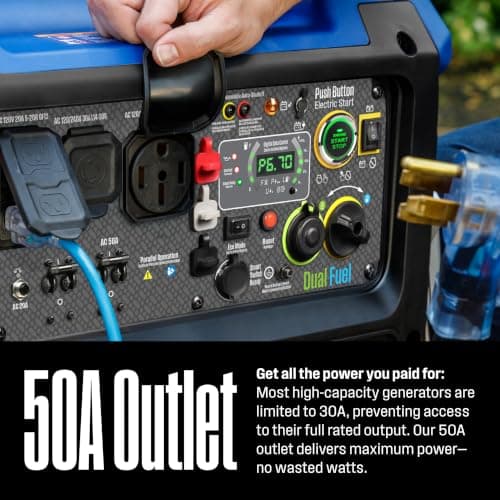
Inverter vs Conventional
Inverter vs Conventional Generator
Inverter against conventional generators on published noise, THD, fuel economy and output per dollar.
Best Generator Cord
The Best Generator Extension Cords
Generator cords by gauge, length and connector type, with the certification and connector-match checks that matter.
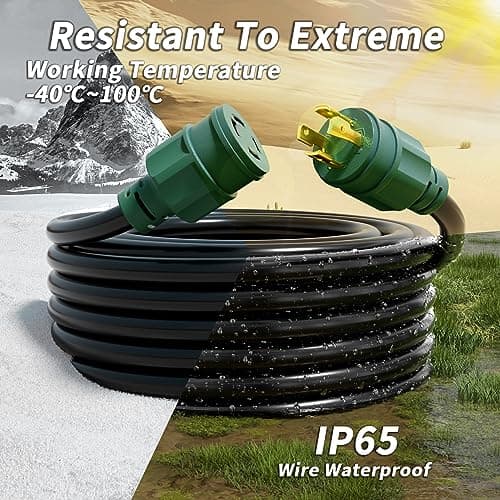
Top pick · PlugSaf 25 ft 30A L14-30 Cord, 10 AWG
$58.99View on Amazon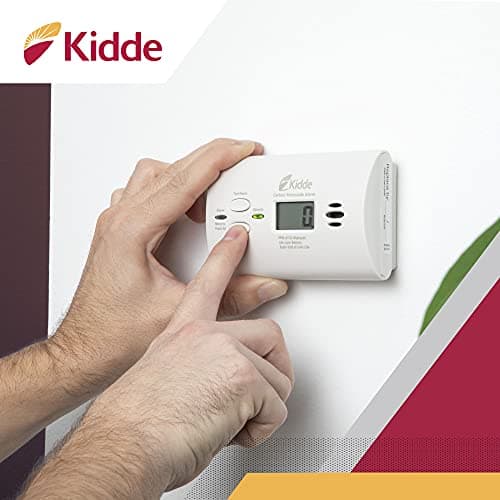
Guide
Generator Carbon Monoxide Safety
The CPSC placement rules, why a garage with the door open is still unsafe, and the battery CO alarm that should be your first purchase.
Review
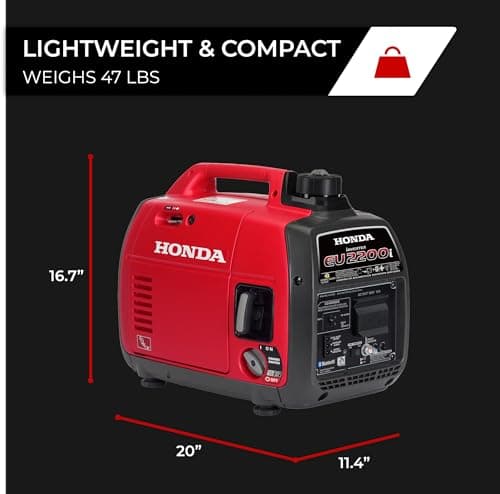
Honda EU2200i Review
The EU2200i's published figures and what they do and do not make it suitable for in home backup.