Generators
Converting a Generator to Propane or Natural Gas
A cheap, reversible way to add a fuel. The catch is that the derating is usually unpublished, and the house side is licensed work.
Written byMike M.
Published
Disclosure: we earn a commission on purchases made through links on this page, at no cost to you. It does not affect what we recommend or what we say about it — how we are funded.
The short answer
Model-specific conversion kits add propane or natural gas capability to many existing generators. They typically use the carburetor's existing port, require no permanent modification, and are reversible — the kit for the Westinghouse WGen9500DF states exactly that, and that gasoline operation is retained. Two real caveats: the output derating is usually not published for the kit, and connecting a natural gas quick-connect to your house supply is licensed gas work.
If you already own a generator and want the fuel flexibility you did not buy, a conversion kit is worth knowing about. It costs a fraction of replacing the machine, and on a dual fuel generator it can add natural gas — which is the single most useful fuel in a long outage.
How a kit works
Gaseous fuel is delivered to the engine at low pressure through a regulator, and the kit's job is to get it into the intake in a controlled way. The better kits do it without cutting anything: the Westinghouse WGen9500DF kit's listing states that it uses the existing port in the carburetor for the natural gas inlet, requires no permanent modification, retains the ability to run gasoline, and that switching back to propane is simply a matter of reconnecting the stock propane hose.
That reversibility matters more than it sounds. It means the conversion does not strand you on one fuel, does not void your ability to run gasoline when gas is what you have, and does not wreck resale value.
The derating, and why we cannot tell you what it is
This is the honest reason a factory tri-fuel machine is better if you are buying new: you get published numbers you can size from. A conversion is the right answer when you already own the generator.
Which half you can do, and which you cannot
The two halves of the job
- Generator side — the kit
- Bolt-on, no modification, reversible
- Propane side
- A tank and a two-stage regulator hose
- Natural gas side
- LICENSED gas work on your supply
- Permit / inspection
- Usually required for the gas connection
The asymmetry is the whole point. Fitting the kit and plugging in a propane tank is straightforward. Putting a quick-connect on your house gas line is not, and must not be improvised.
For propane, the whole thing is within reach: fit the kit, attach a tank through a proper regulator hose, done. A two-stage regulator is the part worth spending on, because it holds output pressure steady as the tank empties — a single-stage regulator lets pressure fall and the generator can surge or stall at low tank level.
For natural gas, the generator side is the easy half. The house side — a quick-connect fitting on your gas supply, correctly sized for the flow the generator needs — is licensed gas work in essentially every jurisdiction, is usually permitted and inspected, and must be arranged in advance rather than in the week before a storm.
Before you buy a kit: three checks
- 1Your exact model. These kits are model-specific — the one here fits the Westinghouse WGEN9500DF and nothing else. Read the label on the frame or control panel.
- 2Warranty. Check whether fitting a third-party kit affects your generator's warranty. A reversible, no-modification kit is the best case, but the manufacturer's position is worth knowing.
- 3Your gas supply's capacity, for natural gas. A generator is a significant appliance and the line has to deliver enough flow at enough pressure. This is a question for whoever does the gas work, and it is better asked before you buy the kit than after.
The short answer
The kit, and the hose you need either way
| # | Product | Best for | Score | Price |
|---|---|---|---|---|
| 1 | 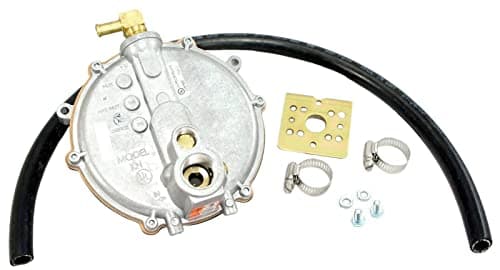 Generic (unbranded) Natural Gas Conversion Kit — WGen9500DF A cheap, reversible way to put a WGen9500DF on your gas line — with the house-side connection being licensed work and the output derating unpublished. | Adding natural gas to a dual fuel unit | 7.8/10 | $129.99 |
| 2 | 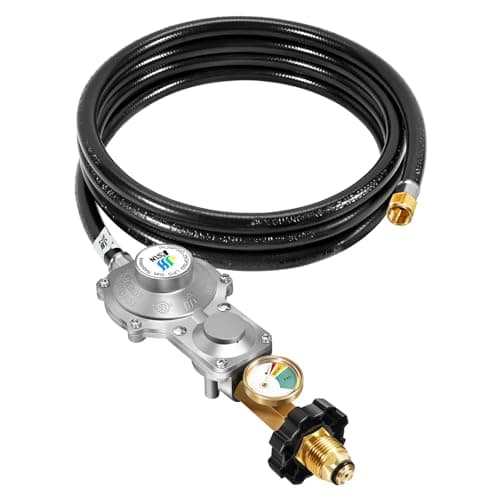 GasSaf 10 ft Two-Stage Propane Regulator + Hose The right propane hose for a dual fuel generator: two-stage regulation and 10 feet of distance, with the pressure spec published so you can verify fit. | Running a dual fuel generator on a tank | 9.0/10 | $47.99 |
#ad Prices as of October 5, 2026; they may have changed since. Scores are our editorial judgment from published specifications, not test results — how we pick. How we are funded.
When to buy a new machine instead
If your generator is gasoline-only and old, the arithmetic often favors replacement: a modern dual fuel machine adds propane, a CO shutdown, better outlets and a warranty, and current prices in this class are not far above what a serious conversion plus hoses costs.
If your generator is a recent dual fuel machine and you have a gas line, the conversion is clearly the better buy — you are adding the one fuel that removes refueling from your plan, for a fraction of the cost of a factory tri-fuel machine.
Or buy a factory tri-fuel machine
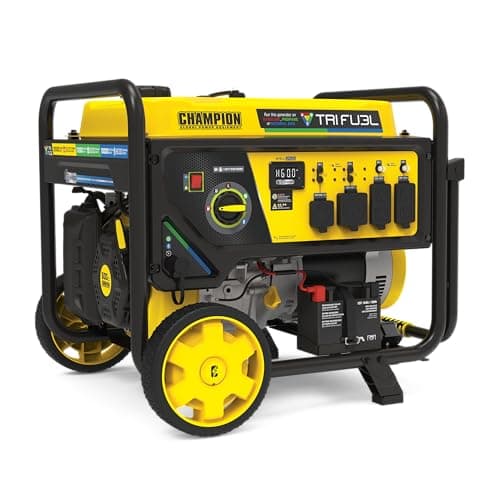
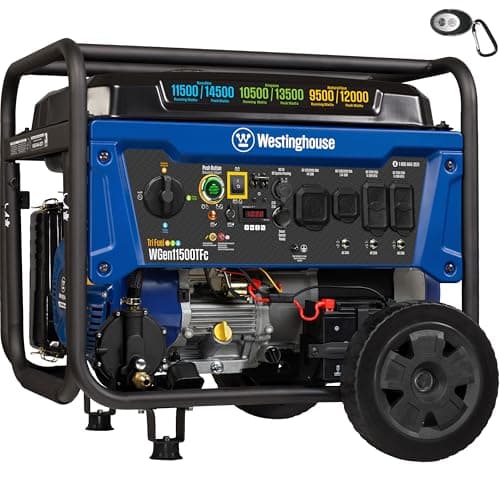
The advantage over a conversion is published per-fuel running watts you can size from. Champion's includes both hoses in the box.
Questions people actually ask
Can I convert my generator to run on propane?
Often yes, with a model-specific conversion kit. The better kits use the carburetor's existing port, need no permanent modification, and are fully reversible — the Westinghouse WGen9500DF kit states all three and that gasoline operation is retained.
How much power do you lose with a conversion kit?
The kits generally do not publish it, which is their real drawback. Gaseous fuel has lower energy density, so there will be a penalty — expect something in the region of a factory machine's, which is around 10% for propane and 15-25% for natural gas. Size conservatively.
Does a conversion kit void my generator's warranty?
Check with the manufacturer. A reversible kit requiring no permanent modification is the best case, but the manufacturer's position on third-party fuel system parts is worth confirming before fitting rather than after.
Can I connect a converted generator to my house gas line myself?
No. Fitting the kit to the generator is straightforward; putting a quick-connect on your house gas supply is licensed gas work in essentially every jurisdiction, usually permitted and inspected. Arrange it in advance.
Is a conversion kit better than buying a tri-fuel generator?
If you already own a suitable dual fuel machine, the conversion is far better value. If you are buying new, a factory tri-fuel generator is better because it publishes per-fuel running watts you can actually size from, and some include both hoses.
Do I need a special regulator for propane?
A two-stage regulator is worth having. It holds output pressure steady as the tank empties, where a single-stage regulator lets pressure fall and the generator can surge or stall at low tank level. Check your generator's required inlet pressure against the regulator's output.
Sources
- Natural Gas Conversion Kit for Westinghouse WGEN9500DF — manufacturer listingThe existing-carburetor-port, no-permanent-modification and reversibility claims quoted on this page.
- GasSaf 10FT Two Stage Propane Regulator — manufacturer listingThe 11 inch water column output pressure and 180,000 BTU maximum referenced in the regulator discussion.
Read next
Best Tri-Fuel
Best Tri-Fuel Generators
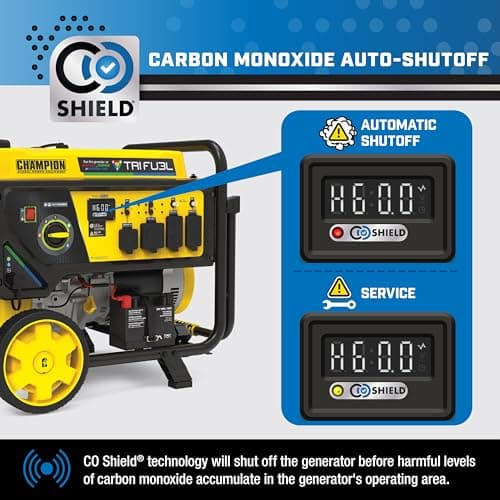
Tri-fuel generators with all three fuels' published running watts, and the natural gas derating stated plainly.
Top pick · Champion 12,500W Tri-Fuel Home Backup
$1,259.99View on Amazon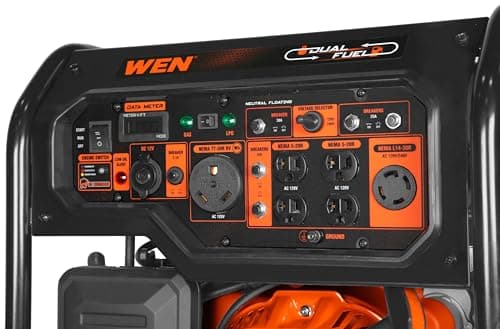
Guide
Is a Dual Fuel Generator Worth It?
The real argument for dual fuel — fuel storage, not running cost — plus the honest case against it.

Guide
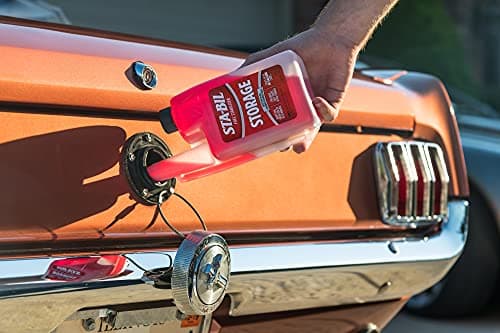
Generator Fuel Storage and Stabilizer
Fuel degradation, stabilizer shelf-life claims, safe storage quantities and containers, and the propane alternative.
Comparison
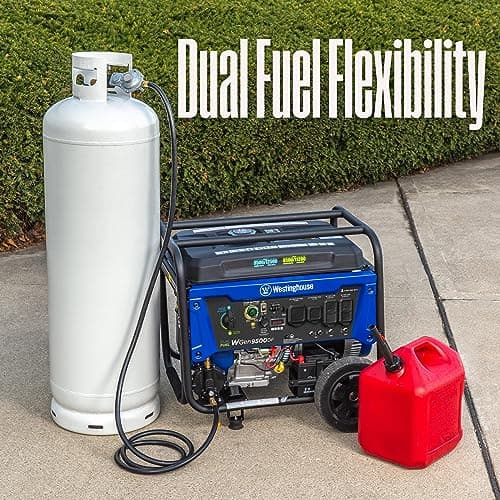
Propane vs Gasoline for a Generator
The honest propane-versus-gasoline comparison: energy density, output penalty, storage life and refueling safety.
Guide
Generator Maintenance Schedule
A maintenance schedule built around the real failure mode of a standby-duty generator: fuel, battery and the quarterly test run.