Generators
Best Quiet Inverter Generators for Home Backup
Ranked on published decibel figures with their measurement conditions — because a dB claim without a distance is not a number.
Written byMike M.
Published
Disclosure: we earn a commission on purchases made through links on this page, at no cost to you. It does not affect what we recommend or what we say about it — how we are funded.
The short answer
Westinghouse's iGen5000DFc is the best quiet inverter generator for home backup: as low as 52 dBA, dual fuel, remote start, a CO sensor and 5,000 peak watts, which covers a fridge, furnace blower, sump pump and lighting. Champion's 4,500 W RV Ready is the value pick at 61 dBA and 3,500 running watts with under 3% THD. For whole-house output with clean power, the iGen12000DFc publishes 12,000 peak watts at 64 dBA with both transfer-switch outlets.
Noise is the reason people buy inverter generators, and it is also the specification most loosely claimed in the category. Half the machines marketed as "super quiet" publish no decibel figure at all. So this ranking starts with what is actually published.
The short answer
Quick picks
| # | Product | Best for | Score | Price |
|---|---|---|---|---|
| 1 | 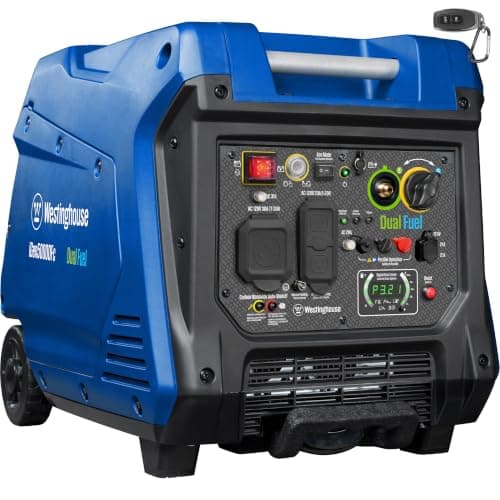 Westinghouse iGen5000DFc 5,000W Dual Fuel Inverter The quietest way to get around 4,000 running watts on either fuel, provided you are running cords rather than a transfer switch. | Quietest dual fuel at 4,000 running watts | 8.6/10 | $999.00 |
| 2 | 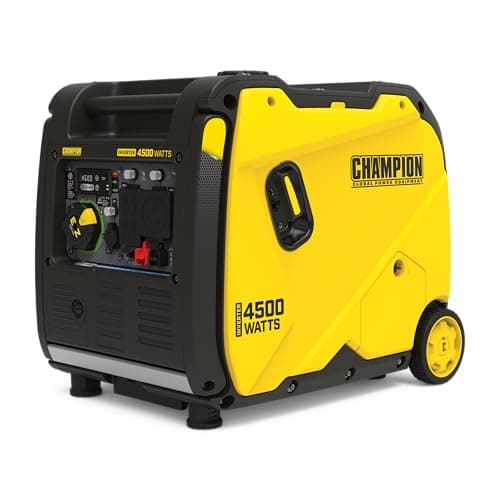 Champion 4,500W RV Ready Inverter The best balance of quiet, clean power and real output for cord-based backup: enough for the essentials, under 3% THD, half the price of the Honda equivalent. | Quiet backup at a sane price | 8.5/10 | $674.10 |
| 3 | 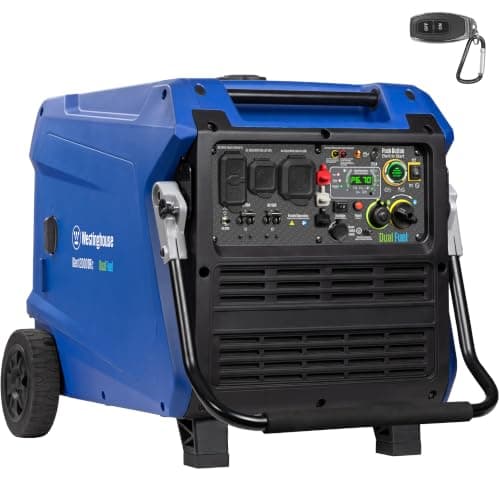 Westinghouse iGen12000DFc 12,000W Dual Fuel Inverter The best technical answer for whole-house backup if the budget allows: transfer-switch-ready output, inverter-clean power, and far less noise than the conventional alternative. | Whole-house backup with clean power | 9.0/10 | $1,899.00 |
| 4 | 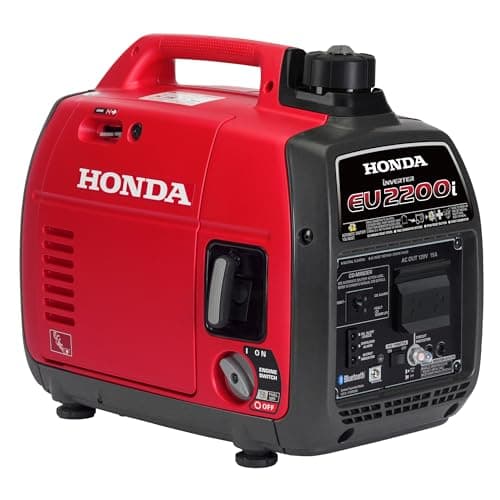 Honda EU2200i 2,200W Inverter The best small inverter generator made, and the wrong tool for whole-house backup — buy it for a fridge, a few lights and quiet, not for your panel. | The quietest credible option | 8.0/10 | $1,199.00 |
| 5 | 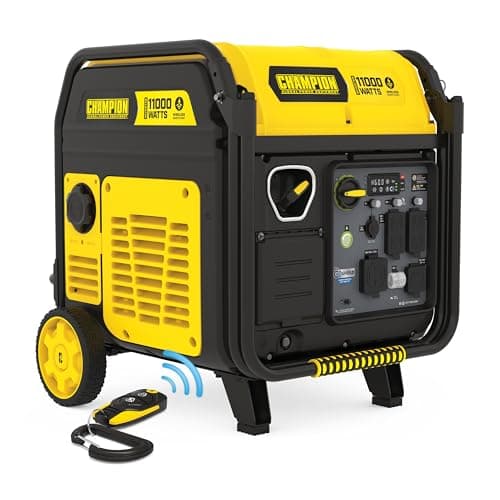 Champion 11,000W Remote Start Inverter A quiet, well-documented 9,000-running-watt inverter whose Cold Start Technology is more useful than the spec sheet suggests — but it only runs on gasoline. | Quiet whole-house, gasoline | 8.1/10 | $1,899.00 |
| 6 | 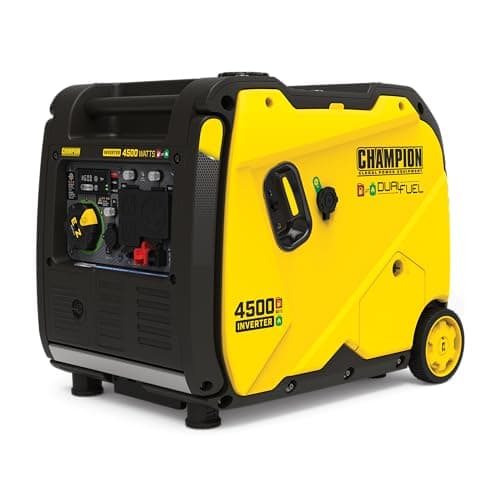 Champion 4,500W Dual Fuel Inverter The gas-only Champion 4500 with a propane option added — worth the premium if your outage plan runs on tanks rather than trips to a gas station. | Quiet plus a propane contingency | 8.4/10 | $902.62 |
| 7 | 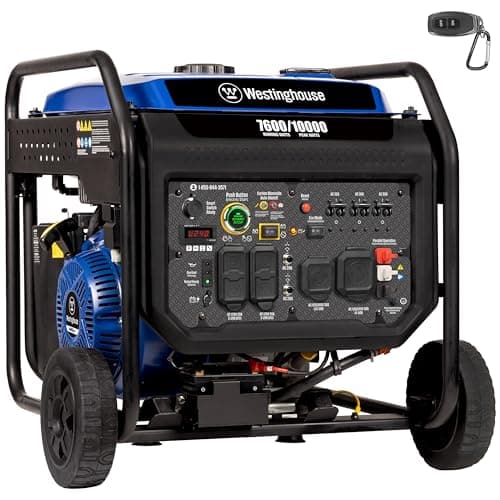 Westinghouse ecoGen10000 10,000W Open-Frame Inverter The value route to inverter-clean power at whole-essential-circuit output, at the cost of the acoustic enclosure and the propane option. | Clean power at 7,600 running watts | 8.3/10 | $1,149.00 |
| 8 | 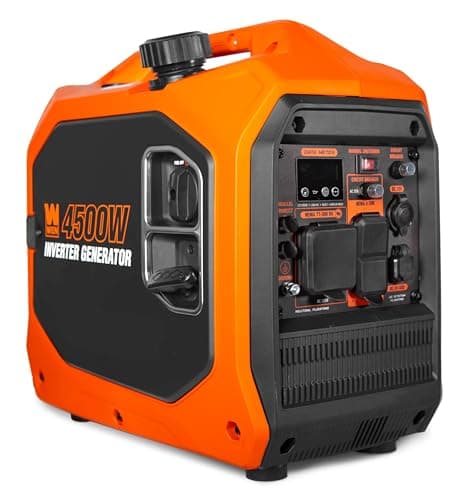 WEN 56432i 4,500W Inverter The cheapest honest route to 3,600 watts of clean power at a weight one person can move — accepting no CO shutoff and pull-start only. | Cheapest clean 3,600 running watts | 7.7/10 | $471.74 |
#ad Prices as of October 5, 2026; they may have changed since. Scores are our editorial judgment from published specifications, not test results — how we pick. How we are funded.
Published noise figures, with conditions
| Machine | Published noise | Distance stated? | THD |
|---|---|---|---|
| Honda EU2200i | 48-57 dB(A) | No distance given | Not stated |
| Westinghouse iGen5000DFc | As low as 52 dBA | No distance given | Not stated |
| Champion 2,500 W ultralight | 53 dBA | Yes — 23 feet | Under 3% |
| Champion 4,500 W | 61 dBA | No distance given | Under 3% |
| Champion 11,000 W | 64 dBA | Yes — 23 feet | Not stated |
| Westinghouse iGen12000DFc | As low as 64 dBA | No distance given | 3% or less |
| WEN 56235i | Compared to conversation | No figure at all | Not stated |
| WEN 56432i | Not published | — | Not stated |
Two things that table makes visible. First, only Champion states a measurement distance on some of its machines, which makes those the only directly comparable figures here. Second, WEN publishes no decibel rating at all on machines it markets as quiet — the 56235i's listing compares the noise to a normal conversation rather than giving a number. That is not a reason to avoid WEN, whose value is genuine, but we are not going to repeat a comparison as if it were data.
The "as low as" qualifier matters too. An inverter generator's whole mechanism is varying engine speed with load, so 52 dBA is a light-load figure and it climbs as you load the machine. Nobody publishes a full-load decibel rating, which is the figure you would actually want.
Why the iGen5000DFc wins
52 dBA at 5,000 peak watts is the best noise-per-watt figure of any dual fuel machine in this registry, and it comes with the things that make a machine usable in an outage: dual fuel so propane is an option, remote start so you are not out in the weather, a CO sensor, and a double-insulated cover that is weather protection as well as acoustic.
Its limitation, shared with most of its class: no 240 V output, so no transfer switch, no well pump, nothing hard-wired. For cord-based backup it is excellent. For panel backup you need the iGen12000DFc or ecoGen10000 further down the list.
The THD question, which is the other reason to buy inverter
Total harmonic distortion measures how clean the AC waveform is. Under 3% is what most inverter machines publish and is considered safe for sensitive electronics. It does not matter for heaters, pumps or incandescent lighting. It can matter for modern furnace control boards, which is the practical case in home backup — a furnace that refuses to run on generator power despite having plenty of watts available is usually a power-quality problem, not a capacity one.
Note from the table that THD is published less consistently than noise. Westinghouse's iGen12000DFc publishes 3% or less; Champion publishes under 3% on its 4,500 W; several machines state nothing. For a machine whose premium rests on power quality, an unpublished THD figure is a fair thing to hold against it.
Parallel capability: the cheap way to grow
Most of these machines are parallel-capable, which is a genuinely useful upgrade path. Two 2,500 W units linked produce roughly double the output, each unit stays one-person portable, and you can run just one when the load is light. Champion's ParaLINK states that two linked 2,500 W-or-higher inverters provide enough power for two 15,000 BTU RV air conditioners.
The constraint is brand compatibility — kits link units from the same maker, often within a model range. Parallel output is also 120 V, so it does not create a 240 V supply for a transfer switch.
Parallel kit
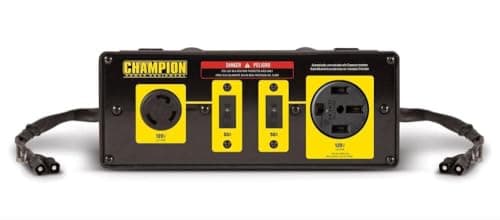
Champion-specific, for 2,500 W and above. Doubles output without buying a machine you cannot lift.
- Output
- 5,000 W peak gas
- Noise
- As low as 52 dBA (mfr)
- Fuel
- Gas / propane
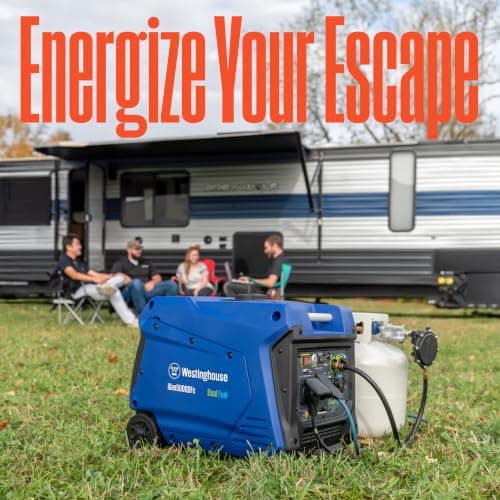
#1 · Quietest dual fuel at 4,000 running watts
Westinghouse iGen5000DFc 5,000W Dual Fuel Inverter
The quietest way to get around 4,000 running watts on either fuel, provided you are running cords rather than a transfer switch.
#ad Price as of October 5, 2026; it may have changed since. How we are funded.
What is good
- 52 dBA at 5,000 peak watts is the best noise-per-watt figure of any dual fuel machine here
- Dual fuel plus remote start plus CO sensor at a mid-range price
- The double-insulated cover is also weather protection the open-frame machines do not have
What is not
- No 240V outlet, so still no transfer switch
- 106 lb and enclosed — awkward to carry despite the telescoping handle
- The 52 dBA figure is at low load; it climbs as you load it
Published specification & our scoring
- 5,000 peak watts on gasoline (manufacturer)
- As low as 52 dBA with a double-insulated cover, muffler and variable-speed engine (manufacturer)
- Manufacturer states inverter technology cuts fuel use up to 50% versus a conventional generator
- 224cc Westinghouse 4-stroke OHV engine
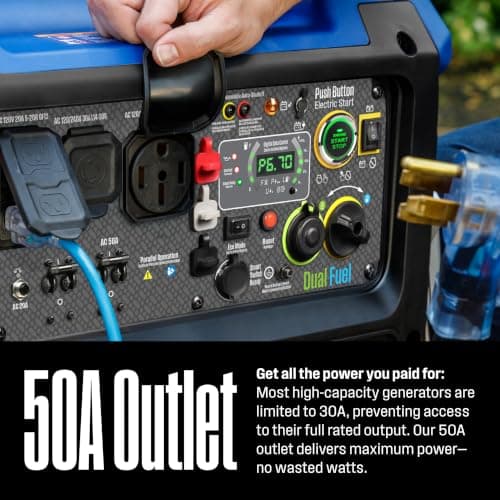
- RV-ready TT-30R 30A, 5-20R 120V 20A duplex, two USB
- Remote electric start, CO sensor; parallel capable
- Published weight 105.8 lb
- Noise
- 10
- Power quality
- 9
- Fuel flexibility
- 9
- Output
- 7
- Safety features
- 9
- Value
- 8
Specification figures are the manufacturer’s published values. Scores are our editorial judgment from those figures and are never published as structured review data — how we pick.
- Running watts
- 3,500 W
- Noise
- 61 dBA (mfr)
- Runtime
- Up to 14 h (mfr)
#2 · Quiet backup at a sane price
Champion 4,500W RV Ready Inverter
The best balance of quiet, clean power and real output for cord-based backup: enough for the essentials, under 3% THD, half the price of the Honda equivalent.
#ad Price as of October 5, 2026; it may have changed since. How we are funded.
What is good
- 3,500 running watts of clean power is enough for a fridge, furnace blower, lights and electronics — a real essential-circuit load, quietly
- 14-hour runtime is excellent for an inverter this size
- Parallel capability means you can double output later rather than replacing the unit
What is not
- No 240V output, so no transfer switch and no well pump
- 61 dBA is noticeably louder than the Honda units, though far quieter than an open-frame machine
- 92 lb is heavy for something you cannot connect to a panel
Published specification & our scoring
- 4,500 starting / 3,500 running watts (manufacturer)
- 61 dBA, up to 14 hours runtime (manufacturer)
- Under 3% THD — safe for sensitive electronics (manufacturer)
- CO Shield carbon monoxide auto shutoff
- 120V 29.2A RV outlet plus a 120V 20A household duplex
- Parallel ready with another 2,800W-or-higher Champion inverter
- Intelligauge with power meter; published weight 92.2 lb
- Noise
- 8
- Power quality
- 9
- Output
- 7
- Runtime
- 9
- Safety features
- 9
- Value
- 9
Specification figures are the manufacturer’s published values. Scores are our editorial judgment from those figures and are never published as structured review data — how we pick.
- Output
- 12,000 W peak
- THD
- Under 3% (mfr)
- Outlets
- 14-50R + L14-30R
#3 · Whole-house backup with clean power
Westinghouse iGen12000DFc 12,000W Dual Fuel Inverter
The best technical answer for whole-house backup if the budget allows: transfer-switch-ready output, inverter-clean power, and far less noise than the conventional alternative.
#ad Price as of October 5, 2026; it may have changed since. How we are funded.
What is good
- Whole-house output AND under 3% THD — this is the combination most homes with modern furnace boards and electronics actually want
- 64 dBA at 12,000 peak watts is dramatically quieter than any open-frame machine of similar output
- Both 240V outlets are transfer-switch ready, so it works with a 30A interlock or a 50A switch
What is not
- Considerably more expensive than a conventional 12kW dual fuel generator
- 187 lb and enclosed — harder to service at home than an open frame
- Inverter electronics are a failure point an open-frame alternator does not have
Published specification & our scoring
- 12,000 peak watts at 3% THD or less (manufacturer)
- As low as 64 dBA with Eco Mode, insulation and mufflers (manufacturer)
- Dual fuel: gasoline or propane
- Manufacturer states inverter technology halves fuel consumption versus a conventional generator
- One 120/240V 14-50R 50A and one L14-30R 30A — both transfer-switch and interlock ready
- LED data center with fuel level, output, remaining runtime, voltage and lifetime hours
- Remote electric start; published weight 187.4 lb
- Output headroom
- 10
- Power quality
- 10
- Noise
- 9
- Transfer-switch fit
- 10
- Fuel flexibility
- 9
- Value
- 6
Specification figures are the manufacturer’s published values. Scores are our editorial judgment from those figures and are never published as structured review data — how we pick.
- Output
- 2,200 W peak
- Noise
- 48-57 dB(A) (mfr)
- Weight
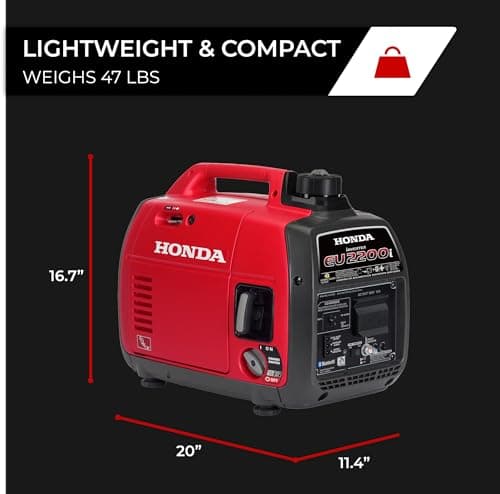
- 46.5 lb
#4 · The quietest credible option
Honda EU2200i 2,200W Inverter
The best small inverter generator made, and the wrong tool for whole-house backup — buy it for a fridge, a few lights and quiet, not for your panel.
#ad Price as of October 5, 2026; it may have changed since. How we are funded.
What is good
- 48-57 dB(A) is the quietest rating in the class, and Honda's figures have historically held up to independent scrutiny better than most
- Honda's small-engine reliability and dealer network are the best in the category — this is the generator that still starts after five years in a shed
- 46.5 lb is one-hand-and-a-grunt portable
What is not
- 2,200 watts will run a fridge OR a space heater, not a house — this is not a home backup generator by itself
- Costs roughly what a 6,500-running-watt dual fuel machine costs
- Gasoline only, and no 240V output at all
Published specification & our scoring
- 2,200 watts, suitable for microwaves, refrigerators, hair dryers and small AC units (manufacturer)
- Operates at 48 to 57 dB(A) (manufacturer)
- CO-MINDER carbon monoxide detection with automatic shutdown
- Bluetooth and the My Generator app for remote monitoring
- 3-year residential warranty (manufacturer)
- Published weight 46.5 lb
- Noise
- 10
- Power quality
- 10
- Reliability
- 10
- Portability
- 9
- Output
- 3
- Value
- 5
Specification figures are the manufacturer’s published values. Scores are our editorial judgment from those figures and are never published as structured review data — how we pick.
- Running watts
- 9,000 W
- Noise
- 64 dBA at 23 ft (mfr)
- Runtime
- Up to 15 h (mfr)
#5 · Quiet whole-house, gasoline
Champion 11,000W Remote Start Inverter
A quiet, well-documented 9,000-running-watt inverter whose Cold Start Technology is more useful than the spec sheet suggests — but it only runs on gasoline.
#ad Price as of October 5, 2026; it may have changed since. How we are funded.
What is good
- Champion publishes the dBA figure and the measurement distance, which most of its rivals do not
- Cold Start Technology matters — a winter outage is exactly when a generator refuses to start
- 9,000 running watts of inverter power with 15-hour runtime
What is not
- Gasoline only at a price where dual fuel is available
- 200 lb
- The 37.5A outlet is an unusual rating; check your inlet and cord before buying
Published specification & our scoring
- 11,000 starting / 9,000 running watts (manufacturer)
- 64 dBA from 23 feet; up to 15 hours on a full tank (manufacturer)
- 459cc Champion engine with Cold Start Technology, electric start, battery included
- Wireless remote start from up to 80 feet
- CO Shield auto shutoff
- Two 120V 20A GFCI duplex, one 120/240V 30A locking, one 120/240V 37.5A, one 12V
- Published weight 200 lb
- Output headroom
- 9
- Power quality
- 9
- Noise
- 9
- Runtime
- 9
- Fuel flexibility
- 4
- Value
- 6
Specification figures are the manufacturer’s published values. Scores are our editorial judgment from those figures and are never published as structured review data — how we pick.
- Running watts
- 3,500 W
- Noise
- 61 dBA (mfr)
- Fuel
- Gas / propane
#6 · Quiet plus a propane contingency
Champion 4,500W Dual Fuel Inverter
The gas-only Champion 4500 with a propane option added — worth the premium if your outage plan runs on tanks rather than trips to a gas station.
#ad Price as of October 5, 2026; it may have changed since. How we are funded.
What is good
- Propane capability on a quiet inverter is the best of both worlds for a multi-day outage
- Propane stores indefinitely, which is the single biggest practical advantage over gasoline
- The EZ Start dial removes the choke-and-pray step
What is not
- Only 7 lb heavier than the gas-only version, but meaningfully more expensive
- Still no 240V output
- Propane output is lower than gasoline; Champion does not publish the propane figure for this model
Published specification & our scoring
- 4,500 starting / 3,500 running watts (manufacturer)
- Dual fuel — gasoline or propane out of the box
- 61 dBA, up to 14 hours runtime (manufacturer)
- CO Shield auto shutoff, electric start with EZ Start dial
- Intelligauge with power meter
- Parallel ready; published weight 99.2 lb
- Noise
- 8
- Power quality
- 9
- Fuel flexibility
- 9
- Output
- 7
- Safety features
- 9
- Value
- 8
Specification figures are the manufacturer’s published values. Scores are our editorial judgment from those figures and are never published as structured review data — how we pick.
- Running watts
- 7,600 W
- THD
- Under 3% (mfr)
- Outlets
- L14-30R + 14-50R
#7 · Clean power at 7,600 running watts
Westinghouse ecoGen10000 10,000W Open-Frame Inverter
The value route to inverter-clean power at whole-essential-circuit output, at the cost of the acoustic enclosure and the propane option.
#ad Price as of October 5, 2026; it may have changed since. How we are funded.
What is good
- 7,600 running watts of sub-3% THD power for noticeably less than the enclosed iGen12000DFc
- 147 lb is 40 lb lighter than the enclosed inverter machines of similar output
- Open frame means home servicing is straightforward
What is not
- Gasoline only
- Open frame means no acoustic enclosure — Westinghouse does not publish a dBA figure for this model
- No CO shutdown listed on this model
Published specification & our scoring
- 7,600 running / 10,000 peak watts on gasoline at under 3% THD (manufacturer)
- 420cc Westinghouse 4-stroke OHV engine with cast-iron sleeve
- Four GFCI 120V 5-20R, one L14-30R, one 14-50R — both 240V outlets transfer-switch ready
- Remote key-fob start with auto choke, plus push-button and recoil
- Automatic low-oil shutdown and digital hour meter
- Published weight 147.7 lb
- Output headroom
- 8
- Power quality
- 10
- Transfer-switch fit
- 10
- Portability
- 7
- Fuel flexibility
- 4
- Value
- 9
Specification figures are the manufacturer’s published values. Scores are our editorial judgment from those figures and are never published as structured review data — how we pick.
- Running watts
- 3,600 W
- Peak watts
- 4,500 W
- Weight
- 53 lb
#8 · Cheapest clean 3,600 running watts
WEN 56432i 4,500W Inverter
The cheapest honest route to 3,600 watts of clean power at a weight one person can move — accepting no CO shutoff and pull-start only.
#ad Price as of October 5, 2026; it may have changed since. How we are funded.
What is good
- 3,600 rated watts at 53 lb is the best output-to-weight ratio in this roundup
- The fuel shutoff feature genuinely extends life on a machine that sits unused for months
- Costs a fraction of the Honda and Champion equivalents
What is not
- No CO shutdown on this model
- No electric start, no remote start
- WEN publishes no dBA figure for this unit despite marketing it as quiet
Published specification & our scoring
- 181cc engine, 4,500 surge / 3,600 rated watts (manufacturer)
- Clean power to prevent damage to sensitive electronics (manufacturer)
- Two 120V three-prong receptacles, one TT-30R RV receptacle, one 12V DC, two USB
- Intelligent data meter
- Fuel shutoff to clear the carburetor before storage
- Published weight 53 lb; three-year warranty
- Output headroom
- 7
- Power quality
- 8
- Portability
- 10
- Safety features
- 4
- Runtime
- 7
- Value
- 10
Specification figures are the manufacturer’s published values. Scores are our editorial judgment from those figures and are never published as structured review data — how we pick.
Questions people actually ask
What is the quietest inverter generator for home backup?
On published figures, Honda's EU2200i at 48-57 dB(A) and Westinghouse's iGen5000DFc at as low as 52 dBA. The Westinghouse is the better home backup machine because it delivers 5,000 peak watts against the Honda's 2,200, with dual fuel and remote start.
How quiet is 52 dBA for a generator?
Quiet enough to hold a conversation beside, and dramatically quieter than a conventional open-frame machine at around 74 dBA. The important caveat is that 'as low as' means at light load — the figure rises as the machine is loaded, and no manufacturer publishes a full-load rating.
Can an inverter generator power my whole house?
Some can. The Westinghouse iGen12000DFc publishes 12,000 peak watts with both an L14-30R and a 14-50R, both transfer-switch ready, at 3% or less THD. Most inverter generators cannot, because they have no 240 V output at all.
Is THD important for a home backup generator?
It matters for anything with a circuit board, and in practice the case that comes up is a modern furnace control board that locks out on a dirty waveform. Under 3% is what most inverter machines publish. It is irrelevant for heaters, pumps and incandescent lighting.
Why is the Honda EU2200i so expensive for its output?
You are paying for noise performance and long-term reliability rather than watts: 48-57 dB(A) and Honda's small-engine record are the best in the class. For home backup value it is hard to justify, since it costs about what a 6,500-running-watt dual fuel machine costs and delivers under 2,000 running watts.
Can I run two inverter generators together?
Yes, with a parallel kit, and it is a sensible upgrade path — each unit stays one-person portable and you can run just one for light loads. Kits are brand-specific and often model-range specific, and the combined output is 120 V so it does not create a 240 V supply.
Sources
- US Consumer Product Safety Commission — Portable Generator Information CenterThe placement and carbon monoxide guidance every generator page on this site links to.
- Eugene Water & Electric Board — Generator Sizing ConsiderationsPublished appliance running and additional-starting watt figures used in the sizing arithmetic on this page.
Read next
Guide
How Quiet Is a Quiet Generator?
Published decibel ratings side by side with their measurement conditions, and what a dB difference actually means.
Inverter vs Conventional
Inverter vs Conventional Generator
Inverter against conventional generators on published noise, THD, fuel economy and output per dollar.
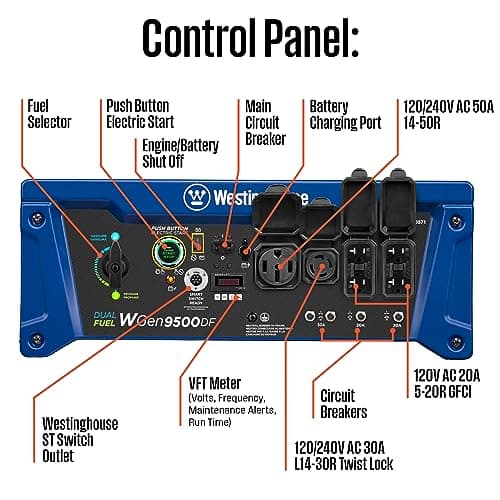
Best Overall Home Backup
The Best Home Backup Generators
Nine conventional-frame generators ranked for whole-house backup, with per-fuel running watts and transfer-switch fit.
Top pick · Westinghouse WGen9500DF 12,500W Dual Fuel
$999.00View on Amazon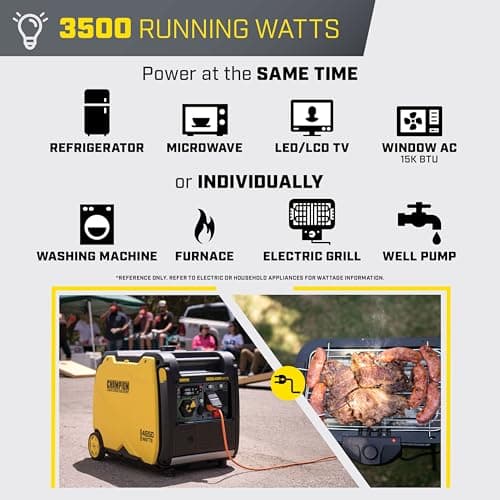
Guide
What Size Generator to Run a Furnace?
Furnace blower sizing from published figures, the gas-versus-electric divide, and why power quality matters for modern control boards.
Review
Honda EU2200i Review
The EU2200i's published figures and what they do and do not make it suitable for in home backup.