Generators
Best Generator for an Apartment
We will give you the picks. We will also tell you that for most apartments the answer is a battery, and the reason is not squeamishness.
Written byMike M.
Published
Disclosure: we earn a commission on purchases made through links on this page, at no cost to you. It does not affect what we recommend or what we say about it — how we are funded.
The short answer
For almost every apartment the correct answer is a battery power station, not a generator. A portable generator must be run outdoors, at least 20 feet from the building, with the exhaust pointed away from windows — which is not achievable from a balcony, a patio or a shared walkway, and is prohibited by most leases. A 1 kWh battery runs a fridge, lights and devices indoors and silently. If you genuinely have a safe outdoor space, Westinghouse's iGen2550DFc is the pick at 42 lb with a CO sensor.
We would rather say that plainly than sell you a generator you cannot legally or safely use. So this page is mostly about the alternative.
What a battery actually covers in an apartment
Usefully, an apartment's essential load is small. No well pump, no sump pump, and heat is usually not yours to run. That leaves the fridge, lighting, devices and perhaps a window air conditioner — and the first three are exactly what batteries are good at.
Capacity against an apartment load, our arithmetic
- 1,024 Wh
- Fridge overnight, or days of devices
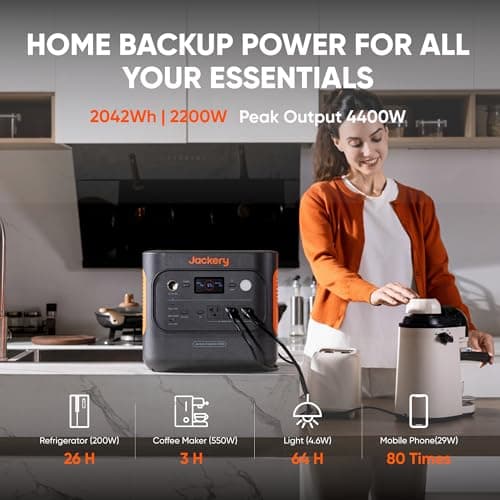
- 2,042 Wh
- Fridge ~30-40 h plus devices
- 288 Wh
- Phones, laptop, lights for days
- Window AC, 1,200 W
- Under 2 h on 2 kWh — not viable
Our calculation from published capacities, derated about 12% for inverter loss and assuming a cycling fridge averages far below its running watts. Air conditioning is the load batteries cannot do.
The key specification to check is surge rating, not capacity: you need about 3,000 watts of surge to start a fridge compressor, because both published charts put the fridge's surge at 2,200 watts. EcoFlow's DELTA 3 Classic publishes 1,800 W continuous with 3,600 W surge and a sub-10 ms UPS switchover, which is why it tops this list.
The short answer
Quick picks
| # | Product | Best for | Score | Price |
|---|---|---|---|---|
| 1 | 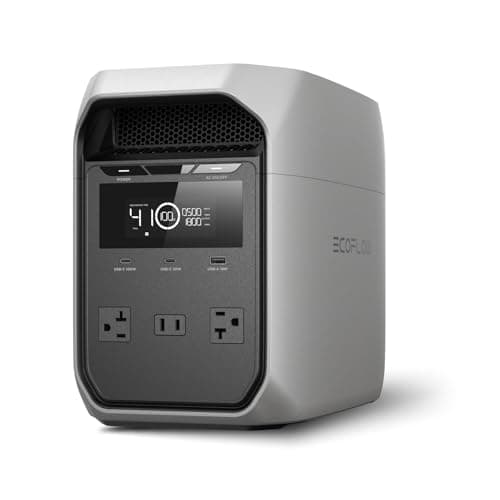 EcoFlow DELTA 3 Classic The best-value battery on the site: UPS-grade switchover, 1,800 W and a 45-minute recharge for roughly half what the 2 kWh units cost. | Best value 1 kWh with UPS | 8.6/10 | $499.00 |
| 2 | 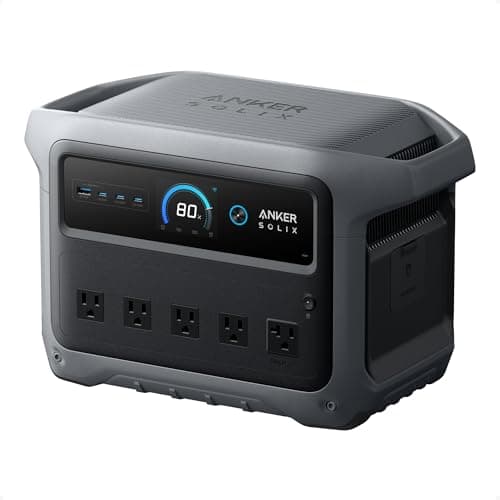 Anker SOLIX C1000 Gen 2 The right 1 kWh battery if your problem is short high-draw bursts rather than long low-draw endurance — and the fastest refill here by a wide margin. | Fastest 1 kWh recharge | 8.5/10 | $499.99 |
| 3 | 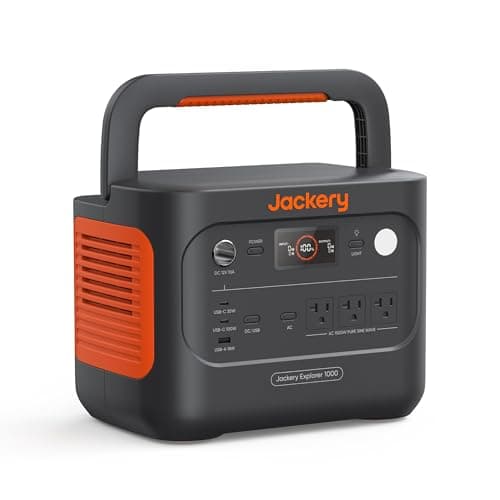 Jackery Explorer 1000 v2 The right size if the goal is specifically keeping the refrigerator and your phones alive overnight — and honest about being nothing more than that. | A fridge overnight, nothing heavier | 8.3/10 | $499.00 |
| 4 | 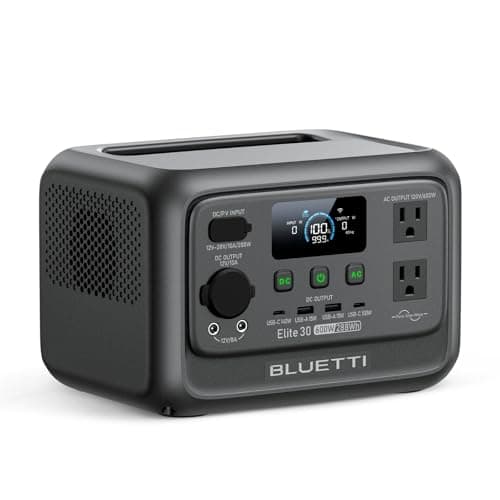 Bluetti Elite 30 V2 The small power station with genuinely useful output, as long as you understand 288 Wh means that output lasts minutes, not hours. | Highest output of the small units | 7.0/10 | $249.99 |
| 5 | 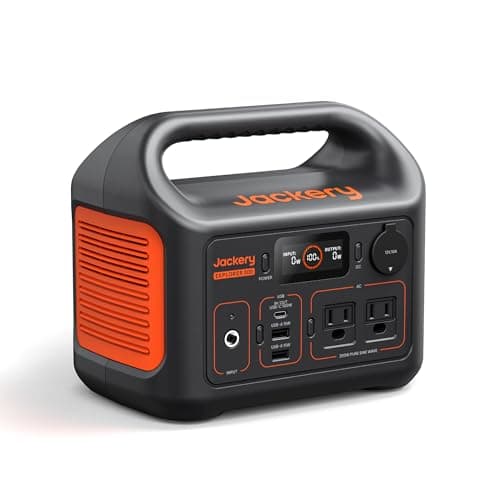 Jackery Explorer 300 Buy this for devices and medical equipment, not appliances — and at 7.5 lb and 4,000 cycles, it is the easiest preparedness purchase on the site. | Phones, laptops, a CPAP | 7.3/10 | $259.00 |
#ad Prices as of October 5, 2026; they may have changed since. Scores are our editorial judgment from published specifications, not test results — how we pick. How we are funded.
The UPS feature that matters most in a rental
Several of these units publish switchover under 10 milliseconds, which means you can leave the fridge or a desk setup plugged in through the battery permanently and the outage simply does not register. In an apartment, where you may not be home and have no generator option at all, automatic is worth more than capacity.
Pair that with a low idle draw if you intend to leave it connected. Anker's SOLIX S2000 publishes a 6 W idle draw and Bluetti's FridgePower publishes 4 W; many units waste five times that doing nothing, which is money and makes permanent connection less sensible.
If you genuinely do have a safe outdoor space
Some ground-floor units, townhouses and duplexes have a yard where 20 feet from every window is achievable. If that is you, the smallest sensible machines are the enclosed dual fuel inverters: Westinghouse's iGen2550DFc at 42 lb publishes 1,900 rated watts, as low as 52 dBA, dual fuel and a CO sensor — and propane means no gasoline stored in a small space, which is a real advantage.
Check your lease and your local rules first, and check them specifically rather than assuming. And note 1,900 running watts is a fridge and lights, not an apartment's full load.
If you have a genuinely safe outdoor space
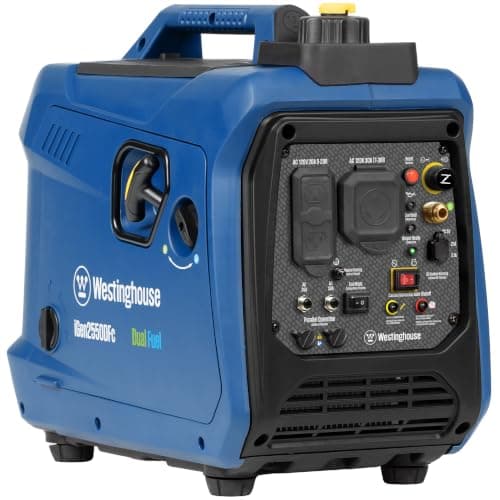
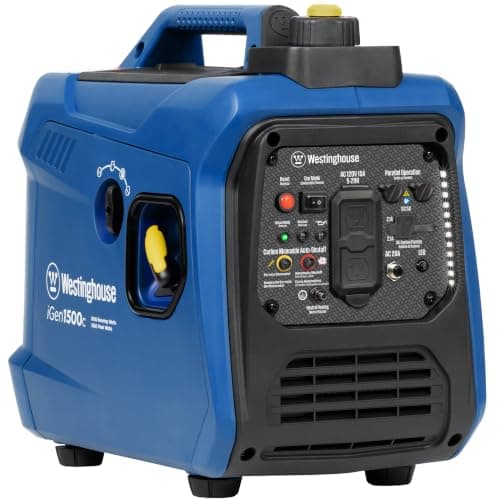
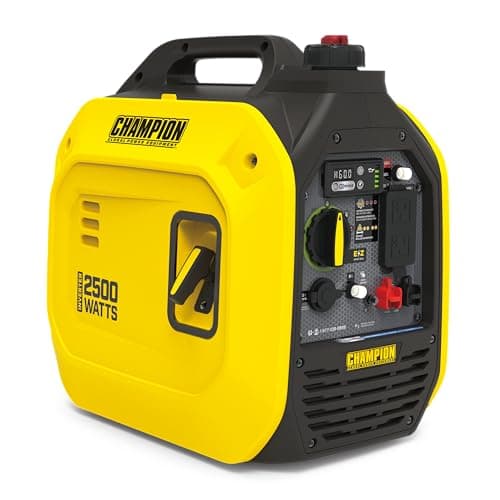
All three are small, quiet and light. The iGen2550DFc is the only one here with both dual fuel and a CO sensor. Placement rules apply in full regardless of size.
- Capacity
- 1,024 Wh
- AC output
- 1,800 W / 3,600 W surge
- Switchover
- Under 10 ms (mfr)
#1 · Best value 1 kWh with UPS
EcoFlow DELTA 3 Classic
The best-value battery on the site: UPS-grade switchover, 1,800 W and a 45-minute recharge for roughly half what the 2 kWh units cost.
#ad Price as of October 5, 2026; it may have changed since. How we are funded.
What is good
- UPS behavior at a 1 kWh price point — you can put the fridge or the home office behind it permanently
- 1,800 W continuous is higher than Jackery's 1,500 W at similar capacity
- 45 minutes to 80% and 26.7 lb
What is not
- 1,024 Wh is a single night of fridge duty, not a weekend
- X-Boost's surge figure does not apply to motor loads
- No expansion battery option on the Classic
Published specification & our scoring
- 1,024 Wh, 1,800 W output with 3,600 W surge via X-Boost (manufacturer)
- 0-80% in 45 minutes with X-Stream AC charging (manufacturer)
- Under 10 ms UPS switchover (manufacturer)
- LiFePO4 cells rated for 10+ years of daily use, EV-grade cell-to-chassis design (manufacturer)
- Published weight 26.7 lb
- Usable capacity
- 6
- Output ceiling
- 7
- UPS behavior
- 10
- Recharge speed
- 10
- Portability
- 9
- Value
- 10
Specification figures are the manufacturer’s published values. Scores are our editorial judgment from those figures and are never published as structured review data — how we pick.
- Capacity
- 1,024 Wh
- AC output
- 2,000 W / 3,000 W peak
- Recharge
- 49 min (mfr)
#2 · Fastest 1 kWh recharge
Anker SOLIX C1000 Gen 2
The right 1 kWh battery if your problem is short high-draw bursts rather than long low-draw endurance — and the fastest refill here by a wide margin.
#ad Price as of October 5, 2026; it may have changed since. How we are funded.
What is good
- 2,000 W continuous at 1 kWh is the highest output-to-capacity ratio here — it runs appliances other 1 kWh units refuse
- 49 minutes to full is the fastest recharge on the site
- 4,000 cycles with at least 80% remaining
What is not
- 1,024 Wh at 2,000 W draw is about 30 minutes — high output and small capacity is a short-runtime combination
- No expansion battery for this generation
- No published UPS switchover time
Published specification & our scoring
- 1,024 Wh capacity, 2,000 W output with 3,000 W peak across 10 ports (manufacturer)
- Full recharge in 49 minutes at 1,600 W with HyperFlash (manufacturer)
- InfiniPower: at least 80% capacity after 4,000 cycles, 10-year design life (manufacturer)
- Manufacturer states it is 14% smaller than the previous generation
- Published weight 24.9 lb
- Output ceiling
- 9
- Recharge speed
- 10
- Cycle life
- 10
- Usable capacity
- 6
- Portability
- 10
- Value
- 9
Specification figures are the manufacturer’s published values. Scores are our editorial judgment from those figures and are never published as structured review data — how we pick.
- Capacity
- 1,070 Wh
- AC output
- 1,500 W / 3,000 W surge
- Weight
- 23.8 lb
#3 · A fridge overnight, nothing heavier
Jackery Explorer 1000 v2
The right size if the goal is specifically keeping the refrigerator and your phones alive overnight — and honest about being nothing more than that.
#ad Price as of October 5, 2026; it may have changed since. How we are funded.
What is good
- The 3,000 W surge rating is what lets it start a fridge compressor — the figure that actually matters, and many rivals understate it
- 23.8 lb is carry-it-upstairs light
- One hour to full is faster than most units twice its price
What is not
- 1,070 Wh is roughly 15-20 hours of fridge cycling, not multiple days
- 1,500 W continuous rules out a microwave and a kettle at the same time
- No 240V output, so nothing hard-wired
Published specification & our scoring
- 1,070 Wh capacity, 1,500 W AC output with 3,000 W surge peak (manufacturer)
- 0-100% in one hour with emergency charging (manufacturer)
- LFP battery holding over 70% of original capacity after its rated life (manufacturer)
- Two USB-C, one USB-A, one DC car port, three pure sine wave AC ports, LED lights
- App control with a 30 dB quiet charging mode
- Published weight 23.8 lb
- Usable capacity
- 6
- Output ceiling
- 6
- Recharge speed
- 10
- Cycle life
- 9
- Portability
- 10
- Value
- 9
Specification figures are the manufacturer’s published values. Scores are our editorial judgment from those figures and are never published as structured review data — how we pick.
- Capacity
- 288 Wh
- AC output
- 600 W / 1,500 W surge
- Weight
- 9.4 lb
#4 · Highest output of the small units
Bluetti Elite 30 V2
The small power station with genuinely useful output, as long as you understand 288 Wh means that output lasts minutes, not hours.
#ad Price as of October 5, 2026; it may have changed since. How we are funded.
What is good
- 600 W continuous is double the usual 300 W at this size — enough for a small appliance, not just devices
- 1,500 W surge gives it a real chance at starting a small fridge compressor
- 9.4 lb
What is not
- 288 Wh at 600 W draw is under 30 minutes — the output is only useful in short bursts
- Costs more than twice the budget 300 W units
- Power Lifting mode reduces voltage and should not be used for motors
Published specification & our scoring
- 288 Wh capacity, 600 W continuous with 1,500 W surge in Power Lifting mode (manufacturer)
- Manufacturer states 600 W output is twice what comparable units provide
- UltraCell technology and smart cooling cut power consumption by 50% (manufacturer)
- Published weight 9.4 lb; LFP chemistry
- Output ceiling
- 6
- Usable capacity
- 3
- Portability
- 10
- Cycle life
- 8
- Value
- 7
- Brand support
- 7
Specification figures are the manufacturer’s published values. Scores are our editorial judgment from those figures and are never published as structured review data — how we pick.
- Capacity
- 292 Wh
- AC output
- 300 W / 600 W peak
- Weight
- 7.5 lb
#5 · Phones, laptops, a CPAP
Jackery Explorer 300
Buy this for devices and medical equipment, not appliances — and at 7.5 lb and 4,000 cycles, it is the easiest preparedness purchase on the site.
#ad Price as of October 5, 2026; it may have changed since. How we are funded.
What is good
- 4,000 cycles at 7.5 lb — this will outlive several phones
- 292 Wh covers two nights of a CPAP without a humidifier, or a week of phone charging
- Small enough that it lives in a cupboard and gets used, rather than being a project
What is not
- 300 W will not start a refrigerator — do not buy it for that
- Solar panel sold separately
- No 240V, no high-draw appliances at all
Published specification & our scoring
- 292 Wh capacity, 300 W rated output with 600 W peak (manufacturer)
- Two AC outlets, a 100 W USB-C PD port, two USB-A, a 120 W car port
- LiFePO4 chemistry rated for over 4,000 charge cycles to 70% capacity (manufacturer)
- Published weight 7.5 lb
- Solar panel not included
- Usable capacity
- 3
- Output ceiling
- 3
- Cycle life
- 10
- Portability
- 10
- Recharge speed
- 7
- Value
- 9
Specification figures are the manufacturer’s published values. Scores are our editorial judgment from those figures and are never published as structured review data — how we pick.
Questions people actually ask
Can I use a generator in an apartment?
Almost never. CPSC guidance requires a generator to be outdoors, at least 20 feet from the building, exhaust pointed away from windows, and never in any partly enclosed space. A balcony or patio fails those conditions and most leases prohibit it. A battery power station is the correct answer.
Can I run a generator on my balcony?
No. A balcony is too close to the building, is usually partly enclosed, and sits directly below someone else's windows. It fails the CPSC's placement guidance on multiple counts and is prohibited by most leases and many local fire codes.
What is the best backup power for an apartment?
A battery power station with at least 3,000 watts of surge rating so it can start a refrigerator, and ideally UPS switchover under 10 milliseconds so it takes over automatically. A 1 kWh unit covers a fridge overnight plus devices; 2 kWh covers considerably more.
Will a power station run my apartment's air conditioning?
Not usefully. A 2 kWh battery running a 1,200 watt window unit lasts under two hours after inverter losses. Air conditioning is a sustained high load, which is what batteries are worst at.
Can I leave a power station plugged in all the time in an apartment?
The units with very low idle draw are designed for it — look for 4 to 6 watts of standby. Combined with UPS switchover under 10 milliseconds, that lets you run the fridge or a desk setup through it permanently so an outage never registers.
Sources
- US Consumer Product Safety Commission — Portable Generator Information CenterThe placement and carbon monoxide guidance every generator page on this site links to.
- Eugene Water & Electric Board — Generator Sizing ConsiderationsPublished appliance running and additional-starting watt figures used in the sizing arithmetic on this page.
Read next
Best Overall Power Station
The Best Home Backup Power Stations
Battery power stations ranked for home backup on surge, capacity, recharge speed and cycle life.
Top pick · Jackery Explorer 2000 v2
$898.99View on Amazon10% off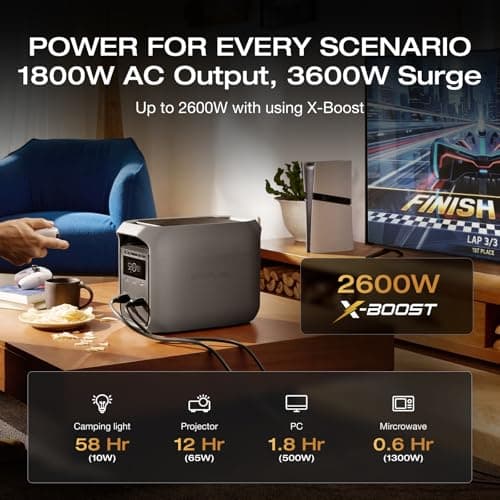
Best Budget Pick
Best Budget Power Stations
Budget power stations worth owning, with honest limits on what 300 watts of output can do.
Top pick · EcoFlow DELTA 3 Classic
$499.00View on Amazon11% off
Battery vs Engine
Portable Power Station vs Generator
Battery against generator on surge capability, runtime, placement and cost, with the two facts that decide it.
Guide
Generator Carbon Monoxide Safety
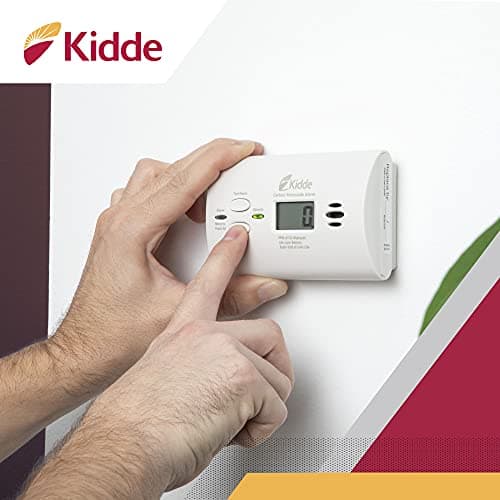
The CPSC placement rules, why a garage with the door open is still unsafe, and the battery CO alarm that should be your first purchase.
Best Quiet Inverter
Best Quiet Inverter Generators for Home Backup
Inverter generators ranked on published noise and THD figures, with the brands that publish no measurable claim named.
Top pick · Westinghouse iGen5000DFc 5,000W Dual Fuel Inverter
$999.00View on Amazon23% off