Power Stations
How to Recharge a Power Station in an Outage
A battery runs out. What you do then is the difference between one day of backup and five.
Written byMike M.
Published
Disclosure: we earn a commission on purchases made through links on this page, at no cost to you. It does not affect what we recommend or what we say about it — how we are funded.
The short answer
- A brief grid restoration is the fastest: the best units here publish 0-80% in 43-49 minutes, so two hours of power refills them completely.
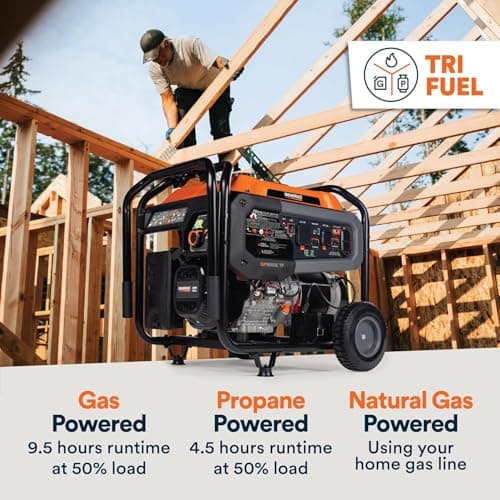
- A generator recharges a battery quickly and runs the heavy loads — the most effective combination for multi-day outages.
- Solar is slower and needs no fuel. Check the unit's input ceiling: 500 W versus 1,200 W is the difference between slow and useful.
- A car works through its 12V outlet but is slow and burns fuel idling. A last resort rather than a plan.
This is the limitation that separates a battery from a generator. A generator with fuel runs indefinitely; a battery holds a fixed quantity of energy. Planning the refill is what turns a one-day battery into a several-day one.
Option one: a brief grid restoration
Underrated, because people think of an outage as binary. In reality power often flickers back for an hour or two during restoration work, and the fast-charging units exploit that completely.
| Unit | Published AC charge speed |
|---|---|
| EcoFlow DELTA 2 Max | 0-80% in 43 minutes |
| Anker SOLIX C1000 Gen 2 | Full in 49 minutes at 1,600 W |
| EcoFlow DELTA 3 Classic | 0-80% in 45 minutes |
| Bluetti AC200PL | 0-80% in 60 minutes at 2,400 W |
| Bluetti AC180 | Full in 1 hour at 1,440 W |
| Jackery Explorer 2000 v2 | 0-80% in 66 minutes |
| EcoFlow DELTA 3 Max | 0-80% in 1.13 hours |
The practical habit: plug it in the instant power returns, not when you get round to it. And if you know a storm is coming, charge it beforehand — Bluetti's FridgePower publishes an app storm alert that does this automatically on the forecast, which is the right way to solve a problem that depends on human memory.
Option two: a generator, which is the best multi-day plan
This combination is better than either device alone and is underused. The generator runs during the day, powering the heavy loads and recharging the battery at full speed. At night the generator is off — no noise, no fuel burn, no carbon monoxide risk — and the battery runs the fridge and electronics silently indoors.
It solves the generator's worst problem (running at 3am next to a bedroom) and the battery's worst problem (running out) simultaneously. A 3,500 running-watt inverter generator plus a 2 kWh battery costs less than a large solar kit and handles motor loads no battery can.
Note that recharging a battery at 1,400-2,400 watts is a real load on a small generator — comfortable for a 3,500 running-watt machine, less so for a 1,900 watt one.
The short answer
Fast-charging units, and the generator to pair with one
| # | Product | Best for | Score | Price |
|---|---|---|---|---|
| 1 | 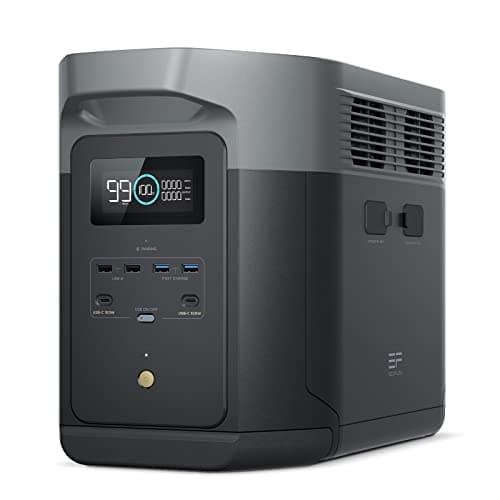 EcoFlow DELTA 2 Max The best choice if solar recharging is part of your plan: 1,000 W of solar input and a 43-minute AC recharge make it the hardest unit here to actually run flat. | Most outlets, expandable to 6 kWh | 8.8/10 | $1,029.00 |
| 2 | 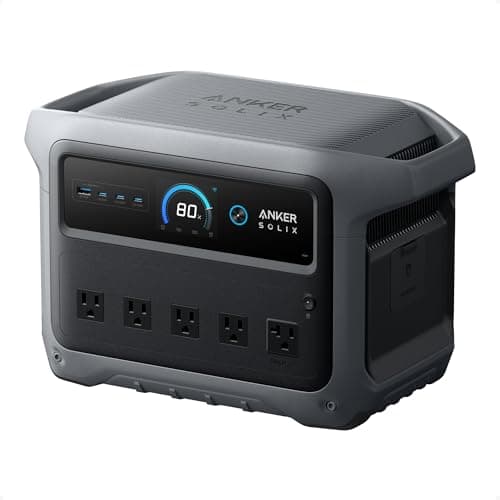 Anker SOLIX C1000 Gen 2 The right 1 kWh battery if your problem is short high-draw bursts rather than long low-draw endurance — and the fastest refill here by a wide margin. | Fastest 1 kWh recharge | 8.5/10 | $499.99 |
| 3 | 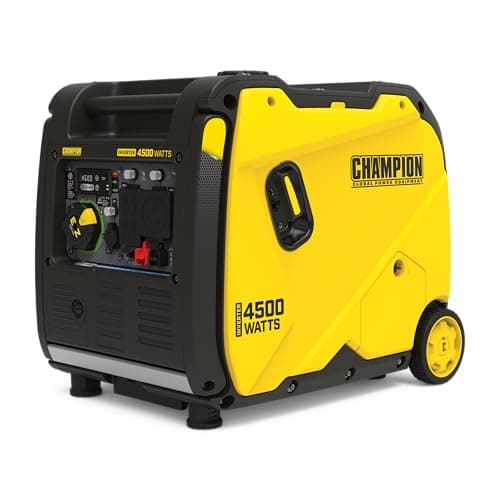 Champion 4,500W RV Ready Inverter The best balance of quiet, clean power and real output for cord-based backup: enough for the essentials, under 3% THD, half the price of the Honda equivalent. | Quiet backup at a sane price | 8.5/10 | $674.10 |
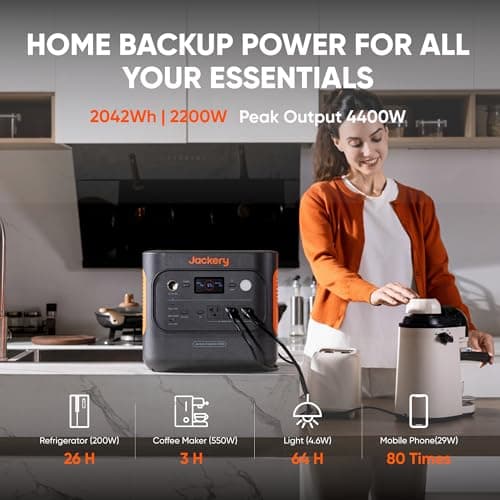
| 4 | 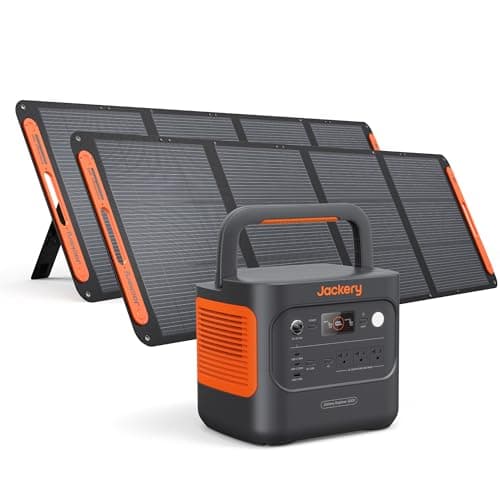 Jackery Explorer 2000 v2 + 2x200W Solar The most complete solar backup package here: enough capacity for a fridge and enough panel area to put something back each day. | The complete 2 kWh solar kit | 8.7/10 | $1,329.00 |
| 5 | 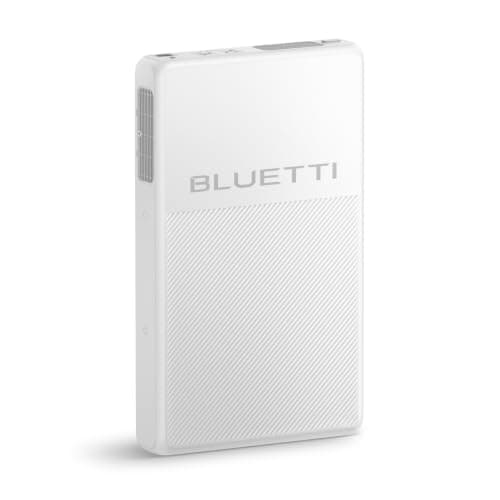 Bluetti FridgePower If the problem you are solving is specifically the refrigerator, this is the unit designed for that problem — the 4 W standby and storm auto-charge are genuine engineering answers to it. | Purpose-built refrigerator backup | 9.0/10 | $899.00 |
#ad Prices as of October 5, 2026; they may have changed since. Scores are our editorial judgment from published specifications, not test results — how we pick. How we are funded.
Option three: solar, with its real limits
The only fuel that needs no trip, which is exactly why it matters in a regional outage. The specification that decides whether it is useful is the unit's solar input ceiling, not the panels:
Published solar input ceilings
- Bluetti AC200PL
- 1,200 W
- EcoFlow DELTA 2 Max
- 1,000 W
- Bluetti AC180
- 500 W
A 500 W ceiling means the unit can never be refilled quickly from sun no matter how many panels you own. A 1,000-1,200 W ceiling means adding panels later actually helps.
Bluetti publishes 2.8-3.3 hours to charge the AC180 from solar alone at 500 W input, which is a best-case figure. Expect considerably longer in real conditions. See best solar generators.
Option four: a car, as a last resort
Every unit here has a 12V car input. It works, and it is slow — a car's accessory outlet is typically limited to around 120 watts, so refilling 2 kWh takes most of a day of idling.
It also burns fuel to run an engine at idle, which is thermodynamically poor, and running an engine for hours brings its own carbon monoxide considerations if the car is anywhere near the house or in a garage. Treat it as what to do when there is no other option, not as a plan.
A better variant: some units accept a higher-power DC input via an alternator charger. EcoFlow lists a DELTA 2 Max variant with an 800 W alternator charger, which is a genuinely useful rate rather than a trickle.
The habit that matters most
Keep it charged. A battery at 40% when the storm arrives has lost 60% of its usefulness, and the units with very low idle draw — 4 to 6 watts on the best here — are designed to be left plugged in permanently for exactly this reason. The best recharge strategy is not needing one.
Questions people actually ask
How do I recharge a power station during a power outage?
Four ways: during a brief grid restoration (fastest — the best units refill to 80% in 43-49 minutes), from a generator, from solar panels, or from a car's 12V outlet. A generator by day and the battery by night is the most effective multi-day combination.
Can I charge a power station from a generator?
Yes, and it is the best multi-day plan. The generator runs by day, powering heavy loads and recharging the battery at full speed; the battery runs the fridge silently indoors overnight. Note that charging at 1,400-2,400 watts is a real load on a small generator.
How long does it take to charge a power station from solar?
Longer than the arithmetic suggests. Bluetti publishes 2.8-3.3 hours for its AC180 at 500 W input, which is a best case. Real panel output depends on angle, cloud, season and temperature, so plan on a partial daily recharge rather than a full one.
Can I charge a power station from my car?
Yes, through the 12V outlet, but slowly — accessory outlets are typically limited to around 120 watts, so refilling 2 kWh takes most of a day of idling. It also burns fuel inefficiently. Some units accept a higher-power alternator charger, which is a better rate.
Which power station charges the fastest?
On published figures, EcoFlow's DELTA 2 Max at 0-80% in 43 minutes and Anker's SOLIX C1000 Gen 2 at a full charge in 49 minutes. At those speeds a 90-minute window of restored grid power refills the unit completely.
Should I keep my power station plugged in all the time?
If it has a low idle draw — 4 to 6 watts on the best units here — then yes, because a battery at 40% when the storm arrives has lost most of its value. Some units also publish storm alerts that fast-charge automatically on the weather forecast.
Read next
Best Solar Kit
Best Solar Generators for Home Backup
Battery-plus-panel kits ranked on solar input ceiling and capacity, with honest expectations for real-world panel output.
Top pick · Jackery Explorer 2000 v2 + 2x200W Solar
$1,329.00View on Amazon19% off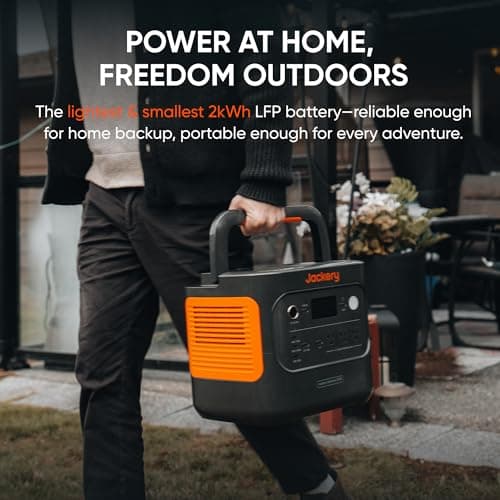
Best Overall Power Station
The Best Home Backup Power Stations
Battery power stations ranked for home backup on surge, capacity, recharge speed and cycle life.
Top pick · Jackery Explorer 2000 v2
$898.99View on Amazon10% off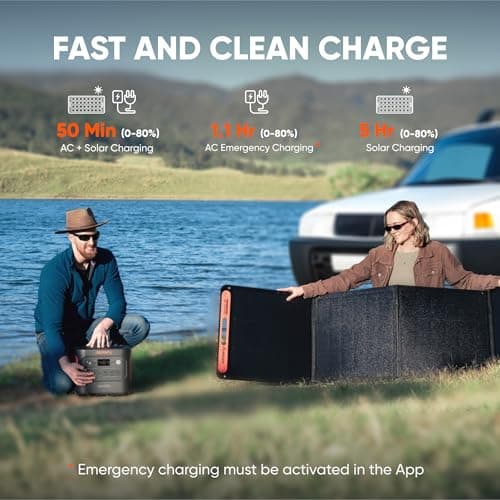
Battery vs Engine
Portable Power Station vs Generator
Battery against generator on surge capability, runtime, placement and cost, with the two facts that decide it.
Guide
Hurricane Season Power Preparation
Preparing for long outages: the fuel logistics problem, why natural gas or propane wins, and a week-before checklist.
Guide
How Long Will a Power Station Run a Fridge?
The runtime calculation shown in full, the manufacturer claims, and why a cycling fridge lasts far longer than its running watts suggest.