Power Stations
How Long Will a Power Station Run a Fridge?
Roughly 15-20 hours per kilowatt-hour. Here is the arithmetic in full, so you can run it on your own fridge.
Written byMike M.
Published
Disclosure: we earn a commission on purchases made through links on this page, at no cost to you. It does not affect what we recommend or what we say about it — how we are funded.
The short answer
Divide the battery's watt-hours by the fridge's average draw and take off 10-15% for inverter loss. Because a compressor cycles rather than running continuously, a modern fridge averages far below its running watts — using roughly 150 W as the average, a 1,024 Wh unit gives about 15-20 hours and a 2,042 Wh unit about 30-40. Anker claims up to 35 hours for its SOLIX S2000, helped by a 6 W idle draw.
This is the question that decides which power station to buy, and it is usually answered with a single confident number. The honest answer is a calculation with assumptions, so here it is with the assumptions visible.
The calculation
Runtime = (capacity x inverter efficiency) / average draw
- Capacity
- Published Wh, e.g. 2,042 Wh
- Inverter efficiency
- ~88% (our assumption)
- Fridge average draw
- ~150 W (our assumption)
- Result
- 2,042 x 0.88 / 150 = ~12 hours?
That last line is deliberately wrong, to make a point. Read on.
If you run that arithmetic you get about 12 hours, and manufacturers claim 30 or 35. Neither is lying — the gap is the cycling assumption, and it is the thing that makes this calculation subtle.
Why cycling changes everything
EWEB's chart puts a refrigerator at 700 running watts. But a fridge does not run at 700 watts continuously — the compressor runs until the box is cold, stops, and restarts when it warms. Over an hour it might run for 15 or 20 minutes.
So the figure that matters is the duty-cycled average, which is much lower than the running watts. A modern efficient refrigerator averages well under 100 watts over a day; an older or fuller one more; one whose door is opened constantly more again.
| Assumed average draw | 1,024 Wh | 2,042 Wh |
|---|---|---|
| 50 W (efficient, door shut) | ~18 hours | ~36 hours |
| 75 W (typical modern) | ~12 hours | ~24 hours |
| 100 W (older unit) | ~9 hours | ~18 hours |
| 150 W (old, or frequently opened) | ~6 hours | ~12 hours |
That table is the real answer. The range across reasonable assumptions is wide enough that your own fridge's consumption is the variable, not the battery's capacity.
How to find your actual number
- 1Read the nameplate for volts and amps — multiply for running watts. That is the figure while the compressor runs, not the average.
- 2Look for a yellow EnergyGuide label or the manufacturer's stated annual kWh. Divide annual kWh by 365, then by 24, and multiply by 1,000 for the average watts. A fridge rated 400 kWh/year averages about 46 watts.
- 3Or measure it with a plug-in energy monitor over a day. This is the only way to get a real figure for your appliance in your kitchen.
That second method is the useful one, and it is free: the EnergyGuide figure is a measured annual consumption, so dividing it down gives you a genuine average rather than our assumption. Most people discover their fridge averages far less than they expected.
What the manufacturers claim, and how to read it
Anker's SOLIX S2000 is the only unit here with a specific fridge claim: up to 35 hours, from 2,010 Wh, attributed to a 6 W idle power draw and 10% higher efficiency. Working backwards, that implies an assumed average draw of around 50 watts — the efficient end of the range above.
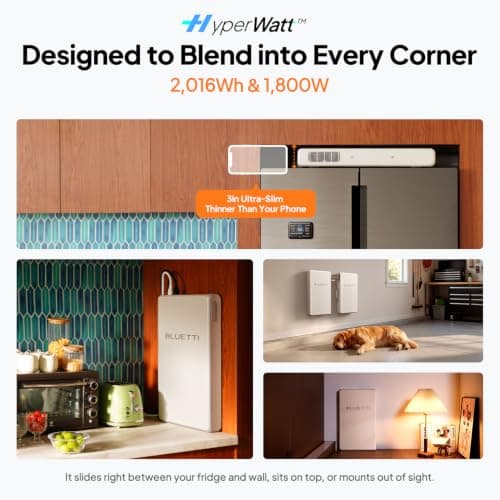
Bluetti's FridgePower claims 26% longer runtime than comparable units from its 4 W standby draw. That is a relative claim rather than an absolute one, and it is the right kind of claim to make.
Both are plausible and both depend on the fridge. Treat a manufacturer's hour figure as the best case with an efficient appliance and a closed door.
Two things that extend runtime more than capacity does
Keeping the door shut. Every opening exchanges cold air for warm and makes the compressor run. FoodSafety.gov's guidance is that an unopened fridge holds safe temperatures for about 4 hours with no power at all — which tells you how much of the load is caused by opening it.
A low idle draw on the battery. A unit wasting 25 watts on standby burns 600 Wh a day doing nothing. Over a long outage that is a third of a 2 kWh battery spent on nothing. The 4-6 watt units are meaningfully better here.
The short answer
The units with the best runtime story
| # | Product | Best for | Score | Price |
|---|---|---|---|---|
| 1 | 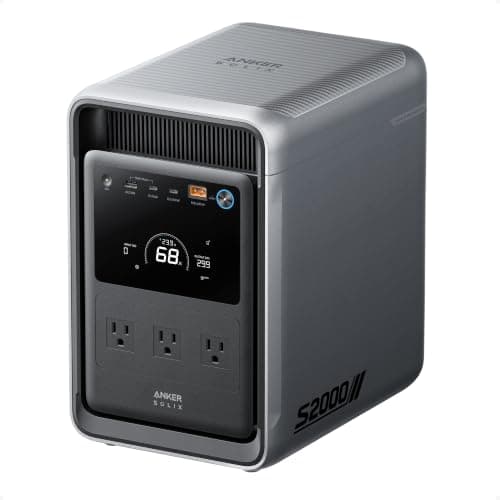 Anker SOLIX S2000 The endurance choice: the lowest idle draw and the longest cycle life here, with an output ceiling deliberately traded away to get them. | Longest fridge runtime per watt-hour | 8.7/10 | $679.99 |
| 2 | 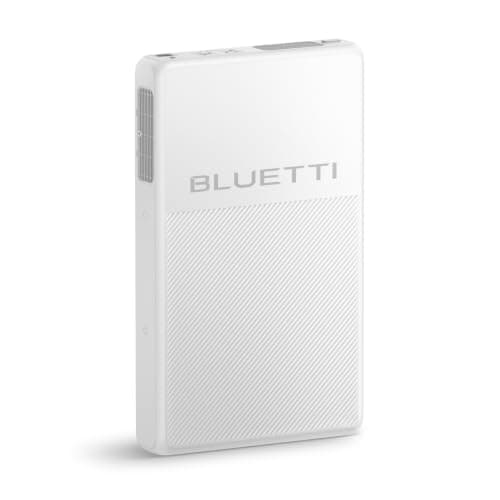 Bluetti FridgePower If the problem you are solving is specifically the refrigerator, this is the unit designed for that problem — the 4 W standby and storm auto-charge are genuine engineering answers to it. | Purpose-built refrigerator backup | 9.0/10 | $899.00 |
| 3 | 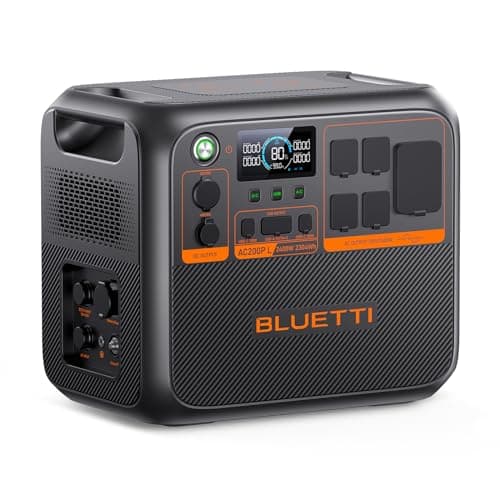 Bluetti AC200PL The most watt-hours for the money, with the honest trade-off being 72 lb and a less polished app than its rivals. | Largest capacity under $1,000 | 8.5/10 | $949.98 |
| 4 | 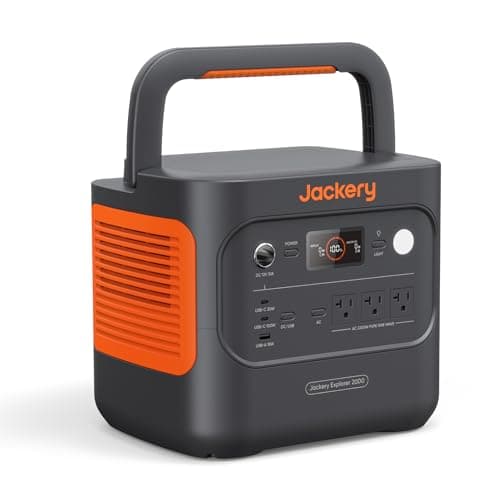 Jackery Explorer 2000 v2 The most sensible battery backup for most homes: enough capacity to carry a fridge and electronics through a typical outage, indoors, silently. | The default 2 kWh home backup battery | 8.9/10 | $898.99 |
| 5 | 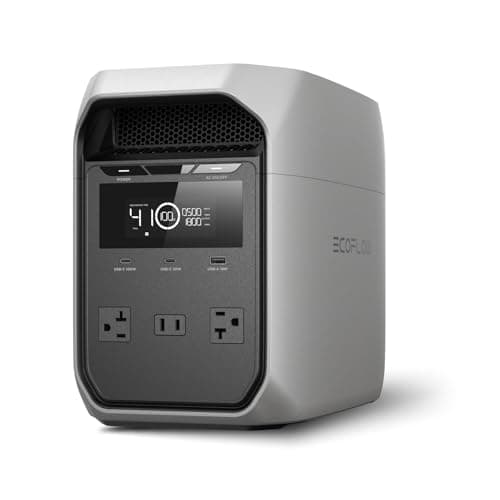 EcoFlow DELTA 3 Classic The best-value battery on the site: UPS-grade switchover, 1,800 W and a 45-minute recharge for roughly half what the 2 kWh units cost. | Best value 1 kWh with UPS | 8.6/10 | $499.00 |
#ad Prices as of October 5, 2026; they may have changed since. Scores are our editorial judgment from published specifications, not test results — how we pick. How we are funded.
Questions people actually ask
How long will a 2000Wh power station run a refrigerator?
Between about 12 and 36 hours depending on the fridge, on our arithmetic at 88% inverter efficiency. An efficient modern unit averaging 50 watts gets to the top of that range; an older one averaging 150 watts to the bottom. Anker claims up to 35 hours for its 2,010 Wh SOLIX S2000.
How do I calculate how long a power station will run my fridge?
Multiply the capacity in watt-hours by about 0.88 for inverter loss, then divide by your fridge's average draw. Find the average from the yellow EnergyGuide label: annual kWh divided by 8,760 and multiplied by 1,000 gives average watts.
Why do manufacturers claim longer runtimes than the arithmetic suggests?
Because they assume an efficient fridge with the door shut, which gives a low duty-cycled average draw. Anker's 35-hour claim implies an assumed average of around 50 watts. These are best-case figures rather than dishonest ones.
Does a fridge use its full running watts continuously?
No, and this is the key point. EWEB lists a fridge at 700 running watts, but the compressor cycles — running perhaps 15-20 minutes an hour — so the average is much lower. That is why batteries do far better on this load than the running figure suggests.
What is the best way to make the battery last longer?
Keep the fridge door shut, which reduces the compressor's duty cycle more than anything else you can do, and choose a battery with a low idle draw. A unit wasting 25 watts on standby burns 600 Wh a day doing nothing at all.
Will a power station run a fridge and a freezer?
Yes, at roughly half the runtime of a fridge alone. Only one 2,200 watt start-up surge needs covering rather than two, since the compressors will not start in the same instant, so the surge requirement does not double.
Sources
- Eugene Water & Electric Board — Generator Sizing ConsiderationsPublished appliance running and additional-starting watt figures used in the capacity arithmetic on this page.
- FoodSafety.gov — food safety during a power outageThe 4-hour refrigerator and 48-hour full-freezer guidance referenced when deciding how much capacity is needed.
Read next
Best for a Refrigerator
Best Power Station for a Refrigerator
Power stations that reliably start a fridge compressor, ranked on surge, idle draw and UPS switchover.
Top pick · Bluetti FridgePower
$899.00View on Amazon40% off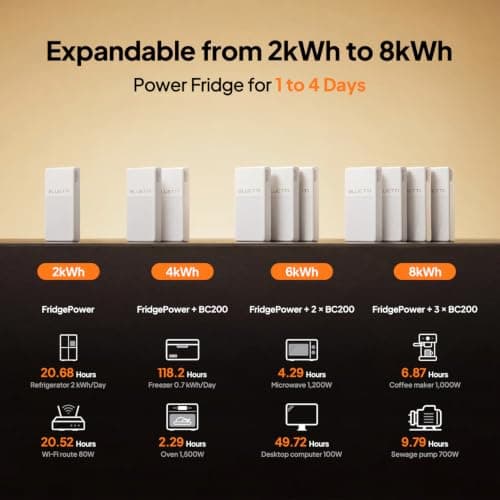
Guide
Keep Your Refrigerator Running Through an Outage
The free measures first, then battery and generator options for a refrigerator, with published wattage and food-safety figures.

Best Overall Power Station
The Best Home Backup Power Stations
Battery power stations ranked for home backup on surge, capacity, recharge speed and cycle life.
Top pick · Jackery Explorer 2000 v2
$898.99View on Amazon10% off
Reference
How Long Does Food Last in a Power Outage?
The published fridge and freezer timings, the 40 F safe threshold, and what to discard or refreeze after power returns.
Guide
How to Recharge a Power Station in an Outage
The four recharge routes during an outage, with published charge speeds and the realistic limits of each.