Model Reviews
Generac GP Series Review
The widest service network and one of the better CO shutdowns. Gasoline only, at a price where dual fuel is available.
Written byMike M.
Published
Disclosure: we earn a commission on purchases made through links on this page, at no cost to you. It does not affect what we recommend or what we say about it — how we are funded.
The short answer
Generac's GP portables publish COsense carbon monoxide detection with automatic shutdown, PowerRush surge technology that the manufacturer states provides 40% more starting capacity, electric start with an included battery, and runtimes up to 12 hours. The 8,125 W model publishes 6,500 running watts; the GP8000E publishes 10,000 starting watts. Nearly all are gasoline only, which at this price is their main weakness — and Generac's tri-fuel is the exception worth buying instead.
The two machines, published side by side
| Generac 8,125 W | GP8000E | |
|---|---|---|
| Starting watts | 8,125 W | 10,000 W |
| Running watts | 6,500 W | Not published |
| Runtime | Up to 10.5 h | Up to 12 h |
| CO protection | COsense | COsense |
| Outlets | GFCI + 120/240V 30A | 2x 120V 20A duplex + 120V/240V 30A |
| Weight | 182 lb | 198 lb |
| Fuel | Gasoline only | Gasoline only |
PowerRush: a real feature, correctly understood
Generac states PowerRush Advanced Technology provides 40% more starting capacity, which is how a 6,500 running-watt machine reaches 8,125 starting watts.
That is genuinely useful, because the surge is what stalls generators. Using EWEB's published figures, a refrigerator needs 2,200 additional watts to start and a 1/3 HP well pump 2,000 — and a machine with 1,625 watts of headroom above its running rating handles those comfortably when lightly loaded.
What it does not do is increase running capacity. 6,500 running watts is 6,500 running watts; PowerRush helps you start a well pump, not run one alongside everything else. See starting watts vs running watts.
COsense and the service network
Generac states COsense continuously monitors and detects hazardous carbon monoxide levels and shuts the generator down, and it is among the better-regarded implementations in the category. Both GP machines publish it, as does Generac's tri-fuel.
The service network is Generac's real structural advantage and it is hard to overstate on a product like this. The widest dealer and parts coverage in the category is worth a great deal five years in, when a part is needed and the question is whether anyone stocks it. That is an argument no specification sheet captures.
The weakness: gasoline only
Both GP machines here are gasoline only, at a price where dual fuel machines are available. That matters because propane stores indefinitely while gasoline degrades within months, and a gummed carburetor is the most common reason a stored generator will not start.
For a machine that runs perhaps ten hours a year, that is the dominant real-world failure mode, and Generac's answer to it on the GP line is nothing but discipline — buy stabilizer and rotate the fuel.
The second weakness is documentation: the GP8000E publishes 10,000 starting watts and no running figure, which is the omission that most hampers sizing. The 8,125 W model does better, publishing 6,500 running watts explicitly.
The Generac to actually buy
Its 12,500 W tri-fuel, which fixes both weaknesses. It publishes 9,500 running and 12,500 starting watts on gasoline, runs on gasoline, liquid propane or natural gas via a dial, has automatic voltage regulation, COsense, electric start, a 7.5 gallon tank with 9.5 hours at 50% load or 14 hours at 25%, and both an L14-30R and a 120/240V 50A outlet.
And its listing states that connecting to a natural gas line gives virtually unlimited runtime, which for anyone expecting multi-day outages is the single most consequential feature available. It is usually cheaper than the Westinghouse WGen9500DF at the same 9,500 running watts.
That machine is our pick in the tri-fuel roundup and it is the reason to shop Generac.
Who the 8,125 W model suits
Someone who wants the Generac service network, a CO shutdown and electric start at the correct size for their load, and is willing to manage gasoline.
6,500 running watts is a genuinely well-chosen figure: using EWEB's published appliance wattages, a fridge, furnace blower, well pump, sump pump and lighting totals about 3,500 running watts, so this covers it with real headroom — and it pairs perfectly with a cheaper 30 amp transfer switch, which passes about 7,200 watts.
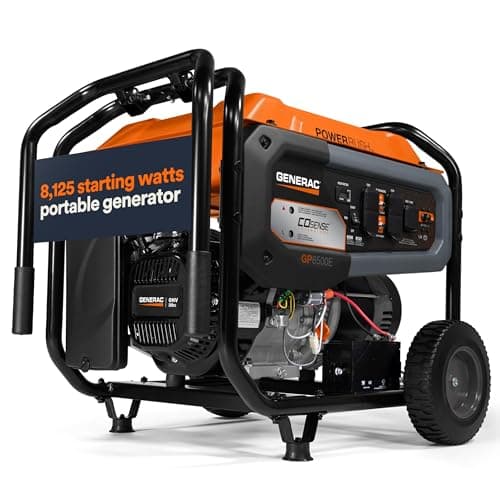
- Running watts
- 6,500 W
- Starting watts
- 8,125 W
- Runtime
- Up to 10.5 h (mfr)
#1 · Essential circuits on a budget
Generac 8,125W Starting Portable
The right size for most people who think they need 10,000 watts: enough running capacity for every essential circuit, with surge headroom for motor startup.
#ad Price as of October 5, 2026; it may have changed since. How we are funded.
What is good
- 6,500 running watts is genuinely enough for a fridge, furnace blower, sump pump, lights and electronics — the realistic essential-circuit set
- PowerRush gives it surge headroom that punches above its running rating, which is exactly what a well pump needs
- Cheapest Generac with COsense and electric start
What is not
- Gasoline only
- 6,500 running watts will not run central air; plan around that or plan for a bigger machine
- No 50A outlet
Published specification & our scoring
- 6,500 running / 8,125 starting watts with PowerRush (manufacturer)
- PowerRush Advanced Technology provides 40% more starting capacity (manufacturer)
- Electric start with included battery
- Up to 10.5 hours continuous runtime (manufacturer)
- COsense CO detection with automatic shutdown
- Digital hour meter and automatic low-oil shutdown
- Published weight 182 lb
- Output headroom
- 7
- Fuel flexibility
- 4
- Transfer-switch fit
- 7
- Runtime
- 8
- Safety features
- 9
- Value
- 9
Specification figures are the manufacturer’s published values. Scores are our editorial judgment from those figures and are never published as structured review data — how we pick.
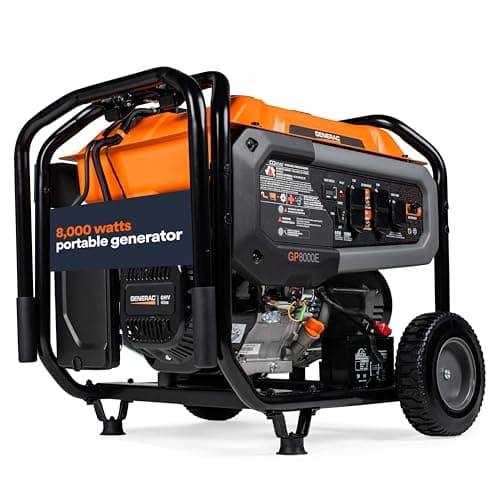
- Starting watts
- 10,000 W
- Runtime
- Up to 12 h (mfr)
- CO protection
- COsense
#2 · Gasoline-only, brand-name simplicity
Generac GP8000E 10,000W Starting
A solid gasoline-only generator from the brand with the best support network, held back by having no propane option at a dual-fuel price.
#ad Price as of October 5, 2026; it may have changed since. How we are funded.
What is good
- Generac's dealer and parts network is the widest in the category — a real advantage five years in
- COsense is one of the better-regarded CO shutdown implementations
- Lighter than the 13kW dual fuel machines at 198 lb
What is not
- Gasoline only — no propane option, which removes the most useful fuel contingency in a long outage
- One 120/240V 30A outlet and no 50A, so it is a 30A transfer-switch machine only
- Costs about the same as dual fuel units with more outlets
Published specification & our scoring
- 10,000 starting watts (manufacturer)
- GFCI outlets: two 120V 20A duplex plus one 120V/240V 30A
- Electric start with included battery
- Up to 12 hours runtime on the steel tank with fuel gauge (manufacturer)
- COsense carbon monoxide detection and shutdown
- Low-oil shutdown, digital hour meter, steel-tube cradle
- Published weight 198 lb
- Output headroom
- 8
- Fuel flexibility
- 4
- Transfer-switch fit
- 7
- Runtime
- 8
- Safety features
- 9
- Value
- 6
Specification figures are the manufacturer’s published values. Scores are our editorial judgment from those figures and are never published as structured review data — how we pick.
The Generac to buy, the dual fuel alternative, and the CO alarm
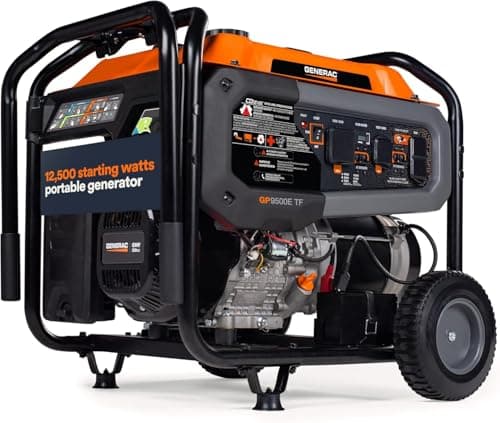
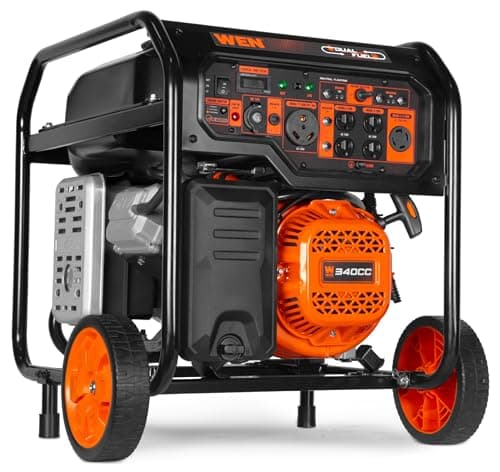
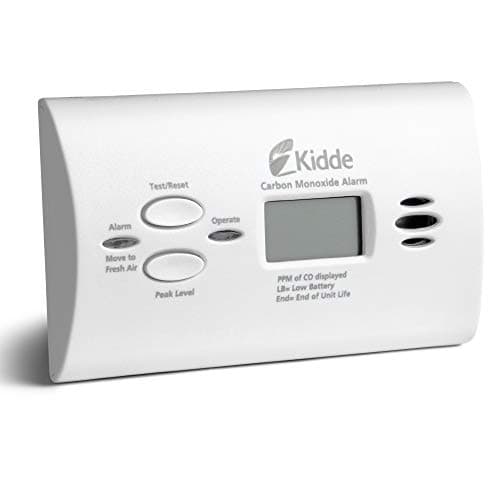
Generac's tri-fuel fixes the gasoline-only weakness and publishes its running watts. WEN's DF8000X is the same 6,500 running watts with dual fuel. The CO alarm is non-optional with any generator.
Questions people actually ask
Are Generac GP generators good for home backup?
They publish COsense carbon monoxide shutdown, PowerRush surge capability and electric start, and Generac has the widest service network in the category. The weakness is that the GP portables are gasoline only at a price where dual fuel is available.
What is Generac PowerRush?
Generac states it provides 40% more starting capacity, which is how a 6,500 running-watt machine reaches 8,125 starting watts. It helps start motor loads like a well pump or a refrigerator compressor. It does not increase running capacity.
How many running watts is the Generac 8125?
6,500 running watts and 8,125 starting watts, per Generac. That is a well-chosen size: a house with a fridge, furnace blower, well pump, sump pump and lighting totals about 3,500 running watts on published figures, and 6,500 pairs well with a cheaper 30 amp transfer switch.
Does the Generac GP8000E publish its running watts?
No, only 10,000 starting watts, which is the omission that most hampers sizing. The 8,125 W model publishes 6,500 running watts explicitly, which makes it the easier machine to size from despite the lower headline figure.
Which Generac portable should I buy?
The 12,500 W tri-fuel. It publishes 9,500 running watts on gasoline, runs on gasoline, propane or natural gas via a dial, includes COsense and both 240 volt outlets, and its listing states a natural gas line gives virtually unlimited runtime. It is usually cheaper than equivalent rivals.
Is COsense enough carbon monoxide protection?
No, on its own. COsense monitors the generator's own operating area, not your house. You still need the machine outdoors at least 20 feet away with the exhaust pointed away, plus battery-powered CO alarms indoors on every sleeping level.
Sources
- Eugene Water & Electric Board — Generator Sizing ConsiderationsPublished appliance running and additional-starting watt figures used to judge what this machine's output actually covers.
- US Consumer Product Safety Commission — Portable Generator Information CenterThe placement and carbon monoxide guidance referenced in the safety notes on this page.
Read next
Best Tri-Fuel
Best Tri-Fuel Generators
Tri-fuel generators with all three fuels' published running watts, and the natural gas derating stated plainly.
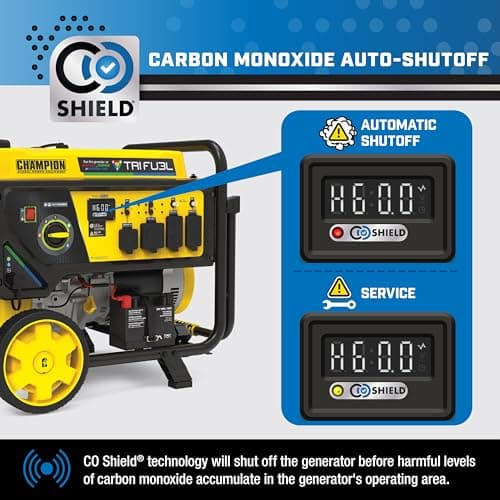
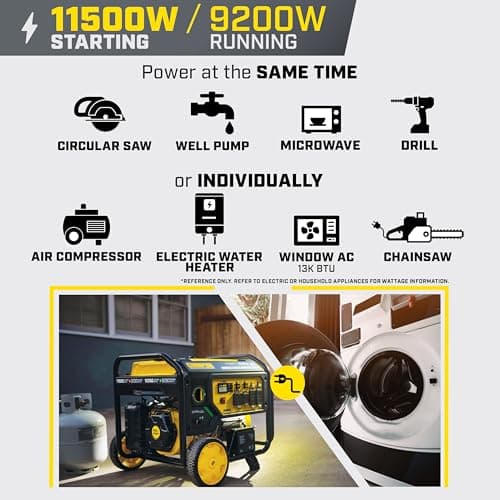
Top pick · Champion 12,500W Tri-Fuel Home Backup
$1,259.99View on Amazon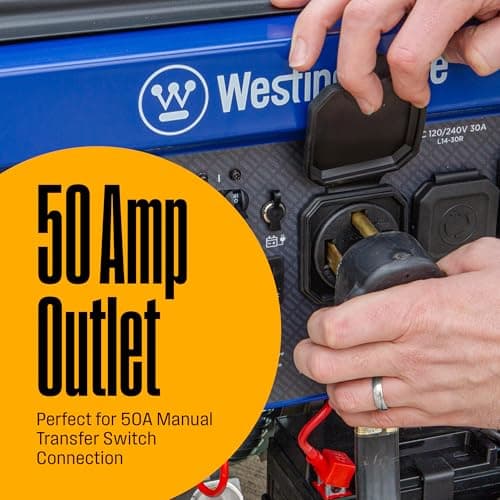
Best Overall Home Backup
The Best Home Backup Generators
Nine conventional-frame generators ranked for whole-house backup, with per-fuel running watts and transfer-switch fit.
Top pick · Westinghouse WGen9500DF 12,500W Dual Fuel
$999.00View on Amazon
Guide
Best Generator Brands
Brand-by-brand assessment based on what each publishes and omits, plus service network and positioning.
Guide
Starting Watts vs Running Watts
What the surge figure means, why motors need it, and how to read the peak-watt number on a generator box.
Guide
Generator Carbon Monoxide Safety
The CPSC placement rules, why a garage with the door open is still unsafe, and the battery CO alarm that should be your first purchase.