Generator Sizing
Starting Watts vs Running Watts
One of these numbers is on the box in large type. The other is the one you size from.
Written byMike M.
Published
Disclosure: we earn a commission on purchases made through links on this page, at no cost to you. It does not affect what we recommend or what we say about it — how we are funded.
The short answer
Running watts is the steady power a device needs once it is operating. Starting watts is the much larger burst a motor or compressor needs in the moment it starts turning, typically two to three times its running figure. A generator must cover the total running load continuously and the single largest start-up surge momentarily. Devices with no motor — heaters, lights, kettles — have no surge at all.
Why motors need a surge and heaters do not
An electric motor at a standstill is, electrically speaking, close to a short circuit. There is no back-EMF opposing the current until the rotor is actually moving, so for a fraction of a second the motor draws everything the supply will give it. Once it is turning, the draw collapses to the running figure.
A heating element has none of that. It is a resistor: it draws the same current the instant you switch it on as it does an hour later. Which is why EWEB's chart lists a space heater at 1,500 running watts and zero additional starting watts, and a refrigerator at 700 running and 2,200 additional.
The surge ratio, from published figures
- Refrigerator
- 700 W running, +2,200 W start
- Electric dryer
- 1,000 W running, +3,000 W start
- Well pump, 1/3 HP
- 1,000 W running, +2,000 W start
- Window AC, 12,000 BTU
- 3,250 W running, +3,950 W start
- Space heater
- 1,500 W running, +0 W start
- LED bulb
- 15 W running, +0 W start
EWEB and Champion figures. The pattern is consistent: anything with a motor or compressor surges by roughly two to three times its running draw; anything purely resistive does not surge at all.
What this means for the generator's two ratings
Generators publish both numbers too, and this is where the marketing happens. A machine sold as "13,000 watts" has 13,000 peak or starting watts — a figure it can hold for a second or two. Its running figure might be 10,500.
| Machine | Advertised | Running watts (gasoline) |
|---|---|---|
| Westinghouse WGen9500DF | 12,500 W | 9,500 W |
| Westinghouse WGen10500DFc | 13,500 W | 10,500 W |
| Champion 11,500 W dual fuel | 11,500 W | 9,200 W |
| WEN DF1100T | 11,000 W | 8,300 W |
| Generac 8,125 W | 8,125 W | 6,500 W |
So the rule: size the continuous load against the generator's running rating, and check your single largest surge against its peak rating. A machine with 6,500 running watts and 8,125 peak watts handles 6,500 watts of continuous load and a 1,625 watt surge on top — which is enough for a fridge only if the fridge is not the last thing you switch on.
The sequencing trick almost nobody mentions
Surge headroom depends on what is already running. If the generator is at 6,000 of its 6,500 running watts and you start a fridge, it needs 2,200 watts it does not have, and it will bog down or trip.
Start the biggest motors first, while the generator is lightly loaded, then add the steady loads. This is free, it costs nothing, and it is the single most useful operational habit in generator ownership. It is also why an interlock kit demands more of you than a transfer switch: with an interlock you control which breakers go on, and in what order.
What about soft starters
If the surge is your constraint rather than the running load — and for houses with a well pump or air conditioning it usually is — you can attack the surge directly. Soft starters ramp a motor up instead of slamming it on.
The published claims are substantial: one well-pump soft starter states it reduces inrush current by up to 50% and will start pumps on generators as small as 3,000 watts, while an AC soft starter claims up to 70% startup reduction. If either figure holds for your equipment, it can move you down a whole generator class for a fraction of the price difference.
Attacking the surge instead of buying more generator
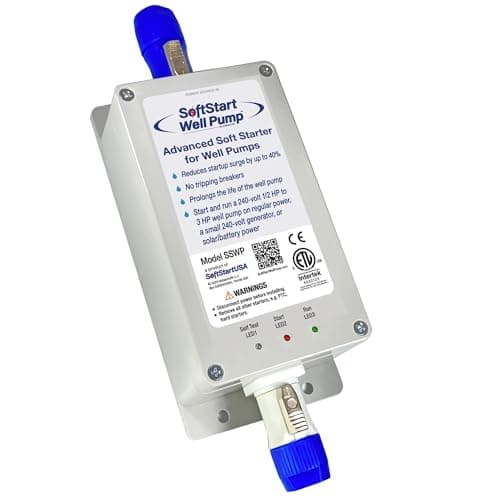
Running a well pump on a smaller generator
SoftStartUSA SoftStart Well Pump Soft Starter
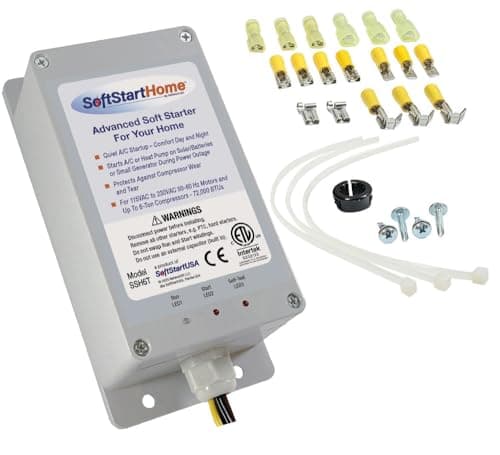
Running central AC on a generator
SoftStartRV SoftStart Home AC Soft Starter
Both are installed at the equipment and are electrical work. Check the compatibility range against your pump or compressor before buying — outside it, neither does anything.
Next: the appliance wattage chart for both figures on every common load, or the calculator to apply them.
Questions people actually ask
What are starting watts on a generator?
The maximum output a generator can deliver for a second or two to get a motor turning. It is also called peak or surge watts, and it is typically 20-25% above the machine's continuous running rating. You size your steady load against the running figure and check your largest single surge against the peak figure.
Why does my fridge need 2,200 starting watts?
A compressor motor at a standstill has no back-EMF opposing the current, so for a fraction of a second it draws far more than its running load. Both charts we cite put the refrigerator surge at 2,200 watts, against a running draw of 400-700. Once the compressor is turning the draw collapses.
Do LED lights and heaters have starting watts?
No. Anything purely resistive — heaters, incandescent bulbs, toasters, kettles — draws the same current the instant you switch it on as it does an hour later. Both published charts list zero additional starting watts for all of them.
Should I buy a generator based on starting watts or running watts?
Running watts, then check the peak. A machine advertised at 13,000 watts may have 10,500 running watts, and the running figure is what has to carry your load for three days. The peak figure only needs to cover your single biggest start-up surge.
Does the order I switch things on matter?
Yes, considerably. Surge headroom is whatever the generator is not already using, so starting a 2,200 watt surge load when the machine is at 90% of its running rating will bog it down. Start the big motors first while the generator is lightly loaded, then add steady loads.
Can a soft starter reduce my generator size?
Often, if the surge rather than the running load is your constraint. Manufacturers of well-pump and AC soft starters publish inrush reductions of 50% and up to 70% respectively. Verify compatibility with your specific pump or compressor, and note the running load does not change.
Sources
- Eugene Water & Electric Board — Generator Sizing ConsiderationsPublic-utility wattage chart: the running and additional-starting figures quoted on this page, and the add-the-single-largest-surge method.
- Champion Power Equipment — Quick Reference WattageManufacturer wattage chart: the second published figure wherever it differs from EWEB's, and the kitchen and laundry loads EWEB does not list.
- SoftStartUSA — well pump soft starter listingManufacturer claim of up to 50% inrush reduction and starting pumps on generators as small as 3,000 W, quoted as a claim.
Read next
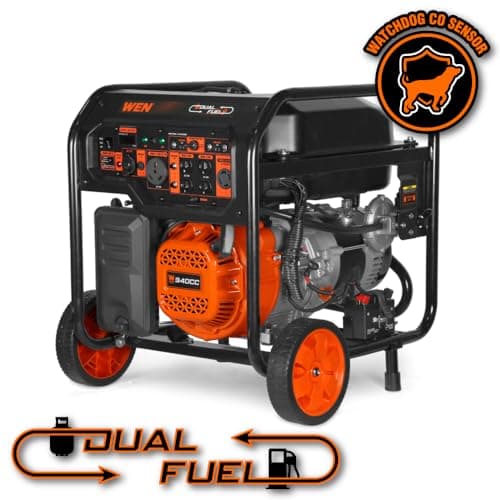
Reference
Appliance Wattage Chart
The site's reference wattage table, with each row's source named and both figures shown wherever the published charts disagree.
Guide
What Size Generator Do I Need?
The core sizing method: total running watts, add the single biggest surge, derate for continuous running, then match a wattage class.
Guide
What Size Generator for a Well Pump?
Well pump sizing from the published 1/3 HP figures, what changes on larger pumps, and the soft-starter route.

Guide
What Size Generator to Run an Air Conditioner?
Window AC sizing from two published charts that disagree sharply, central AC guidance from the nameplate, and the soft-starter alternative.
Best Dual Fuel
Best Dual Fuel Generators for Home Backup
Dual fuel generators ranked on both fuels' published running watts, with the brands that decline to publish propane figures named.
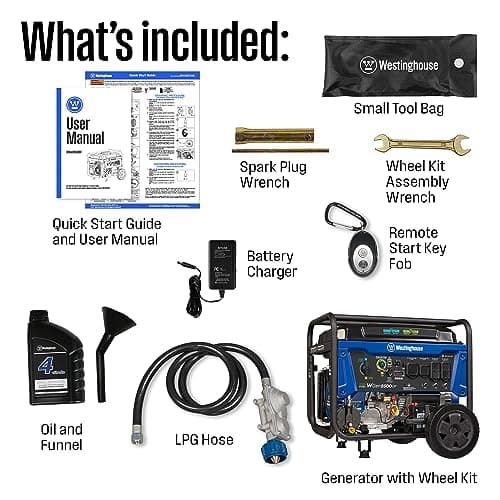
Top pick · Westinghouse WGen9500DF 12,500W Dual Fuel
$999.00View on Amazon