Generator Sizing
What Size Generator to Run an Air Conditioner?
Air conditioning is the load that pushes people from a 5,000-watt generator to a 12,000-watt one. Sometimes a $350 part is the better answer.
Written byMike M.
Published
Disclosure: we earn a commission on purchases made through links on this page, at no cost to you. It does not affect what we recommend or what we say about it — how we are funded.
The short answer
| Unit | Running watts | Additional starting watts | Source |
|---|---|---|---|
| Window AC, 12,000 BTU | 3,250 | 3,950 | EWEB |
| Air conditioner, window unit | 1,200 | 2,000 | Champion |
| Central air conditioning | Not published | Not published | — |
The window-unit disagreement is a size difference. Central AC is absent from both charts we cite, and we will not invent a figure for the load that most often decides a generator purchase.
Air conditioning is where generator sizing gets expensive, and it is where you should be most suspicious of confident round numbers. A compressor has a large surge and a large sustained load, which is the worst combination there is for a generator.
Window units: pick the right figure
Our two published sources are three times apart on this, and both are right about different appliances. Champion's 1,200 running watts describes a small bedroom unit; EWEB's 3,250 describes a 12,000 BTU one. A 5,000 BTU window unit and a 12,000 BTU one are genuinely not the same load.
So read the nameplate. It is on the back or the side of the unit and gives volts and amps — multiply for running watts. Then size against that, not against a chart.
One 12,000 BTU window unit added to an essential-circuit plan
- Essential set (fridge, heat, water, lights)
- 3,500 W
- Window AC, 12,000 BTU
- 3,250 W
- Total running
- 6,750 W
- Largest surge (the AC, 3,950 W)
- +3,950 W
- Starting watts needed
- 10,700 W
- Derated running minimum
- 8,500 W
Notice the AC takes over as the largest surge, displacing the refrigerator. One window unit roughly doubles the generator you need.
8,500 running watts with 10,700 starting watts is an 8,000-10,000 running-watt portable generator and — importantly — a 50 amp connection, because a 30 amp transfer switch caps at about 7,200 watts and would throttle it.
Central air: what we will and will not tell you
We will not give you a wattage for central air conditioning, because neither chart we cite publishes one and this is the single most consequential load in the whole sizing exercise. A number we made up here would be worse than no number at all.
What we will tell you is exactly how to find yours, and it takes two minutes:
- 1Go to the outdoor condenser unit. There is a data plate on the side.
- 2Find RLA or Rated Load Amps (sometimes just "running amps") and the voltage, usually 208/230 V. Multiply them: that is your running watts.
- 3Find LRA — Locked Rotor Amps. Multiply by the voltage. That is roughly the compressor's start-up surge, and it will be a large number.
- 4Add the air handler or furnace blower separately — that is a second motor, typically 700 watts or so on the published chart.
That LRA figure is usually the moment people realize central air is a serious problem. It is also why the next section exists.
The soft-starter shortcut
If LRA is what is pushing you into a much larger generator, you can attack it directly rather than paying for engine capacity you will use for half a second at a time.
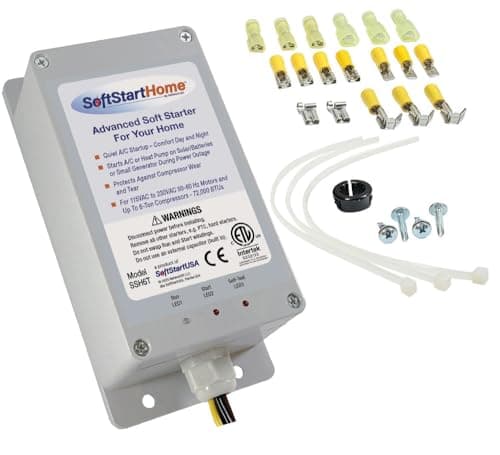
A soft starter ramps the compressor up instead of locking the rotor and slamming it on. SoftStart's home unit publishes a claimed 70% reduction in startup power, and states it is designed for generators, off-grid and solar systems. It also claims a secondary benefit that you keep whether or not the power is out: lower startup stress and less heat buildup in the compressor windings, which extends compressor life.
Price it against the difference between the generator you would need with and without it. If a soft starter and a 9,500-watt machine cost less than a 13,000-watt machine, and the surge was the only reason you were looking at 13,000, the arithmetic is straightforward.
Reduce the surge, or buy for it
Running central AC on a generator
SoftStartRV SoftStart Home AC Soft Starter
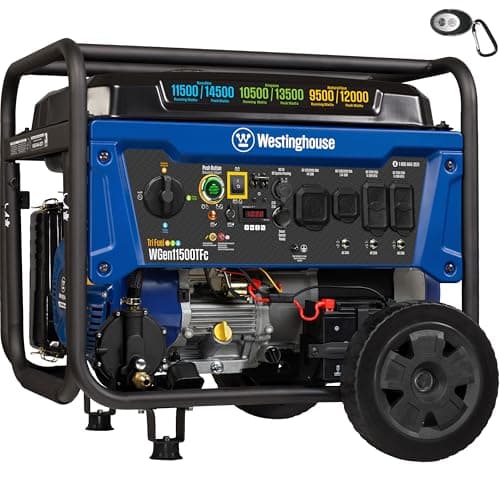
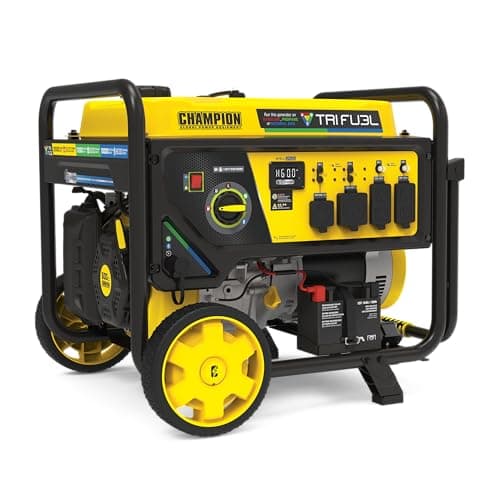
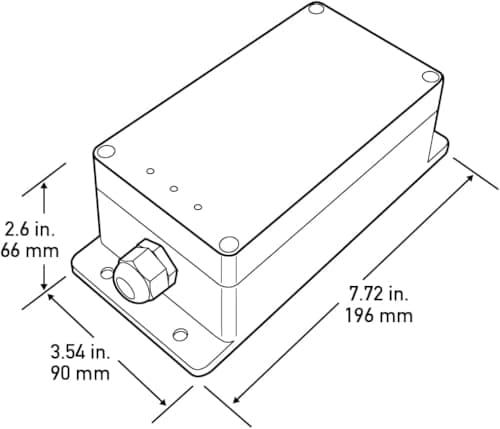
The soft starter is installed at the condenser — HVAC and electrical work, not a plug-in device. Confirm compatibility with your specific system first.
What most people actually do
They leave central air off the backup list. An outage in summer is uncomfortable; an outage in winter without heat, or without a sump pump, is damaging. If the budget is finite — and it is — spending it on the loads that prevent damage rather than the load that provides comfort is the rational allocation.
A middle path that works well: back up the essential circuits with a correctly sized generator, and run one window unit in the bedroom from it. One 5,000-8,000 BTU window unit is a far smaller load than a central system, and sleeping comfortably is most of the benefit.
Related: running AC on a generator for the operational side, and the load calculator with a custom-watts row for your nameplate figures.
Questions people actually ask
What size generator do I need to run a window air conditioner?
It depends heavily on the unit's size. Champion's chart puts a window unit at 1,200 running watts with a 2,000 watt surge; EWEB puts a 12,000 BTU unit at 3,250 running with a 3,950 watt surge. Read the nameplate on yours — a 5,000 BTU unit and a 12,000 BTU unit are very different loads.
How many watts does central air conditioning use?
Neither published chart we cite gives a figure, and we will not invent one for the load that most often decides a generator purchase. Read the data plate on your outdoor condenser: RLA multiplied by voltage gives running watts, and LRA multiplied by voltage gives roughly the start-up surge.
Will a 10,000 watt generator run central air?
Possibly, depending entirely on your system's RLA and LRA and on what else is running. Many 3-ton systems plus an essential-circuit set land near or above that figure. Read the plate, and investigate a soft starter before assuming you need to go larger.
Does a soft starter let me use a smaller generator for AC?
Often, if the surge was your constraint. SoftStart publishes a claimed 70% reduction in startup power for its home unit. It does not reduce the running load at all, so a 3-ton system still needs its full running wattage continuously from the generator.
Can a power station run an air conditioner?
A small window unit, briefly. A 2 kWh battery at a 1,200 watt running draw lasts under two hours, and the compressor surge is at the edge of what most units supply. Central air is out of the question for a portable battery.
Is it worth backing up air conditioning at all?
For most households, no — not compared with heat, water and a sump pump, where failure causes damage rather than discomfort. A common and sensible compromise is to size for the essentials and run a single bedroom window unit from the generator, which is a fraction of the load of a central system.
Sources
- Eugene Water & Electric Board — Generator Sizing ConsiderationsPublic-utility wattage chart: the running and additional-starting figures quoted on this page, and the add-the-single-largest-surge method.
- Champion Power Equipment — Quick Reference WattageManufacturer wattage chart: the second published figure wherever it differs from EWEB's, and the kitchen and laundry loads EWEB does not list.
- SoftStartRV — SoftStart Home soft starter listingManufacturer claim of up to 70% startup power reduction and the compressor-life benefit, quoted as claims.
Read next
Guide
Running Air Conditioning on a Generator
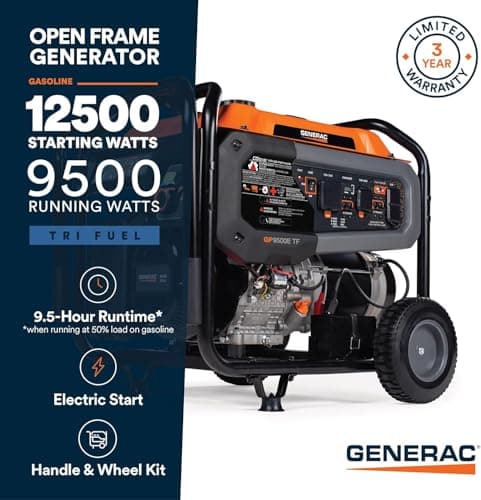
The practical side of running AC on generator power: sequencing, soft starters, and backing up one room instead of the house.
Guide
What Size Generator for a House?
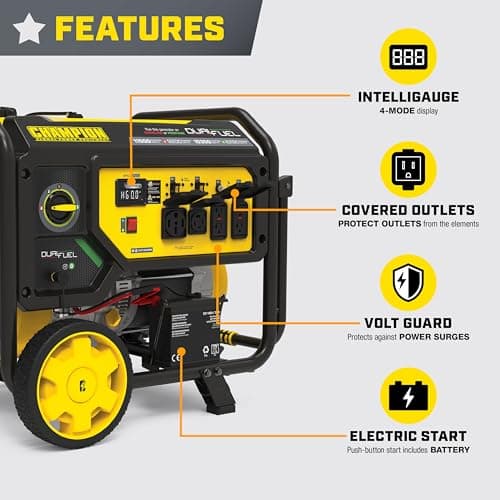
Load tables for four realistic house types — gas heat, well pump, central air and electric heat — with the generator class each needs.
Guide
Starting Watts vs Running Watts
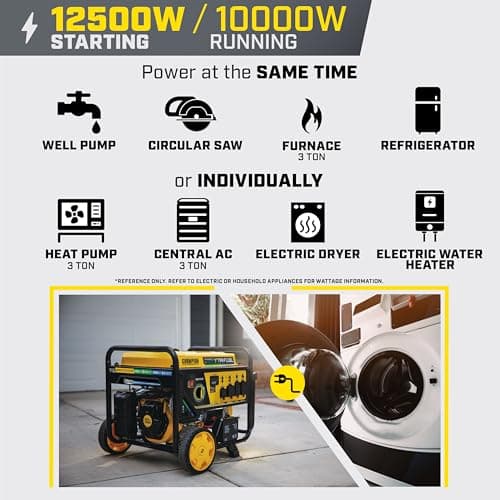
What the surge figure means, why motors need it, and how to read the peak-watt number on a generator box.
Best Tri-Fuel
Best Tri-Fuel Generators
Tri-fuel generators with all three fuels' published running watts, and the natural gas derating stated plainly.
Top pick · Champion 12,500W Tri-Fuel Home Backup
$1,259.99View on Amazon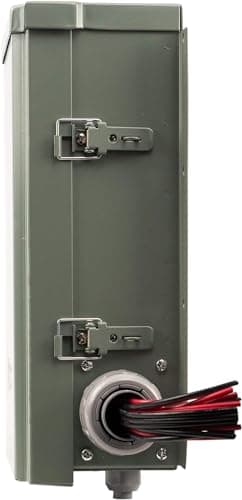
Best 50A Switch
The Best 50 Amp Transfer Switches
50 amp transfer switches, which generators need one, and the whole-chain cost of the 50 amp upgrade.
Top pick · Connecticut Electric EmerGen EGS1012KG2 50A 10-Circuit
$379.99View on Amazon