Transfer Switches & Connection
Generator Cord Gauge Guide
10 AWG for 30 amps. Much heavier for 50. Thinner than that is not a saving — it is a cord that overheats inside its jacket.
Written byMike M.
Published
Disclosure: we earn a commission on purchases made through links on this page, at no cost to you. It does not affect what we recommend or what we say about it — how we are funded.
The short answer
| Connection | Gauge | Conductors | Example |
|---|---|---|---|
| 30 A, 120/240 V | 10 AWG | 4 (L14-30) | PlugSaf, Kohree, Southwire, RVGUARD |
| 50 A, 120/240 V | 6/3 + 8/1 AWG | 4 (14-50 / SS2-50) | VEVOR 50 A kit |
Published conductor specifications from the manufacturer listings for the cords in this registry. Every 30 amp cord here publishes 10 AWG; VEVOR is one of the few 50 amp products that publishes its gauge at all.
Cord gauge is the one specification in this whole category where there is no judgment call. It is either correct for the current or it is a hazard.
Why gauge is not a place to save money
A conductor has resistance, and current through resistance produces heat. A conductor sized for the current dissipates that heat harmlessly; an undersized one gets hot inside an insulating jacket, where the heat cannot escape. That is how cords fail, and the failure mode is fire rather than inconvenience.
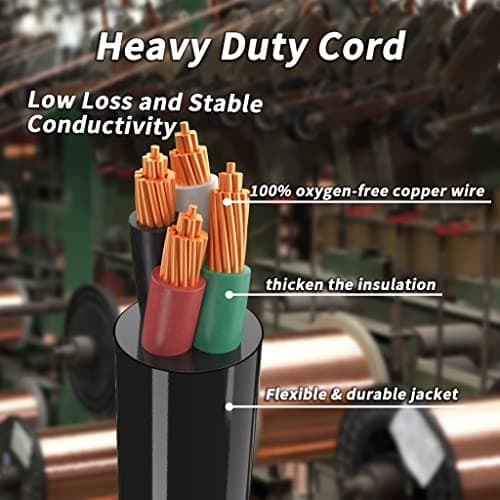
10 AWG is the standard for 30 amps and every 30 amp cord in this registry publishes it. For 50 amps the conductors are substantially heavier — VEVOR publishes 6/3 plus 8/1 AWG, meaning three 6 AWG conductors plus one 8 AWG.
Copper versus copper-clad aluminum
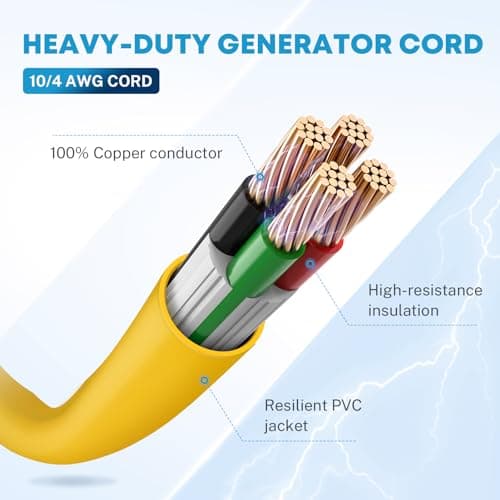
The other corner cheap cords cut. Copper-clad aluminum (CCA) has an aluminum core with a copper coating; it is lighter and cheaper and has higher resistance than solid copper for the same gauge, so it runs hotter at the same current.
Look for an explicit statement. Kohree publishes 100% copper wire with a flame-retardant, heat-resistant jacket. Deeklify publishes multi-strand pure copper cores. Where a listing is silent on conductor material at a suspiciously low price, that silence is informative.
Length and voltage drop
Resistance is proportional to length, so a longer cord drops more voltage at the same current. The practical effect is reduced voltage at your panel, which matters most for motor loads — a well pump trying to start on sagged voltage draws heavy current and may not turn.
The trade-off by length
- 20-25 ft, 10 AWG
- Negligible drop at 30 A
- 40-50 ft, 10 AWG
- Small but real
- 100 ft, 10 AWG
- Significant at sustained 30 A
Qualitative, from the physics rather than a published measurement — we have not measured voltage drop on any of these cords. The practical guidance is to avoid running near the full rated current on a very long cord.
RVGUARD's 100-foot cord is the right product for a detached garage or a long driveway, and the honest caveat is to run well below 30 amps continuously on it. The alternative — a shorter cord and a generator sited closer — conflicts with CPSC's 20-foot placement guidance, so the long cord is often the lesser compromise.
Jacket type and temperature rating
The letters matter. STW and SJTW are the common outdoor-rated jacket designations on these cords: PlugSaf publishes STW on its 30 amp cords, RVGUARD publishes SJTW, VEVOR publishes SJTW at 30 amps and STW at 50.
Temperature rating matters for winter use specifically. RVGUARD publishes an all-weather jacket rated from -40 F to 221 F without cracking or deforming. A cord that stiffens and cracks in a freeze is a failure at the exact moment you need it, and that specification is the one to look for in a cold climate.
PlugSaf publishes IP65 weather resistance, which addresses water ingress at the connectors rather than jacket flexibility. Both are worth having and they are not the same thing.
Certification
ETL listing is third-party safety certification and is what to look for on a cord feeding your panel. Kohree, RVGUARD, Deeklify and VEVOR all publish it on the cords here. Southwire is a mainstream US wire manufacturer, which is a different kind of assurance — the conductor is what it says it is.
The short answer
Cords with published gauge and certification
| # | Product | Best for | Score | Price |
|---|---|---|---|---|
| 1 | 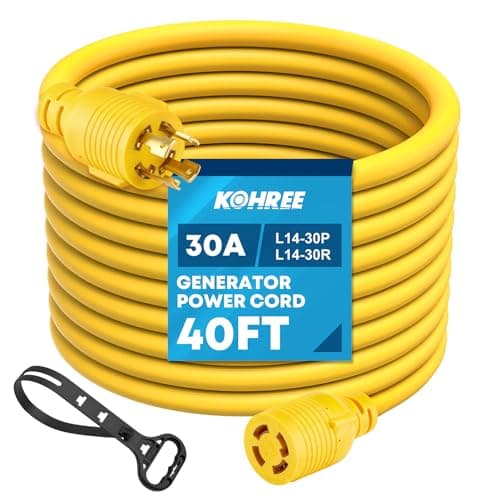 Kohree 40 ft 30A L14-30 Cord, ETL Listed The best-certified cord here: ETL listed and explicitly all-copper at a useful 40-foot length. | ETL listing and 100% copper | 9.0/10 | $79.99 |
| 2 | 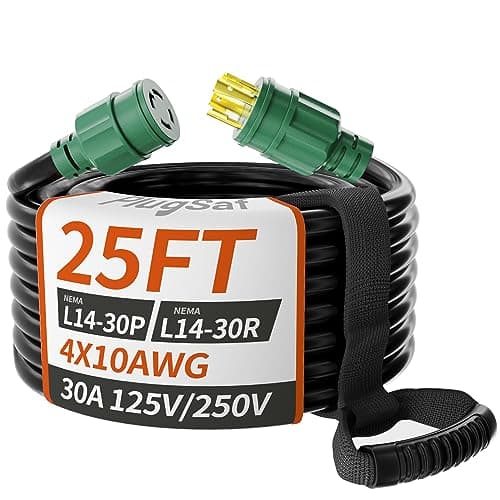 PlugSaf 25 ft 30A L14-30 Cord, 10 AWG The correct first cord for most installations: 25 feet of 10 AWG with L14-30 twist-locks at both ends. | The default generator cord | 9.0/10 | $58.99 |
| 3 | 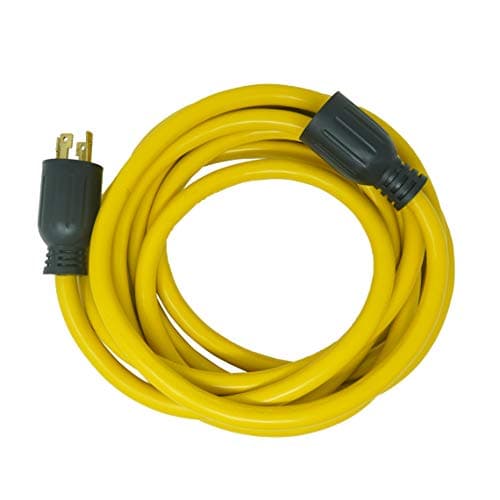 Southwire 20 ft 30A L14-30 Cord, 10 Gauge Choose this when brand provenance on the conductor matters more than a published IP rating — 20 feet of real Southwire 10 AWG. | A known-brand short cord | 8.8/10 | $53.62 |
| 4 | 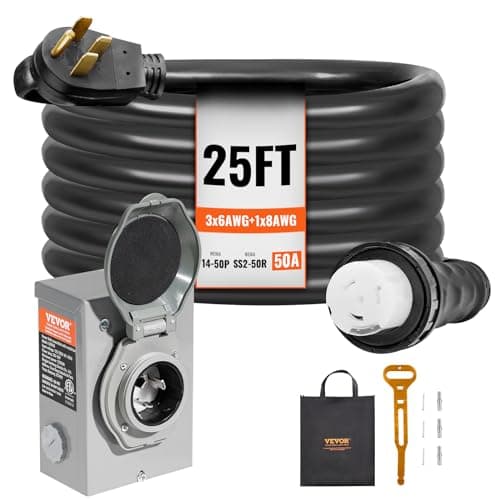 VEVOR 50A Cord + Inlet Box Kit, 25 ft The cheapest correct 50 A connection kit: properly sized conductors, matched connectors, ETL certified. | Matched 50A cord and inlet | 8.8/10 | $149.90 |
| 5 | 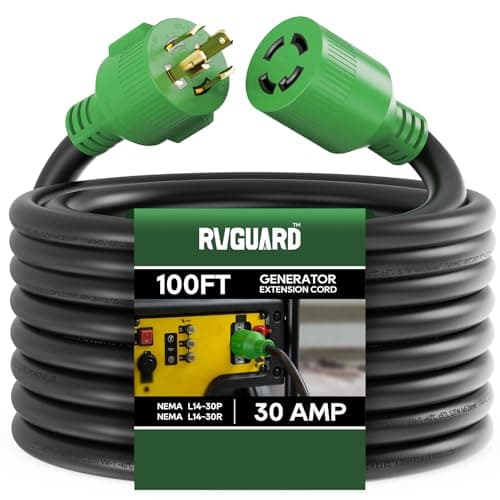 RVGUARD 100 ft 30A L14-30 Cord, ETL Listed Buy this only when the distance genuinely demands it, and plan to run well below 30 A — voltage drop at 100 feet is physics, not a product flaw. | Very long runs | 8.4/10 | $189.99 |
| 6 | 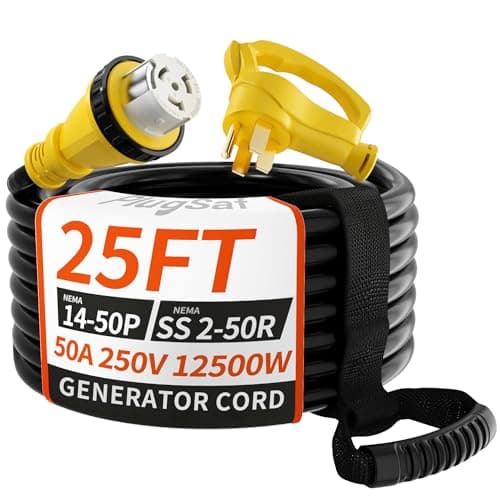 PlugSaf 25 ft 50A 14-50P to SS2-50R Cord The right 50 A cord for the common arrangement — just verify both connector types against your generator and your inlet before ordering. | 50A generators to a 50A inlet | 8.9/10 | $103.99 |
#ad Prices as of October 5, 2026; they may have changed since. Scores are our editorial judgment from published specifications, not test results — how we pick. How we are funded.
Questions people actually ask
What gauge cord do I need for a 30 amp generator?
10 AWG, four conductor, with L14-30 twist-locks at both ends. Every 30 amp generator cord in this registry publishes 10 AWG. Thinner conductor at 30 amps overheats inside the jacket, which is a fire risk rather than a saving.
What gauge cord do I need for a 50 amp generator?
Substantially heavier than 30 amp — VEVOR publishes 6/3 plus 8/1 AWG for its 50 amp cord, meaning three 6 AWG conductors plus one 8 AWG. Be wary of any 50 amp cord that states the amperage and connectors but not the conductor gauge.
Is copper-clad aluminum cord acceptable for a generator?
It has higher resistance than solid copper at the same gauge, so it runs hotter at the same current. Look for an explicit statement of 100% copper — Kohree and Deeklify both publish it. Silence on conductor material at a low price is informative.
Does a longer generator cord reduce power?
It increases voltage drop, which reduces the voltage at your panel. The effect is negligible at 25 feet and significant over 100 feet at sustained full current. It matters most for motor loads, where sagged voltage can prevent a well pump starting.
What does STW or SJTW mean on a generator cord?
They are outdoor-rated jacket designations. PlugSaf publishes STW, RVGUARD publishes SJTW. Separately, look for a temperature rating — RVGUARD publishes -40 F to 221 F — because a cord that cracks in a freeze fails at the worst time.
Should a generator cord be ETL listed?
It is worth insisting on, since the cord carries the full output of your generator to your panel. Kohree, RVGUARD, Deeklify and VEVOR all publish ETL listing. A mainstream manufacturer like Southwire is a different but comparable assurance.
Sources
- US Consumer Product Safety Commission — Portable Generator Information CenterThe 20-foot placement guidance that sets the minimum practical cord length referenced on this page.
Read next
Best Generator Cord
The Best Generator Extension Cords
Generator cords by gauge, length and connector type, with the certification and connector-match checks that matter.
Top pick · PlugSaf 25 ft 30A L14-30 Cord, 10 AWG
$58.99View on Amazon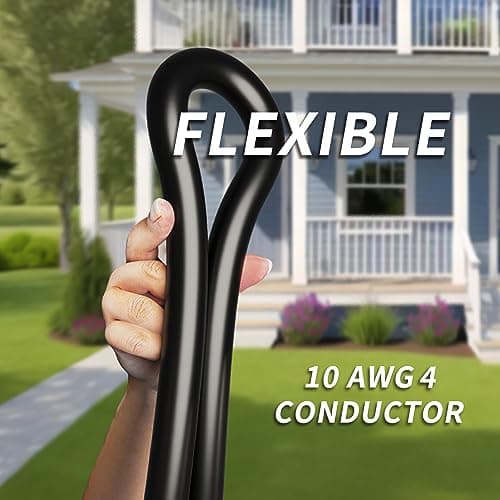
Reference
Can You Use a Regular Extension Cord With a Generator?
When a household extension cord is acceptable with a generator and when it is not, with the gauge and voltage reasons.
Comparison
Generator Cord vs Extension Cord
The four construction differences between a generator cord and a household extension cord, and when each is correct.
Best Inlet Box
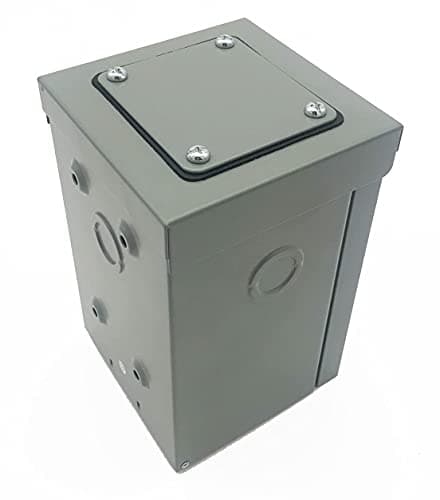
The Best Generator Power Inlet Boxes
Power inlet boxes ranked on enclosure rating, wiring room and connector match, for 30A and 50A installations.
Top pick · Connecticut Electric EGSPI50 50A Power Inlet Box
$62.95View on Amazon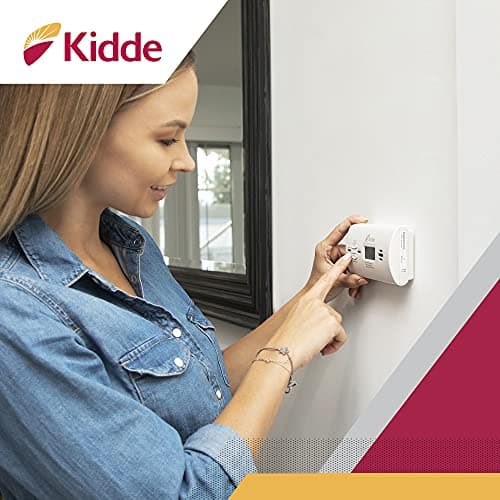
Guide
Generator Carbon Monoxide Safety
The CPSC placement rules, why a garage with the door open is still unsafe, and the battery CO alarm that should be your first purchase.