Comparisons
Generator Inlet Box vs Transfer Switch
The most common misunderstanding in this category: these are not two ways to do the same thing. You usually need both.
Written byMike M.
Published
Disclosure: we earn a commission on purchases made through links on this page, at no cost to you. It does not affect what we recommend or what we say about it — how we are funded.
The short answer
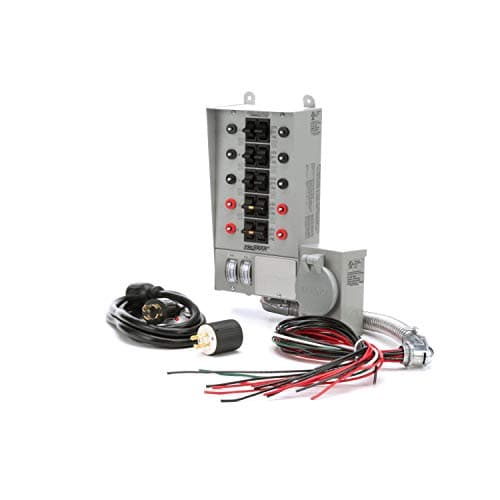
They do different jobs and most installations need both. The inlet box is the weatherproof receptacle on your exterior wall that the generator cord plugs into — it gets power to the wall. The transfer switch is what prevents your generator from back-feeding the utility and decides which circuits it feeds. Some switches include an integrated inlet, which is the one case where a separate box is unnecessary.
This comes up constantly because both products appear in the same search results at very different prices, and it is easy to conclude the cheap one is a budget alternative to the expensive one. It is not.
What each part does
| Inlet box | Transfer switch | |
|---|---|---|
| Job | Weatherproof connection point | Prevents back-feeding |
| Where | Exterior wall | Beside the panel |
| Replaces | A cord through a window | Nothing — it is the safety device |
| Without it | Cord through a window or door | Back-feeding, which is lethal |
Put another way: an inlet box on its own gets power to a receptacle on your wall and does nothing to stop that power reaching the utility. It is not a safety device. If you have an inlet box and no transfer switch or interlock, you have the convenience and none of the protection.
Why you need the inlet box too
Three reasons, all practical:
- No cord through an opening. A cord run through a window or door means that window cannot close, which in a winter outage defeats part of the point, and the cord gets crushed.
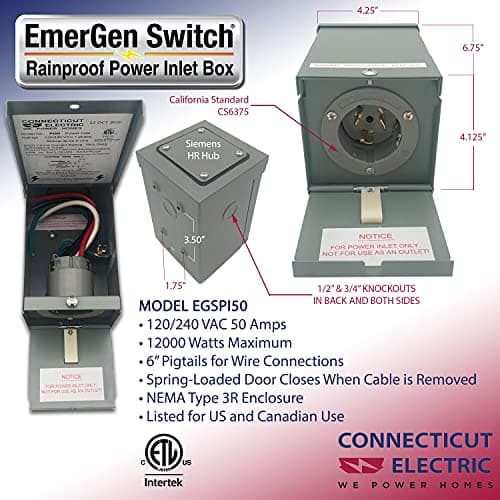
- Weather. The box is NEMA 3R rainproof, and the better ones close themselves — Connecticut Electric's EGSPI50 publishes a spring-loaded door that shuts when the cable is removed.
- Correct connectors. An inlet box presents the right twist-lock plug for your cord, which cannot shake loose in wind and physically prevents mismatching voltages.
The exception: switches with an integrated inlet
Two products in this registry remove the need for a separate box. Reliance Controls' 306A (30 A, 6 circuits) and A510A (50 A, 10 circuits) both publish an optional integrated power inlet.
That saves a second wall penetration and a second piece of hardware, which is a genuine simplification. The constraint is geometry: the switch itself has to be mounted somewhere the generator cord can reach, which in practice means a garage or an accessible basement wall rather than a utility closet.
If your layout suits it, this is the tidiest arrangement available. If the panel is in a basement corner, you need the separate box.
What a complete setup looks like
The four parts
- 1. The generator
- With the correct 240 V outlet
- 2. The cord
- Right gauge, length and connectors
- 3. The inlet box
- Or an integrated inlet on the switch
- 4. Transfer switch or interlock
- The safety device
Parts 2, 3 and 4 are where mismatches happen. Buying them as a matched kit removes the risk — Connecticut Electric's EmerGen 50 A kit includes switch, inlet box and cord; Champion's 201193 includes switch, inlet box and a 30-foot cord.
The connector-matching problem is worst at 50 amps, where a 14-50R inlet needs a different cord from an SS2-50P or CS6375 one. VEVOR's matched 30 and 50 amp cord-plus-inlet kits exist precisely for this, and both publish ETL certification.
The short answer
Complete kits, and the switches with integrated inlets
| # | Product | Best for | Score | Price |
|---|---|---|---|---|
| 1 | 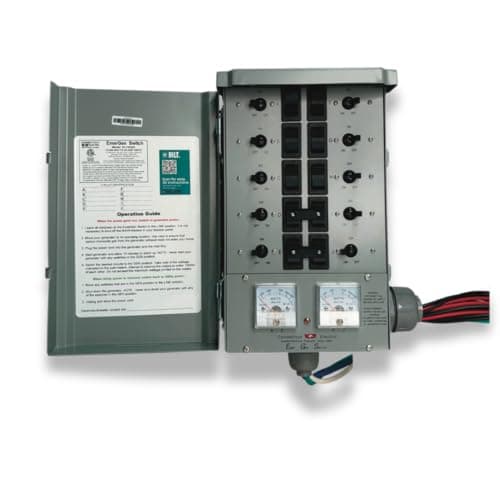 Connecticut Electric EmerGen EGS1012KG2 50A 10-Circuit The simplest way to do a 50 A installation correctly: everything matched in one box, including the cord people most often get wrong. | 50A kit with inlet and cord | 9.0/10 | $379.99 |
| 2 | 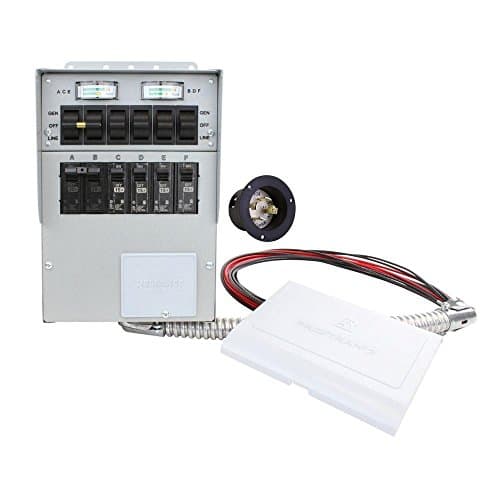 Reliance Controls 306A Pro/Tran2 6-Circuit 30A Worth choosing over the 310CRK specifically if a garage-mounted switch with an integral inlet suits your layout — one install instead of two. | Six circuits, optional inlet | 7.6/10 | $299.00 |
| 3 | 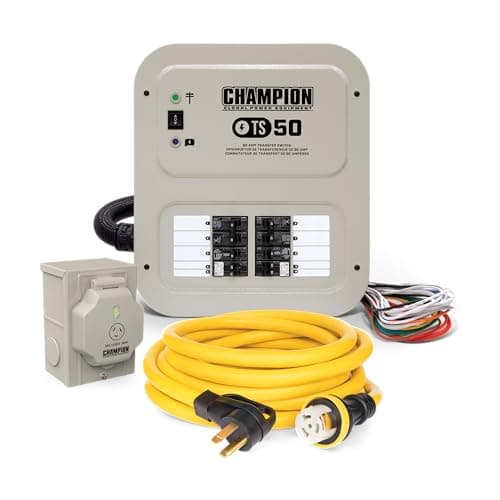 Champion 201193 50A 10-Circuit with Cord The most completely specified 50 A package: UL 1008, prewired, with a cord long enough to site the generator safely. | UL 1008 certified with a 30 ft cord | 9.0/10 | $610.72 |
| 4 | 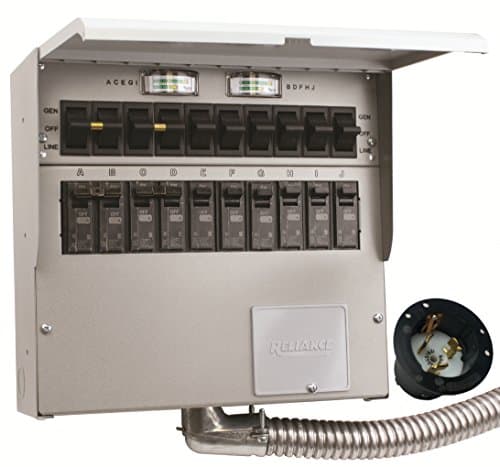 Reliance Controls A510A Pro/Tran2 10-Circuit 50A Buy this only if your generator genuinely exceeds 7,500 running watts — then it is the switch that lets you actually use what you paid for. | Using a big generator's full output | 8.8/10 | $524.00 |
| 5 | 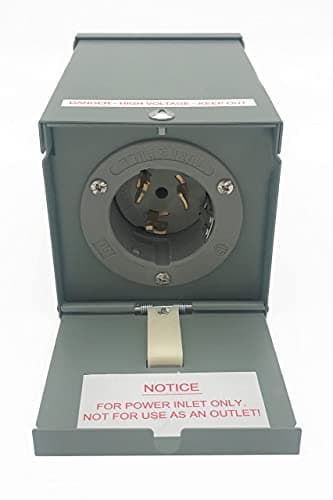 Connecticut Electric EGSPI50 50A Power Inlet Box The best-engineered 50 A inlet here: prewired pigtails, a self-closing weather door, and the receptacle standard 50 A cords actually use. | Prewired 50A inlet | 9.2/10 | $62.95 |
| 6 | 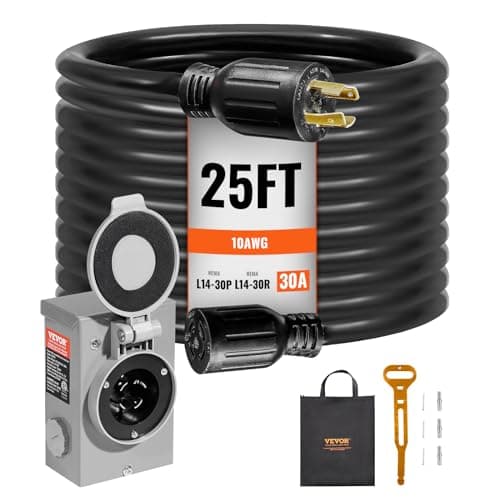 VEVOR 30A Cord + Inlet Box Kit, 25 ft The simplest way to buy the 30 A connection parts correctly: matched ETL-certified cord and inlet in one order. | Matched 30A cord and inlet | 8.6/10 | $78.90 |
#ad Prices as of October 5, 2026; they may have changed since. Scores are our editorial judgment from published specifications, not test results — how we pick. How we are funded.
The version of this question that is actually dangerous
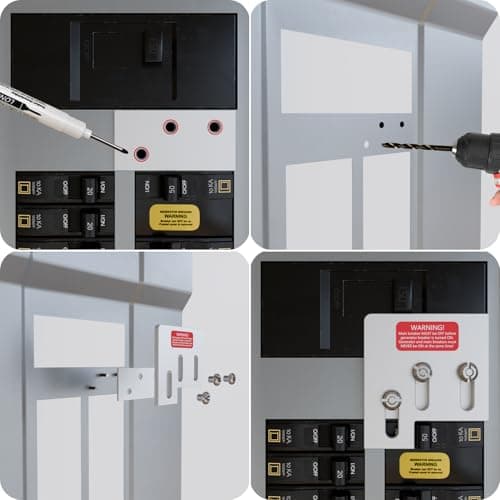
If budget is the constraint, an interlock kit is the cheap compliant path — the plate costs tens of dollars. Skipping the safety device to afford the convenience device is the wrong way round. See backfeeding dangers.
Questions people actually ask
Do I need both an inlet box and a transfer switch?
Usually yes. The inlet box is the weatherproof receptacle the cord plugs into; the transfer switch is what prevents back-feeding and decides which circuits get power. Some switches — Reliance's 306A and A510A — include an integrated inlet, which is the one case a separate box is unnecessary.
Is an inlet box a cheaper alternative to a transfer switch?
No, and this is a dangerous misunderstanding. An inlet box provides a weatherproof connection point and no protection at all. Without a transfer switch or interlock kit, the generator can energize your panel while the utility is connected, which endangers line workers.
What does a generator inlet box actually do?
It gives you a weatherproof, correctly connectored place to plug the generator cord in on your exterior wall, so you do not run a cord through a window. The better ones publish a NEMA 3R rating and a spring-loaded door that closes when the cord is removed.
Which transfer switches have a built-in inlet?
Reliance Controls' 306A (30 amp, 6 circuits) and A510A (50 amp, 10 circuits) both publish an optional integrated power inlet. The constraint is that the switch must then be mounted where the generator cord can reach it, usually a garage or accessible basement wall.
Can I buy the inlet box and cord separately?
Yes, but connector mismatches are the most common ordering error, especially at 50 amps where 14-50, SS2-50 and CS6375 are easy to confuse. Matched kits — VEVOR's 30 and 50 amp ETL-certified cord-plus-box sets — remove the risk.
What is the minimum I need to connect a generator safely?
A transfer switch or interlock kit for the hard-wired loads, or nothing at all if you only run cords to plug-in appliances. The inlet box is highly desirable but is convenience and weatherproofing; the switch or interlock is the part that is not optional.
Sources
- US Consumer Product Safety Commission — Portable Generator Information CenterThe placement and carbon monoxide guidance referenced wherever this page compares indoor and outdoor operation.
- Eaton BRMIKBR Type BR mechanical interlock kit — manufacturer listingManufacturer statement that the kit meets National Electrical Code Article 702 requirements.
Read next
Best Inlet Box
The Best Generator Power Inlet Boxes
Power inlet boxes ranked on enclosure rating, wiring room and connector match, for 30A and 50A installations.
Top pick · Connecticut Electric EGSPI50 50A Power Inlet Box
$62.95View on Amazon
Best Transfer Switch
The Best Generator Transfer Switches
Transfer switches ranked on circuit count, amp rating and kit completeness, from 6-circuit 30A to 10-circuit 50A.
Top pick · Reliance Controls 310CRK 10-Circuit 30A Kit
$474.76View on Amazon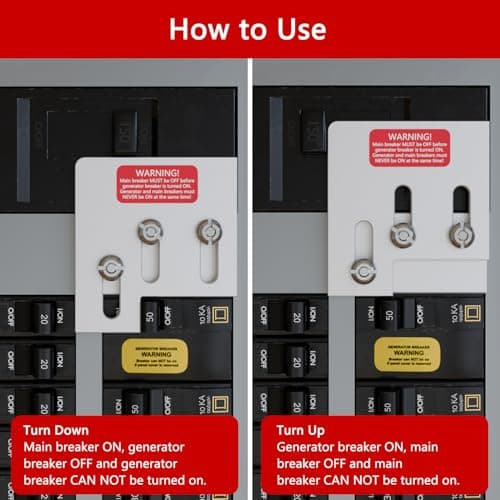
Guide
The Dangers of Back-Feeding a Generator
What back-feeding does electrically, why it is lethal to line workers, and the inexpensive compliant alternatives.
Connection Comparison
Interlock Kit vs Transfer Switch
Interlock kit against transfer switch on cost, circuit access, load management, panel fit and inspection risk.
Guide
How Transfer Switch Installation Works
What a transfer switch installation involves, what drives the quote, and the decisions to make before the electrician arrives.