Outage Prep
Running Air Conditioning on a Generator
The load that doubles your generator budget. There is usually a cheaper way to sleep comfortably.
Written byMike M.
Published
Disclosure: we earn a commission on purchases made through links on this page, at no cost to you. It does not affect what we recommend or what we say about it — how we are funded.
The short answer
A window air conditioner is the practical option: published figures run from 1,200 to 3,250 running watts depending on size, with surges of 2,000 to 3,950 watts. Central air is far harder — read RLA and LRA from the condenser data plate, because neither published chart we cite covers it. A soft starter claiming up to 70% startup reduction is often cheaper than the larger generator the surge would otherwise require.
Air conditioning on generator power is the question where the gap between "technically possible" and "sensible purchase" is widest. It is possible. It is usually not the best use of the money.
Start the compressor first, always
The single most useful operational point on this page. A compressor's surge is enormous relative to its running load, and surge headroom is whatever the generator is not already using.
So: start the generator, let it stabilize, and switch the air conditioner on before the fridge, before the lights, before anything else. Once the compressor is turning its draw collapses to the running figure and you can add the rest. Try it the other way round — fridge and lights first, AC last — and the same generator that would have managed will stall.
Window units: the proportionate answer
| Source | Running watts | Additional starting watts |
|---|---|---|
| EWEB — 12,000 BTU window unit | 3,250 | 3,950 |
| Champion — window unit, size unspecified | 1,200 | 2,000 |
The important thing that table shows: unit size is the whole variable. A small bedroom window unit at around 1,200 running watts is a load almost any mid-sized generator can absorb. A 12,000 BTU unit at 3,250 running watts with a 3,950 watt surge roughly doubles the generator you need.
Which leads to the compromise most people should make: back up one bedroom, not the house. A single small window unit in the room you sleep in delivers most of the real benefit of air conditioning during an outage, for a fraction of the load and the generator cost. Nobody needs the whole house at 72 F while the power is out.
Central air: what you need to find out
We will not give you a wattage for central air, because neither chart we cite publishes one and this is the most consequential figure in the whole sizing exercise. Here is how to get yours, in two minutes:
- 1Go to the outdoor condenser. There is a data plate on the side.
- 2RLA or Rated Load Amps multiplied by the voltage (usually 208/230 V) gives running watts.
- 3LRA — Locked Rotor Amps — multiplied by the voltage gives roughly the compressor's start-up surge. This number will be large.
- 4Add the air handler blower separately: EWEB's published figure for a 1/3 HP furnace fan blower is 700 running watts with a 1,400 watt surge.
Take those numbers to the load calculator as a custom load. In most cases a central system plus an essential-circuit set lands above 11,000 running watts, which means a tri-fuel machine and a 50 amp connection.
The soft-starter route
If the LRA figure is what is driving you to a much larger generator, attack it directly. A soft starter ramps the compressor instead of locking the rotor and slamming it on. SoftStart's home unit publishes a claimed 70% reduction in startup power, and explicitly describes itself as designed for generators, off-grid and solar systems.
It also claims a benefit you keep permanently: lower startup stress and less heat buildup in the compressor windings, which extends compressor life. That is a real secondary return on the purchase whether or not the power is out.
Two honest limits. It reduces the start draw and does nothing to the run draw, so a 3-ton system still needs its full running wattage continuously from the generator. And installation is at the condenser — HVAC and electrical work, not a plug-in device — so check compatibility with your specific system first.
The short answer
The soft starter, and the machines if you size for the surge instead
| # | Product | Best for | Score | Price |
|---|---|---|---|---|
| 1 | 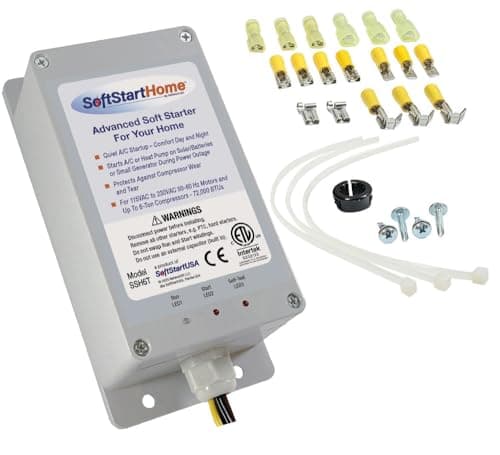 SoftStartRV SoftStart Home AC Soft Starter The right tool if AC is forcing your generator size up, with one essential caveat: it solves the surge, not the sustained running load. | Running central AC on a generator | 8.4/10 | $355.00 |
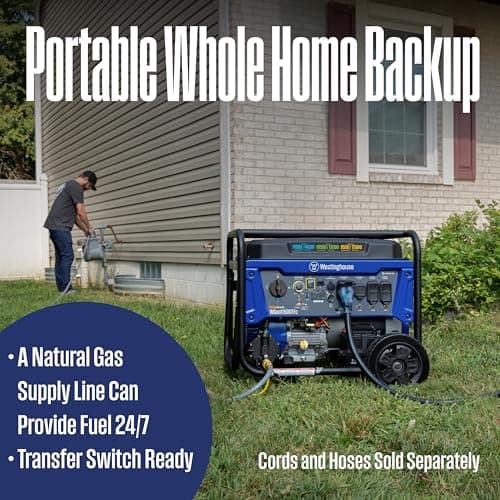
| 2 | 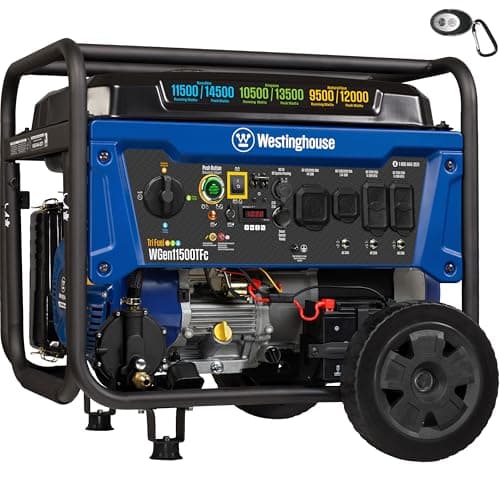 Westinghouse WGen11500TFc 14,500W Tri-Fuel Buy this when the sizing math genuinely lands above 10,000 running watts — not because bigger feels safer. | Larger homes with real 240V loads | 8.9/10 | $1,499.00 |
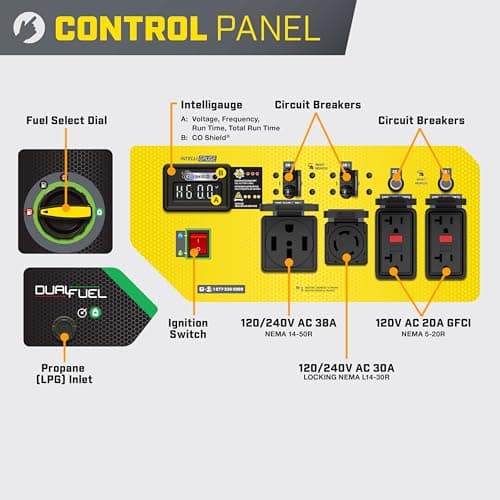
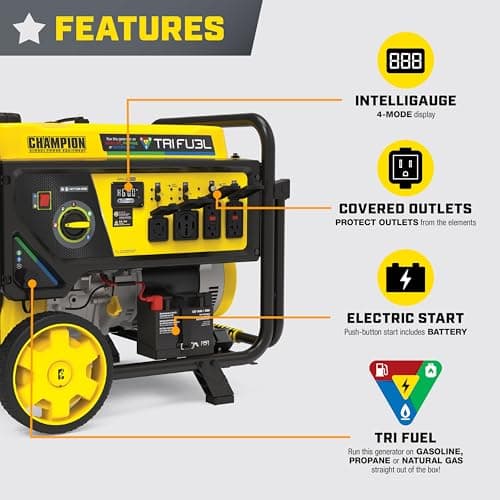
| 3 | 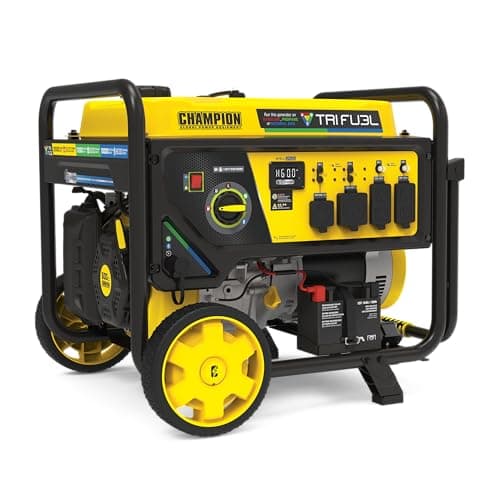 Champion 12,500W Tri-Fuel Home Backup The most complete tri-fuel package on the shelf: three fuels, both hoses, every output figure published, CO shutdown included. | Tri-fuel with both hoses in the box | 9.0/10 | $1,259.99 |
| 4 | 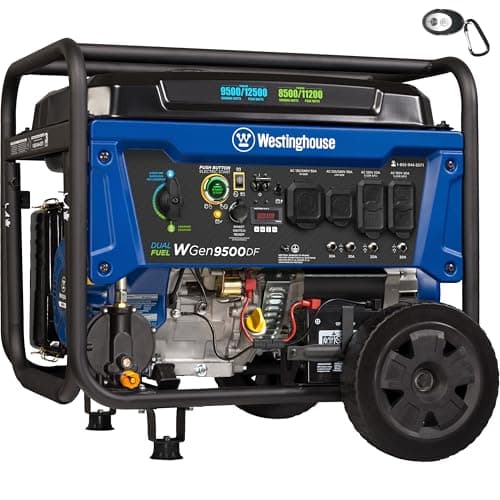 Westinghouse WGen9500DF 12,500W Dual Fuel The most broadly sensible home backup generator on the market: enough running watts for a whole essential-circuit panel, both transfer-switch outlets, and dual fuel — with the caveat that it has no CO shutoff. | The default whole-house pick | 8.8/10 | $999.00 |
#ad Prices as of October 5, 2026; they may have changed since. Scores are our editorial judgment from published specifications, not test results — how we pick. How we are funded.
What about a battery?
Realistically, no. A 2 kWh battery running a 1,200 watt window unit lasts under two hours before inverter losses, and the compressor surge is at the edge of what most units supply. Air conditioning is a sustained high load, which is precisely the shape batteries are worst at.
The exception worth knowing: Anker's SOLIX F3800 publishes 3,840 Wh and 240 V output, which is a different class of device. Even there, running a central system would empty it in a couple of hours.
Sizing detail: generator size for an air conditioner.
Questions people actually ask
Can you run air conditioning on a generator?
A window unit, yes, comfortably on a mid-sized generator — published figures run from 1,200 to 3,250 running watts depending on size. Central air is much harder and usually pushes you above 11,000 running watts with a 50 amp connection, unless a soft starter brings the surge down.
What size generator do I need to run a window AC?
For a small bedroom unit around 1,200 running watts with a 2,000 watt surge, a 3,500 running-watt machine covers it with room for other loads. For a 12,000 BTU unit at 3,250 running watts with a 3,950 watt surge, you need substantially more. Read the nameplate on yours.
Should I turn the AC on before or after other appliances?
Before, always. Surge headroom is whatever the generator is not already using, so start the compressor while the machine is lightly loaded and add the fridge, lighting and everything else afterwards. Doing it the other way round is what makes a generator stall.
Will a soft starter let me run central AC on a smaller generator?
Often, if the surge rather than the running load is your constraint. SoftStart publishes a claimed 70% startup reduction for its home unit. The running load does not change at all, so a 3-ton system still needs its full running wattage continuously.
Can a power station run an air conditioner?
Only briefly. A 2 kWh battery running a 1,200 watt window unit lasts under two hours after inverter losses, and the compressor surge is at the edge of what most units supply. Sustained high loads are what batteries are worst at.
Is it worth backing up air conditioning?
For most households, not compared with heat, water and a sump pump, where failure causes damage rather than discomfort. The compromise that works well is sizing for the essentials and running a single bedroom window unit, which delivers most of the real benefit for a fraction of the load.
Sources
- Eugene Water & Electric Board — Generator Sizing ConsiderationsPublished running and additional-starting watt figures quoted on this page.
- Champion Power Equipment — Quick Reference WattageThe window-unit figure shown alongside EWEB's.
- SoftStartRV — SoftStart Home soft starter listingThe 70% startup-reduction and compressor-life claims, quoted as manufacturer claims.
Read next
Guide
What Size Generator to Run an Air Conditioner?
Window AC sizing from two published charts that disagree sharply, central AC guidance from the nameplate, and the soft-starter alternative.
Guide
Starting Watts vs Running Watts
What the surge figure means, why motors need it, and how to read the peak-watt number on a generator box.
Best Tri-Fuel
Best Tri-Fuel Generators
Tri-fuel generators with all three fuels' published running watts, and the natural gas derating stated plainly.
Top pick · Champion 12,500W Tri-Fuel Home Backup
$1,259.99View on Amazon
Guide
Hurricane Season Power Preparation
Preparing for long outages: the fuel logistics problem, why natural gas or propane wins, and a week-before checklist.
Guide
What Size Generator for a House?
Load tables for four realistic house types — gas heat, well pump, central air and electric heat — with the generator class each needs.