Power Stations
Best Portable Power Stations Under $500
This is the bracket where the category changes job. Below it you are buying a device charger; at the top of it you are buying a battery that starts a refrigerator compressor.
Written byMike M.
Published
Disclosure: we earn a commission on purchases made through links on this page, at no cost to you. It does not affect what we recommend or what we say about it — how we are funded.
The short answer
Under $500 the best portable power station is EcoFlow's DELTA 3 Classic: 1,024 Wh with 1,800 W of output, a 3,600 W surge and a published sub-10 ms UPS switchover, at 26.7 lb. Bluetti's AC180 holds more energy for less — 1,152 Wh and 1,800 W — and recharges fully in an hour. Below about $300 the output ceiling drops to 300-600 W, which runs devices, lights and a CPAP but will not start a refrigerator.
Most price-capped roundups are arbitrary. This one is not, because $500 happens to be where this category crosses a real line. The two units at the top of the bracket publish 1,800 watts of continuous output with surge ratings that clear a refrigerator compressor's start-up draw. The units below them publish 300 to 600 watts, which is a different product doing a different job.
So the question this page answers is not "which is best" but "which side of the line do you need to be on" — and then, within each side, which unit publishes the figures that matter.
The short answer
Quick picks
| # | Product | Best for | Score | Price |
|---|---|---|---|---|
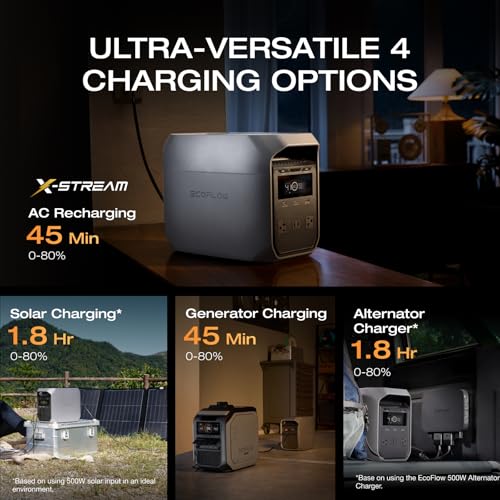
| 1 | 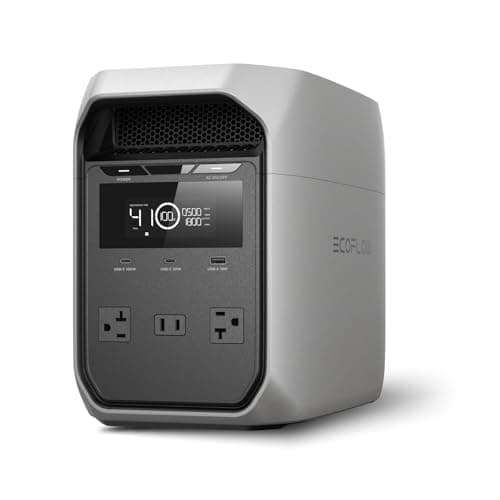 EcoFlow DELTA 3 Classic The best-value battery on the site: UPS-grade switchover, 1,800 W and a 45-minute recharge for roughly half what the 2 kWh units cost. | Best value 1 kWh with UPS | 9.3/10 | $462.00 |
| 2 | 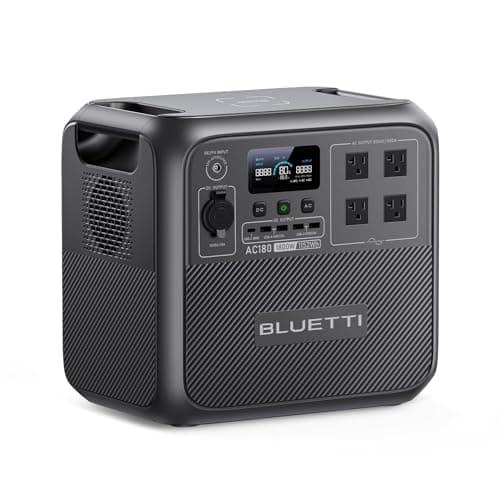 Bluetti AC180 The cheapest battery that will actually run a refrigerator overnight, with solar input as its main compromise. | 1.1 kWh at the lowest price | 8.9/10 | $549.00 |
| 3 | 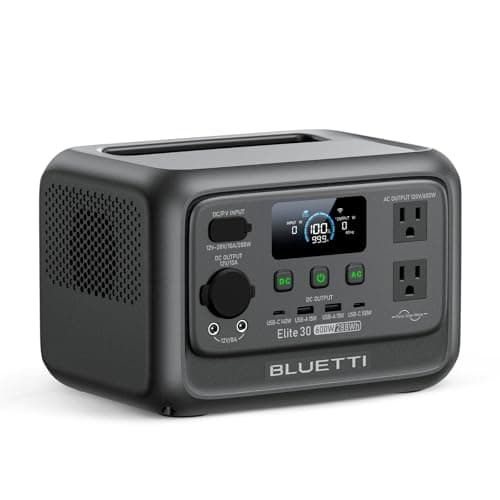 Bluetti Elite 30 V2 The small power station with real output: 600 W continuous and a 1,500 W lift at 9.4 lb, which is double what this size class usually manages. | Highest output of the small units | 8.4/10 | $329.99 |
| 4 | 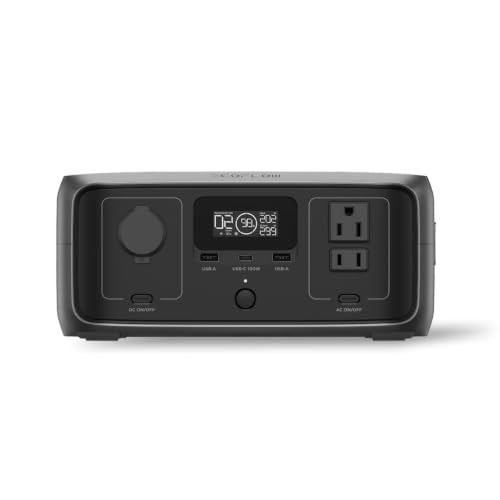 EcoFlow RIVER 3 230 The best small power station on this site: a published sub-20 ms UPS switchover and a one-hour full recharge on a LiFePO4 pack — genuine backup hardware rather than a camping battery, even if the listing leaves its weight and cycle rating unstated. | The small unit that behaves like backup gear | 8.6/10 | $319.00 |
| 5 | 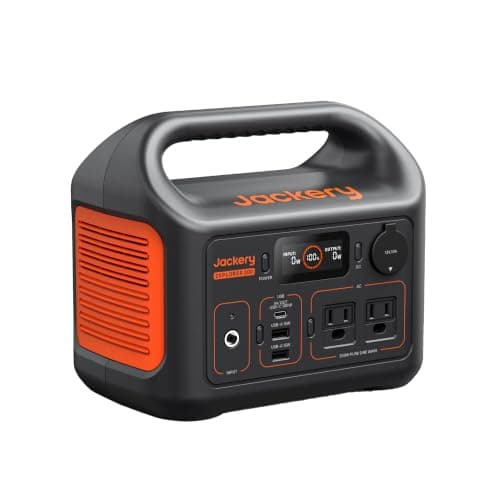 Jackery Explorer 300 Buy this for devices and medical equipment, not appliances — and at 7.5 lb and 4,000 cycles, it is the easiest preparedness purchase on the site. | Phones, laptops, a CPAP | 8.6/10 | $289.00 |
| 6 | 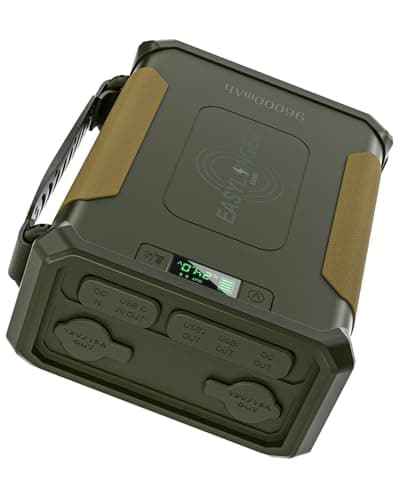 EASYLONGER ES960 CPAP Battery If the backup power question is specifically about a CPAP, a purpose-built DC battery outlasts a general power station of the same capacity — buy this rather than a bigger box. | CPAP specifically | 8.7/10 | $269.99 |
#ad Amazon prices as of November 19, 2026; they may have changed since. Scores are our editorial judgment from published specifications, not test results — how we pick. How we are funded.
The line this bracket crosses
Published capacity and output under the cap
- Bluetti AC180
- 1,152 Wh / 1,800 W, 2,700 W peak
- EcoFlow DELTA 3 Classic
- 1,024 Wh / 1,800 W, 3,600 W surge
- EASYLONGER ES960
- 297.6 Wh DC CPAP battery
- Jackery Explorer 300
- 292 Wh / 300 W, 600 W peak
- Bluetti Elite 30 V2
- 288 Wh / 600 W, 1,500 W lifting
- EcoFlow RIVER 3 230
- 230 Wh / 550 W, up to 600 W
Manufacturer published figures. Note the gap in the middle of the table: there is nothing between 300 Wh and 1,000 Wh under this cap, which is why the bracket splits so cleanly into two groups rather than forming a gradient.
The two fridge-capable units, compared properly
EcoFlow's DELTA 3 Classic and Bluetti's AC180 both publish 1,800 W of continuous output, and both sit just under the cap. They are not the same purchase.
| EcoFlow DELTA 3 Classic | Bluetti AC180 | |
|---|---|---|
| Published capacity | 1,024 Wh | 1,152 Wh |
| Continuous output | 1,800 W | 1,800 W |
| Surge or peak | 3,600 W (X-Boost) | 2,700 W peak |
| UPS switchover | Under 10 ms published | UPS function, no transfer time published |
| AC recharge | 0-80% in 45 minutes | Full in 1 hour at 1,440 W |
| Max solar input | Not published on the listing | 500 W, 2.8-3.3 hour solar charge |
| Published weight | 26.7 lb | 37.4 lb |
The DELTA 3 Classic takes the top slot on the strength of three published numbers: the 3,600 W surge, the sub-10 ms switchover and the 26.7 lb weight. The switchover is the one that changes what the product is — at that speed a refrigerator or a router that is already plugged into it never registers the outage, so the battery can live behind an appliance permanently rather than being fetched when the lights go out.
The AC180 answers with capacity and solar. It holds 128 Wh more, which is roughly another hour and a half of cycling fridge duty on our arithmetic, and it is the only unit under this cap that publishes a maximum solar input — 500 W, with a stated 2.8 to 3.3 hour solar-only charge. If the plan involves panels, that published ceiling is the difference between being able to size an array and guessing at one.
Its honest cost is weight: 37.4 lb against 26.7 lb. That is the difference between a battery you move between rooms and one you place once.
Below $300: what the small units are genuinely for
Four units sit in the lower half of this bracket, and none of them runs a refrigerator. That is not a criticism — it is their design. What they do is keep the things that make an outage bearable alive: phones, a laptop, a router and modem, LED lighting, and a CPAP overnight.
- Bluetti Elite 30 V2 publishes 600 W continuous with a 1,500 W Power Lifting figure at 288 Wh and 9.4 lb — double the output most units this size manage. Bluetti's own guidance is that the lifting mode is not for motors, so read the 1,500 W as a kettle-and-drill allowance rather than a compressor rating.
- EcoFlow RIVER 3 230 publishes 230 Wh, 550 W and a sub-20 ms UPS switchover with a one-hour full recharge. At this size that switchover is the feature: it is what lets a modem and a router sit behind it permanently.
- Jackery Explorer 300 publishes 292 Wh, 300 W with a 600 W peak, 7.5 lb and over 4,000 cycles to 70% capacity — the longest published cycle life of the small units here.
- EASYLONGER ES960 is a purpose-built DC CPAP battery rather than a general power station: 297.6 Wh LiFePO4 with a published compatibility list and a claim of 2+ nights without the humidifier. If the CPAP is the whole reason you are shopping, it outlasts a general unit of the same capacity because it skips two conversion steps.
The best budget power stations under $300 page ranks this lower group on its own terms and is the better read if your list is genuinely devices only.
What no battery under $500 does
- It does not run a house. No unit under this cap publishes a 240 V outlet, and none connects to a breaker panel. A well pump, a dryer or a central air handler is out of reach by design.
- It does not run heat. A 1,500 W space heater empties the largest battery here in well under an hour. Resistive heat has no duty cycle and no surge — it simply draws its full rating until the battery is flat.
- It does not run for days. At 1 kWh, a cycling refrigerator gets roughly six hours on our arithmetic; the AC180's 1,152 Wh gets about seven. A panel or a generator is what turns either into a multi-day plan.
- It does not include panels. Every unit here is the battery alone. Solar kits start higher — the best solar generators for home backup covers those.
If the real requirement is a day or more of fridge duty, the next bracket up is the honest answer rather than a bigger small battery: best portable power stations under $1,000 is where the 2 kWh class begins.
How long each of these actually lasts
The arithmetic is ours and the assumptions are stated: a cycling refrigerator averages roughly 150 watts over a day rather than its 700 W running figure, and an inverter loses about 12% converting DC to AC. Usable watt-hours divided by about 170 gives the hours.
Fridge runtime by capacity, at a 150 W cycling average
- 1,152 Wh (AC180)
- Roughly 7 hours
- 1,024 Wh (DELTA 3 Classic)
- Roughly 6 hours
- 292 Wh (Explorer 300)
- Under 2 hours, if it started at all
Our own arithmetic with the assumptions stated, not a manufacturer specification and not a measurement of ours. [How long will a power station run a fridge](/power-stations/how-long-will-a-power-station-run-a-fridge) works the same sum through in detail, and the [power station runtime calculator](/sizing/power-station-runtime-calculator) runs it on your own numbers.
The six units in full
- Capacity
- 1,024 Wh
- AC output
- 1,800 W / 3,600 W surge
- Switchover
- Under 10 ms (mfr)
#1 · Best value 1 kWh with UPS
EcoFlow DELTA 3 Classic
The best-value battery on the site: UPS-grade switchover, 1,800 W and a 45-minute recharge for roughly half what the 2 kWh units cost.
#ad Price as of November 19, 2026; it may have changed since. How we are funded.
Why we picked it
- UPS behavior at a 1 kWh price point — you can put the fridge or the home office behind it permanently
- 1,800 W continuous is higher than Jackery's 1,500 W at similar capacity
- 45 minutes to 80% and 26.7 lb
Good to know
- 1,024 Wh is a single night of fridge duty, not a weekend
Published specification & our scoring
- 1,024 Wh, 1,800 W output with 3,600 W surge via X-Boost (manufacturer)
- 0-80% in 45 minutes with X-Stream AC charging (manufacturer)
- Under 10 ms UPS switchover (manufacturer)
- LiFePO4 cells rated for 10+ years of daily use, EV-grade cell-to-chassis design (manufacturer)
- Published weight 26.7 lb
- Usable capacity
- 6
- Output ceiling
- 7
- UPS behavior
- 10
- Recharge speed
- 10
- Portability
- 9
- Value
- 10
Specification figures are the manufacturer’s published values. Scores are our editorial judgment from those figures and are never published as structured review data — how we pick.
- Capacity
- 1,152 Wh
- AC output
- 1,800 W / 2,700 W peak
- Recharge
- 1 h at 1,440 W (mfr)
#2 · 1.1 kWh at the lowest price
Bluetti AC180
The cheapest battery that will actually run a refrigerator overnight, with solar input as its main compromise.
#ad Price as of November 19, 2026; it may have changed since. How we are funded.
Why we picked it
- 1,152 Wh and 1,800 W for well under $500 is the price floor for a battery that can genuinely carry a fridge overnight
- One-hour full recharge
- UPS function included
Good to know
- 37.4 lb for 1.1 kWh is heavy relative to Jackery's 23.8 lb for 1.07 kWh
Published specification & our scoring
- 1,152 Wh LiFePO4 battery, 1,800 W output with 2,700 W peak (manufacturer)
- Full recharge in one hour at 1,440 W AC input (manufacturer)
- 500 W solar input; 2.8-3.3 hours solar-only charge (manufacturer)
- Eight outlets; UPS function for emergency power (manufacturer)
- App control; published weight 37.4 lb
- Usable capacity
- 6
- Output ceiling
- 7
- Recharge speed
- 9
- Solar input
- 5
- Portability
- 7
- Value
- 10
Specification figures are the manufacturer’s published values. Scores are our editorial judgment from those figures and are never published as structured review data — how we pick.
- Capacity
- 288 Wh
- AC output
- 600 W / 1,500 W surge
- Weight
- 9.4 lb
#3 · Highest output of the small units
Bluetti Elite 30 V2
The small power station with real output: 600 W continuous and a 1,500 W lift at 9.4 lb, which is double what this size class usually manages.
#ad Price as of November 19, 2026; it may have changed since. How we are funded.
Why we picked it
- 600 W continuous is double the usual 300 W at this size — enough for a small appliance, not just devices
- 1,500 W surge gives it a real chance at starting a small fridge compressor
- 9.4 lb
Good to know
- Good to know: 288 Wh means the 600 W output is for short bursts — a kettle or a drill, not an hour of continuous load
Published specification & our scoring
- 288 Wh capacity, 600 W continuous with 1,500 W surge in Power Lifting mode (manufacturer)
- Manufacturer states 600 W output is twice what comparable units provide
- UltraCell technology and smart cooling cut power consumption by 50% (manufacturer)
- Published weight 9.4 lb; LFP chemistry
- Output ceiling
- 6
- Usable capacity
- 3
- Portability
- 10
- Cycle life
- 8
- Value
- 7
- Brand support
- 7
Specification figures are the manufacturer’s published values. Scores are our editorial judgment from those figures and are never published as structured review data — how we pick.
- Capacity
- 230 Wh
- AC output
- 550 W / up to 600 W
- UPS switchover
- Under 20 ms (mfr)
#4 · The small unit that behaves like backup gear
EcoFlow RIVER 3 230
The best small power station on this site: a published sub-20 ms UPS switchover and a one-hour full recharge on a LiFePO4 pack — genuine backup hardware rather than a camping battery, even if the listing leaves its weight and cycle rating unstated.
#ad Price as of November 19, 2026; it may have changed since. How we are funded.
Why we picked it
- A published sub-20 ms UPS switchover at this size is the feature that turns a small battery into real backup gear — plug the modem and the router into it and an outage never reaches them
- 0-100% in one hour on a single cable means it is topped up and back in the cupboard before the next weather front
- LiFePO4 rather than the older chemistry still common at this size, which is what makes a battery that sits in a cupboard for years worth owning
Good to know
- 230 Wh is a devices-and-electronics battery — it carries a modem, lights, phones and a CPAP, where a refrigerator needs one of the 1 kWh units
- The current listing is thin on published detail: no weight, no cycle rating and no solar input ceiling, so three of the figures a backup buyer wants are simply not stated
Published specification & our scoring
- 230 Wh LiFePO4 capacity with 550 W AC output and up to 600 W (manufacturer)
- Under 20 ms auto-switching UPS — the outlet hands over to the battery when the grid drops (manufacturer)
- 0-100% on AC in one hour of fast charging (manufacturer)
- Solar panel sold separately; this listing publishes no solar input ceiling
- This listing publishes no weight, no cycle count and no IP rating — figures the previous 245 Wh RIVER 3 listing carried and which we have not transferred across
- Usable capacity
- 3
- Output ceiling
- 6
- Recharge speed
- 10
- UPS behavior
- 9
- Portability
- 9
- Value
- 8
Specification figures are the manufacturer’s published values. Scores are our editorial judgment from those figures and are never published as structured review data — how we pick.
- Capacity
- 292 Wh
- AC output
- 300 W / 600 W peak
- Weight
- 7.5 lb
#5 · Phones, laptops, a CPAP
Jackery Explorer 300
Buy this for devices and medical equipment, not appliances — and at 7.5 lb and 4,000 cycles, it is the easiest preparedness purchase on the site.
#ad Price as of November 19, 2026; it may have changed since. How we are funded.
Why we picked it
- 4,000 cycles at 7.5 lb — this will outlive several phones
- 292 Wh covers two nights of a CPAP without a humidifier, or a week of phone charging
- Small enough that it lives in a cupboard and gets used, rather than being a project
Good to know
- Good to know: 300 W is a devices-and-medical-equipment battery — phones, a laptop and a CPAP, where a refrigerator needs one of the 1 kWh units
Published specification & our scoring
- 292 Wh capacity, 300 W rated output with 600 W peak (manufacturer)
- Two AC outlets, a 100 W USB-C PD port, two USB-A, a 120 W car port
- LiFePO4 chemistry rated for over 4,000 charge cycles to 70% capacity (manufacturer)
- Published weight 7.5 lb
- Solar panel not included
- Usable capacity
- 3
- Output ceiling
- 3
- Cycle life
- 10
- Portability
- 10
- Recharge speed
- 7
- Value
- 9
Specification figures are the manufacturer’s published values. Scores are our editorial judgment from those figures and are never published as structured review data — how we pick.
- Capacity
- 297.6 Wh
- CPAP nights
- 2+ (mfr)
- Chemistry
- LiFePO4
#6 · CPAP specifically
EASYLONGER ES960 CPAP Battery
If the backup power question is specifically about a CPAP, a purpose-built DC battery outlasts a general power station of the same capacity — buy this rather than a bigger box.
#ad Price as of November 19, 2026; it may have changed since. How we are funded.
Why we picked it
- Ships with the DC cables for the common CPAP machines, which is the part people get wrong buying a general-purpose power station
- Running the CPAP on DC rather than through an AC inverter is substantially more efficient — it is why this gets two nights where a 300 Wh power station gets one
- FSA/HSA eligibility can make it effectively cheaper
Good to know
- Check your specific machine against the compatibility list before buying
Published specification & our scoring
- 297.6 Wh LiFePO4 battery pack (manufacturer)
- Manufacturer states 2+ nights of CPAP use without a humidifier or heated tube; runtime varies
- Four cables included; compatible with ResMed S9, AirSense 10/11, AirCurve 10/11, AirMini and Philips DreamStation (manufacturer)
- Also listed as compatible with Sefam S.Box, Resvent iBreeze, Apex iCH and Löwenstein Prisma (manufacturer)
- FSA/HSA eligible (manufacturer)
- Fit for purpose
- 10
- Efficiency
- 9
- Usable capacity
- 4
- Versatility
- 3
- Value
- 8
- Brand support
- 5
Specification figures are the manufacturer’s published values. Scores are our editorial judgment from those figures and are never published as structured review data — how we pick.
In short
Our recommendation
Best Battery Under $500
9.3/10EcoFlow DELTA 3 Classic
The best-value battery on the site: UPS-grade switchover, 1,800 W and a 45-minute recharge for roughly half what the 2 kWh units cost.
Runner-up
8.9/10Bluetti AC180
The cheapest battery that will actually run a refrigerator overnight, with solar input as its main compromise.
#ad Price as of November 19, 2026; it may have changed since. How we are funded.
Brands: want your product tested? For Brands.
Questions people actually ask
What is the best portable power station under $500?
EcoFlow's DELTA 3 Classic on the published figures: 1,024 Wh, 1,800 W of output with a 3,600 W surge, a sub-10 ms UPS switchover and 26.7 lb. Bluetti's AC180 is the alternative if capacity and a published solar input ceiling matter more than weight and switchover speed.
Will a power station under $500 run a refrigerator?
The two units at the top of the bracket will. A refrigerator needs roughly 2,200 additional watts to start its compressor on the published chart figures, which the DELTA 3 Classic's 3,600 W surge and the AC180's 2,700 W peak both clear. Expect six to seven hours of cycling fridge duty on our arithmetic, not a full day.
How long will a 1,000Wh power station run a fridge?
Roughly six hours on our arithmetic, which assumes a 150 watt cycling average and a 12% inverter loss. A newer, emptier fridge with the door kept shut does better; an older or fuller one does worse. Keeping the door closed is worth as much as buying more capacity.
Is it worth spending $500 instead of $300 on a power station?
Only if you need the output. The jump buys roughly four times the capacity and three times the continuous watts, which is the difference between charging devices and running an appliance. If your list is phones, a router, lights and a CPAP, the extra money buys capacity you will not use.
Can a power station under $500 run a CPAP all night?
Yes, comfortably, and a purpose-built DC CPAP battery does it best. EASYLONGER's ES960 publishes 297.6 Wh with a claim of 2+ nights without the humidifier, because running the machine from DC skips two conversion steps. Turn the heated humidifier and hose off on battery — they are by far the largest loads.
Do any power stations under $500 have UPS switchover?
Two publish a transfer time: EcoFlow's DELTA 3 Classic at under 10 ms and the RIVER 3 230 at under 20 ms. Bluetti's AC180 publishes a UPS function without a stated transfer time. At those speeds a refrigerator, modem or medical device never registers the outage.
Can I add solar panels to a power station under $500?
Yes, but check the published input ceiling first because it caps the array permanently. The AC180 publishes 500 W with a stated 2.8 to 3.3 hour solar charge, which is the clearest figure in this bracket. Where a listing publishes no ceiling, a third-party array cannot be sized from published data at all.
Sources
- Eugene Water & Electric Board — Generator Sizing ConsiderationsPublished appliance running and additional-starting watt figures used in the capacity arithmetic on this page.
- FoodSafety.gov — food safety during a power outageThe 4-hour refrigerator and 48-hour full-freezer guidance referenced when deciding how much capacity is needed.
Read next
Best Budget Pick
Best Budget Power Stations
Budget power stations worth owning, with honest limits on what 300 watts of output can do.
Top pick · EcoFlow DELTA 3 Classic
$462.00See the DELTA 3 Classic on Amazon17% off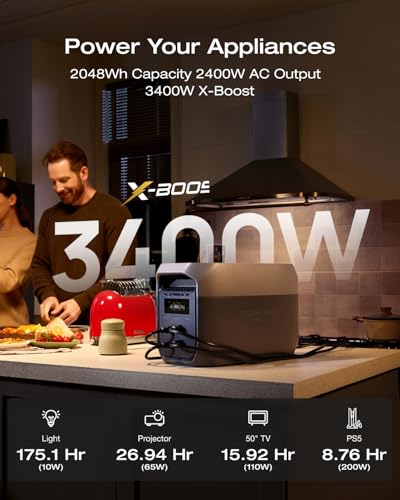
Best Battery Under $1,000
Best Portable Power Stations Under $1,000
Price-capped at $1,000: the 2 kWh frontier, the surge figure that starts a refrigerator, and the standby draw that quietly empties a battery.
Top pick · EcoFlow DELTA 3 Max
$999.00See the DELTA 3 Max on Amazon17% off
Best for a Refrigerator
Best Power Station for a Refrigerator
Power stations that reliably start a fridge compressor, ranked on surge, idle draw and UPS switchover.
Top pick · Bluetti FridgePower Backup System
$1,899.00See the FridgePower Backup System on Amazon27% off
Guide
Power Station Runtime Calculator
The runtime calculator: watt-hours times inverter efficiency divided by your load, both directions, with a live-priced pick for the capacity class you land in.
Best Inverter Under $500
Best Inverter Generators Under $500
Price-capped at $500: the four inverter generators under the ceiling, what 1,900 clean watts actually runs, and the safety and noise figures that separate them.
Top pick · Champion 2,500W Ultralight Inverter
$487.38See the 2,500W Ultralight Inverter on Amazon
Jackery Alternative
Jackery Alternatives for Home Backup
The honest read on what Jackery does well, then five routes away from it: UPS switchover, output per dollar, solar headroom, idle draw and 240 V.
Top pick · EcoFlow DELTA 3 Max
$999.00See the DELTA 3 Max on Amazon17% off