Generator Sizing
Power Station Runtime Calculator
Enter the battery's watt-hours and the load you want to carry. You get the hours it lasts, the capacity your outage plan actually needs, and the picks that cover it.
Written byMike M.
Published
Disclosure: we earn a commission on purchases made through links on this page, at no cost to you. It does not affect what we recommend or what we say about it — how we are funded.
Interactive
Power station runtime calculator
Your battery’s rated watt-hours and the load you want to run. You get the hours it lasts, and the capacity your load would actually need for the outage you are planning for.
The maker's published Wh figure, on the spec sheet and on every product page here. A 2 kWh unit is 2,000 Wh.
What the battery is powering. Type a figure from your appliance's nameplate, or start from one of the loads below.
A duty-cycled average, not a running figure: the compressor cycles. Our assumption, the same one used on the fridge runtime page.
24 for a day, 72 for the three-day outage most storm plans are built around.
Our assumption is 88%, not a published figure — the conversion from the battery's DC to household AC always loses some. If your maker publishes a number, use theirs.
Capacity is only half of whether a battery can do a job. The other half is the inverter’s continuous watt rating, which caps what you can plug in at any instant — and its surge rating, which decides whether a motor will start at all. Check both on the spec sheet, and use the generator wattage calculator if your list includes a pump or a compressor.
Your result
- Usable capacity
- 1,802 Wh
- Runtime at that load
- 18 hr 1 min
- Capacity for 24 hr
- 2,728 Wh
Usable capacity 1802 watt-hours. Runtime 18 hr 1 min. Capacity needed for 24 hours: 2728 watt-hours.
Short by 680 Wh. To hold 100 W for 24 hours you need about 2,728 Wh of rated capacity — a bigger unit, an expansion battery, or a solar panel putting charge back in during the day.
The arithmetic
- usable Wh = rated Wh × efficiency
- hours = usable Wh ÷ load W
- Wh needed = (load W × hours) ÷ efficiency
Nothing hidden. The efficiency term is the only assumption in it, and it is yours to change. Cycling loads — a refrigerator, a furnace blower — run far longer than their running watts suggest, because they are only drawing power part of the time.
Your capacity class
2,200 - 3,500 Wh
Multi-day territory, or a single day with something hungry on the list. At this size the unit is heavy enough that where it lives becomes a real decision, and expandability starts to matter more than the headline figure — a base unit plus one extra battery is usually cheaper than the next model up.
Our pick — 2,200 - 3,500 Wh
Bluetti Elite 300
The most capacity in one carryable box
#ad Price as of November 19, 2026; it may have changed since. How we are funded.
5 capacity classes, each with a pick already in this site’s registry and priced live.
The short answer
Power station runtime is rated watt-hours multiplied by inverter efficiency, divided by the load in watts. A 2,000 Wh battery at 88% efficiency carrying 100 watts runs about 17.6 hours. Reverse it to size a purchase: load watts times the hours you need, divided by efficiency, gives the rated capacity to shop for. Cycling appliances — a fridge, a furnace blower — last far longer than their running watts suggest, because they only draw power part of the time.
The calculator above runs both directions at once, so you never have to work it backwards by hand. The only assumption in it is the inverter efficiency figure, it defaults to our stated 88%, and it is an input you can change rather than a constant hidden in the arithmetic.
The formula, and the one number in it that is an assumption
Runtime arithmetic
- Usable watt-hours
- rated Wh x efficiency
- Runtime in hours
- usable Wh / load in watts
- Capacity needed
- (load W x hours) / efficiency
- Our efficiency assumption
- 88%
Rated watt-hours is the maker's published figure. Load watts come from the published appliance charts cited below, or from your own nameplate. The 88% is ours: converting the battery's DC to household AC always costs something, nobody publishes a consistent figure for it, and we would rather show an assumption you can change than bury one you cannot.
Why it matters: a 2,048 Wh battery is not 2,048 Wh of household power. At 88% it is about 1,802 Wh at the outlet, and the gap is roughly three hours of refrigerator duty. Any runtime figure that ignores the conversion loss is optimistic by about an eighth.
The mistake that makes batteries look useless
Using running watts for a load that cycles. A refrigerator's published running draw is around 700 watts, but the compressor is not on continuously — it runs, reaches temperature and stops. Over a day the average is far lower, which is why a 2 kWh battery that looks like it would run a fridge for under three hours actually covers most of a day.
| Assumed 24-hour average | 1,000 Wh battery | 2,000 Wh battery |
|---|---|---|
| 50 W (efficient unit, door kept shut) | ~17 hours | ~35 hours |
| 100 W (typical) | ~8 hours 45 min | ~17 hours 30 min |
| 150 W (older or full, door opened often) | ~5 hours 50 min | ~11 hours 40 min |
Resistive loads are the opposite case and the calculator will show it brutally. A 1,500 watt space heater has no cycle and no surge: it draws its full rating continuously. The biggest battery on this site empties in well under three hours. Heat through an outage is a fuel problem rather than a battery one, which is why it sits in the winter storm checklist next to a generator and not next to a battery.
Capacity is only half of whether it works
The other half is the inverter. Capacity in watt-hours decides how long; the inverter's continuous watt rating decides what you can plug in at all, and its surge rating decides whether a motor will start.
Those two specifications move independently, and the pairing is often counter-intuitive: Anker publishes 2,010 Wh behind a 1,500 W output on the SOLIX S2000, and 1,024 Wh behind 2,000 W with 3,000 W of peak on the C1000 Gen 2 — the smaller battery starts motors the larger one cannot. Check both figures on the spec sheet, and run your appliance list through the generator wattage calculator if it includes a pump or a compressor, because that tool is where the surge arithmetic lives.
The capacity classes the calculator sorts you into
| Rated capacity | What it realistically covers | What to look at |
|---|---|---|
| Under 400 Wh | Phones, a laptop, a CPAP without its humidifier, a lamp and the modem. | Fits in a drawer, recharges in an hour or two. Will not carry a refrigerator usefully. |
| 400 - 1,200 Wh | A refrigerator overnight, or a long run of everything small. | The class most people actually need. Check the inverter rating, not just the capacity. |
| 1,200 - 2,200 Wh | Fridge plus lights, devices and internet through a day and into a second. | The home-backup sweet spot. A solar panel turns the countdown into a daily budget. |
| 2,200 - 3,500 Wh | Multi-day essentials, or one day with something hungry on the list. | Expandability matters more than the headline figure at this size. |
| Over 3,500 Wh | Circuits rather than extension cords, for several days. | A system, not a box you carry. Ask whether a generator belongs in the plan too. |
Recharging changes the answer more than capacity does
A battery is a budget, not a tank, as soon as something is putting charge back in. A 200 W panel in good conditions returns a useful fraction of a day's essential load, and a generator run for two hours in the afternoon refills most units entirely. Both are covered in how to recharge a power station during an outage.
That is also the honest answer to a multi-day outage: a battery indoors overnight for silence and safety, and a generator outdoors during the day to refill it. Neither device does the whole job as well as the pair does.
Batteries for the three most common answers
What each capacity class actually buys
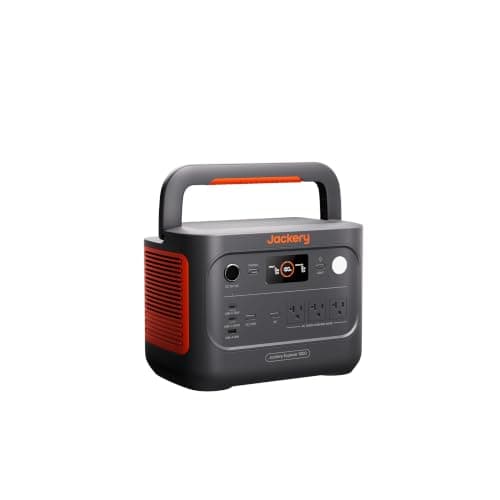
A fridge overnight, nothing heavier
Jackery Explorer 1000 v2
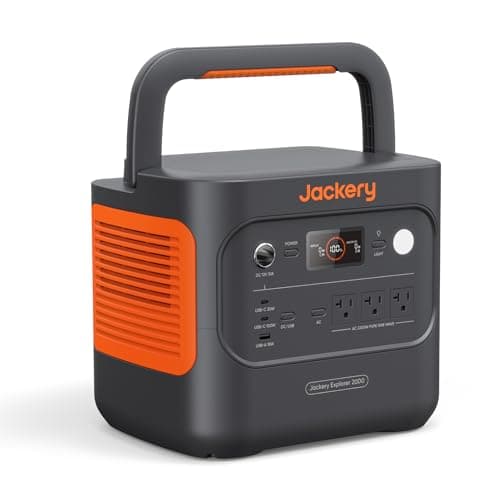
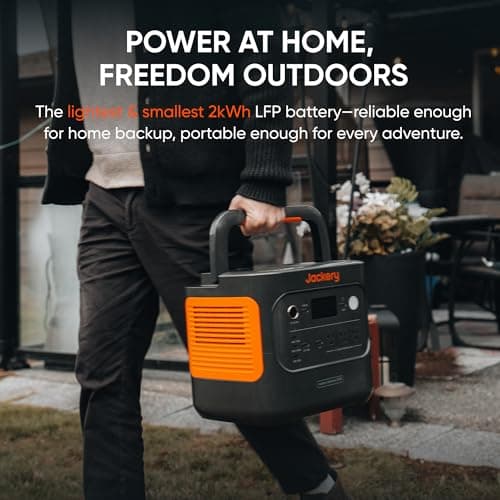
The default 2 kWh home backup battery
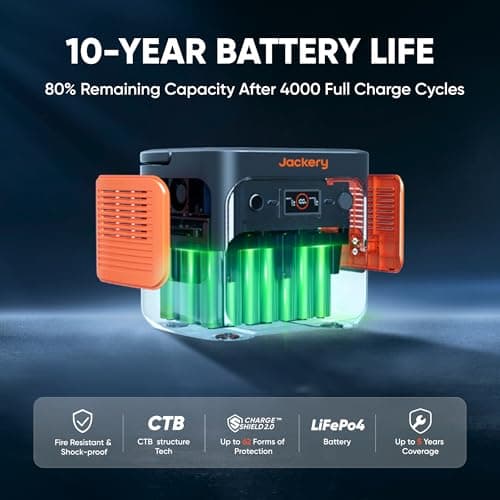
Jackery Explorer 2000 v2
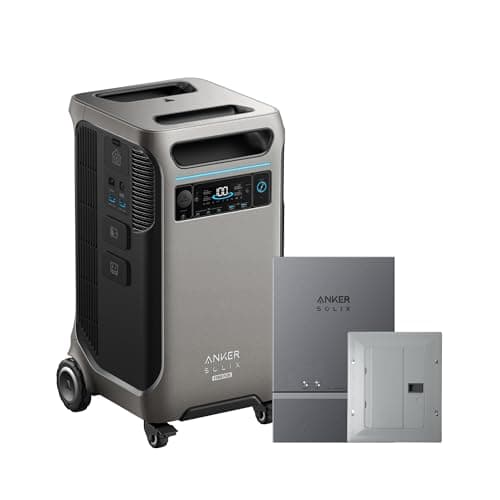
Left to right: a published 1,070 Wh covers a refrigerator overnight; 2,042 Wh covers a day of fridge, lights, devices and internet; 3,840 Wh expandable is the point at which a battery runs circuits rather than extension cords. Every capacity figure is the maker's published rating.
Worked examples using this same arithmetic: how long will a power station run a fridge and can a power station run a furnace.
Sizing a generator instead, or as well? The generator wattage calculator handles running watts and start-up surge, and power station vs generator works through the choice itself.
Questions people actually ask
How do I calculate power station runtime?
Multiply the rated watt-hours by the inverter efficiency, then divide by your load in watts. A 2,000 Wh battery at 88% efficiency carrying a 100 watt load runs about 17.6 hours. The calculator on this page does it in both directions, including the capacity you would need for a target number of hours.
How long will a 2,000 Wh power station run a refrigerator?
Between about 12 and 35 hours on our arithmetic, depending on the fridge. The figure that matters is the 24-hour average draw, not the running watts: an efficient unit with the door kept shut averages nearer 50 watts, an older or fuller one nearer 150.
Why is usable capacity lower than the rating on the box?
Because converting the battery's DC output to household AC loses energy. We assume 88% efficiency, so a 2,048 Wh battery delivers roughly 1,802 Wh at the outlet. It is an assumption rather than a published figure, which is why it is an input you can change.
Is the runtime calculator free?
Yes. No sign-up, no email, nothing stored, and the formula is printed next to the result so you can check the arithmetic rather than trust it.
Can a power station run a space heater?
Only briefly. A 1,500 watt heater has no duty cycle and no surge — it draws its full rating continuously — so even a 3,840 Wh system empties in a little over two hours. Heating through an outage is a fuel question rather than a battery one.
Does a bigger battery always run longer?
For the same load, yes. But capacity and output are separate specifications, and the inverter decides what you can plug in at all. Anker publishes 2,010 Wh behind a 1,500 W inverter on one unit and 1,024 Wh behind 2,000 W with 3,000 W peak on another, so the smaller battery starts motors the larger one cannot.
How many watt-hours do I need for a three-day outage?
Enter 72 hours in the calculator with your real load and it will tell you. For a refrigerator plus lights, devices and internet, the figure usually lands above what any single portable unit holds, which is why a solar panel or a generator to recharge is part of a credible three-day plan.
Sources
- Eugene Water & Electric Board — Generator Sizing ConsiderationsPublic-utility wattage chart: the running and additional-starting figures quoted on this page, and the add-the-single-largest-surge method.
- Champion Power Equipment — Quick Reference WattageManufacturer wattage chart: the second published figure wherever it differs from EWEB's, and the kitchen and laundry loads EWEB does not list.
- FoodSafety.gov — food safety during a power outageThe 4-hour refrigerator and 48-hour full-freezer guidance used to decide how many hours of capacity a battery actually has to cover.
Read next
Guide
Generator Wattage Calculator
The site's generator size calculator: pick appliances from the published wattage chart, get running watts, peak watts and a size class with a live-priced pick.
Guide
What Size Power Station Do I Need?
Sizing a power station from your actual load: the watts-times-hours arithmetic, what each published capacity really covers, and the output ceiling that overrules it.

Guide
How Long Will a Power Station Run a Fridge?
The runtime calculation shown in full, the manufacturer claims, and why a cycling fridge lasts far longer than its running watts suggest.
Best Overall Power Station
The Best Home Backup Power Stations
Battery power stations ranked for home backup on surge, capacity, recharge speed and cycle life.
Top pick · Jackery Explorer 2000 v2
$999.00See the Explorer 2000 v2 on Amazon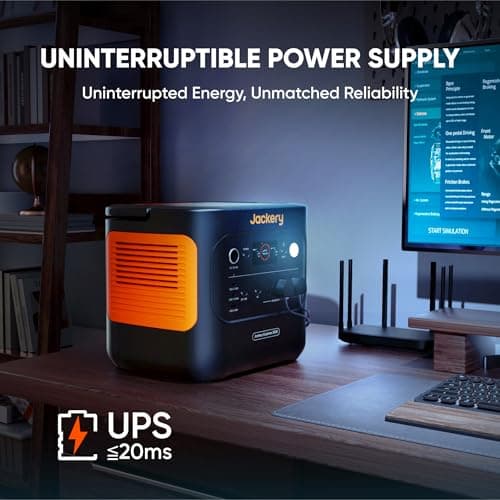
Battery vs Engine
Portable Power Station vs Generator
Battery against generator on surge capability, runtime, placement and cost, with the two facts that decide it.