Power Stations
Best Portable Power Stations Under $1,000
Three units land within 38 Wh of each other at the top of this budget. The figures that separate them are surge output and standby draw, not capacity.
Written byMike M.
Published
Disclosure: we earn a commission on purchases made through links on this page, at no cost to you. It does not affect what we recommend or what we say about it — how we are funded.
The short answer
Under $1,000 the best portable power station is EcoFlow's DELTA 3 Max: 2,048 Wh, 2,400 W of output with 3,400 W in X-Boost, and a published sub-10 ms switchover so a refrigerator or a modem never notices the outage. Anker's SOLIX S2000 matches it on capacity with a 6 W idle draw and a published 10,000 cycles, and EcoFlow's DELTA 3 Classic is the cheapest unit here that genuinely starts a fridge compressor.
This budget has a clean shape. At the top of it, three batteries land within 38 watt-hours of each other — 2,048 Wh, 2,042 Wh and 2,010 Wh — so capacity is effectively settled and the decision moves to two other published numbers: how much surge the inverter will deliver, and how much power the unit wastes sitting idle. At the bottom of it, roughly half the money buys roughly half the capacity, and the question becomes whether that is still enough.
What the cap excludes matters just as much, and we say so plainly below: no unit under $1,000 publishes a 240 V outlet, and none of them connects to your breaker panel.
The short answer
Quick picks
| # | Product | Best for | Score | Price |
|---|---|---|---|---|
| 1 | 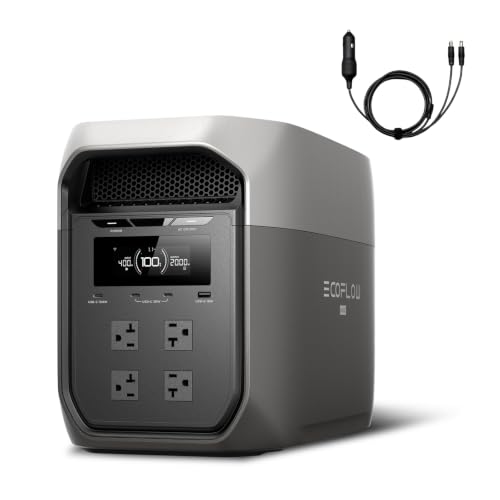 EcoFlow DELTA 3 Max The best battery here for keeping specific things running without interruption — the sub-10 ms transfer is a real functional difference, not a spec-sheet flourish. | UPS-grade switchover for a fridge | 9.4/10 | $999.00 |
| 2 | 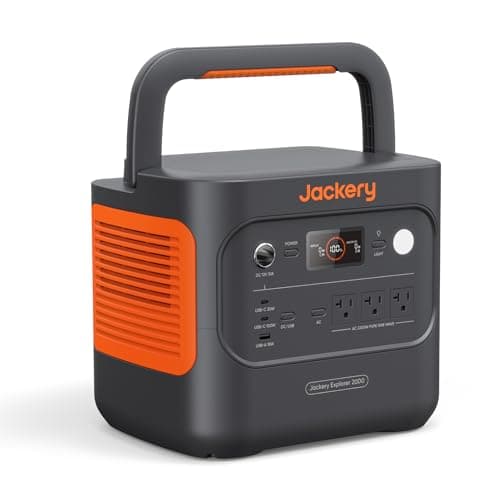 Jackery Explorer 2000 v2 The most sensible battery backup for most homes: enough capacity to carry a fridge and electronics through a typical outage, indoors, silently. | The default 2 kWh home backup battery | 9.4/10 | $999.00 |
| 3 | 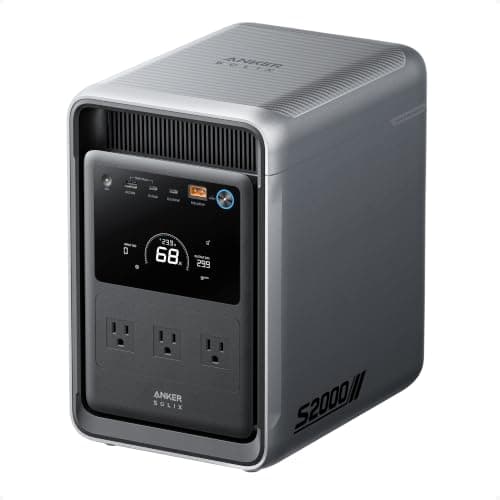 Anker SOLIX S2000 The endurance choice: the lowest idle draw and the longest cycle life here, with an output ceiling deliberately traded away to get them. | Longest fridge runtime per watt-hour | 9.3/10 | $699.99 |
| 4 | 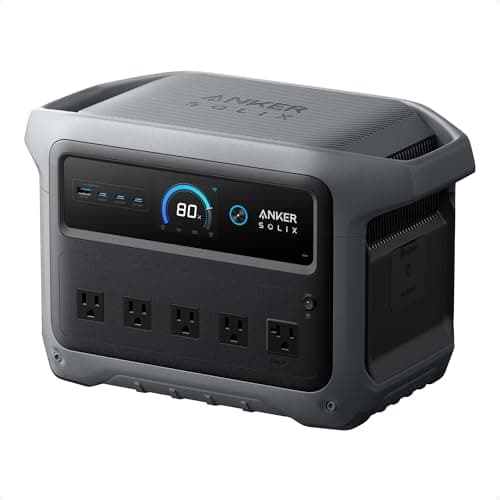 Anker SOLIX C1000 Gen 2 The right 1 kWh battery if your problem is short high-draw bursts rather than long low-draw endurance — and the fastest refill here by a wide margin. | Fastest 1 kWh recharge | 9.2/10 | $529.99 |
| 5 | 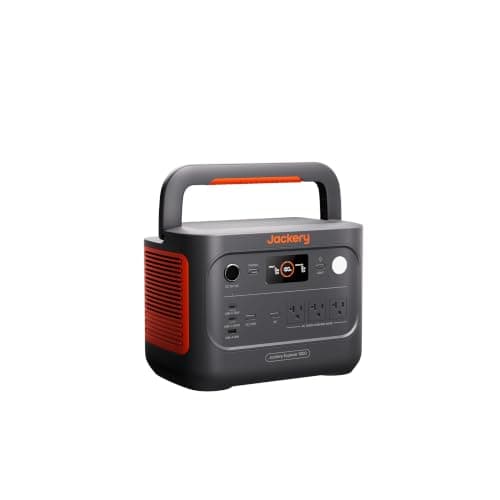 Jackery Explorer 1000 v2 The right size for the job most people actually want: a refrigerator and the phones carried through the night, at 23.8 lb and a full recharge in an hour. | A fridge overnight, nothing heavier | 9.1/10 | $559.00 |
| 6 | 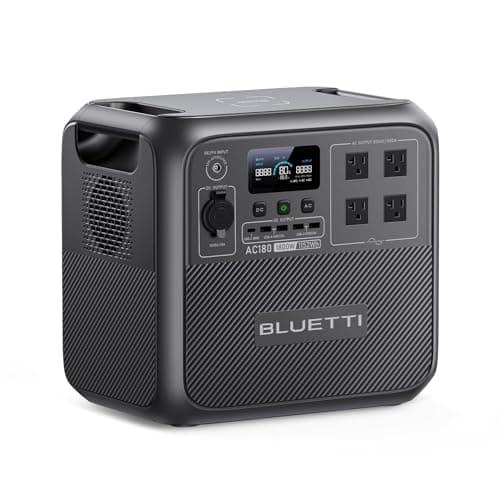 Bluetti AC180 The cheapest battery that will actually run a refrigerator overnight, with solar input as its main compromise. | 1.1 kWh at the lowest price | 8.9/10 | $549.00 |
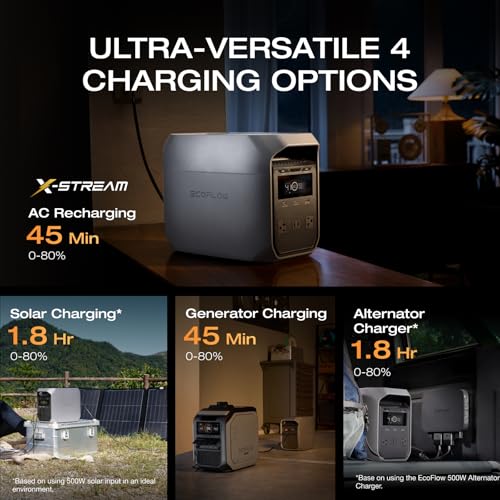
| 7 | 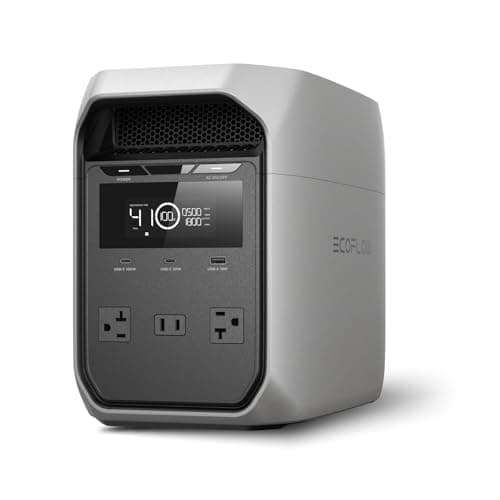 EcoFlow DELTA 3 Classic The best-value battery on the site: UPS-grade switchover, 1,800 W and a 45-minute recharge for roughly half what the 2 kWh units cost. | Best value 1 kWh with UPS | 9.3/10 | $462.00 |
#ad Amazon prices as of November 19, 2026; they may have changed since. Scores are our editorial judgment from published specifications, not test results — how we pick. How we are funded.
Where the $1,000 ceiling actually falls
Capacity and output under the cap
- EcoFlow DELTA 3 Max
- 2,048 Wh / 2,400 W, 3,400 W boost
- Jackery Explorer 2000 v2
- 2,042 Wh / 2,200 W
- Anker SOLIX S2000
- 2,010 Wh / 1,500 W
- Bluetti AC180
- 1,152 Wh / 1,800 W, 2,700 W peak
- Jackery Explorer 1000 v2
- 1,070 Wh / 1,500 W, 3,000 W surge
- Anker SOLIX C1000 Gen 2
- 1,024 Wh / 2,000 W, 3,000 W peak
- EcoFlow DELTA 3 Classic
- 1,024 Wh / 1,800 W, 3,600 W boost
Manufacturer published figures. Every cell chemistry here is LiFePO4, which is the baseline to insist on at this price — the published cycle claims run from 3,000 to 10,000 cycles rather than the few hundred older lithium packs managed.
Two things fall out of that table immediately. The 2 kWh class is a real plateau at this budget rather than a ladder, and in the 1 kWh class output varies far more than capacity: 1,024 Wh buys anything from 1,500 W to 2,000 W of continuous output depending on which unit you choose.
Surge is the number that decides whether it runs a refrigerator
A refrigerator's compressor needs roughly 2,200 watts to start, against 400-700 watts to run — that is the published figure from the appliance charts this site cites throughout, and it is the whole reason continuous output ratings mislead people. A 1,800 W unit with a 3,600 W boost starts a fridge. A 1,800 W unit with no surge headroom may not.
- EcoFlow DELTA 3 Classic: 1,800 W continuous, 3,600 W via X-Boost — the largest published surge in the 1 kWh class here.
- Anker SOLIX C1000 Gen 2: 2,000 W continuous, 3,000 W peak, and the highest continuous rating relative to its capacity on this page.
- Jackery Explorer 1000 v2: 1,500 W continuous but a published 3,000 W surge, which is the figure that matters and which Jackery states plainly.
- Bluetti AC180: 1,800 W continuous with a 2,700 W peak — above the published fridge start-up figure, but with the least headroom here.
- Anker SOLIX S2000: 1,500 W continuous with a published 3,000 W peak — the lowest continuous rating on this page, but enough peak headroom on paper to clear the 2,200 W start-up.
Standby draw is the number nobody checks
A power station bought for outages spends almost all of its life plugged in and doing nothing, and most of them consume 20-30 watts in that state. Anker publishes a 6 W idle draw for the SOLIX S2000 and states that, with 10% higher efficiency, it is what yields up to 35 hours of refrigerator backup. Over a week of idling that difference is larger than the capacity gap between any two units on this page.
It also publishes the longest service life in this bracket: 314Ah LFP cells rated at 10,000 cycles with a stated 15-year lifespan, against the 3,000 to 4,000 cycles most units here claim, behind an under-10 ms UPS switchover that lets it sit permanently in front of the circuit it protects. For a unit that lives plugged in for months at a time, those specifications are worth more than 38 watt-hours of capacity.
The capacity arithmetic, shown so you can check it
Published watt-hours are not delivered watt-hours. Our arithmetic below derates roughly 12% for inverter conversion loss and assumes a modern Energy Star refrigerator averaging about 60 watts across its duty cycle — it runs its compressor roughly a third of the time, so the average draw is far below the running figure on its label. Substitute your own numbers; the method is what matters.
| Unit | Published capacity | Our estimate: fridge-only runtime |
|---|---|---|
| EcoFlow DELTA 3 Max | 2,048 Wh | About 30 hours |
| Jackery Explorer 2000 v2 | 2,042 Wh | About 30 hours |
| Anker SOLIX S2000 | 2,010 Wh | About 30 hours; Anker states up to 35 on its 6 W idle draw |
| Bluetti AC180 | 1,152 Wh | About 17 hours |
| Jackery Explorer 1000 v2 | 1,070 Wh | About 15 hours |
| Anker SOLIX C1000 Gen 2 | 1,024 Wh | About 15 hours |
| EcoFlow DELTA 3 Classic | 1,024 Wh | About 15 hours |
Top pick: the DELTA 3 Max, for the switchover
EcoFlow publishes a sub-10 ms transfer time on the DELTA 3 Max, and that is the specification that changes how the battery gets used. Below about 20 milliseconds, equipment plugged into it does not reboot when the grid drops: the fridge keeps cycling, the modem stays online, the desktop does not lose the file. That turns the unit from something you fetch during an outage into something that sits permanently behind the circuit you care about.
On top of that it publishes 2,048 Wh, 2,400 W continuous with 3,400 W in X-Boost, 0-80% in 1.13 hours and a 10-year daily-use design life. The honest gaps: it publishes 45 lb, and EcoFlow states this version takes no expansion batteries, so 2,048 Wh is where it stops. Jackery, by contrast, publishes 39.5 lb for the Explorer 2000 v2 and states it is the lightest 2 kWh unit available — if the battery has to move between a basement and an upstairs room, that is the better buy.
If the problem is specifically the refrigerator
The purpose-built unit is the better answer, and it now sits above this cap. Bluetti's FridgePower publishes 2,016 Wh, 1,800 W, a 10 ms DualGuard UPS switch, a 75 mm slim body designed to sit beside or behind the fridge, four UPS modes, and expansion to a stated 8,064 Wh with BlueCell 200 packs — but Bluetti now sells it only as a system with an expansion battery included, which puts the entry price comfortably over $1,000.
Inside the cap, Anker's SOLIX S2000 is the closest thing to it: a 6 W idle draw, an under-10 ms UPS switchover and a manufacturer claim of up to 35 hours of refrigerator backup, in a 35.7 lb case Anker states is 30% smaller than the average 2 kWh unit. Its continuous ceiling is 1,500 W — the lowest on this page — so a microwave or a power tool is marginal even behind the 3,000 W peak. Best power station for a refrigerator goes through that job in detail.
The budget end of the bracket
EcoFlow's DELTA 3 Classic is the cheapest unit on this page that genuinely runs a refrigerator: 1,024 Wh, 1,800 W, a 3,600 W X-Boost surge, the same sub-10 ms UPS switchover as the DELTA 3 Max, 0-80% in 45 minutes and a published 26.7 lb. For roughly half the money of a 2 kWh unit you get half the capacity and give up almost nothing else, which makes it the value pick of the bracket rather than a compromise.
Bluetti's AC180 is the alternative read: 1,152 Wh is more capacity than the DELTA 3 Classic for a similar outlay, with a one-hour full recharge at 1,440 W. Its compromises are a 500 W solar input ceiling and 37.4 lb, against Jackery's 23.8 lb for about the same capacity. If the unit will be carried rather than installed, that weight difference is the deciding figure.
A panel inside the cap, or more battery?
Two bundles land under $1,000 with a panel included, and they answer a different question: not "how long does it last" but "what happens when it is empty". A multi-day outage with no grid to recharge from makes a panel the difference between a battery and a brick — and against a generator, solar input is the only refill that needs no fuel run.
Battery-plus-panel bundles under the cap
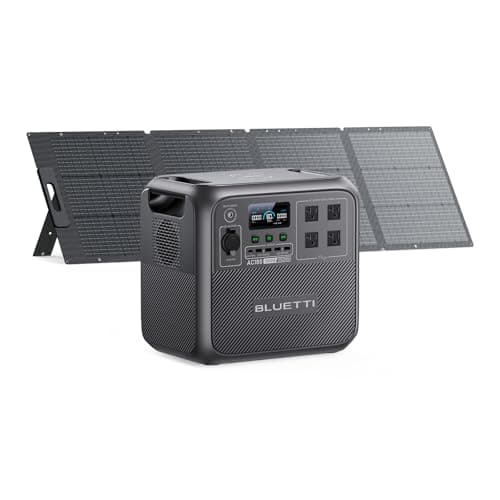
Cheapest solar kit that runs a fridge
Bluetti AC180 + 200W Solar
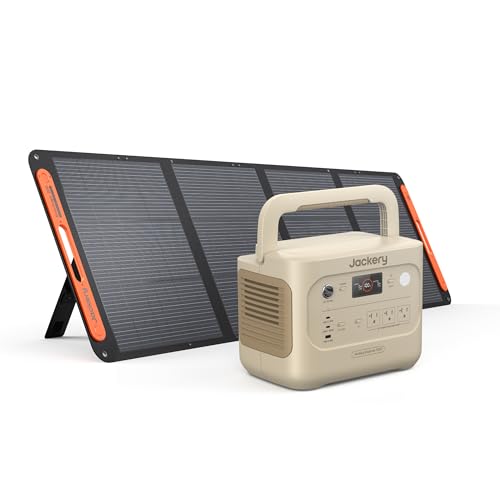
Entry solar kit
Jackery Explorer 1000 v2 + 200W Solar
Both bundle a 1 kWh-class battery with 200 W of portable panels. Expect a real-world panel to deliver meaningfully less than its rated watts — panels are rated at standard test conditions and lose output as they heat up, which the US Department of Energy states plainly.
If the outages you plan for are hours rather than days, capacity is the better use of the money. If they are days, or if you live where crews take a while, the panel is. How to charge a power station in an outage covers all four refill routes, and best solar panels for a power station covers buying a panel separately.
What $1,000 does not buy
- 1A 240 V outlet. Nothing in this bracket publishes one. A well pump, a dryer or a central air handler needs 240 V, and the battery that provides it — Anker's SOLIX F3800 Plus — is a multiple of this budget. Best home backup batteries covers that tier.
- 2Panel integration. These units power what you plug into them. Feeding your house circuits means a transfer switch and a 240 V source, which is the generator route — see portable power station vs generator for the honest comparison.
- 3Meaningful expansion. Nothing in this bracket takes an expansion battery — EcoFlow states the DELTA 3 Max listing specifically is not compatible with extra batteries, and every other unit here is a fixed capacity for life.
- 4Days of whole-house duty. 2 kWh is roughly a day and a half of refrigerator cycling on its own. Running a fridge, a furnace blower and a well pump for three days is a generator problem, not a battery problem at this price.
Prices move, and a price-capped list nobody re-checks becomes fiction. Every figure on this page comes from the live retail listing through this site's price layer rather than from our own notes, and no price is written into the prose. If a pick rises above the cap, the live price will say so before we do.
- Capacity
- 2,048 Wh
- AC output
- 2,400 W / 3,400 W boost
- Switchover
- Under 10 ms (mfr)
#1 · UPS-grade switchover for a fridge
EcoFlow DELTA 3 Max
The best battery here for keeping specific things running without interruption — the sub-10 ms transfer is a real functional difference, not a spec-sheet flourish.
#ad Price as of November 19, 2026; it may have changed since. How we are funded.
Why we picked it
- A sub-10 ms switchover means plugged-in equipment never notices the outage — this is what makes it genuinely usable for a fridge, a modem or a home office
- 3,400 W in X-Boost handles appliances the 2,400 W rating would reject
- Usually cheaper than the DELTA 2 Max it replaces
Good to know
- EcoFlow states this version takes no expansion batteries, so 2,048 Wh is the ceiling — the older DELTA 2 Max reaches 6 kWh
Published specification & our scoring
- 2,048 Wh LFP battery, 2,400 W output (manufacturer)
- Up to 3,400 W continuous in X-Boost mode (manufacturer)
- Under 10 ms transfer time for home backup (manufacturer)
- 0-80% in 1.13 hours with X-Stream charging (manufacturer)
- Manufacturer states a decade of daily use and a 5-year service commitment
- Published weight 45 lb; 19.44 x 12 x 9.4 in. Current listing adds a cigarette-to-DC5521 adapter cable
- Usable capacity
- 9
- Output ceiling
- 8
- UPS behavior
- 10
- Recharge speed
- 8
- Cycle life
- 9
- Value
- 9
Specification figures are the manufacturer’s published values. Scores are our editorial judgment from those figures and are never published as structured review data — how we pick.
- Capacity
- 2,042 Wh
- AC output
- 2,200 W
- Weight
- 39.5 lb
#2 · The default 2 kWh home backup battery
Jackery Explorer 2000 v2
The most sensible battery backup for most homes: enough capacity to carry a fridge and electronics through a typical outage, indoors, silently.
#ad Price as of November 19, 2026; it may have changed since. How we are funded.
Why we picked it
- 2,042 Wh runs a modern fridge for roughly a day and a half of cycling — the single most useful thing a battery does in an outage
- 39.5 lb for 2 kWh is genuinely carryable by one person, which no generator at equivalent usefulness is
- Zero exhaust means it runs indoors, which is the entire point versus a generator
- 66 minutes to 80% means you can top it up fast from a generator or during a brief grid restoration
Good to know
- Costs about the same as a 9,500-running-watt dual fuel generator with ten times the output
Published specification & our scoring
- 2,042 Wh capacity, 2,200 W total AC output across three AC ports (manufacturer)
- 0-80% in 66 minutes on AC fast charging (manufacturer)
- LiFePO4 battery rated for up to 10 years (manufacturer)
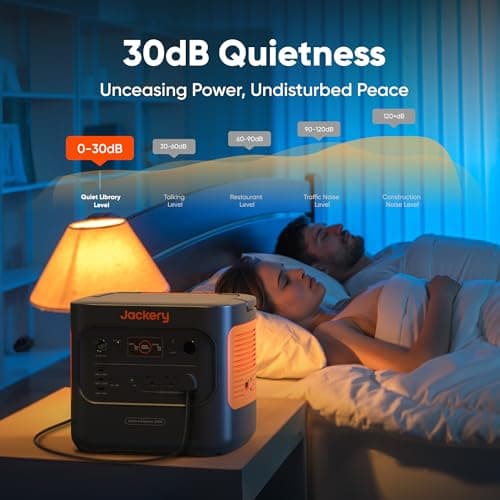
- Silent Charging Mode under 30 dB (manufacturer)
- Published weight 39.5 lb — manufacturer states it is the lightest 2 kWh unit
- App control
- Usable capacity
- 9
- Output ceiling
- 7
- Recharge speed
- 10
- Cycle life
- 9
- Portability
- 9
- Value
- 9
Specification figures are the manufacturer’s published values. Scores are our editorial judgment from those figures and are never published as structured review data — how we pick.
- Capacity
- 2,010 Wh
- AC output
- 1,500 W / 3,000 W peak
- Cycles
- 10,000 LFP (mfr)
#3 · Longest fridge runtime per watt-hour
Anker SOLIX S2000
The endurance choice: the lowest idle draw and the longest cycle life here, with an output ceiling deliberately traded away to get them.
#ad Price as of November 19, 2026; it may have changed since. How we are funded.
Why we picked it
- 10,000 cycles is more than three times what most LiFePO4 power stations claim — this is a buy-once battery
- A 6 W idle draw makes it one of the few units that is sensible to leave plugged in permanently
- The manufacturer's 35-hour fridge figure is the longest claim of any 2 kWh unit here
Good to know
- 1,500 W continuous is the lowest of the 2 kWh units — the 3,000 W peak starts a fridge, but sustained high loads are not what it is built for
Published specification & our scoring
- 2,010 Wh capacity, 1,500 W AC output with a 3,000 W peak (manufacturer)
- Manufacturer states up to 35 hours of fridge backup, from a 6 W idle draw and 10% higher efficiency
- 314Ah LFP cells rated 10,000 cycles with a stated 15-year lifespan (manufacturer)
- Manufacturer states it is 30% smaller and 25% lighter than the industry average 2 kWh unit
- Under 10 ms UPS switchover (manufacturer)
- Published weight 35.7 lb, 8.2 x 11.1 x 12.7 in
- Usable capacity
- 9
- Cycle life
- 10
- Standby efficiency
- 10
- Output ceiling
- 5
- Recharge speed
- 7
- Value
- 10
Specification figures are the manufacturer’s published values. Scores are our editorial judgment from those figures and are never published as structured review data — how we pick.
- Capacity
- 1,024 Wh
- AC output
- 2,000 W / 3,000 W peak
- Recharge
- 49 min (mfr)
#4 · Fastest 1 kWh recharge
Anker SOLIX C1000 Gen 2
The right 1 kWh battery if your problem is short high-draw bursts rather than long low-draw endurance — and the fastest refill here by a wide margin.
#ad Price as of November 19, 2026; it may have changed since. How we are funded.
Why we picked it
- 2,000 W continuous at 1 kWh is the highest output-to-capacity ratio here — it runs appliances other 1 kWh units refuse
- 49 minutes to full is the fastest recharge on the site
- 4,000 cycles with at least 80% remaining
Good to know
- 1,024 Wh at 2,000 W draw is about 30 minutes — high output and small capacity is a short-runtime combination
Published specification & our scoring
- 1,024 Wh capacity, 2,000 W output with 3,000 W peak across 10 ports (manufacturer)
- Full recharge in 49 minutes at 1,600 W with HyperFlash (manufacturer)
- InfiniPower: at least 80% capacity after 4,000 cycles, 10-year design life (manufacturer)
- Manufacturer states it is 14% smaller than the previous generation
- Under 10 ms UPS switchover (manufacturer)
- Published weight 24.9 lb
- Output ceiling
- 9
- Recharge speed
- 10
- Cycle life
- 10
- Usable capacity
- 6
- Portability
- 10
- Value
- 9
Specification figures are the manufacturer’s published values. Scores are our editorial judgment from those figures and are never published as structured review data — how we pick.
- Capacity
- 1,070 Wh
- AC output
- 1,500 W / 3,000 W surge
- Weight
- 23.8 lb
#5 · A fridge overnight, nothing heavier
Jackery Explorer 1000 v2
The right size for the job most people actually want: a refrigerator and the phones carried through the night, at 23.8 lb and a full recharge in an hour.
#ad Price as of November 19, 2026; it may have changed since. How we are funded.
Why we picked it
- The 3,000 W surge rating is what lets it start a fridge compressor — the figure that actually matters, and many rivals understate it
- 23.8 lb is carry-it-upstairs light
- One hour to full is faster than most units twice its price
Good to know
- 1,070 Wh is roughly 15-20 hours of fridge cycling, not multiple days
Published specification & our scoring
- 1,070 Wh capacity, 1,500 W AC output with 3,000 W surge peak (manufacturer)
- 0-100% in one hour with emergency charging (manufacturer)
- LFP battery holding over 70% of original capacity after its rated life (manufacturer)
- Two USB-C, one USB-A, one DC car port, three pure sine wave AC ports, LED lights
- App control with a 30 dB quiet charging mode
- Published weight 23.8 lb
- Usable capacity
- 6
- Output ceiling
- 6
- Recharge speed
- 10
- Cycle life
- 9
- Portability
- 10
- Value
- 9
Specification figures are the manufacturer’s published values. Scores are our editorial judgment from those figures and are never published as structured review data — how we pick.
- Capacity
- 1,152 Wh
- AC output
- 1,800 W / 2,700 W peak
- Recharge
- 1 h at 1,440 W (mfr)
#6 · 1.1 kWh at the lowest price
Bluetti AC180
The cheapest battery that will actually run a refrigerator overnight, with solar input as its main compromise.
#ad Price as of November 19, 2026; it may have changed since. How we are funded.
Why we picked it
- 1,152 Wh and 1,800 W for well under $500 is the price floor for a battery that can genuinely carry a fridge overnight
- One-hour full recharge
- UPS function included
Good to know
- 37.4 lb for 1.1 kWh is heavy relative to Jackery's 23.8 lb for 1.07 kWh
Published specification & our scoring
- 1,152 Wh LiFePO4 battery, 1,800 W output with 2,700 W peak (manufacturer)
- Full recharge in one hour at 1,440 W AC input (manufacturer)
- 500 W solar input; 2.8-3.3 hours solar-only charge (manufacturer)
- Eight outlets; UPS function for emergency power (manufacturer)
- App control; published weight 37.4 lb
- Usable capacity
- 6
- Output ceiling
- 7
- Recharge speed
- 9
- Solar input
- 5
- Portability
- 7
- Value
- 10
Specification figures are the manufacturer’s published values. Scores are our editorial judgment from those figures and are never published as structured review data — how we pick.
- Capacity
- 1,024 Wh
- AC output
- 1,800 W / 3,600 W surge
- Switchover
- Under 10 ms (mfr)
#7 · Best value 1 kWh with UPS
EcoFlow DELTA 3 Classic
The best-value battery on the site: UPS-grade switchover, 1,800 W and a 45-minute recharge for roughly half what the 2 kWh units cost.
#ad Price as of November 19, 2026; it may have changed since. How we are funded.
Why we picked it
- UPS behavior at a 1 kWh price point — you can put the fridge or the home office behind it permanently
- 1,800 W continuous is higher than Jackery's 1,500 W at similar capacity
- 45 minutes to 80% and 26.7 lb
Good to know
- 1,024 Wh is a single night of fridge duty, not a weekend
Published specification & our scoring
- 1,024 Wh, 1,800 W output with 3,600 W surge via X-Boost (manufacturer)
- 0-80% in 45 minutes with X-Stream AC charging (manufacturer)
- Under 10 ms UPS switchover (manufacturer)
- LiFePO4 cells rated for 10+ years of daily use, EV-grade cell-to-chassis design (manufacturer)
- Published weight 26.7 lb
- Usable capacity
- 6
- Output ceiling
- 7
- UPS behavior
- 10
- Recharge speed
- 10
- Portability
- 9
- Value
- 10
Specification figures are the manufacturer’s published values. Scores are our editorial judgment from those figures and are never published as structured review data — how we pick.
In short
Our recommendation
Best Battery Under $1,000
9.4/10EcoFlow DELTA 3 Max
The best battery here for keeping specific things running without interruption — the sub-10 ms transfer is a real functional difference, not a spec-sheet flourish.
Runner-up
9.4/10Jackery Explorer 2000 v2
The most sensible battery backup for most homes: enough capacity to carry a fridge and electronics through a typical outage, indoors, silently.
#ad Price as of November 19, 2026; it may have changed since. How we are funded.
Brands: want your product tested? For Brands.
Questions people actually ask
What is the best portable power station under $1,000?
EcoFlow's DELTA 3 Max. It publishes 2,048 Wh, 2,400 W of continuous output with 3,400 W in X-Boost, and a sub-10 ms switchover that lets a fridge or a modem ride through the outage without rebooting. Jackery's Explorer 2000 v2 is the pick if the unit has to be carried — it publishes 39.5 lb for 2,042 Wh.
How big a power station can you get for under $1,000?
About 2 kWh. Three units cluster at the top of this budget within 38 watt-hours of each other: 2,048 Wh, 2,042 Wh and 2,010 Wh. Capacity above that, and any unit with a 240 V outlet, costs more than $1,000.
Will a power station under $1,000 run a refrigerator?
Yes, if its published surge rating clears the roughly 2,200 watts a compressor needs to start. On our arithmetic — a 12% inverter derate and a 60 W average draw for a modern fridge — a 2 kWh unit covers about 30 hours of fridge-only duty and a 1 kWh unit about 15. Add phones, a router and lights and both figures fall.
Can a power station under $1,000 power a whole house?
No. None of them publishes a 240 V outlet and none connects to a breaker panel, so a well pump, dryer or central air handler is out of reach. They power what you plug into them, which for most outages means the refrigerator, the internet, lights, phones and a CPAP. Whole-house backup at this price means a generator and a transfer switch.
Is LiFePO4 worth it under $1,000?
It is the baseline rather than an upgrade — every unit in this bracket uses it. The published cycle claims run from 3,000 to 10,000 cycles with 80% or more capacity remaining, against a few hundred for older lithium chemistries. For a battery used a handful of times a year, that is the difference between a decade of service and a few years.
How long does a 2,000Wh power station last?
It depends entirely on the load. Our arithmetic puts a 2 kWh unit at about 30 hours running a modern refrigerator alone, roughly 20 hours with a router and phone charging added, and under two hours on a 1,000 W space heater. Anything with a heating element empties a battery of this size quickly, which is why heaters belong on a generator.
Should I buy a bigger battery or add a solar panel?
Capacity wins for outages measured in hours; a panel wins for outages measured in days, because it is the only refill route that needs no fuel and no grid. Two bundles in this bracket include 200 W of panels with a 1 kWh-class battery, which is the cheaper way to test whether solar recharging suits your location.
Sources
- Eugene Water & Electric Board — Generator Sizing ConsiderationsPublished appliance running and additional-starting watt figures used in the capacity arithmetic on this page.
- FoodSafety.gov — food safety during a power outageThe 4-hour refrigerator and 48-hour full-freezer guidance referenced when deciding how much capacity is needed.
- US Department of Energy — Solar Photovoltaic Performance and Efficiency BasicsPublished statement that solar cells work best at low temperatures, used on the panel roundup where it explains why a hot panel underperforms its rating.
Read next
Best Battery Under $500
Best Portable Power Stations Under $500
Price-capped at $500: the six batteries under the ceiling, and the surge rating that separates the ones that run a fridge from the ones that charge phones.
Top pick · EcoFlow DELTA 3 Classic
$462.00See the DELTA 3 Classic on Amazon17% off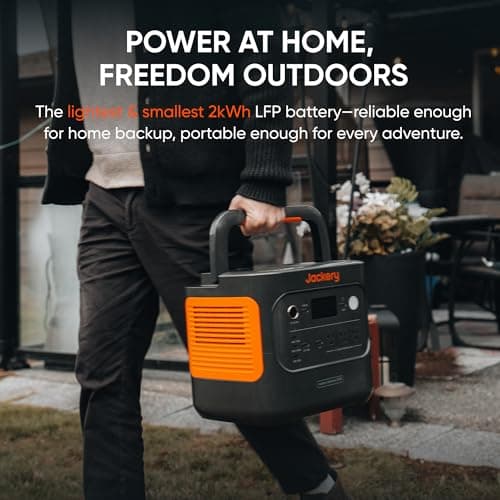
Best Overall Power Station
The Best Home Backup Power Stations
Battery power stations ranked for home backup on surge, capacity, recharge speed and cycle life.
Top pick · Jackery Explorer 2000 v2
$999.00See the Explorer 2000 v2 on Amazon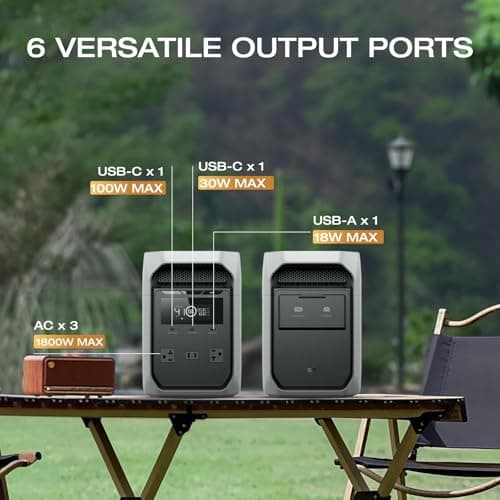
Best Budget Pick
Best Budget Power Stations
Budget power stations worth owning, with honest limits on what 300 watts of output can do.
Top pick · EcoFlow DELTA 3 Classic
$462.00See the DELTA 3 Classic on Amazon17% off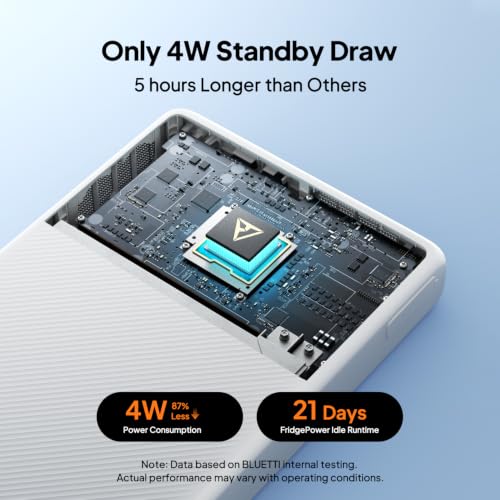
Best for a Refrigerator
Best Power Station for a Refrigerator
Power stations that reliably start a fridge compressor, ranked on surge, idle draw and UPS switchover.
Top pick · Bluetti FridgePower Backup System
$1,899.00See the FridgePower Backup System on Amazon27% off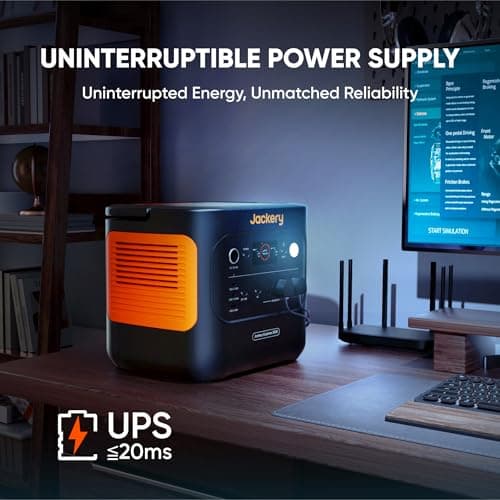
Guide
What Size Power Station Do I Need?
Sizing a power station from your actual load: the watts-times-hours arithmetic, what each published capacity really covers, and the output ceiling that overrules it.
Battery vs Engine
Portable Power Station vs Generator
Battery against generator on surge capability, runtime, placement and cost, with the two facts that decide it.