Generator Sizing
What Size Power Station Do I Need?
A generator is sized in watts. A battery is sized in watt-hours, and the second number is the one people forget until the third hour of the outage.
Written byMike M.
Published
Disclosure: we earn a commission on purchases made through links on this page, at no cost to you. It does not affect what we recommend or what we say about it — how we are funded.
The short answer
| What you want to carry | Watt-hours to plan for | Published capacity that covers it |
|---|---|---|
| Phones, a laptop, a router | 100-300 Wh overnight | 230-292 Wh class |
| A CPAP overnight | 300-600 Wh | 288-1,070 Wh class |
| A refrigerator, overnight | 700-1,200 Wh | 1,024-1,152 Wh class |
| A refrigerator, a full day | 1,500-2,500 Wh | 2,010-3,014.4 Wh class |
| Fridge plus a furnace blower, a day | 2,500 Wh and up | 2 kWh expandable, or a generator |
| Anything at 240 V | Capacity is not the issue | Only units publishing 240 V output |
The middle column is watts multiplied by hours, allowing for a compressor that cycles rather than runs continuously. The right-hand column is the span of published capacities in our registry that lands there.
Sizing a generator is a watts question: can it carry the load at all. Sizing a battery is two questions, because a battery can carry a load it cannot carry for long. You need the output rating to be high enough, and separately you need the watt-hours to last. Almost everyone who is disappointed by a power station got the first number right and the second one wrong.
The arithmetic, in one line
Watt-hours needed
- The formula
- Running watts x hours = watt-hours
- Refrigerator example
- 700 W x 8 h, cycling roughly half the time
- Which gives
- About 2,800 Wh of run time, or ~1,400 Wh drawn
- Plus conversion losses
- Plan a margin rather than sizing to the exact figure
The 700 W refrigerator figure is EWEB's published running-watt value. The cycling allowance is our reasoning — a compressor does not run continuously, which is why an 8-hour night costs far less than 8 x 700 Wh.
That cycling point is the single most useful thing on this page, and it is why published runtime claims for refrigerators look implausibly good until you understand them. A compressor runs in bursts. The appliance is on for eight hours; the motor is not.
It is also why the honest unit of planning is hours rather than days. FoodSafety.gov publishes that a closed refrigerator holds a safe temperature for about four hours and a full freezer for about 48, which means a battery's job is usually to extend a window rather than to replace the grid. How long a power station runs a fridge works that through model by model.
The second number: output, which overrules capacity
A large battery with a small inverter cannot start a motor, however many watt-hours it holds. Published output ratings in our registry span a factor of fifteen:
| Unit | Published capacity | Published AC output |
|---|---|---|
| EcoFlow RIVER 3 230 | 230 Wh | 550 W, up to 600 W |
| Jackery Explorer 300 | 292 Wh | 300 W, 600 W peak |
| Bluetti Elite 30 V2 | 288 Wh | 600 W, 1,500 W surge in Power Lifting |
| Anker SOLIX C1000 Gen 2 | 1,024 Wh | 2,000 W, 3,000 W peak |
| Jackery Explorer 1000 v2 | 1,070 Wh | 1,500 W, 3,000 W surge |
| Bluetti AC180 | 1,152 Wh | 1,800 W, 2,700 W peak |
| Anker SOLIX S2000 | 2,010 Wh | 1,500 W, 3,000 W peak |
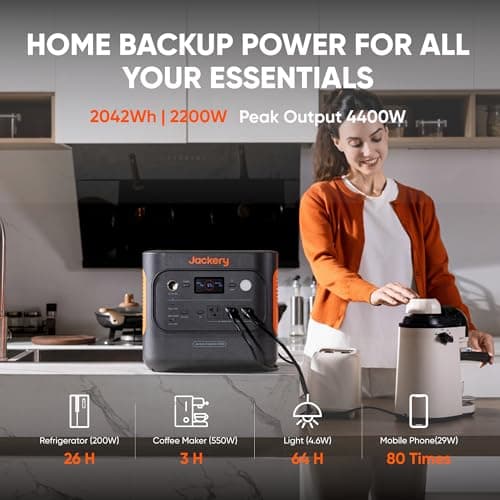
| Jackery Explorer 2000 v2 | 2,042 Wh | 2,200 W across three AC ports |
| Bluetti FridgePower | 2,016 Wh | 1,800 W, 3,600 W surge |
| EcoFlow DELTA 3 Max | 2,048 Wh | 2,400 W |
| Jackery HomePower 2000 Plus v2 | 2,048 Wh, to 12 kWh | 2,400 W |
| Bluetti Elite 300 | 3,014.4 Wh | 2,400 W, 4,800 W surge |
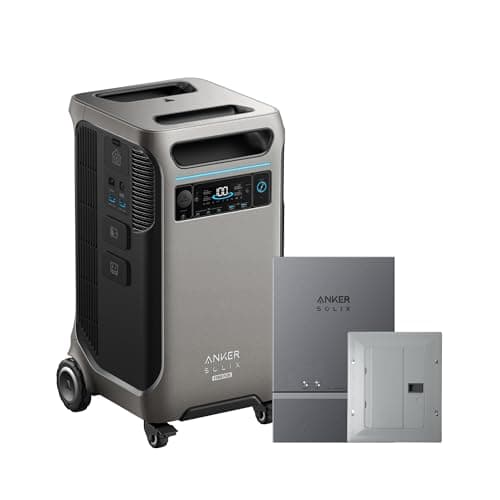
| Anker SOLIX F3800 Plus | 3,840 Wh | 6,000 W |
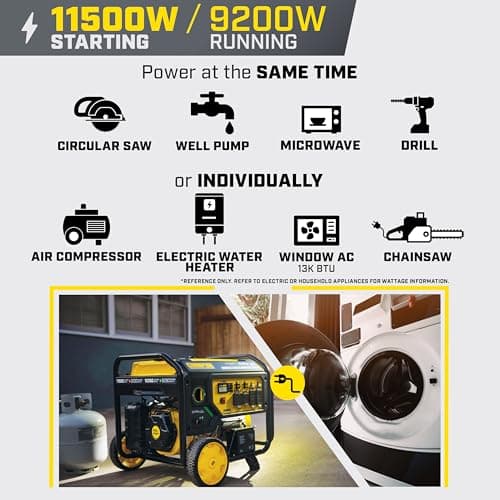
The surge column is where motors are won or lost. A refrigerator compressor draws several times its running watts for a second at every start — starting watts versus running watts is the full explanation — so a unit publishing 1,500 W continuous with 3,000 W of surge is a very different proposition from one publishing 1,500 W flat.
Four worked cases
Phones, a laptop and the router
A few hundred watt-hours covers a night comfortably, and the units are small enough to be genuinely portable — Jackery publishes 7.5 lb for the Explorer 300, where EcoFlow's RIVER 3 230 listing publishes no weight at all. This is also the one tier where a UPS is a real alternative, which power station versus UPS covers.
A CPAP overnight
Draw depends heavily on whether the humidifier and heated hose are running — without them a machine is a modest load, with them it is several times that. The dedicated case is handled on the best power station for a CPAP and backup power for medical devices, and it is the one application where you size with real margin rather than to the arithmetic.
The refrigerator, which is why most people are here
A 1 kWh unit with real surge headroom covers a night. A 2 kWh unit covers a day, and 2 kWh is where the category concentrates for exactly that reason. Bluetti's FridgePower is built around the case specifically — it publishes 2,016 Wh, a 10 ms DualGuard UPS switchover and a 4 W standby draw, that last figure being what makes it sensible to leave plugged in permanently.
A fridge plus a furnace blower, or anything at 240 V
EWEB puts a 1/3 HP furnace blower at 700 running watts with a 1,400 watt surge, so the pair is within a 2 kWh unit's output — but not within its capacity for long. This is where expandability stops being a marketing feature: Anker publishes up to 26.9 kWh for an expanded F3800 Plus and Jackery 12 kWh for the HomePower 2000 Plus v2.
And 240 V is a separate gate entirely. Only one unit in this registry publishes it — the F3800 Plus — so if your essential list contains anything hard-wired at 240 V, capacity is not the deciding specification. Can a power station run a furnace covers the blower case properly.
The short answer
One at each size
| # | Product | Best for | Score | Price |
|---|---|---|---|---|
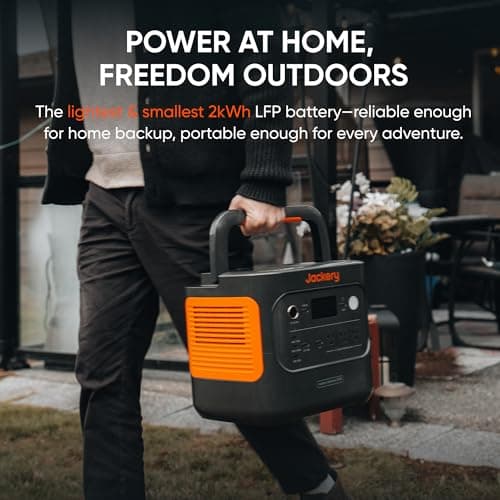
| 1 | 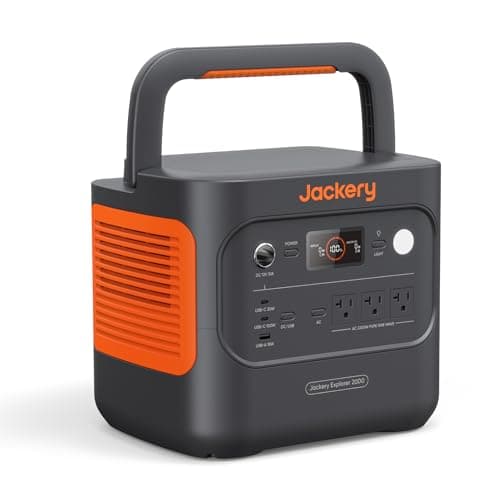 Jackery Explorer 2000 v2 The most sensible battery backup for most homes: enough capacity to carry a fridge and electronics through a typical outage, indoors, silently. | The default 2 kWh home backup battery | 9.4/10 | $999.00 |
| 2 | 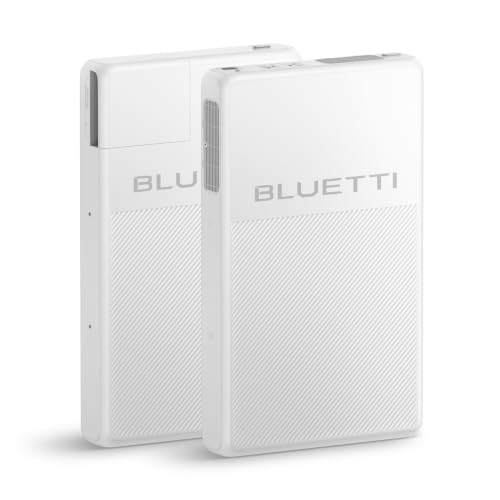 Bluetti FridgePower Backup System If the problem you are solving is specifically the refrigerator, this is the system designed for that problem — the 4 W standby and storm auto-charge are genuine engineering answers to it. | Purpose-built refrigerator backup | 9.5/10 | $1,899.00 |
| 3 | 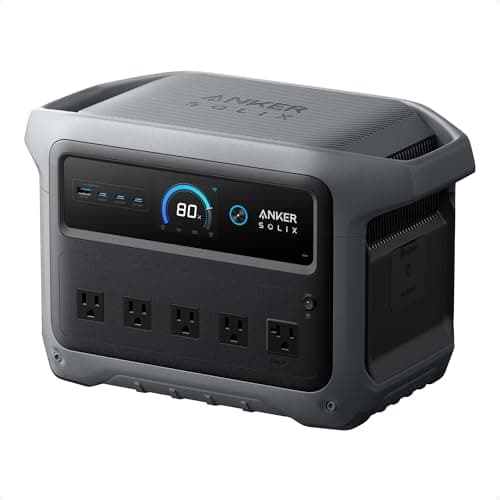 Anker SOLIX C1000 Gen 2 The right 1 kWh battery if your problem is short high-draw bursts rather than long low-draw endurance — and the fastest refill here by a wide margin. | Fastest 1 kWh recharge | 9.2/10 | $529.99 |
| 4 | 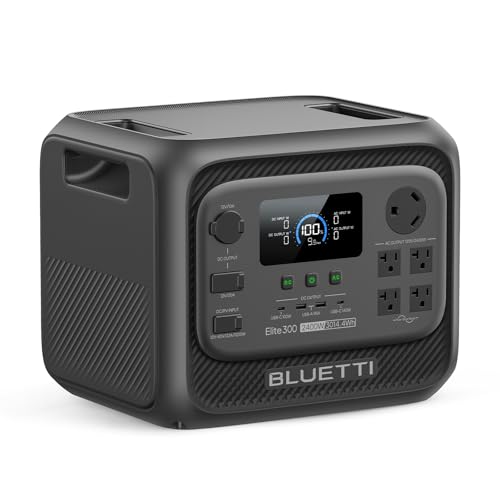 Bluetti Elite 300 The most capacity Bluetti sells in a single carryable box here: 3 kWh behind a 2,400 W inverter with a genuine 4,800 W surge, let down only by the lack of a 240 V outlet at a size where you start wanting one. | The most capacity in one carryable box | 9.0/10 | $1,299.00 |
| 5 | 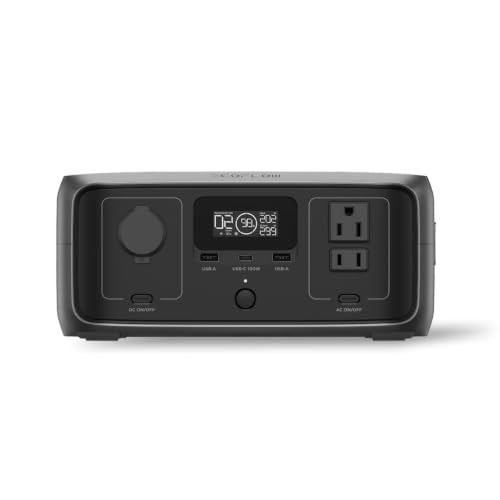 EcoFlow RIVER 3 230 The best small power station on this site: a published sub-20 ms UPS switchover and a one-hour full recharge on a LiFePO4 pack — genuine backup hardware rather than a camping battery, even if the listing leaves its weight and cycle rating unstated. | The small unit that behaves like backup gear | 8.6/10 | $319.00 |
#ad Amazon prices as of November 19, 2026; they may have changed since. Scores are our editorial judgment from published specifications, not test results — how we pick. How we are funded.
Three mistakes worth avoiding
- Sizing on capacity alone. The SOLIX S2000 publishes 2,010 Wh behind a 1,500 W output; the C1000 Gen 2 publishes half the capacity behind 2,000 W with 3,000 W of peak. Which is bigger depends entirely on what you are asking it to do.
- Forgetting the solar ceiling. If the plan involves refilling from panels, the station's published maximum solar input caps it permanently — 500 W on the AC180, 1,000 W on the DELTA 2 Max, 3,200 W on the F3800 Plus — and no figure at all on the RIVER 3 230, which is its own kind of answer. How many solar panels for a power station starts from that figure.
- Buying capacity when the answer is an engine. Past about a day of a real household load, more battery stops being the efficient answer. Battery backup versus a generator is that decision, and it is a legitimate one to reach.
Questions people actually ask
What size power station do I need for a refrigerator?
Around 1 kWh of published capacity covers a refrigerator overnight and about 2 kWh covers a full day, because a compressor cycles rather than running continuously. Check the surge rating as well as the capacity — the motor draws several times its running watts for a second at every start.
How many watt-hours do I need in a power station?
Multiply the running watts of what you want to carry by the hours you need it, then allow for the fact that motor-driven appliances cycle rather than run continuously, and add a margin for conversion losses. For most households the answer lands between 1,000 and 2,500 Wh.
Is a bigger power station always better?
No, because capacity and output are separate specifications. Anker's SOLIX S2000 publishes 2,010 Wh behind a 1,500 W output while the C1000 Gen 2 publishes 1,024 Wh behind 2,000 W with 3,000 W of peak — the smaller battery starts motors the larger one cannot.
What size power station do I need to run my house?
A portable power station is not a whole-house device. Only one unit in this registry publishes a 240 V output at all — the Anker SOLIX F3800 Plus — and anything hard-wired at 240 V is gated on that, not on capacity. Past about a day of real household load, the comparison to be having is battery against generator.
How do I know if a power station can start my appliance?
Compare the appliance's starting watts, not its running watts, against the station's published surge or peak rating. A unit quoted at 1,500 W continuous with 3,000 W surge handles a very different set of motors from one quoted at 1,500 W with no surge figure published at all.
Should I buy an expandable power station?
If your honest requirement is more than a day of a real load, yes — the published ceilings are substantial, with Anker stating 26.9 kWh for an expanded F3800 Plus and Jackery 12 kWh for the HomePower 2000 Plus v2. If the requirement is a fridge overnight a few times a year, expandability is money spent on a capability you will not use.
Sources
- Eugene Water & Electric Board — Generator Sizing ConsiderationsPublic-utility wattage chart: the running and additional-starting figures quoted on this page, and the add-the-single-largest-surge method.
- FoodSafety.gov — food safety during a power outageThe 4-hour refrigerator and 48-hour full-freezer guidance used to decide how many hours of capacity a battery actually has to cover.
- US Consumer Product Safety Commission — Portable Generator Information CenterCarbon monoxide placement guidance referenced wherever this page tells a reader where to put the machine.
Read next
Guide
Power Station Runtime Calculator
The runtime calculator: watt-hours times inverter efficiency divided by your load, both directions, with a live-priced pick for the capacity class you land in.
Best Overall Power Station
The Best Home Backup Power Stations
Battery power stations ranked for home backup on surge, capacity, recharge speed and cycle life.
Top pick · Jackery Explorer 2000 v2
$999.00See the Explorer 2000 v2 on Amazon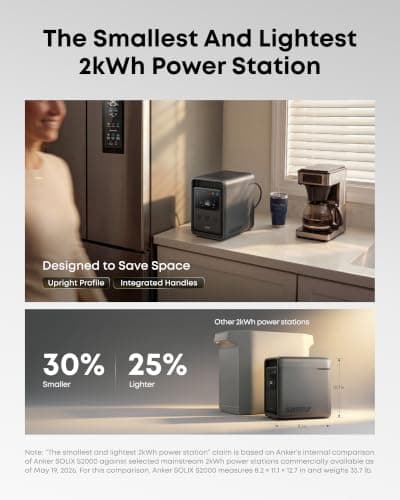
Guide
How Long Will a Power Station Run a Fridge?
The runtime calculation shown in full, the manufacturer claims, and why a cycling fridge lasts far longer than its running watts suggest.
Guide
Starting Watts vs Running Watts
What the surge figure means, why motors need it, and how to read the peak-watt number on a generator box.
Comparison
Portable Power Station vs a UPS
UPS against portable power station on what each is for, published switchover times, standby draw and whether you can leave one plugged in permanently.
Comparison
Home Battery Backup vs Generator
Installed home battery systems against generators, and the expandable portable units that sit between them.