Comparisons
Generac Alternatives for Home Backup
Generac set the template for home backup. These are the machines worth comparing against it, and the specific thing each one does differently.
Written byMike M.
Published
Disclosure: we earn a commission on purchases made through links on this page, at no cost to you. It does not affect what we recommend or what we say about it — how we are funded.
The short answer
The closest alternative to a Generac portable is the Westinghouse WGen10500DFc: 10,500 running watts on gasoline, 9,500 on propane, CO shutdown, remote start and both transfer-switch outlets. If what you actually want is the automatic, plumbed-in behavior of a Generac standby, the real alternatives are a tri-fuel portable on a natural gas line or a 240 V battery system — not another portable generator.
Searches for Generac alternatives usually come from one of two places: a quote for an installed standby unit that was higher than expected, or a shopping list where the Generac portable costs more than a similar-output rival. Those are different problems with different answers, so this page separates them.
What Generac is known for, stated fairly first
Generac is the brand most people picture when they hear "whole house generator", and the reasons are real rather than marketing. Three of them matter when you shop against it:
- The widest dealer and parts network in the category. Five years into ownership, when something needs a part, that network is worth more than a specification difference. It is the single strongest argument for buying Generac and we are not going to pretend otherwise.
- COsense and PowerRush. Generac publishes CO detection with automatic shutdown across the portable line, and states that PowerRush provides 40% more starting capacity — which is the surge headroom a well pump start actually needs.
- An upgrade path on the connection. Generac's HomeLink manual transfer switch publishes a conversion to automatic standby capability with an upgrade kit, and Generac also sells a 200 A automatic transfer switch for a full panel. No other brand in this registry offers that ladder.
What follows is not a case against any of that. It is the set of things Generac's portable range does not do, and the machines that do them. Our Generac generator review is the range-level read if you want the brand-specific detail first.
The short answer
Quick picks
| # | Product | Best for | Score | Price |
|---|---|---|---|---|
| 1 | 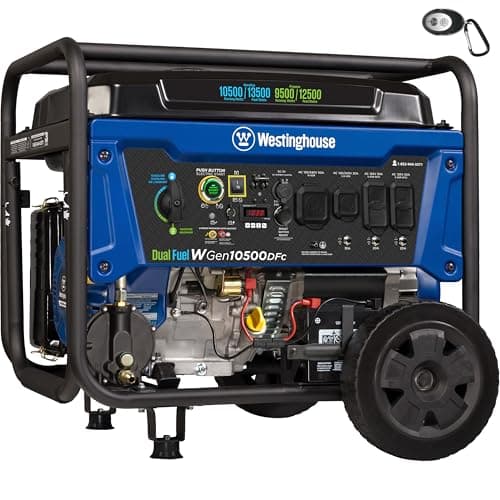 Westinghouse WGen10500DFc 13,500W Dual Fuel The WGen9500DF with the two things it is missing fixed: more running watts and a CO shutdown, at a higher price. | Same layout, with CO shutdown | 9.5/10 | $1,099.00 |
| 2 | 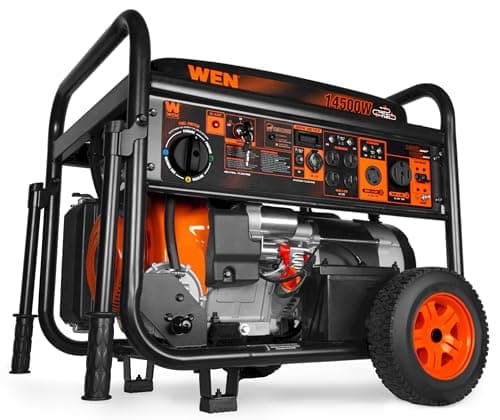 WEN TF-1450X 14,500W Tri-Fuel The value play in the 11,500-running-watt tri-fuel bracket, as long as you are comfortable with a thinner support network. | Tri-fuel value at high output | 9.4/10 | $1,054.75 |
| 3 | 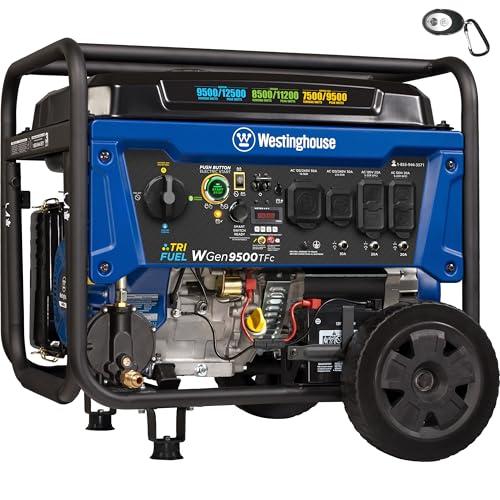 Westinghouse WGen9500TFc 12,500W Tri-Fuel The cheapest credible way to get a generator onto your home's natural gas line, and the only machine at this price that publishes what it makes on all three fuels. | Natural-gas hookup at the lowest cost | 9.4/10 | $1,149.00 |
| 4 | 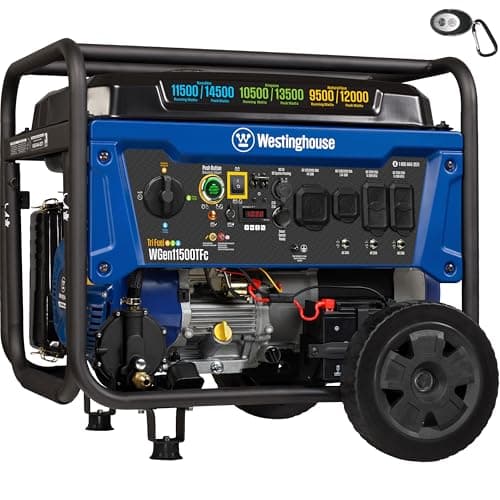 Westinghouse WGen11500TFc 14,500W Tri-Fuel Buy this when the sizing math genuinely lands above 10,000 running watts — not because bigger feels safer. | Larger homes with real 240V loads | 9.4/10 | $1,499.00 |
| 5 | 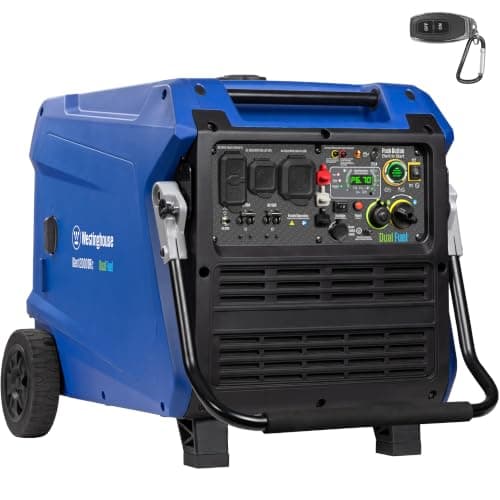 Westinghouse iGen12000DFc 12,000W Dual Fuel Inverter The best technical answer for whole-house backup if the budget allows: transfer-switch-ready output, inverter-clean power, and far less noise than the conventional alternative. | Whole-house backup with clean power | 9.5/10 | $1,899.00 |
| 6 | 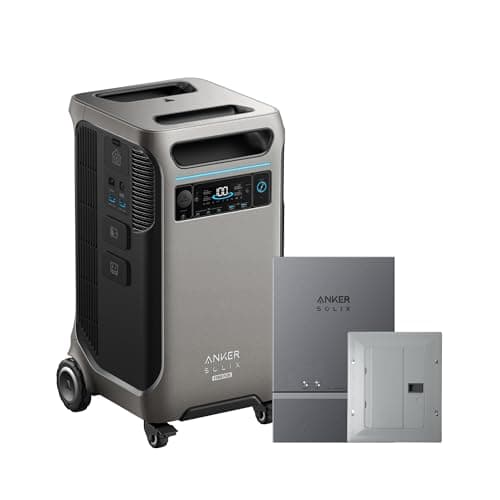 Anker SOLIX F3800 Plus The battery that can genuinely stand in for a generator on 240V circuits, with the registry's highest solar input ceiling, priced like the installed system it really is. | 240V loads plus generator pairing | 9.2/10 | $4,099.99 |
| 7 | 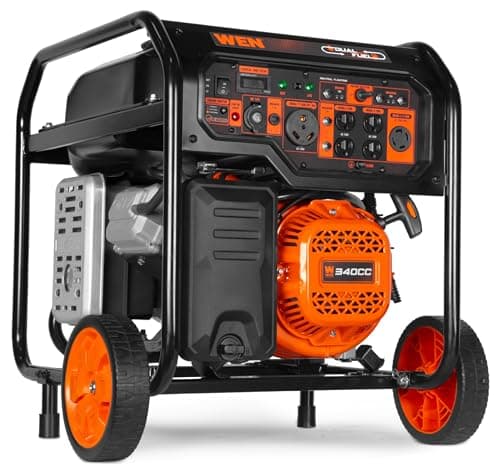 WEN DF8000X 8,000W Dual Fuel The best-value correctly-sized home backup generator here: enough for every essential circuit, dual fuel, CO shutoff, a real transfer-switch outlet, and no money spent on capacity you will not use. | Essential circuits, dual fuel, lowest cost | 9.2/10 | $658.41 |
#ad Amazon prices as of November 19, 2026; they may have changed since. Scores are our editorial judgment from published specifications, not test results — how we pick. How we are funded.
Route 1: the same job with more running watts and a second fuel
The straight substitution for a Generac portable is Westinghouse's WGen10500DFc. It publishes 10,500 running watts on gasoline and 9,500 on propane, a 500cc engine with a cast-iron sleeve, CO shutdown, remote key-fob start, and both an L14-30R and a 14-50R so the connection plan can change later without the generator changing. Generac's own GP8000E, the closest portable on output, publishes 10,000 starting watts and is gasoline only.
That second fuel is the substantive difference rather than a feature-list win. Propane stores indefinitely; gasoline degrades within months, and stale fuel is the most common reason a stored generator refuses to start. In a long outage the gas stations are usually out of power too, while a pair of 20 lb tanks in the garage are exactly as full as the day they were filled.
What you give up: Westinghouse's service network is narrower than Generac's, and at 230 lb this machine is not getting carried anywhere. It is also open-frame, so it is as loud as a Generac of the same class.
Route 2: tri-fuel, which is the real answer to a standby quote
If the appeal of a Generac standby was that it runs on your house gas line and never needs refueling, the alternative is not another gasoline portable — it is a tri-fuel portable plumbed to the same supply. A natural gas line does not run out, which makes it the single biggest runtime upgrade available at any price.
Published output on natural gas
- Westinghouse WGen11500TFc
- 9,500 W running on NG
- WEN TF-1450X
- 8,750 W running on NG
- Westinghouse WGen9500TFc
- 7,500 W running on NG
Manufacturer published figures. Every fuel costs output: each of these machines makes meaningfully less on natural gas than on gasoline, which is why the gasoline figure on the box is the wrong one to size from if natural gas is the plan.
Note who is not on that list. Generac does not currently list a tri-fuel portable on Amazon, so taking the gas-line route means leaving the brand. The cheapest way onto it is Westinghouse's WGen9500TFc, which publishes 12,500 peak and 9,500 running watts on gasoline, 7,500 running on natural gas, CO shutdown, remote key-fob start and both 240 V outlets. WEN's TF-1450X is the output play at 11,500 running watts on gasoline, and the WGen11500TFc publishes the highest natural gas figure here.
Route 3: inverter-clean output at whole-house watts
Nothing in Generac's portable line combines whole-house output with inverter power quality. Westinghouse's iGen12000DFc does: 12,000 peak watts at 3% THD or less, as low as 64 dBA with Eco Mode, dual fuel, a 14-50R and an L14-30R both transfer-switch ready, and remote electric start. For a house with a modern furnace control board, a variable-speed well pump or a lot of electronics, low harmonic distortion is the specification that matters most.
It is also dramatically quieter than any open-frame machine of this output, which in a multi-day outage with neighbors nearby is a practical consideration rather than a luxury. The costs are a higher price, an enclosure that is harder to service at home, and 187 lb. Inverter vs conventional generator works that trade through properly.
Route 4: no engine at all
The alternative Generac does not sell in this registry is a battery. Anker's SOLIX F3800 Plus publishes 3,840 Wh, 6,000 W of AC output, and both 120 V and 240 V — Anker cites a dryer as an example load — plus 3,200 W of solar input, expansion to a published 26.9 kWh for one station, and compatibility with a generator for automatic start-stop runtime extension. It runs indoors, makes no exhaust, needs no fuel run and no oil change, and starts instantly without anyone going outside.
Where it loses to an engine is duration under heavy load. 3,840 Wh is a few hours of several large appliances, while a generator with a fuel supply runs for days. Where it wins is everything else about living with it, and a battery plus a generator is a genuinely good pairing rather than a compromise — home battery backup vs generator and best home backup batteries take the battery route in detail.
The cheapest alternative that is still enough
If the Generac quote was simply more than the problem is worth, the WEN DF8000X deserves a look before you spend again. It publishes 6,500 running watts on gasoline and 5,850 on propane, Watchdog CO shutdown, a transfer-switch-ready L14-30R, a TT-30R for an RV, a wheel kit and up to 10.5 hours at half load on 6.7 gallons.
Using the published appliance figures from Eugene Water & Electric Board, a realistic essential-circuit load — refrigerator, furnace blower, well pump, sump pump and lighting — is near 3,500 running watts. A 30 A transfer switch or interlock passes only about 7,200 watts anyway. For a great many houses, the sub-$1,000 machine is not a downgrade from a 13 kW unit; it is the correctly sized one. Our best portable generators under $1,000 roundup is the whole bracket.
Which alternative fits which reason for leaving
| Why you are looking elsewhere | The alternative | What it costs you |
|---|---|---|
| The standby quote was too high | Tri-fuel portable on the house gas line | You start it and connect it by hand; the gas line still needs a licensed install |
| Generac portable costs more at the same output | Westinghouse WGen10500DFc | A narrower service and parts network |
| You want quiet, clean power at high output | Westinghouse iGen12000DFc | Highest price of the engine options; harder to service at home |
| You do not want an engine to maintain | Anker SOLIX F3800 Plus | Hours rather than days under heavy load, at a higher price |
| The whole project felt oversized | WEN DF8000X | No remote start; essential circuits only |
Keep the Generac connection even if you change the generator
Transfer switches are brand-agnostic: they care about amperage, circuit count and the outlet on your generator, not the badge on it. Generac's HomeLink 30 A manual switch publishes a one-button electronic rocker and an upgrade path to automatic standby capability, and it works with any generator carrying a matching L14-30R. Reliance's Pro/Tran family is the usual alternative and generally costs less.
Either switch works with any of the generators above
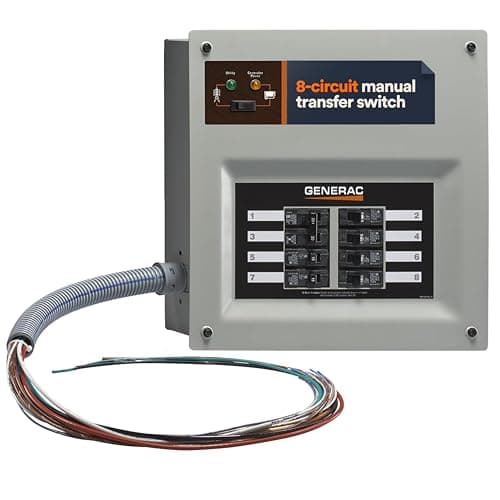
A path to automatic later
Generac HomeLink 6852 30A Manual
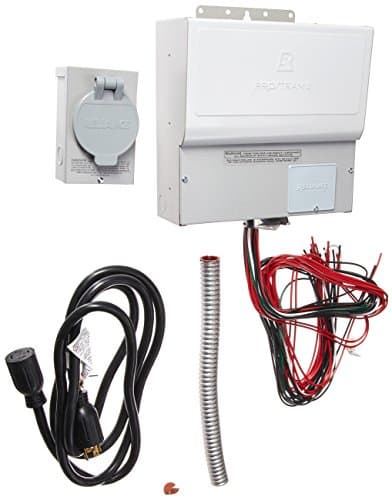
The ten-circuit default
Reliance Controls 310CRK 10-Circuit 30A Kit
A manual transfer switch is a permitted electrical installation in most jurisdictions. An interlock kit is the cheaper legal route where your panel supports one, and the Eaton factory kit publishes compliance with National Electrical Code Article 702.
One Generac product that genuinely is not an alternative for a portable plan: the 200 A Next Gen automatic transfer switch. It is designed for a permanently installed standby generator, and pairing it with a portable is not its intended use. If automatic whole-panel transfer is the requirement, that is a standby system, and portable vs standby generator is the page that settles it.
No price appears in the prose on this page. Every figure shown on the cards is the live retail price through this site's price layer, so the comparison you see is today's, not the one that was true when this was written. Specifications are the manufacturer's published figures.
- Running watts
- 10,500 W gas / 9,500 W LP
- Starting watts
- 13,500 W gas
- CO shutdown
- Yes
#1 · Same layout, with CO shutdown
Westinghouse WGen10500DFc 13,500W Dual Fuel
The WGen9500DF with the two things it is missing fixed: more running watts and a CO shutdown, at a higher price.
#ad Price as of November 19, 2026; it may have changed since. How we are funded.
Why we picked it
- A thousand running watts more than the WGen9500DF, and it adds the CO shutdown that model lacks
- Propane output of 9,500 running watts is higher than many units manage on gasoline
- Same twin transfer-switch outlets, so the connection plan does not change
Good to know
- 230 lb and open-frame — this is not getting carried anywhere
Published specification & our scoring
- 10,500 running / 13,500 peak watts on gasoline (manufacturer)
- 9,500 running / 12,500 peak watts on propane (manufacturer)
- 500cc Westinghouse 4-stroke OHV engine, cast-iron sleeve
- Automatic low-oil AND carbon monoxide (CO) shutdown
- Two 120V 5-20R GFCI, one L14-30R 30A, one 14-50R 50A
- Remote key-fob start plus electric and recoil start
- Published weight 230 lb
- Output headroom
- 10
- Fuel flexibility
- 9
- Transfer-switch fit
- 10
- Runtime
- 8
- Safety features
- 9
- Value
- 8
Specification figures are the manufacturer’s published values. Scores are our editorial judgment from those figures and are never published as structured review data — how we pick.
- Running watts
- 11,500 W gas / 8,750 W NG
- Starting watts
- 14,500 W gas
- Outlets
- L14-30R + 14-50R
#2 · Tri-fuel value at high output
WEN TF-1450X 14,500W Tri-Fuel
The value play in the 11,500-running-watt tri-fuel bracket, as long as you are comfortable with a thinner support network.
#ad Price as of November 19, 2026; it may have changed since. How we are funded.
Why we picked it
- Matches the Westinghouse WGen11500TFc's 11,500 running watts for appreciably less money
- Both 240V outlets are transfer-switch ready, which is what you want at this output
- WEN publishes all three fuels fully, including the awkward natural-gas numbers
Good to know
- No remote start at this price point
Published specification & our scoring
- Gasoline: 14,500 surge / 11,500 running watts (manufacturer)
- Propane: 12,500 surge / 10,300 running watts (manufacturer)
- Natural gas: 10,500 surge / 8,750 running watts (manufacturer)
- 500cc 4-stroke OHV engine, electric start
- 8.2-gallon tank, up to 12 hours at half load (manufacturer)
- WEN Watchdog CO shutdown sensor
- Four 120V 5-20R, one L14-30R, one 14-50R, one 12V DC — both 240V outlets transfer-switch ready
- Output headroom
- 10
- Fuel flexibility
- 10
- Transfer-switch fit
- 10
- Runtime
- 9
- Safety features
- 8
- Value
- 10
Specification figures are the manufacturer’s published values. Scores are our editorial judgment from those figures and are never published as structured review data — how we pick.
- Running watts
- 9,500 W gas / 7,500 W NG
- Starting watts
- 12,500 W gas
- Fuels
- Gas / LP / natural gas
#3 · Natural-gas hookup at the lowest cost
Westinghouse WGen9500TFc 12,500W Tri-Fuel
The cheapest credible way to get a generator onto your home's natural gas line, and the only machine at this price that publishes what it makes on all three fuels.
#ad Price as of November 19, 2026; it may have changed since. How we are funded.
Why we picked it
- Natural gas capability is the single biggest runtime upgrade available — a plumbed line does not run out
- It publishes running watts on all three fuels, including the natural gas figure most tri-fuel listings leave out, so you can size honestly before buying
- Both 240V outlets are here: the L14-30R a transfer switch expects and a 14-50R for a 50A connection or an RV
Good to know
- 7,500 running watts on natural gas is 2,000 less than on gasoline — size from the fuel you will actually run
- 215 lb open-frame, and the 6.6-gallon tank is smaller than the 9.5-gallon tanks on the bigger tri-fuel machines
Published specification & our scoring
- Gasoline: 12,500 peak / 9,500 running watts (manufacturer)
- Propane: 11,200 peak / 8,500 running watts (manufacturer)
- Natural gas: 9,500 peak / 7,500 running watts (manufacturer)
- 457cc Westinghouse 4-stroke OHV engine with cast-iron sleeve
- Up to 12 hours on the 6.6-gallon tank, with a fuel gauge (manufacturer)
- Two 120V 5-20R GFCI, one transfer-switch-ready L14-30R, one RV-ready 120/240V 14-50R
- Automatic low-oil AND carbon monoxide shutdown, digital hour meter
- Remote key-fob start plus electric and recoil start; published weight 215 lb
- 3-year limited service, labor and parts coverage (manufacturer)
- Output headroom
- 9
- Fuel flexibility
- 10
- Transfer-switch fit
- 10
- Runtime
- 8
- Safety features
- 9
- Value
- 10
Specification figures are the manufacturer’s published values. Scores are our editorial judgment from those figures and are never published as structured review data — how we pick.
- Running watts
- 11,500 W gas / 9,500 W NG
- Starting watts
- 14,500 W gas
- Runtime
- Up to 19 h (mfr)
#4 · Larger homes with real 240V loads
Westinghouse WGen11500TFc 14,500W Tri-Fuel
Buy this when the sizing math genuinely lands above 10,000 running watts — not because bigger feels safer.
#ad Price as of November 19, 2026; it may have changed since. How we are funded.
Why we picked it
- 11,500 running watts is enough to add central air to the essential-circuit list in many homes
- 19-hour runtime means one overnight refuel instead of three
- Low THD on a conventional frame is unusual and genuinely useful if you are running computers and a modern furnace board
Good to know
- 230 lb, and at this output you are firmly in permanent-location territory
Published specification & our scoring
- Gasoline: 14,500 peak / 11,500 running watts (manufacturer)
- Propane: 13,500 peak / 10,500 running watts (manufacturer)
- Natural gas: 12,000 peak / 9,500 running watts (manufacturer)
- 550cc 4-stroke OHV Westinghouse engine with cast-iron sleeve
- Up to 19 hours on the 9.5-gallon tank (manufacturer)
- Low THD — manufacturer states it is safe for sensitive electronics
- Published weight 230 lb
- Output headroom
- 10
- Fuel flexibility
- 10
- Transfer-switch fit
- 10
- Runtime
- 10
- Power quality
- 9
- Value
- 7
Specification figures are the manufacturer’s published values. Scores are our editorial judgment from those figures and are never published as structured review data — how we pick.
- Output
- 12,000 W peak
- THD
- Under 3% (mfr)
- Outlets
- 14-50R + L14-30R
#5 · Whole-house backup with clean power
Westinghouse iGen12000DFc 12,000W Dual Fuel Inverter
The best technical answer for whole-house backup if the budget allows: transfer-switch-ready output, inverter-clean power, and far less noise than the conventional alternative.
#ad Price as of November 19, 2026; it may have changed since. How we are funded.
Why we picked it
- Whole-house output AND under 3% THD — this is the combination most homes with modern furnace boards and electronics actually want
- 64 dBA at 12,000 peak watts is dramatically quieter than any open-frame machine of similar output
- Both 240V outlets are transfer-switch ready, so it works with a 30A interlock or a 50A switch
Good to know
- 187 lb and enclosed — harder to service at home than an open frame
Published specification & our scoring
- 12,000 peak watts at 3% THD or less (manufacturer)
- As low as 64 dBA with Eco Mode, insulation and mufflers (manufacturer)
- Dual fuel: gasoline or propane
- Manufacturer states inverter technology halves fuel consumption versus a conventional generator
- One 120/240V 14-50R 50A and one L14-30R 30A — both transfer-switch and interlock ready
- LED data center with fuel level, output, remaining runtime, voltage and lifetime hours
- Remote electric start; published weight 187.4 lb
- Output headroom
- 10
- Power quality
- 10
- Noise
- 9
- Transfer-switch fit
- 10
- Fuel flexibility
- 9
- Value
- 6
Specification figures are the manufacturer’s published values. Scores are our editorial judgment from those figures and are never published as structured review data — how we pick.
- Capacity
- 3,840 Wh
- AC output
- 6,000 W
- Voltage
- 120V and 240V
#6 · 240V loads plus generator pairing
Anker SOLIX F3800 Plus
The battery that can genuinely stand in for a generator on 240V circuits, with the registry's highest solar input ceiling, priced like the installed system it really is.
#ad Price as of November 19, 2026; it may have changed since. How we are funded.
Why we picked it
- 240V output at 6,000 W is what lets a battery feed panel circuits the way a generator does — almost nothing else in this class publishes it
- 3,840 Wh is nearly two days of fridge-plus-electronics duty
- 3,200 W of solar input is the highest here, so panels added later genuinely refill it inside a day
- The auto start-stop generator pairing is the closest a battery system comes to indefinite runtime
Good to know
- 135.6 lb, and effectively a fixed installation once it is placed
Published specification & our scoring
- 3,840 Wh LiFePO4 capacity, 6,000 W AC output (manufacturer)
- Dual-voltage 120V and 240V output — manufacturer cites powering a dryer
- 3,200 W solar input across two MPPT inputs — the highest ceiling in this registry (manufacturer)
- Expandable with BP3800 packs; manufacturer publishes a 26.9 kWh ceiling for one station
- Cells rated 3,000+ cycles to 80% capacity, 10-year lifespan, five-year warranty (manufacturer)
- Published weight 135.6 lb
- Compatible with the Smart Generator 5500 for automatic start-stop runtime extension (manufacturer)
- Current listing is the F3800 Plus paired with Anker's Home Power Panel, and publishes a 12,000 W maximum AC output for two stations run together (manufacturer)
- Usable capacity
- 10
- Output ceiling
- 10
- Expandability
- 10
- Portability
- 3
- Cycle life
- 9
- Value
- 5
Specification figures are the manufacturer’s published values. Scores are our editorial judgment from those figures and are never published as structured review data — how we pick.
- Running watts
- 6,500 W gas / 5,850 W LP
- Starting watts
- 8,000 W gas
- CO shutdown
- Watchdog
#7 · Essential circuits, dual fuel, lowest cost
WEN DF8000X 8,000W Dual Fuel
The best-value correctly-sized home backup generator here: enough for every essential circuit, dual fuel, CO shutoff, a real transfer-switch outlet, and no money spent on capacity you will not use.
#ad Price as of November 19, 2026; it may have changed since. How we are funded.
Why we picked it
- 6,500 running watts with CO shutdown, dual fuel and a proper L14-30R, for the price of a gasoline-only machine
- 10.5 hours at half load is better runtime than WEN's larger DF1100X
- The TT-30R makes it an RV generator as well, which widens its usefulness between outages
Good to know
- Good to know: 6,500 running watts covers the essentials; central air needs a larger machine
Published specification & our scoring
- Gasoline: 8,000 surge / 6,500 rated watts (manufacturer)
- Propane: 7,200 surge / 5,850 rated watts (manufacturer)
- 340cc engine, electric start
- WEN Watchdog CO shutdown sensor
- 6.7-gallon tank, up to 10.5 hours at half load (manufacturer)
- Wheel kit included; four 120V 5-20R, one TT-30R RV outlet, one L14-30R transfer-switch-ready twist-lock
- Output headroom
- 7
- Fuel flexibility
- 9
- Transfer-switch fit
- 9
- Runtime
- 9
- Safety features
- 8
- Value
- 10
Specification figures are the manufacturer’s published values. Scores are our editorial judgment from those figures and are never published as structured review data — how we pick.
In short
Our recommendation
Generac Alternative
9.5/10Westinghouse WGen10500DFc 13,500W Dual Fuel
The WGen9500DF with the two things it is missing fixed: more running watts and a CO shutdown, at a higher price.
Runner-up
9.4/10WEN TF-1450X 14,500W Tri-Fuel
The value play in the 11,500-running-watt tri-fuel bracket, as long as you are comfortable with a thinner support network.
#ad Price as of November 19, 2026; it may have changed since. How we are funded.
Brands: want your product tested? For Brands.
Questions people actually ask
What is a good alternative to a Generac generator?
For a portable, the Westinghouse WGen10500DFc: 10,500 running watts on gasoline and 9,500 on propane, CO shutdown, remote start and both transfer-switch outlets, where Generac's closest portable is gasoline only. For an installed standby, the alternatives are a tri-fuel portable plumbed to your gas line or a 240 V battery system such as Anker's SOLIX F3800 Plus.
Is there a cheaper alternative to a Generac standby generator?
Yes — a large tri-fuel portable connected to your natural gas line gives you the fuel supply that makes a standby attractive, at a fraction of the equipment cost. What you give up is automatic operation: you start the machine and move the transfer switch by hand. The gas connection itself is still licensed plumbing work.
What brand is better than Generac?
No brand is better at everything. Westinghouse publishes more running watts and dual fuel at comparable prices; WEN is the value option with CO shutdown included; Westinghouse's inverter line is quieter with cleaner power. Generac keeps the widest dealer and parts network and the only upgrade path from a manual switch to automatic standby, which for long-term ownership is a real advantage.
Who makes Generac generators?
Generac is the manufacturer — it builds its own engines and generators rather than badging another maker's, which is part of why its parts and dealer network is as wide as it is. Our range-level Generac review covers what the portable line publishes, model by model.
Can I use a Generac transfer switch with another brand of generator?
Yes. A transfer switch is specified by amperage, circuit count and the generator outlet it connects to, not by brand. Generac's HomeLink 30 amp manual switch works with any generator that has a matching L14-30R outlet, and the same is true in reverse for Reliance and Connecticut Electric switches with a Generac generator.
Is a battery a realistic alternative to a Generac generator?
For some houses, yes. A 240 V battery system runs indoors with no exhaust, no fuel and no maintenance, and starts instantly. Its limit is duration under heavy load — a few hours of several large appliances against days for an engine with a fuel supply. Many people end up with both, using the battery for the quiet hours and the generator for the long haul.
Does a Generac alternative still need a transfer switch?
Yes, if you want it feeding your house wiring. Every portable generator needs a transfer switch or a panel interlock kit, whichever brand it is. Backfeeding through a dryer or range outlet is illegal and lethal to utility line workers, and no generator choice changes that.
Sources
- Eugene Water & Electric Board — Generator Sizing ConsiderationsPublished appliance running and additional-starting watt figures used in the load arithmetic on this page.
- US Consumer Product Safety Commission — Portable Generator Information CenterThe placement and carbon monoxide guidance referenced wherever this page compares indoor and outdoor operation.
- Eaton BRMIKBR Type BR mechanical interlock kit — manufacturer listingManufacturer statement that the kit meets National Electrical Code Article 702 requirements.
Read next
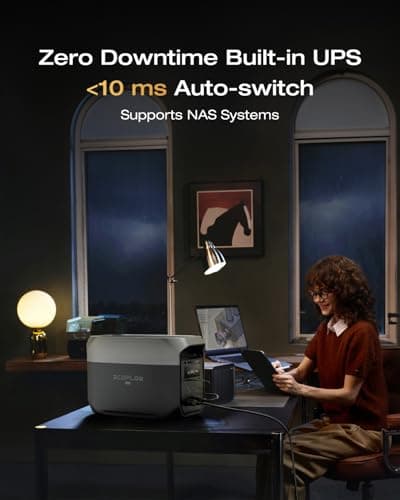
Jackery Alternative
Jackery Alternatives for Home Backup
The honest read on what Jackery does well, then five routes away from it: UPS switchover, output per dollar, solar headroom, idle draw and 240 V.
Top pick · EcoFlow DELTA 3 Max
$999.00See the DELTA 3 Max on Amazon17% off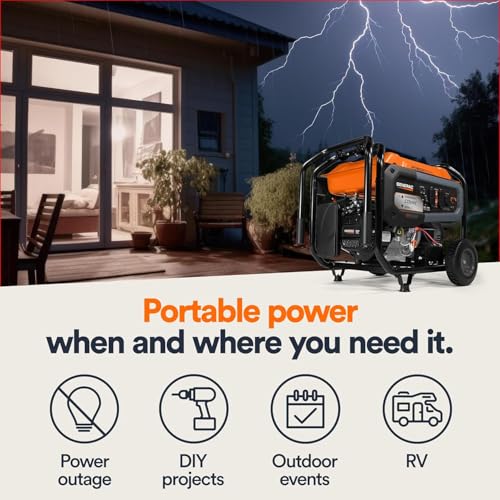
Review
Generac Generators Reviewed
Generac's home backup range end to end: the portables still listed, three transfer switches, the HomeLink upgrade path, and an honest read on which parts of the ecosystem are worth paying for.
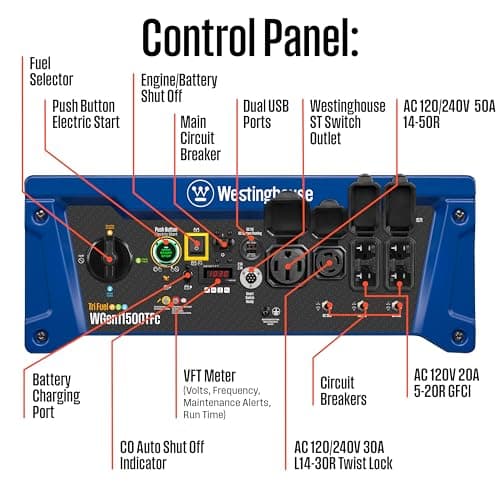
Comparison
Portable vs Standby Generator
Portable against permanently installed standby generators, and where the top of the portable range starts to overlap.
Best on Natural Gas
The Best Natural Gas Generators for Home Backup
Five tri-fuel generators ranked on published natural gas running watts, plus what a gas quick-connect actually involves and the conversion-kit alternative.
Top pick · Westinghouse WGen11500TFc 14,500W Tri-Fuel
$1,499.00See the WGen11500TFc 14,500W Tri-Fuel on Amazon
Best Under $1,000
Best Portable Generators Under $1,000
Price-capped at $1,000: what that budget buys in running watts, which outlets to insist on, and the one trap in the cheapest big machine.
Top pick · Westinghouse WGen9500DF 12,500W Dual Fuel
$999.00See the WGen9500DF 12,500W Dual Fuel on AmazonBest Battery System
Battery Backup for a Home, Sized to Carry Circuits
Home backup batteries ranked on expandable capacity, 240V capability and what each unit will carry — not on portability.
Top pick · Anker SOLIX F3800 Plus
$4,099.99See the SOLIX F3800 Plus on Amazon