Comparisons
Jackery Alternatives for Home Backup
Jackery builds the lightest batteries in this registry and publishes the longest design lives. These are the alternatives worth a look, organized by the reason people go looking.
Written byMike M.
Published
Disclosure: we earn a commission on purchases made through links on this page, at no cost to you. It does not affect what we recommend or what we say about it — how we are funded.
The short answer
Jackery is the lightest-per-watt-hour brand in this registry and publishes the longest design lives — 39.5 lb for 2,042 Wh, 23.8 lb for 1,070 Wh, and a stated 16-year design life on the HomePower 2000 Plus v2. The alternatives worth considering answer the four figures Jackery publishes for no unit here: a UPS transfer time, a standby draw, a maximum solar input and a 240 V output. EcoFlow's DELTA 3 Max is the best all-round swap; Anker's SOLIX F3800 Plus is the only route to 240 V.
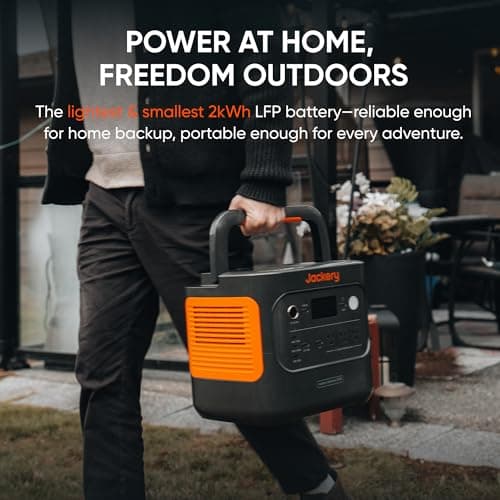
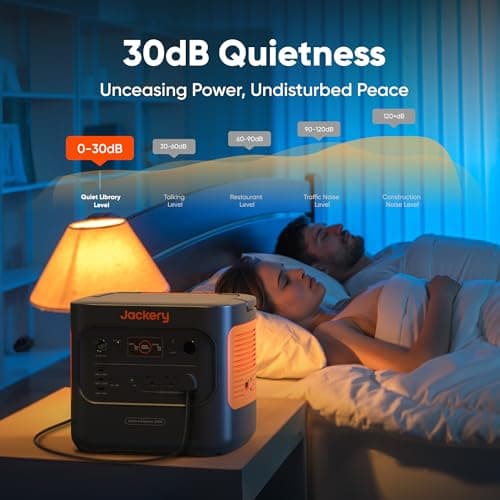
Start with what is actually good, because a page that pretends otherwise is no use to anyone shopping. Jackery's weight figures are real and they are the best here: the Explorer 2000 v2 publishes 2,042 Wh at 39.5 lb, which is a battery one person carries upstairs. The Explorer 1000 v2 publishes 1,070 Wh at 23.8 lb with a 3,000 W surge rating that genuinely starts a fridge compressor. The HomePower 2000 Plus v2 publishes 6,000+ cycles, a 16-year design life and expansion to 12 kWh from a 40.6 lb base — the lightest expandable system on this site. And Jackery publishes a weight for every unit it sells, which not every brand here does.
What sends people looking elsewhere is usually one specific missing number rather than a general dissatisfaction. So this page is organized by that number.
The short answer
Quick picks
| # | Product | Best for | Score | Price |
|---|---|---|---|---|
| 1 | 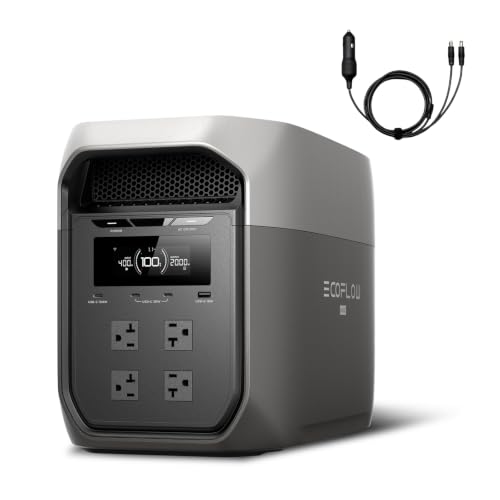 EcoFlow DELTA 3 Max The best battery here for keeping specific things running without interruption — the sub-10 ms transfer is a real functional difference, not a spec-sheet flourish. | UPS-grade switchover for a fridge | 9.4/10 | $999.00 |
| 2 | 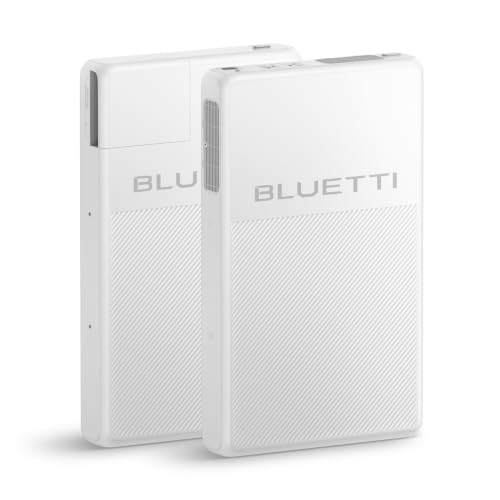 Bluetti FridgePower Backup System If the problem you are solving is specifically the refrigerator, this is the system designed for that problem — the 4 W standby and storm auto-charge are genuine engineering answers to it. | Purpose-built refrigerator backup | 9.5/10 | $1,899.00 |
| 3 | 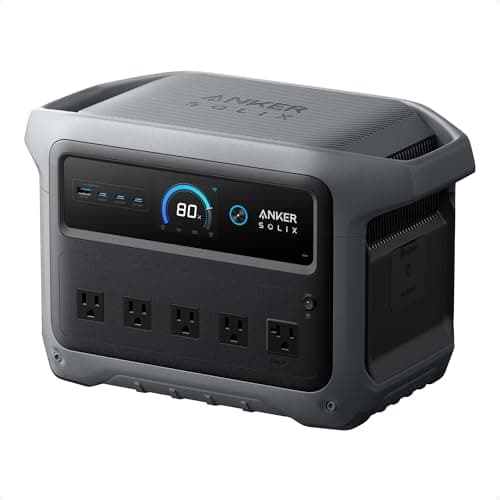 Anker SOLIX C1000 Gen 2 The right 1 kWh battery if your problem is short high-draw bursts rather than long low-draw endurance — and the fastest refill here by a wide margin. | Fastest 1 kWh recharge | 9.2/10 | $529.99 |
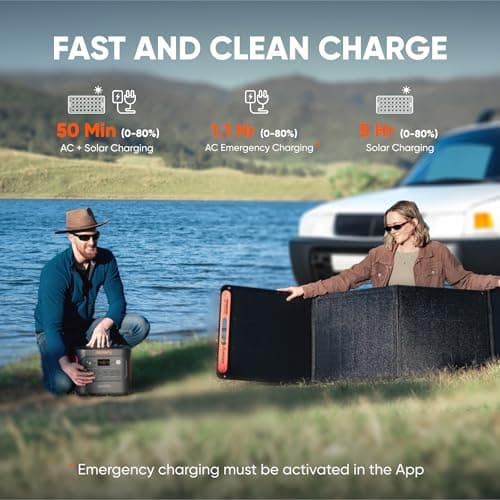
| 4 | 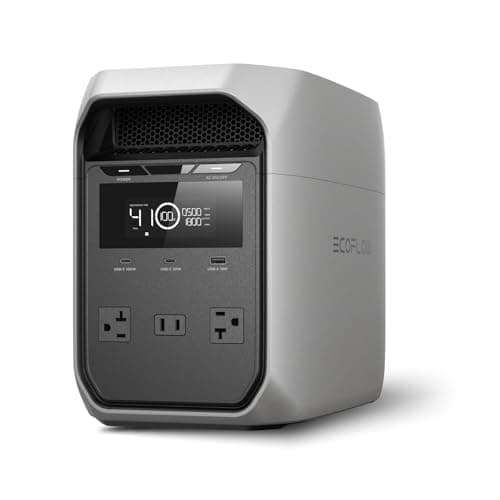 EcoFlow DELTA 3 Classic The best-value battery on the site: UPS-grade switchover, 1,800 W and a 45-minute recharge for roughly half what the 2 kWh units cost. | Best value 1 kWh with UPS | 9.3/10 | $462.00 |
| 5 | 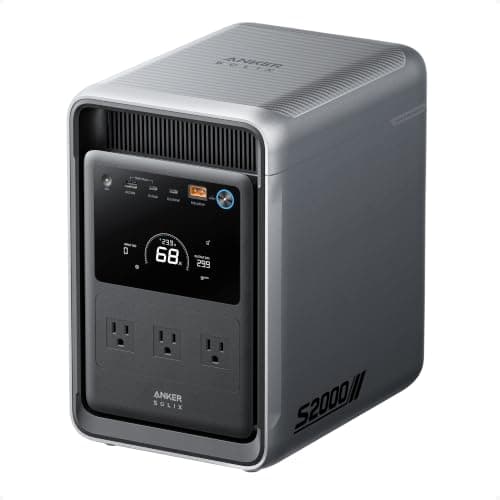 Anker SOLIX S2000 The endurance choice: the lowest idle draw and the longest cycle life here, with an output ceiling deliberately traded away to get them. | Longest fridge runtime per watt-hour | 9.3/10 | $699.99 |
| 6 | 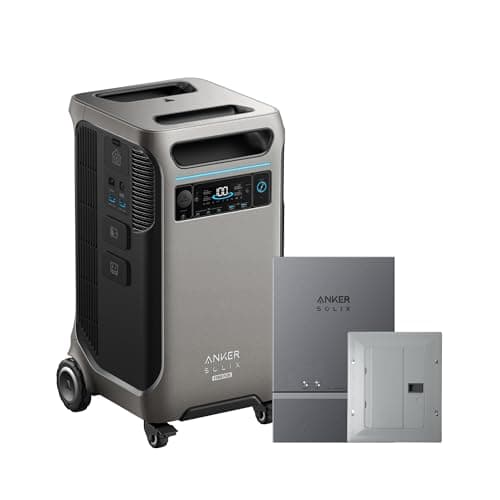 Anker SOLIX F3800 Plus The battery that can genuinely stand in for a generator on 240V circuits, with the registry's highest solar input ceiling, priced like the installed system it really is. | 240V loads plus generator pairing | 9.2/10 | $4,099.99 |
#ad Amazon prices as of November 19, 2026; they may have changed since. Scores are our editorial judgment from published specifications, not test results — how we pick. How we are funded.
Reason one: you want a published UPS transfer time
This is the most common reason, and it is a documentation gap rather than a proven absence. Jackery publishes no UPS transfer time for any of the four units in this registry. That matters because the transfer time is what decides whether a battery is an emergency supply you plug things into after the lights go out, or backup infrastructure your refrigerator is already plugged into.
Published switchover figures in this registry
- EcoFlow DELTA 3 Max
- Under 10 ms
- EcoFlow DELTA 3 Classic
- Under 10 ms
- Anker SOLIX C1000 Gen 2
- Under 10 ms
- Anker SOLIX S2000
- Under 10 ms
- Bluetti FridgePower
- 10 ms DualGuard
- EcoFlow RIVER 3 230
- Under 20 ms
- Every Jackery unit here
- Not published
Manufacturer published figures. A gap in a listing is not proof a feature is missing — it means you cannot plan around it, which for a backup purchase amounts to the same thing.
EcoFlow's DELTA 3 Max is the swap most Explorer 2000 v2 shoppers end up making: effectively the same capacity at 2,048 Wh, more output at 2,400 W with 3,400 W in X-Boost, a published sub-10 ms switchover and a 0-80% recharge in 1.13 hours. It is the heavier unit, at a published 45 lb against the Explorer's 39.5 lb, and it takes no expansion batteries at all.
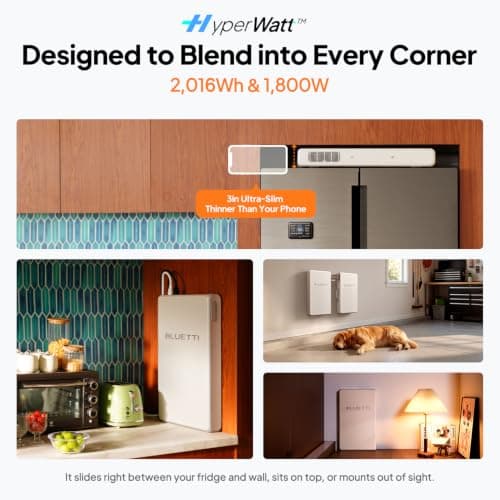
Bluetti's FridgePower answers the same question from the opposite end: 2,016 Wh behind a 10 ms DualGuard UPS, a published 4 W standby draw and a 75 mm slim case designed to live beside a refrigerator, with app storm alerts that start fast charging before weather arrives. If the battery is going to sit plugged in permanently, that 4 W figure is the one to compare.
Reason two: you want more output for the money
Jackery's output ratings are conservative relative to the price. The Explorer 1000 v2 publishes 1,500 W continuous at 1,070 Wh; the Explorer 2000 v2 publishes 2,200 W at 2,042 Wh. Both are honest figures with real surge ratings behind them, but at the same capacity other brands publish more.
| Unit | Published capacity | Continuous output | Surge or peak |
|---|---|---|---|
| Anker SOLIX C1000 Gen 2 | 1,024 Wh | 2,000 W | 3,000 W peak |
| EcoFlow DELTA 3 Classic | 1,024 Wh | 1,800 W | 3,600 W X-Boost |
| Jackery Explorer 1000 v2 | 1,070 Wh | 1,500 W | 3,000 W surge |
| EcoFlow DELTA 3 Max | 2,048 Wh | 2,400 W | 3,400 W X-Boost |
| Jackery Explorer 2000 v2 | 2,042 Wh | 2,200 W | Not published separately |
Anker's SOLIX C1000 Gen 2 is the pick here: 2,000 W continuous with a 3,000 W peak from 1,024 Wh at 24.9 lb, a full recharge in 49 minutes and a published 4,000 cycles to at least 80% with a 10-year design life. It is lighter than the Jackery it replaces and recharges faster. EcoFlow's DELTA 3 Classic is the cheaper route to the same class, with a 3,600 W surge and the sub-10 ms switchover.
Reason three: you want to plan a solar array
Jackery publishes no maximum solar input for any unit in this registry. That is the specification that caps an array permanently, so without it a third-party panel purchase cannot be sized from published data — you are left with the brand's own matched kits.
- Anker SOLIX F3800 Plus publishes 3,200 W across two MPPT inputs, the highest ceiling here.
- EcoFlow DELTA 2 Max publishes 1,000 W, with a stated 0-80% in 43 minutes when solar and AC are combined.
- Bluetti AC180 publishes 500 W with a 2.8-3.3 hour solar-only charge — low, but at least stated.
How many solar panels you need for a power station works through why that one number decides the whole panel purchase.
Reason four: it will live plugged in, so idle draw matters
A battery that sits behind a refrigerator for months is drawing power the whole time. Two units here publish that figure: Bluetti's FridgePower at 4 W and Anker's SOLIX S2000 at 6 W. Jackery publishes no standby draw for any unit in this registry.
Anker's SOLIX S2000 is the long-horizon alternative to the Explorer 2000 v2: 2,010 Wh against 2,042 Wh, 314 Ah LFP cells rated at 10,000 cycles with a stated 15-year lifespan, a 6 W idle draw and a manufacturer claim of up to 35 hours of fridge backup. Its cost is output — 1,500 W against Jackery's 2,200 W — so it is the swap for duration rather than for appliances.
Reason five: you need 240 volts
No Jackery unit in this registry publishes a 240 V output, and neither does anything else here except one machine. If your essential list contains a well pump, a dryer or a central air handler, capacity is not the deciding specification — the voltage is.
Anker's SOLIX F3800 Plus publishes 3,840 Wh, 6,000 W of output and dual-voltage 120 V and 240 V, with a stated 26.9 kWh expansion ceiling and 3,200 W of solar input. It is priced like the installed system it really is, and using the 240 V output into house circuits needs an electrician and a compatible transfer arrangement. At that budget, compare it honestly against a battery versus a generator before committing.
Where Jackery still wins
Three things, and they are not small. Weight: 39.5 lb for 2,042 Wh is the best figure here, and Jackery publishes a weight for every unit while two of its rivals publish none at all. Documented longevity: 6,000+ cycles and a stated 16-year design life on the HomePower 2000 Plus v2, against the 3,000 to 4,000 cycles most rivals claim. An expansion path you can carry: 2,048 Wh to 12 kWh from a 40.6 lb base, with Priority Routing to keep chosen circuits running.
If those are your priorities, the honest answer is that no alternative on this page beats them, and the Jackery home backup review is the better page to read next. Bluetti vs Jackery for home backup runs the brand-against-brand version of this comparison in detail.
The six alternatives in full
- Capacity
- 2,048 Wh
- AC output
- 2,400 W / 3,400 W boost
- Switchover
- Under 10 ms (mfr)
#1 · UPS-grade switchover for a fridge
EcoFlow DELTA 3 Max
The best battery here for keeping specific things running without interruption — the sub-10 ms transfer is a real functional difference, not a spec-sheet flourish.
#ad Price as of November 19, 2026; it may have changed since. How we are funded.
Why we picked it
- A sub-10 ms switchover means plugged-in equipment never notices the outage — this is what makes it genuinely usable for a fridge, a modem or a home office
- 3,400 W in X-Boost handles appliances the 2,400 W rating would reject
- Usually cheaper than the DELTA 2 Max it replaces
Good to know
- EcoFlow states this version takes no expansion batteries, so 2,048 Wh is the ceiling — the older DELTA 2 Max reaches 6 kWh
Published specification & our scoring
- 2,048 Wh LFP battery, 2,400 W output (manufacturer)
- Up to 3,400 W continuous in X-Boost mode (manufacturer)
- Under 10 ms transfer time for home backup (manufacturer)
- 0-80% in 1.13 hours with X-Stream charging (manufacturer)
- Manufacturer states a decade of daily use and a 5-year service commitment
- Published weight 45 lb; 19.44 x 12 x 9.4 in. Current listing adds a cigarette-to-DC5521 adapter cable
- Usable capacity
- 9
- Output ceiling
- 8
- UPS behavior
- 10
- Recharge speed
- 8
- Cycle life
- 9
- Value
- 9
Specification figures are the manufacturer’s published values. Scores are our editorial judgment from those figures and are never published as structured review data — how we pick.
- Capacity
- 2,016 Wh (4,032 Wh as sold)
- AC output
- 1,800 W / 3,600 W surge
- Standby draw
- 4 W (mfr)
#2 · Purpose-built refrigerator backup
Bluetti FridgePower Backup System
If the problem you are solving is specifically the refrigerator, this is the system designed for that problem — the 4 W standby and storm auto-charge are genuine engineering answers to it.
#ad Price as of November 19, 2026; it may have changed since. How we are funded.
Why we picked it
- 4 W standby draw is the specification that matters most for a device left plugged in for months — most power stations waste 20-30 W doing nothing
- The storm alert auto-charge is the single most practically useful feature on any battery here: it tops itself up before the outage
- 75 mm deep means it actually fits where a fridge lives, instead of becoming a floor obstacle
Good to know
- 1,800 W ceiling — it is built for a fridge, not for the house
- The standalone unit is gone: Bluetti sells it only as the main unit plus a BC200 pack now, which roughly doubles the entry price even though the cost per watt-hour barely moves
Published specification & our scoring
- 2,016 Wh LFP battery, 1,800 W output with a 3,600 W surge rating (manufacturer)
- Ultra-low 4 W standby consumption; manufacturer states 26% longer runtime as a result
- DualGuard UPS with a 10 ms switch to battery (manufacturer)
- 75 mm slim design purpose-built to sit beside or behind a refrigerator (manufacturer)
- Storm alert push notifications that trigger automatic fast charging; Alexa and Google Home (manufacturer)
- Four UPS modes — Standard, PV Priority, Time of Use and Customized; reverts to grid power automatically if the unit itself faults (manufacturer)
- Expandable to a stated 8,064 Wh with BlueCell 200 packs, which the manufacturer puts at four days of fridge duty
- Bluetti now sells it only as a system: the FridgePower main unit plus one BC200 expansion battery, which it states powers a fridge for 2-3 days out of the box
- Published unit weight 41.9 lb, 22.83 x 13.78 x 2.95 in — the 2.95 in depth is the 75 mm claim; leveling feet, handle straps and wall-mount brackets included
- Usable capacity
- 10
- Standby efficiency
- 10
- UPS behavior
- 10
- Output ceiling
- 7
- Form factor
- 10
- Value
- 8
Specification figures are the manufacturer’s published values. Scores are our editorial judgment from those figures and are never published as structured review data — how we pick.
- Capacity
- 1,024 Wh
- AC output
- 2,000 W / 3,000 W peak
- Recharge
- 49 min (mfr)
#3 · Fastest 1 kWh recharge
Anker SOLIX C1000 Gen 2
The right 1 kWh battery if your problem is short high-draw bursts rather than long low-draw endurance — and the fastest refill here by a wide margin.
#ad Price as of November 19, 2026; it may have changed since. How we are funded.
Why we picked it
- 2,000 W continuous at 1 kWh is the highest output-to-capacity ratio here — it runs appliances other 1 kWh units refuse
- 49 minutes to full is the fastest recharge on the site
- 4,000 cycles with at least 80% remaining
Good to know
- 1,024 Wh at 2,000 W draw is about 30 minutes — high output and small capacity is a short-runtime combination
Published specification & our scoring
- 1,024 Wh capacity, 2,000 W output with 3,000 W peak across 10 ports (manufacturer)
- Full recharge in 49 minutes at 1,600 W with HyperFlash (manufacturer)
- InfiniPower: at least 80% capacity after 4,000 cycles, 10-year design life (manufacturer)
- Manufacturer states it is 14% smaller than the previous generation
- Under 10 ms UPS switchover (manufacturer)
- Published weight 24.9 lb
- Output ceiling
- 9
- Recharge speed
- 10
- Cycle life
- 10
- Usable capacity
- 6
- Portability
- 10
- Value
- 9
Specification figures are the manufacturer’s published values. Scores are our editorial judgment from those figures and are never published as structured review data — how we pick.
- Capacity
- 1,024 Wh
- AC output
- 1,800 W / 3,600 W surge
- Switchover
- Under 10 ms (mfr)
#4 · Best value 1 kWh with UPS
EcoFlow DELTA 3 Classic
The best-value battery on the site: UPS-grade switchover, 1,800 W and a 45-minute recharge for roughly half what the 2 kWh units cost.
#ad Price as of November 19, 2026; it may have changed since. How we are funded.
Why we picked it
- UPS behavior at a 1 kWh price point — you can put the fridge or the home office behind it permanently
- 1,800 W continuous is higher than Jackery's 1,500 W at similar capacity
- 45 minutes to 80% and 26.7 lb
Good to know
- 1,024 Wh is a single night of fridge duty, not a weekend
Published specification & our scoring
- 1,024 Wh, 1,800 W output with 3,600 W surge via X-Boost (manufacturer)
- 0-80% in 45 minutes with X-Stream AC charging (manufacturer)
- Under 10 ms UPS switchover (manufacturer)
- LiFePO4 cells rated for 10+ years of daily use, EV-grade cell-to-chassis design (manufacturer)
- Published weight 26.7 lb
- Usable capacity
- 6
- Output ceiling
- 7
- UPS behavior
- 10
- Recharge speed
- 10
- Portability
- 9
- Value
- 10
Specification figures are the manufacturer’s published values. Scores are our editorial judgment from those figures and are never published as structured review data — how we pick.
- Capacity
- 2,010 Wh
- AC output
- 1,500 W / 3,000 W peak
- Cycles
- 10,000 LFP (mfr)
#5 · Longest fridge runtime per watt-hour
Anker SOLIX S2000
The endurance choice: the lowest idle draw and the longest cycle life here, with an output ceiling deliberately traded away to get them.
#ad Price as of November 19, 2026; it may have changed since. How we are funded.
Why we picked it
- 10,000 cycles is more than three times what most LiFePO4 power stations claim — this is a buy-once battery
- A 6 W idle draw makes it one of the few units that is sensible to leave plugged in permanently
- The manufacturer's 35-hour fridge figure is the longest claim of any 2 kWh unit here
Good to know
- 1,500 W continuous is the lowest of the 2 kWh units — the 3,000 W peak starts a fridge, but sustained high loads are not what it is built for
Published specification & our scoring
- 2,010 Wh capacity, 1,500 W AC output with a 3,000 W peak (manufacturer)
- Manufacturer states up to 35 hours of fridge backup, from a 6 W idle draw and 10% higher efficiency
- 314Ah LFP cells rated 10,000 cycles with a stated 15-year lifespan (manufacturer)
- Manufacturer states it is 30% smaller and 25% lighter than the industry average 2 kWh unit
- Under 10 ms UPS switchover (manufacturer)
- Published weight 35.7 lb, 8.2 x 11.1 x 12.7 in
- Usable capacity
- 9
- Cycle life
- 10
- Standby efficiency
- 10
- Output ceiling
- 5
- Recharge speed
- 7
- Value
- 10
Specification figures are the manufacturer’s published values. Scores are our editorial judgment from those figures and are never published as structured review data — how we pick.
- Capacity
- 3,840 Wh
- AC output
- 6,000 W
- Voltage
- 120V and 240V
#6 · 240V loads plus generator pairing
Anker SOLIX F3800 Plus
The battery that can genuinely stand in for a generator on 240V circuits, with the registry's highest solar input ceiling, priced like the installed system it really is.
#ad Price as of November 19, 2026; it may have changed since. How we are funded.
Why we picked it
- 240V output at 6,000 W is what lets a battery feed panel circuits the way a generator does — almost nothing else in this class publishes it
- 3,840 Wh is nearly two days of fridge-plus-electronics duty
- 3,200 W of solar input is the highest here, so panels added later genuinely refill it inside a day
- The auto start-stop generator pairing is the closest a battery system comes to indefinite runtime
Good to know
- 135.6 lb, and effectively a fixed installation once it is placed
Published specification & our scoring
- 3,840 Wh LiFePO4 capacity, 6,000 W AC output (manufacturer)
- Dual-voltage 120V and 240V output — manufacturer cites powering a dryer
- 3,200 W solar input across two MPPT inputs — the highest ceiling in this registry (manufacturer)
- Expandable with BP3800 packs; manufacturer publishes a 26.9 kWh ceiling for one station
- Cells rated 3,000+ cycles to 80% capacity, 10-year lifespan, five-year warranty (manufacturer)
- Published weight 135.6 lb
- Compatible with the Smart Generator 5500 for automatic start-stop runtime extension (manufacturer)
- Current listing is the F3800 Plus paired with Anker's Home Power Panel, and publishes a 12,000 W maximum AC output for two stations run together (manufacturer)
- Usable capacity
- 10
- Output ceiling
- 10
- Expandability
- 10
- Portability
- 3
- Cycle life
- 9
- Value
- 5
Specification figures are the manufacturer’s published values. Scores are our editorial judgment from those figures and are never published as structured review data — how we pick.
In short
Our recommendation
Jackery Alternative
9.4/10EcoFlow DELTA 3 Max
The best battery here for keeping specific things running without interruption — the sub-10 ms transfer is a real functional difference, not a spec-sheet flourish.
Runner-up
9.5/10Bluetti FridgePower Backup System
If the problem you are solving is specifically the refrigerator, this is the system designed for that problem — the 4 W standby and storm auto-charge are genuine engineering answers to it.
#ad Price as of November 19, 2026; it may have changed since. How we are funded.
Brands: want your product tested? For Brands.
Questions people actually ask
What is the best alternative to Jackery?
EcoFlow's DELTA 3 Max for most people: 2,048 Wh against the Explorer 2000 v2's 2,042 Wh, more output at 2,400 W with 3,400 W in X-Boost, and a published sub-10 ms UPS switchover that Jackery does not state for any unit here. Anker's SOLIX C1000 Gen 2 is the better swap at the 1 kWh size.
Is Jackery or EcoFlow better for home backup?
EcoFlow publishes the figures a backup plan needs — a transfer time on the DELTA 3 Classic and Max, and a solar input ceiling on the DELTA 2 Max. Jackery publishes the better weight figures and the longer design life. For a battery that stays in one place behind a refrigerator, the published switchover usually decides it.
Is Jackery or Anker better?
Anker publishes the longest cycle life here — 10,000 cycles with a stated 15-year lifespan on the SOLIX S2000 — plus a 6 W idle draw and a sub-10 ms switchover. Jackery publishes lighter units and an expansion path to 12 kWh. Anker is also the only brand here with a 240 V unit, the SOLIX F3800 Plus.
Why would I not buy a Jackery?
Usually one of five missing figures: no published UPS transfer time, no published standby draw, no published maximum solar input, no 240 V output, and conservative continuous output at a given capacity. If none of those matters to your plan, Jackery's weight and documented longevity make it a sound buy.
Is there a cheaper alternative to Jackery with the same capacity?
At the 1 kWh size, yes — EcoFlow's DELTA 3 Classic publishes 1,024 Wh with 1,800 W and a 3,600 W surge, and Bluetti's AC180 publishes 1,152 Wh with 1,800 W, both normally under the Explorer 1000 v2's price. Check the live prices on each card, because this bracket moves week to week.
Do any Jackery alternatives run a well pump or a dryer?
Only Anker's SOLIX F3800 Plus, which publishes dual-voltage 120 V and 240 V output at 6,000 W. Every other battery on this page and in the Jackery range is 120 V only, which rules out anything hard-wired at 240 V no matter how much capacity it holds.
Does Jackery publish how long its batteries last in an outage?
It publishes capacity and cycle life rather than runtime claims. Anker is the exception among the alternatives here, stating up to 35 hours of fridge backup for the SOLIX S2000 from a 6 W idle draw. Treat any manufacturer hour figure as a best case with an efficient appliance and a closed door.
Sources
- Eugene Water & Electric Board — Generator Sizing ConsiderationsPublished appliance running and additional-starting watt figures used in the load arithmetic on this page.
- US Department of Energy — Solar and Resilience BasicsPublished statement that residential solar panels alone are not enough for resilience because grid-tied systems switch off when grid power is lost, and that independent operation needs a properly configured inverter plus storage. Quoted directly on this page.
Read next
Bluetti vs Jackery
Bluetti vs Jackery for Home Backup
Bluetti against Jackery on the published figures that decide a home backup purchase: UPS transfer time, solar input ceiling, standby draw, weight, cycle life and the expansion path.
Review
Jackery for Home Backup
Jackery's Explorer and HomePower lines for home backup, with published capacity, cycle life and expansion figures.
Best Overall Power Station
The Best Home Backup Power Stations
Battery power stations ranked for home backup on surge, capacity, recharge speed and cycle life.
Top pick · Jackery Explorer 2000 v2
$999.00See the Explorer 2000 v2 on Amazon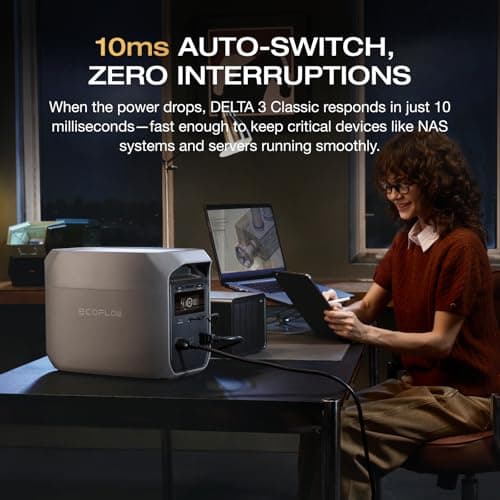
Best Battery Under $500
Best Portable Power Stations Under $500
Price-capped at $500: the six batteries under the ceiling, and the surge rating that separates the ones that run a fridge from the ones that charge phones.
Top pick · EcoFlow DELTA 3 Classic
$462.00See the DELTA 3 Classic on Amazon17% off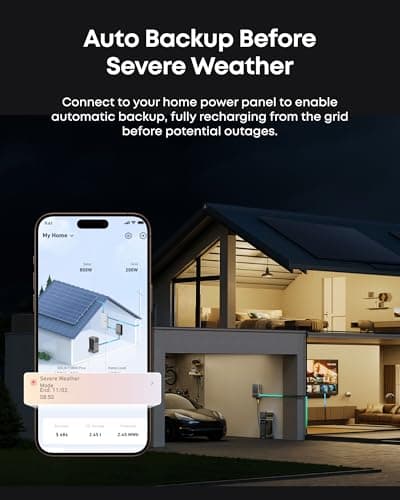
Comparison
Home Battery Backup vs Generator
Installed home battery systems against generators, and the expandable portable units that sit between them.
Guide
Power Station Runtime Calculator
The runtime calculator: watt-hours times inverter efficiency divided by your load, both directions, with a live-priced pick for the capacity class you land in.